Another winter solstice is upon us: 2016 – The year in review

Winter solstice. The longest night of the year.

Moving forward, the days grow steadily longer and, in less than two weeks, we will leave a dark, disturbing year behind us.

But it would be reckless to imagine that 2017 will be brighter. However, with luck, we can be forewarned, forearmed, and determined not to relax our guard. We can stand together against the rising tides of hatred, and remember what is truly at stake.
11229294674_e5844929df_z1

Since I started this blog two and a half years ago, winter solstice has become my annual check-in point. Last December, I reflected on the key elements of a year that began with a move to writing seriously about books and culminated with my first review for Numéro Cinq. Against that trajectory, I wrote about my trip to South Africa, and the pulmonary embolism and cardiac arrest that followed within a few weeks of my return. I imagined that the eventful year I had experienced would not likely, for better or worse, be exceeded this year.

Cue 2016.

This has been a year of heartache, anger, and dismay. Around the world and close to home. I watched the violence in Syria, the outcome of the Brexit vote, and the spectacle of the American election, among the other tragic and unexpected events that have unfolded. And as economic uncertainty and anxiety has grown in my own hometown—a city that lives and dies with the price of oil—the crime and homicide rate has risen sharply this year. It does not feel like the same community any more.

Then there is the lengthy roll call of the writers, artists, and performers who have left us. But to be honest, I cannot say that I have felt these losses as acutely as many others… I’ve been distracted by the immediate, personal losses that marked this year. My mother, my father, and one of my closest friends, all gone within the span of two months. And my grief—that most fundamental human emotion—is complicated, inarticulate, and wearing.

It will take time.

11592010455_89917d80e3_z1

But, 2016 has also been a time of amazing growth and opportunity for me as a writer. I don’t know how often I resolved, with the dawn of a new year that: This year I will write. Last December, with that first critical review under my belt, I could not have imagined that I would have, in addition to regular contributions to Numéro Cinq, published reviews at 3:AM, Minor Literature[s], The Quarterly Conversation, and The Rusty Toque. And I would not have dared to dream that I would see my essays and prose pieces published on line and in print, or that I would be invited to join the editorial team of The Scofield. As 2017 approaches, I have a handful of reviews scheduled and several prose projects underway. I’m also feeling inspired to return to photography after a lengthy hiatus, and to see how I can incorporate photos into my written work.

I have much to look forward to, in spite of, or rather, against the new darkness that threatens.

Art and literature are more important than ever at times like this.

So, this seems to be an appropriate time to look back over this year’s reading, and highlight the books that stand out for me.

I’ve read about 50 books to date, a little more than half of what I read in 2015. I don’t even want to hazard a guess as to how many books I bought, received as review copies, or brought home from the library. I feel, as usual, like I fell short of my intentions. However, I have to remember that I was writing, working on critical reviews, and dealing with considerable life stresses over the past twelve months.

More than ever before, I read like a writer this year. That is, I was especially attuned to voice, structure and approach to storytelling. Consequently, the books that made my year-end list tend to reflect this focus. Of course, any “best-of list” leaves out many excellent books. I’ve managed a baker’s dozen here, and it’s probably a reflection of the increased number of off-blog reviews I wrote that this year’s list is predominately composed of new releases. I was surprised to see that once I’d made my selection.

In reverse chronological order, my top reads of 2016 include the following:

Story of Love in Solitude by Roger Lewinter (France), translated by Rachel Careau
I will write about this collection of three short stories once I have completed The Attraction of Things. My verdict is still out on that title, but this tiny book is simply wonderful.

The Inevitable Gift Shop by Will Eaves (UK)
Fragmentary, cross genre writing that works fascinates me. Billed as a “memoir by other means”, it is Eaves’ unique tone that makes this blend of memoir, literary criticism, and poetry so compelling. His thoughtful reflections on reading and writing made this an ideal meditation to turn to after a year of reading critically and exploring my own literary voice.
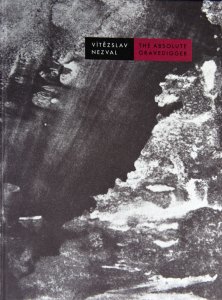
gravediggerThe Absolute Gravedigger by Vítěslav Nezval (Czech Republic), translated by Stephan Delbos & Tereza Novická)
I have found myself turning to poetry more and more as the world seems increasingly unstable and, well, surreal. This newly translated collection of poetry by one of the best known Czech Surrealists should be essential reading at this time. Originally published in 1937, the darkness he could see on the horizon are all too familiar once again.

The Country Road by Regina Ullmann (Swiss), translated by Kurt Beals
I read this collection of short stories when I was in a very low mood. But in the spare, sombre prose of these tales I found a beauty that, rather than deepening my depression, brought strange comfort. Admired, in her lifetime, by the likes of Rilke, Mann, and Musil, Ullmann’s work is mostly forgotten today. This volume, released in English translation in 2015, is a rare treasure—one that I encountered at just the right moment.

panorama-coverPanorama by Dušan Šarotar (Slovenia), translated by Rawley Grau
For me, as a reader and a writer, one of the most important books I read this year is this literary meditation on migration, language, landscape, and loss. This novel finally broke through my own stubborn determination to hold to a sharp delineation between fiction and nonfiction, and has made me re-evaluate potential approaches to themes I wish to examine. What Šarotar achieves here with his own unique take on what might be deemed a “Sebaldian” approach, is the creation of an atmospheric, captivating, and intelligent work.

The Passion According to G.H. by Clarice Lispector (Brazil), translated by Idra Novey
Oh wow! In a way, I am glad I didn’t read Lispector before writing and publishing my essay “Your Body Will Betray You,” because she is exploring the process of coming into being so beautifully that I might not have been able to write at all after reading this. Employing an unconventional narrative, Lispector’s G.H. experiences a vivid, metaphysical crisis triggered by the sight of a cockroach. The result is a remarkable, thoroughly engaging read. I have at least three more of her books waiting for the new year.

Proxies by Brian Blanchfield (US)
I bought a number of essay collections this year and currently have several on the go. This collection impressed me not only for the way the essays were composed—written without consulting outside sources—but for some of the ideas explored, and for reinforcing the value and possibilities of the personal essay/memoir form. I also greatly appreciated his guiding caveat: Permitting Shame, Error and Guilt, Myself the Single Source.

SergioSergio Y. by Alexandre Vidal Porto (Brazil), translated by Alex Ladd
This book is significant and important for dealing with gender identity and transition in a sensitive and original way. I am, as a transgender person, critical of much of what passes as literary writing on this subject. This is a most impressive work with a startling and unique approach. As I noted in my review, Sergio Y. is novel that approaches the transgender experience from the inside and the outside, allowing for the comfort with names and pronouns to vary, over time and from person to person, reflecting the complexities of relationships that others, even loving family members, can have when an accepted and assumed identity is challenged. That is the book’s greatest strength.
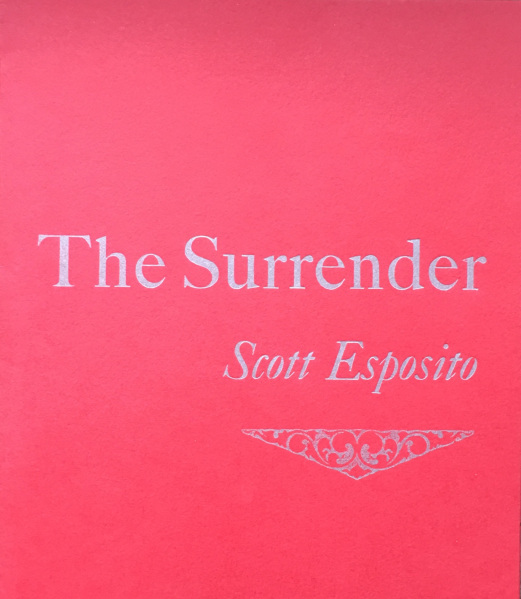
surrThe Surrender by Scott Esposito (US)
This book was on my radar from the moment I first heard of it. Again, despite my typical gender related skepticism, I was drawn to this transgender-themed memoir/film critique/literary diary. I wanted to know how Scott would present his story—one that is not commonly heard. Although his journey is very different than mine, we share a certain sensibility. This is a brave and most wonderful book by a man who has long been one of my heroes. He has since become one of the many literary friends I have come to know and cherish this year.

Layout 1

Atlas of an Anxious Man by Christoph Ransmayr (Austria), translated by Simon Pare
This book was a total surprise when it arrived courtesy of the good people at Seagull Books. This most unusual travelogue, a series of brief “encounters” across the globe, contains some of the most stunning descriptive language I have ever read. Each episode begins with the words “I saw…” and ends with a wise, evocative observation. From the North Pole, to South America, from deep inside the mountains of New Zealand, to a parking lot in San Diego, this is a journey that will not be easily forgotten. Highly recommended.

Quiet Creature on the Corner by João Gilberto Noll (Brazil), translated by Adam Morris
My third Brazilian book on this list is this enigmatic novella that led to one of the most entertaining literary discussions of the year. What is it about? Well that is the challenge. I had to read it three times before I could begin to get a handle on it. The narrator, a young man who finds himself in a strange situation that is rapidly growing stranger, is, in his oddly passive tone, almost more disturbing than whatever might be happening. Opaque and surreal, this book gets under your skin.

The Crocodiles by Youssef Rakha (Egypt), translated by Robin Moger
This novel still holds fast in my memory although I read it back in February. It is, as I described it in my review, a prose poem of simmering power, unwinding across 405 numbered paragraphs, tracing a torturous path from the first stirrings of poetic assurance within a trio of young men in the 1990s to the doomed protests of the Arab Spring. It is a dark, intense exploration of youthful political idealism, that builds on repeated images, themes and refrains to create a compelling narrative force as it moves toward its stunning conclusion. Again, this is another work that is increasingly relevant in today’s world.
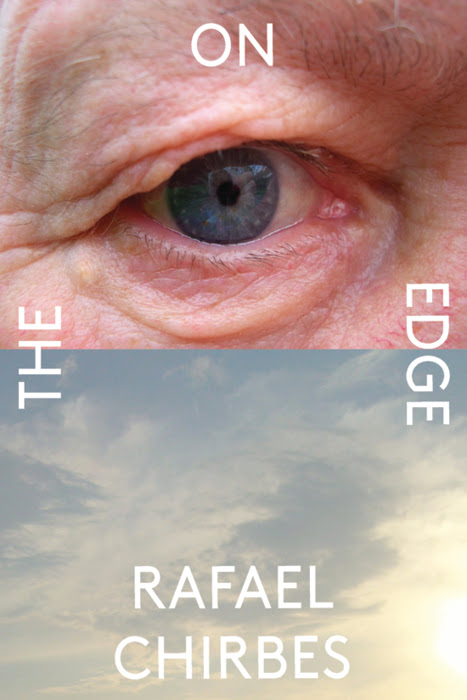
On-the-edgeOn the Edge by Rafael Chirbes (Spain), translated by Margaret Jull Costa
Finally, the very first book I read in 2016 is probably my favourite book of the year. I wrote about this novel at length for Numéro Cinq and I regret that it has not generated more discussion. In what is essentially an extended monologue with brief cameos from other characters, Chirbes creates a memorable, engaging, and tragic character in seventy-year-old Esteban, a man who has lost absolutely everything in the economic collapse of 2008.  Thoroughly human in his wisdom, his resolve, his shortcomings, and his despair; this is a powerful and important book that deals frankly with many of the critical issues—including migration, xenophobia, and economic decline—that are more vital than ever as we step into 2017.
Beginning to write through grief: A reflection & link to my poem at the Sultan’s Seal

I am, as many know, dealing with a multi-layered, complex grief—my mother, my father, and one of my closest friends—all lost within the last six months. When my parents died in July, I entertained an immediate grief project, my own mourning diary, an echo of Roland Barthes. I started with a subdued passion, an ache as intellectual as emotional. In truth, my emotions were, I can now see, constrained and intellectualized.

I was numb.

Others reached out to me in those early weeks, sharing their own stories. The terrain of grief is rocky, I was warned. The journey long. The pain uneven. But, although I am in mid-life, a loss of this nature—doubled and complicated—was something I had never faced.

Then my friend took her own life sometime on September 1st. Even though I knew, in my heart, that such an event was almost inevitable, the pain and anger tore me apart. I knew she had tried every available option she could afford to fight an erratic and devastating variation of bipolar disorder, and I fully respected her decision and her right to make it. But suddenly my world was a darker, lonelier place.

And she had lived half a world away.

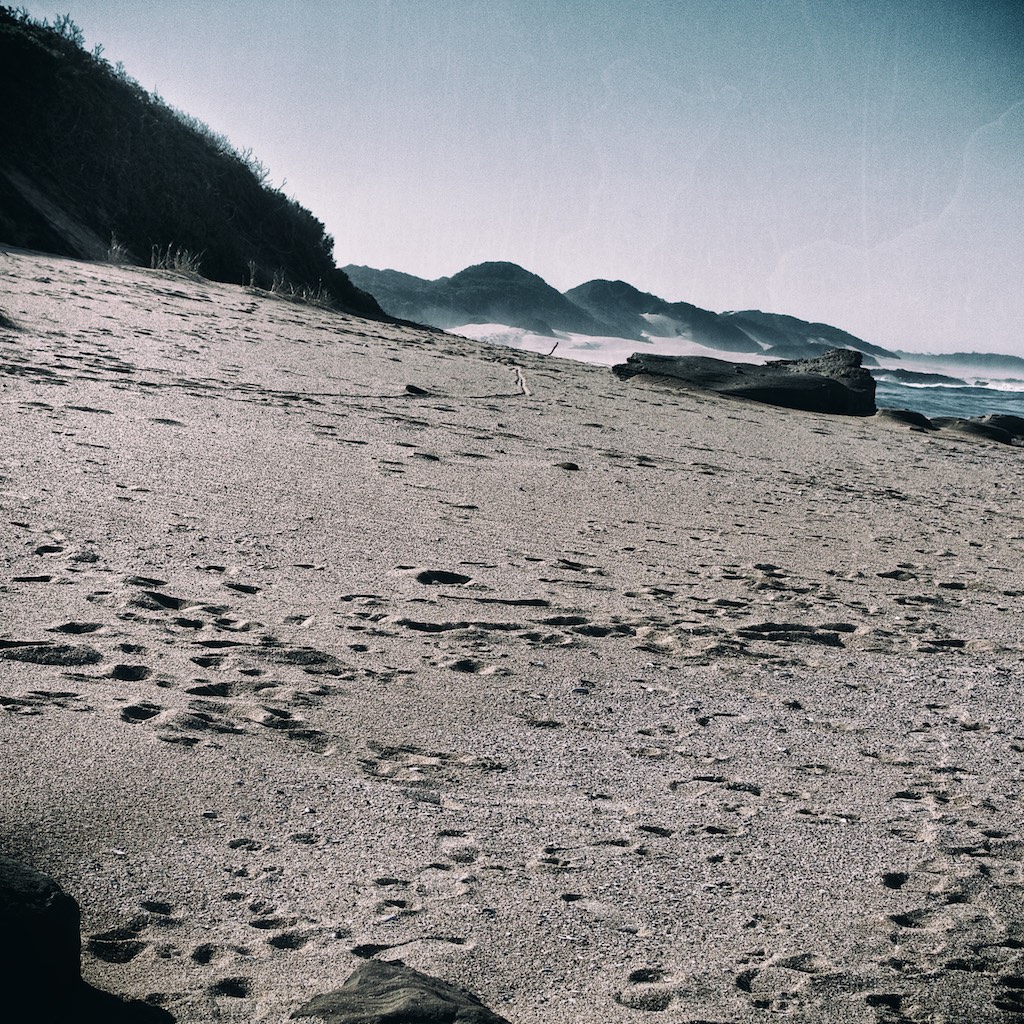
Again, the first thing I thought of was to write. This time, my distance from her demanded and informed my need to write—and I knew exactly what I wanted to do. I wanted to gather words and sentences from her writing and our communications, and together with some photographs from my trip to visit her in South Africa, create an elegy.

An offering.beach

Drawing inspiration from a prose piece by Breyten Breytenbach, and the sound driven writings of my friend, Daniela Cascella, I set to work. And I knew exactly where I wanted to publish this memorial if I was able to realize my vision—The Sultan’s Seal, a most wonderful space created and curated by Egyptian writer, Youssef Rakha.

The result, “And I will Tell You Something,” was published this past weekend. Three hundred words, five images and almost three months shaping, reshaping, listening and accepting the silence that emerged. This is perhaps the most emotionally demanding piece I have ever written. Yet, now five days after my words were finally set free in the world, I feel a tremendous sense of rightness. An element of peace. I still ache, but, with this prose poem, I feel I can begin to heal.

And I hope that others may find something in it too.

Literature as Liberator: My contribution to the 2016-17 Seagull Books catalogue

Earlier this year I was invited by Naveen Kishore, the publisher of Seagull Books, to write a contribution for their 2016-2017 catalogue. Now the Seagull catalogue is never an ordinary publication. It is a lavishly illustrated volume featuring the stunning artwork of Sunandini Banerjee, and contributions from a wide range of writers, translators, and this year, a handful of humble book bloggers, myself included. When I agreed to try to put something together, Naveen sent me this year’s “Provocation”:

Soul he said. Soul as the prison of the body. Soul I asked? What about the ones who don’t believe? In soul. Or God. Or religion. The ones that understand the body for what it is. Accept its one-way journey towards the inevitable. The body as decay. Gradual ruin. Eventual crumbling. We all know this. Or those that think the ‘inner core’, or what I presume is a ‘substitute’ for the notion of ‘soul’, is actually just an ever changing, evolving, fermenting mass of literature that grows. And grows. And knows freedom. And fear. And emotion. And love. And death. And every kind of existential angst that any soul worth its weight in gold would know! What about me? I asked. Or you for that matter. We who write and read and write and continue to both read and write while our bodies grow old and tired. But the mind. The mind remains in a state of excitement. Constantly radiant. Its brilliance grows with every new thought. What if we substitute ‘literature’ for ‘soul’ in your proud statement so that it now reads ‘Literature as the prison of the body’. Thing is that this doesn’t hold. Literature cannot be a space that restricts movement. Or freedom. At least it shouldn’t be. It is meant to be a liberating presence. Like its close companion. The dark. For me the dark is important. The dark as a substitute for soul? Maybe. Darkness is essential for literature of meaning to grow and take root.

The body. The soul. Literature.

2016-11-09-17-33-54I knew immediately what I would write. I took themes that were spinning through my head, scratched out on notepads—unformed, but increasingly urgent ideas that I wanted to find a way to address in words—and placed them within the framework of an analogy I have long used to describe my experience of feeling that I did not belong in the body I was born in. This piece represents the first creative expression of the self, of my self, that I dared to offer for publication. Although I had addressed my gender-different history, my queerness, in the occasional blog post and review, I had never sought to open some of the deeper elements of being that have come to define—and trouble—my long-term experience of living in the world as a gay transgender man.

2016-11-09-17-28-08In the meantime, between writing and submitting my Seagull “response” and finally holding the published catalogue in my hands earlier this month, I published two critical pieces of writing. Your Body Will Betray You (Minor Literature[s] May 6, 2016) explores the body and being, while A Reader’s Journey Through Transition (Literary Hub October 25, 2016) takes a look at the urgency with which I attempted to read myself to a place of self understanding. I’m proud of both of these essays, but I must confess, there is a certain weariness that comes with writing so honestly about oneself, not to mention a creeping discomfort with being laid bare, as such. This is a reflection of my ongoing personal struggle with the value and efficacy of being out, and with the inevitable fatigue that comes with constantly having to come out, again and again.

If I had thought writing myself out in the world would help, I’m not sure it has. But then again, we are constantly reading and writing ourselves into being. It is a process, not an end. Like transition.

So, after a little consideration, I’m ready to reproduce my Seagull Books contribution here. Rest assured this is not an excuse not to request a copy of this amazing catalogue for yourself. A Seagull Books catalogue is a work of art and celebration of literature.

The seeds of both of my later essays are evident in the following parable, but this piece attempts to articulate my own experience of feeling “wrongly gendered.” You will note that it is not a question of outward expression—being differently gendered, as I know it, comes from inside, not from wanting to play with the toys or wear the clothing of the other “sex.”

Here, then is my contribution to the 2016-17 Seagull Catalogue, with endless gratitude to Naveen Kishore:

Literature as liberator, you suggest.

I am, I want to reply, inclined to agree.

But I would caution you that words can confine us, as readily as they can set us free. We can become entangled in meanings, lose ourselves in definitions, search in circles for explanations when all we know is that the words we hear don’t seem touch the heart of what or whom we seem to be. False trails can mislead, lead away from understanding, especially if the destination you seek is not marked on any of the maps you can find. You wander blind.

And, you speak of the transience of the body, its trajectory toward decline, deterioration and decay.

I would argue the body cannot be so easily discarded.

Let me reframe the imagery.

Accept, for the sake of argument that the body is the fragile housing of the mind and the mind is the intersection of the heart and the brain; and, as such, both are essential to the experience of being in the world. The soul then, or that spark by which we know we are alive, can be thought of as being-in-motion. And literature—the stories we tell, the stories we turn to—is an essential element of the process of understanding ourselves in the world.

We are reading and writing ourselves into being.  Always.

Let me tell you a story.

Imagine, for moment, a darkened room. The sole illumination is a candle burning against the insistent gloom.

A boy inhabits this space; it is the only space he has ever known. And he has known, for almost as long as he can remember that everyone he encounters, every person who stands at the threshold and beckons, is expecting someone else, someone he can only pretend to be. He decorates his room, he carries his candle into the corners to try to understand what secrets they might contain, he worries that his insecurities might be exposed. But, of course, it’s dark, and others tend to see only what they want to see.

As the boy grows, his room becomes a more distorted, distressing, disorienting place. He wonders what lessons he missed, why he is unable to learn to exist comfortably in this strange space.

He assumes he is at fault.

If only his candle burned brighter. If only his room was not so dark.

He continues to decorate and redecorate his room. He scours the books that line the shelves, listens to the music that fills the hollows. Somewhere, somewhere far away he senses there is an answer to his otherness but its truth escapes him. He seems to fall off the axis the wrong way. So he puts away the stories of his childhood, the ones he tried to emulate with his own tales of ordinary boys on heroic journeys to fight dragons, and tries to draw a new character, the one he is supposed to be. If he can tell this character’s story, find her voice, perhaps he can write himself into the woman everyone else anticipates, the woman everyone else sees.

But he cannot find the voice.

He puts down his pen, files the unfinished stories and poems. Or throws them away.

He goes to university. He reads more books. The unease intensifies, the books can only take him so far—he continually reaches a place where the road ends, where the bridge is washed out, where the trail fades away into the underbrush. And then he falls in love. If he can’t fix the persistent otherness, perhaps he can hide—in plain sight.

The years pass. And still his room is an alien space.

He plays by every rule he can imagine. Marriage. Children.

Until, one day, he finds a book. It’s not the answer, but it shatters something deep within, it whispers in the darkness, and the candle flickers briefly. So he reads more. He encounters words that catch him up, that lead him on. He reads more. The words, the words threaten to tear apart his world. He tries on stories; wonders if they fit, if they’ll finally help him understand the room that has, over the years, come to feel more like a prison than a body.

He longs to make his way home to a place he’s never been.

He reads more.

And at last he comes to understand that the only way to make sense of himself in the world—to touch the centre of his very own being-in-motion—is not to deny the man inside but to renovate the room. To step out of the shadows and acknowledge the person he has always been, celebrate him and let him live. The candle still burns, but the room is now bathed in natural light.

So yes, literature can illuminate the corners, crack the walls, break down the door to bring the essential being—the soul, if you like—into the light.

I know this in my bones. The story I just told you is mine.

On reading and writing and slowly going nowhere

I track the books I read, I have since I was in my early twenties—first in small hardcover journals, now on a spreadsheet. I’m not a spectacularly fast reader but in recent months my completion rate has fallen to a crawl. I have submitted a couple of reviews for publication elsewhere but my blog has seen few fresh posts. I’m probably reading half a dozen books, including several poetry and essay collections, but focus is hard to find and sustain. However, I am not a loss for the company of words. I have a couple of longer essays to edit for the upcoming Scofield, as well as final assignments for a copy editing course I’ve been taking; and I have to say that losing myself in the words of others from a perspective that draws from, and yet differs from, that of a reader or a writer, is proving to be exactly the distraction I needed.

These past few weeks have been difficult.

Thanksgiving was a trigger point; the first day where the magnitude of the recent losses—of my parents and one of my closest friends—hit home and hit hard. That aloneness that goes to the core. Rather than dissipating, the darkness grew, and despite some very positive events and occurrences in my life, it threatened to overwhelm. Within a week I was feeling seriously suicidal for the first time in more than twenty years. The only thing holding me back was the thought of all the work I would put my children and brothers through, something I know especially well as co-executor of my father’s will.

I have sought help. I have reached out.

It does not seem to be depression as much as grief; and it’s a multi-layered, complex grief. So although I still struggle, at times, against the feeling that I don’t want to keep on living; I am not feeling inclined to take matter into my own hands. Of course, none of this is aided by the fact that I have been fighting a vicious cold, hacking cough and all. Makes it very hard to find that spark, but I hope it’s rekindled soon. This is a hell of a way to live, but I’ll keep reading, sketching out ideas, and writing while I wait.

6412706291_3376c44b28_zThroughout all of this there has been goodness: A forthcoming review of a book that has, more than anything I have read for a long while, made me think about a way to approach some writing I have in mind (I will write about it when the review goes live); a long conversation with a Twitter friend who is still far away, but now close enough to call (a real treat because Twitter has been a little uncomfortable for me of late, but that’s another story); and the publication of an essay I wrote for Literary Hub. The essay is called A Reader’s Journey Through Transition, and I don’t know what was more exciting, publication day itself or seeing my name in the week-end review with other authors like Toni Morrison, Junot Diaz, Rabih Alameddine, and Marilynne Robinson!


Wrestling with Rhys: Reflections on reading Voyage in the Dark

I debated leaving this book undiscussed, unfinished even. It is not in my nature to write negative reviews but I am not certain my reaction to Voyage in the Dark, my selection for the Jean Rhys Reading Week, counts as negative as much as it stands as disappointed. I felt it was worthwhile looking into why this book and its author did not work for me as I had hoped it would, especially when, at one time, I did read and enjoy several of her books. If anything has changed, of course, it is me. I am not the same reader I was thirty years ago and, if there could have been a worse time for me to entertain the company of Voyage’s protagonist Anna Morgan, this past week would be hard to beat.

voyageWhen we meet Anna, the young narrator of Jean Rhys’ 1934 novel, she is eighteen, going on nineteen, and working as a chorus girl. Transplanted to England from her childhood home in the Caribbean, she paints a picture of a country that is bleak, cold, rainy and unwelcoming. She meets Walter Jeffries while she is on tour and once she is back in London they connect and initiate an affair. Anna takes this development in stride, as if it is both her due and her fate. She tolerates the sex and relies on the money he provides her to pay her board in a series of rooming houses and buy herself clothing. If her feelings are conflicted, it is difficult to tell. If anything she comes across as inordinately indifferent:

Of course, you get used to things, you get used to anything. It was as if I had always lived like that. Only sometimes, when I had got back home and was undressing to go to bed, I would think, ‘My God, this is a funny way to live. My God, how did this happen?’

Happiness is at best a vague notion, elusive when she vaguely tries to grasp at it. Only when Walter leaves for an extended business trip, severing their relationship upon his return, does Anna feel “smashed.” She makes attempts to reach out to him, to win him back, but what does she really miss? His arms or his money? It is hard to be certain.

Anna is always cold. She blames it on her origins in a hot climate, but the chill runs much deeper. In contrast to her persistent obsession with the monotony of her English surroundings, memories of her life in Dominica are presented in richer, more vivid terms. They are shot through with a melancholia that does not speak to childhood nostalgia alone–there is a sense that her emotions are complicated–but these passages allow for some of my favourite moments in the book:

All the way back in the taxi I was still thinking about home and when I got into bed I lay awake, thinking about it. About how sad the sun can be, especially in the afternoon, but in a different way from the sadness of cold places, quite different. And the way the bats fly out at sunset, two by two, very stately. And the smell of the store down on the Bay. (‘I’ll take four yards of the pink, please, Miss Jessie.’) And the smell of Francine – acrid sweet. And the hibiscus once – it was so red, so proud, and its long gold tongue hung out. It was so red that even the sky was just a background for it. And I can’t believe it’s dead….And the sound of rain on the galvanized-iron roof. How it would go on and on, thundering on the roof…

Rhys’ prose is strikingly spare and unaffected. It works well when she is looking back, or when the narrative occasionally falls into brief periods of stream of consciousness. The personality of secondary characters, if not necessarily sympathetic, are rendered with stronger brush strokes than that of the young woman at the centre of the narrative. And this is where the Voyage in the Dark becomes an effort for me as a reader.

Anna’s extraordinary passivity is a hallmark of the novel, as are the abrupt flashes of impatience and pride that periodically flare around others. She can be fickle, petulant and self indulgent. None of these factors are a problem, together or apart; what seems lacking is a context in which to understand her attitude and behaviour. For many readers I suspect this elusive quality of Anna’s character is where the interest and appeal lies. I found that despite moments when I was ready to re-evaluate my response to the text, Anna’s hollowness, apathy and vanity would test my patience again.

When she muses “I was thinking, ‘I’m nineteen and I’ve got to go on living and living and living,” her reflections echo a person struggling with depression, and that may be a fair interpretation, but it doesn’t hold weight for me in spite of passages like:

It’s funny when you feel as if you don’t want to do anything more in your life except to sleep, or else to lie without moving. That’s when you hear time sliding past you like water running.

Anna holds no responsibility for anything that has happened to her in her short life. She is miserable and expects everything to be handed to her. That’s fine, there are people like that and I do not expect characters to behave in manner that I approve of or to be likeable. But in modernist fiction I anticipate a measure of believability that, for some reason, is lacking for me here.

This is, I caution, my own idiosyncratic response to a book that I realize is beloved by many. I can understand how, in my early twenties, living with an as yet undiagnosed mood disorder, as an ostensibly female person keen to find female characters and writers that resonated with my own alien understanding of my gender identity; Jean Rhys’ novels and female characters could have held a strong appeal. From this vantage point in my 50s, I suspect it is more my experience with mental illness, personally and professionally, than my cross gendered path that account for my difficulty pulling myself through this short novel. And then, I am also mourning the suicide of a dear friend who battled a soul crushing depression for more than a year before finally taking matters into her own hands earlier this month. Against that backdrop, Anna’s persistent gloominess was, shall we say, cold comfort.

A meditation on life and death: Beastlife by J’Lyn Chapman

Once I became aware that this book existed, I knew I had to have it. So I ordered it immediately.

When it arrived and I went down to the bookstore to retrieve it (that is, release it from the bookseller who could not refrain from glancing through it as if he was regretting having to let it go), trusting some odd intuition that it might hint at something I was looking for. But, to be fair, I had little idea what to expect.

J’Lyn Chapman’s Beastlife is very small, fitting into the palm of the hand, or better yet, a pocket. An ideal companion for a walk in a park or natural area. I bought it with the idea that it might offer an unconventional provocation for a process of loosening, prying open, the closed window between my loss and the grief that I cannot begin to touch yet. At this point, in the first months following my parents’ deaths, mourning feels more like an empty space. Written of the body, mine and theirs. Confused. Contorted. Corporeal.

2016-08-21 19.53.09Not everyone would look to a book containing photographs of dead birds (albeit small, grainy black and white images), to find a voice for sorrow. For me it makes a strange sort of sense. It sounds morbid, but hopefully, if I manage to put to word the images that haunt my memories of my mother’s last month and days, I will be able to illustrate the beauty. If I have learned anything yet in these early days following the first significant losses of my life, it is that making sense of the death of those closest to us is at once universal and specific. And I lost both parents. Two very different relationships, two different circumstances, two separate yet entwined experiences of grief.

Of course, there is much more to Beastlife than photographs of birds.

This collection of essays—poetic meditations—on life and death, birds and beasts, and our human interaction with the natural world offers evocative, yet insistent reminders that we should strive to observe, engage with, and exist in this world with grace and compassion. Not that we, as humans, always succeed. Sometimes we are careless. And sometimes we are unthinkably cruel—inhuman even.

Death is a theme throughout, up close and afar. And violence too. Chapman explores the ways we intersect with nature—as hunters, naturalists, observers of atrocities, and, most fundamentally perhaps, bearers of new life. This tiny volume challenges the readers to reflect on our place in the cycle of life, in the beauty and the pain.

For me, at this time, when death is very much on my mind, there is an odd comfort in these pages.

The volume opens with “Bear Stories,” a series of very short pieces; raw, visceral prose poems that draw on the intimate complexity of our connection to the natural world. Bound with water, blood, fur, and feather the beauty is shocking, brutal, sublime. Drawn from an earlier longer form chapbook, these “stories” invite us to consider the world at gut level.

In the dark, a body is a pond. The night birds make hollow sounds, and then there is a sound of the mouth, pulled back, curled out. And so on. Fur catches the moon as it comes out barbed and dark. A vertical cut whines under the ribs, and the long grass keeps it from you.

The micro essays and meditations that comprise the central portion of  Beastlife are remarkably rich, drawing on a range of literary and critical resources. “A Catalogue and Brief Comments on the Archive Compiled and Written by the Ministry of Sorrow to Birds,” for instance, takes inspiration from Ovid, Heidegger, Barthes, Sebald, Tennyson and more. Despite its seemingly whimsical name, this is a more explicit meditation on death and dying framed against images, photographic and descriptive, of dead birds. The ministry of the title is an imagined institution dedicated to a form of archival lamentation, an understanding of death and mourning through the collection of photographic specimens. They seek and gather images into a growing chronicle of sorrow:

We were stopped, and looked down, in the walk by the bird, flies, cigarette, glint of coin. We saw the futility in keeping—the ornaments in hydriotaphia and their obsidian speaking something of its keeper. But the detritus we die alongside or do not die alongside, the litter jettisoned from our death and dying bodies or we die too quickly to regard, utter the currency of living things.

And there is this discomfort: the spectacle. Its hard edges. We have bodies too, we say, and we want them wrapped in webby husk, a film, a membrane huddled into self. But our bodies are still over-looked by our own flânerie, in which the world, and its subtle schism of that which is alive and that which is dead, becomes our final coup for all we have lost in the leaving. All the unmeasured ether, it flames with our light.

In death we are confronted with the fragility of the body—the body of the one who has died and, in reflection, our own. In her next essay, “We Continue to Unskin: On Taxidermy,” following Truth’s advice to Petrarch to constantly meditate upon his own mortality, Chapman contemplates mortality and the miracle of immortality which, paradoxically involves an engagement with death. Structured along lines from a poem by Paul Celan, this journey takes us through the a more familiar archive of natural history. From the delicate art of the taxidermist, preserving the form and imitation of natural life in the animal’s natural habitat, to the narrator’s own relentless search to find her place in the urban spaces she inhabits, the promise of immortality lies, of course, in language.

And yet every sentence has its beginnings and each animal, posed as it is in flight or in fright has its past-tense. Beauty, eternal gesture. I want to write sentences that stretch on toward desperation, as in the fugal voices that become discordant but still lovely, then recollected in harmony. At the apotheosis of the desperation, the line would break into clause or new sentence and the break would be the point of discord rather than calm, and still the dissolution would be reprieve, as when the healthy mind refuses any more annihilation and in its descent decides to rest. But there must be sentences that travel toward the desperate one. There must be travel.

The last entry, “Our Final Days,” echoes in form the contained short prose pieces of “Bear Stories,” but here the brutality is decidedly human—dispatches of cruelty, violence, and injury are played against the hope that some semblance of beauty in nature may preserve us. It’s a faint hope, a lament of an entirely different order. It’s too easy to get wrapped up in the disheartening news that floods our lives through our TVs and news feeds. Sometimes I find myself relieved that my parents will not see any more of the potential darkness that seems to ever loom on the horizon. But then I remember that I have two children. Life goes on. I reorient myself to the future again.

There is a woeful inadequacy that washes over me when I read more conventional memoirs of loss and explorations of grief. I keep peeking into odd corners, turning over rocks to see what crawls out. Reading books like Beastlife.

I keep the other poetic evocations of grief, the books I am amassing, close at hand. I read them to stir up and open the gates that are still secured against the flood of choked tears, the barricades of numbed sadness, that do not seem to be able to allow more than a slow leak in occasional shuddered gasps. At the moment mourning feels more like emptiness. I feel a need to find a starting point with death, with these particular deaths, with watching each one on their deathbeds, before I can find and begin to work through the grief.

Beastlife by J’Lyn Chapman is published by Calamari Archive.

Now and at the Hour of Our Death by Susan Moreira Marques, a reflection and review

We obsess over lasts as we do over firsts. Last days, last images, last words. We want signs.

Last month, my brothers and I made a most difficult decision about our father who was, at the time facing a cluster of serious complications resulting from a stroke and car accident. Four days earlier we had gathered around our mother’s bedside as the respirator that was barely keeping her breathing was removed. Within four hours she was gone. After agreeing to discontinue treatment of our father, he would continue to live, slowly dying, for another week. As I kept vigil day after day I tried to remind myself that there was a time when death was allowed to take its course, in the home, even as so-called “normal” life would begin to spin, a troubled satellite, around the dying person. Death was part of life, not something that happened elsewhere, surrounded by tubes and machinery. Although my dad remained in the hospital until the end, he was moved to a quiet, private room where he was kept comfortable, free of pain, and cared for by the nursing staff. As a family we were supported and respected. It wasn’t easy, and we’re all still numbed and distorted in our grieving, but if there is such a thing as a good death, I think that both of my parents had good deaths, if good means having a chance to say I love you, over and over and over until the end.

nowdeathWhen I first started to read Susana Moreira Marques’ Now and at the Hour of Our Death, I wondered if I was too raw, too plagued with second thoughts about the decisions we had made, to be able to surrender to a lyrical and experimental essay about death and dying. This book had been sitting on my shelves since it arrived last year with my And Other Stories subscription, several times I had opened it but somehow the time was not right. I suppose the book was waiting for me.

Over the course of five months in 2011, Marques made several visits to a palliative care project in rural north-east Portugal. She accompanied a team of health care professionals as they traveled from village to village to assist those on their final journeys, allowing them to be able die, as comfortably as possible, in their own homes; and along the way she recorded her own observations, collected anecdotes, and listened to the stories of the people she met. The result is powerful meditation dying, as a lived experience shared by a family, a community.

The first half of the book is fragmentary in style and form, blending facts and definitions, character sketches, brief stream-of-conscious like passages, pieces of wisdom—all presented with a quiet dignity in lucid, affecting prose:

The swallows have already built their nests above the back door; this is how they do it every year. They are useful birds, and beautiful, and have always been a favourite of his. But now he watches them as he never has before, because he might not see another spring.

*

AGONY: 1. The last struggle against death. 2. [Figurative] Anguish, affliction. 3. An imminent conclusion (preceded by a great disturbance).

‘Agony,’ the dictionary does not note, is a technical term.

*

Immortal in the morning. At night, the fear of never waking.

*

Lands, roads, people, time, time, people, roads, land. What matters here is different, very different.

The second half of the book, entitled “Portraits”, offers a closer look at three individual stories. Here Marques becomes a gentle presence as she describes each situation, then she steps back and lets those involved have their say. There is Paula, a woman with a young family, who is dying of cancer. She speaks with a brave spirit about how she and her husband had taken their time, waiting to have their second child, assuming they had “all the time in the world.” She will only have another year to live at the time that her thoughts are recorded. Then we meet João and Maria, a couple in their 80s who reminisce about their years in Angola. Both are ill, yet neither feels that they are ready to die, they live for visits from their children and grandchildren, and each one fears being the one left behind.

Finally, in the third portrait, the dying person is silent by the time Marques meets the family. While their father Rui lies on his death bed, his adult daughters, Elisa and Sara, each respond in their own way in his final months, the latter driving home from France every fortnight to spend time with him and her mother. Their own accounts follow his death, capturing the early weeks of grief, anger and regret. Very different in temperament, the sisters respond in their own ways to the loss, but for each of them it is the first time they have come up against the close experience with death and it is a leveling experience. Sara realizes she had never appreciated the magnitude of what others she had known would have been going through when they lost a parent, regretting that she had failed to say anything. I can’t help but feel that that is a common occurrence. Nothing but the death of a close friend or family member prepares you for the experience. Elisa, on the other hand, is surprised to find that she is unable to shriek and scream in anguish the way her sister and mother do when her father finally passes:

. . . I couldn’t react. It must have been two months before I cried. It’s really hard for me to cry. And now I’ve finally started crying, but only because I’ll get all worked up over something minor, and then I might cry a little out of frustration. But when it happened – and the atmosphere at our house was just so strange . . . It took me a long time to realize what was going on.

The final section, a single page long, is a guide for “When you come back from the journey no healthy person wants to take,” a list of the ways “you”, that is anyone who survives the death of a loved one, can be expected to act. . . paying attention to time, the things and people that are precious, the bridges that need to be mended and, simply, endeavouring to live well. I hope I can follow this wisdom even if, at the moment, I am inclined to relate to Elisa’s reaction, with grief coming in angry outbursts more than tears.

witm-logo

Now and at the Hour of Our Death is translated from the Portuguese by Julia Sanches and published by And Other Stories.


What we read: A reflection on gender, language and necessity

My astonishment – and what is really my anxiety (my indisposition) come from what, in fact, is not a lack (I can’t describe this as a lack, my life is not disarrayed), but a *wound*, something that has harmed love’s very source.
– Roland Barthes, Mourning Diary

A comment made this morning on a post I wrote just over a year and half ago, has made me stop to consider what I am reading at this moment and why. The original post is called Gendering my bookshelves, a look at the gender of the authors I tend to read which were, at the time, and continue to be, predominately male. In the meantime I have read more female writers than I might have anticipated, but I have read more in general. So the ratio is perhaps closer to 80/20 than the 90/10 I figured last year.

This is Women in Translation Month, a project I respect and support, but I am unlikely to contribute with the same intensity as before. Truth is, despite a nice selection of titles that I had collected with this month in mind, I am not certain I will manage to read many. In fact I am close to putting my first effort Now and At the Hour of Our Death by Susana Moreira Marques aside. Don’t get me wrong, this piece of experimental nonfiction about a traveling palliative care team in rural Portugal is quite wonderful. But not right now. These are portraits of death and dying. And to read it so soon after watching both of my parents die hurts like hell.

I am relatively new to the business of maintaining a book blog and, of late, much of my review focus has actually moved off of my blog to online magazines. But what is a literary blog if not an opportunity to write about what one is reading? Sometimes that includes review copies and new releases, but that type of reading comes with pressures and can cut into other reading that one is drawn to. Themes like Women In Translation, German Lit, Spanish Lit all offer opportunities to open up and encourage conversation about literatures that one may or may not otherwise consider.

But sometimes our reading is directed by the forces and idiosyncrasies and, of course, the tragedies of our own lives.

At the moment, I want to read two different types of books–those that offer total distraction, and those that say something about grief and loss. That is where I am at, pure and simple. July was absorbed by hospital vigils and then, once my father finally passed, the immediate business of beginning to organize paperwork, notify institutions and prepare to apply for Probate. We have not even managed to plan a memorial of any kind. Over and over others have commented about how well I seem to be holding up…

2016-08-07 19.03.15But I’m not. The other night, reading Barthes’ Mourning Diary I found myself thinking, but this is different, he is so focused on his mother, my mourning is different. Is it? My father was injured and his death was slow. In the midst of it, my mother took sick and was gone within three days. My mother’s death, is a loss of an entirely different order than that of my father. She was my best friend. I could talk to her about anything. Without her I have no one else, no partner, and no friend as close. Although I have two children, I cannot burden them as they are each bearing their own grief. I woke up yesterday to the harsh recognition that I was trying to roll these two events, these two losses, these two individuals, these two unique relationships into one experience to be grieved as whole. But I cannot. They are separate events and they are one. Suddenly the magnitude of the task ahead is overwhelming.

So I will read and I will write. I want to write and publish something before time has a chance to edit it… a task inspired by Barthes and by Peter Handke’s A Sorrow Beyond Dreams. Women in Translation may or may not figure in the equation. In fact translation may not fit into much of my reading at all this month. So be it. Aside from Barthes, I have a memoir called When It Rains by Maggie MacKellar, a memoir that deals with two intersecting deaths, and I have ordered Love’s Work by Gillian Rose and Simon Critchley’s Very Little… Almost Nothing. Each one of these titles was suggested by Twitter/blogging contacts. I am open to more.

Finally I must say that I have been deeply moved by those who have reached out by email or on Twitter, publicly or through Direct Message, to offer condolences, good wishes, suggested reading and writerly support.

I am in mourning.

There will be words.

In uncertain terms – Proxies: Essays Near Knowing by Brian Blanchfield

This is a book braver than I am.

I am not even certain where to begin to unravel my reaction to reading this collection of essays. Until recently I was resisting the dawning recognition that what I needed to say—the subjects I wanted to explore—would be best met through essay/memoir writing. Or to put it another way, I realized that I have neither the patience nor aptitude for fiction. But what of the essay and its personalized variant, the memoir? I wasn’t even sure I liked the form. So I have learned to approach reading essays with an eye to writing. I read not simply for the joy of encountering well-crafted, intellectually and emotionally engaging prose. A work that excites me, in style, content, or both, invariably sends me to my current notebook where I spin, inward and outward, a cascade of thoughts, images, and ideas… fuel for my own scribblings.

Proxies, by the American poet and essayist Brian Blanchfield, is one such work.

proxiesSubtitled Essays Near Knowing, the pieces that comprise this collection were composed under a particular creative constraint. Blanchfield decided to refrain from seeking any guidance from authoritative sources during the writing process. Thus these essays were written unplugged, if you like. Of course, adopting a learned tone without fact checking (and we all do it, especially in conversation), necessitates allowing for a margin of error. Consequently, pages of “Corrections” addressing many of the resultant inaccuracies and inconsistencies, close out the book. However, Blanchfield also gives himself a secondary challenge in this project:

Having determined that this would be unresearched essaying, analytic but nonacademic, I was almost immediately drawn to a second constraint—or better, invitation: to stay with the subject until it gives onto an area of personal uneasiness, a site of vulnerability, and keep unpacking from there.

As he hits these points of reflection that effectively bend the essay toward memoir, there is, he admits, a certain fumbling allowed, stimulating a transition that, in its sometimes sudden movement, creates an energy that is dynamic, emotionally raw. What begins as a focused consideration of a topic, a concept, or theme, seems to turn personal in a heartbeat, and works its way through to a resolution, however ambivalent that may be. No grand narrative arcs here, only furtive digging through the fragmented moments of life, each essay preceded by the same caveat: Permitting Shame, Error and Guilt, Myself the Single Source.

Blanchfield’s starting points are varied. As a poet, it is not surprising that many start with language and meaning: “On Propositionizing”, “On Confoundedness”, “On Abstraction”, “On the Ingénue”, “On the Near Term”. Some have more tangible contexts at the outset: “On Minutes”, “On the Leave” (as in the game of pool), “On Dossiers”. He often draws on specific images from his own life to set the stage, but those musings typically lead him much closer to the bone as the essay takes shape. Relationships with his parents, the tenuousness of his chosen profession, and his sexuality—his queerness of being—are common themes that regularly surface as he ventures into those areas of private anxiety and susceptibility.

As personal as he gets, and he can lay himself bare, these essays are rich with fascinating intellectual ideas, with references to philosophers, psychologists and, naturally, poets. Some essays are simple and relatively self-contained, while others seem to mutate, in the reading, as the author reaches for a subject that expands, like a pool of liquid, resisting the ordered shape one might anticipate. At best, at their most intriguing, these are essays meant to be experienced as much as read.

Take, for the sake of illustration, “On Minutes.” This piece begins, objectively, with a discussion of meeting minutes, the recorded, dispassionate account of the details of a meeting—no place for embellishment, dramatic flair. Expanding on this basic subject, Blanchfield recounts his own experience working as an executive assistant at a performing arts organization in Tuscon at a time when he and his partner were struggling to make ends meet on one salary. It was a job borne of necessity not desire to say the least. He slides from the drudgery of typing up minutes into memories of accompanying his mother to her office job on weekends as a young child, occupying himself creating stories while she worked, reading them aloud to her co-workers at the end of the day. These childhood creations are then parlayed into a link to the remembrance of his return to his mother’s home for his stepfather’s funeral. From there he passes into a reflection on “Paraphrase”, a poem by Hart Crane that, for Blanchfield, “gets the sudden, lights-out fact of death right.” At this point, what has become a quick dip into the territory of memoir, turns again and, as it shifts, the language of the essay slides into richly poetic territory with a meditation on the closing stanza of Crane’s poem in which the white head of the deceased is observed as a “paraphrase” among the roses on the wallpaper:

The word choice is inexplicable, querulous, oblique, just right. A paraphrase among the rows of roses—a relief receding there—renders their locked pattern a kind of language, but what can it say?; and the head in the place where the living being lay is nominated as this titular hermeneutic tool, useless as such without its objective genitive of. It cannot be said what original locution this paraphrase summarizes. A case, I think, for Crane, of Flesh Made Word again. A reversion. Revelation withdrawn.

The essay winds down with thoughts of Crane who, fittingly, worked an office typist; and the speculation that the imagined head on the bed might have been that of his lover’s father. Some strange, small circle, elegantly wrought from very humble beginnings. The essays in this book move like this, through memories, reflections, ideas and poetic contemplation.

One of the most profoundly moving pieces in the collection arises from Blanchfield’s attempt to address his relationship with his mother—once loving, now long strained by her inability to accept his sexuality. “On Peripersonal Space” begins with the notion that an individual’s concept of the self includes all the space within reach around his or her body. He hears a radio discussion with the authors of a book on the subject, a mother and son team, a collaboration that, within his own scope of experience, is unimaginable. Yet he finds it difficult to approach his desired subject, as much he feels it is essential that he make the attempt. This is a challenge I understand—writing about those with whom our relationships are close but complicated, is an uneasy task:

Since I began this project, I have tried a number of times to write about my mother and me, and have abandoned a few attempts already. If these essays are, in part, inroads to disinhibited autobiography, as I have come to claim they are, and demand they be, I feel the imperative to address the subject above all others. But ours is a relationship so deep and damaged and (still) so tenuous it has defied emergence.

So how to start? He takes the peripersonal space as a cue, beginning with an account of the closely bound emotional intimacy and playful games that he, as an only child, and his then divorced mother used to enjoy when he was young. His description and the psychological implications of their connection is startlingly frank and triggers a concern that I also share with respect to writing about close family members:

It is more than embarrassing to relate all of this. I come up against the inappropriateness of, for one thing, sharing what is only half mine to share. But is that partiality, expressed by that proportion—half of one—ethical, or healthy for a grown man? Roland Barthes has famously said that to be a writer is, essentially, to violate a primal taboo, to “play with the mother’s body.” No, I love Barthes and he is a signal influence on my conception of this very book; but the remark presumes a class and level of literacy I was not born into.

The resulting essay achieves a surrogate catharsis of sorts, but not between the author and his mother. The roots of their (as yet) unresolved divide lie deep in the American south where Blanchfield was raised in a Primitive Baptist family. He had to leave to live openly as a gay man, moving to New York City in his early twenties. The years that have passed, and the miles that have separated them have not healed the rift. Honestly sharing the pain of rejection, the frustration at his mother’s inability to come to any terms of respectful disapproval, and the sting of hearing her say “I shouldn’t have to choose between my God and my son” leaves a deep sorrow that lingers on the page.

Essayists are no strangers to the practice of blending intellectual and literary observations with autobiographical reflections. What Blanchfield seems to approach here is a means of allowing himself, as a writer, to push his way inward, passing from the factual (more or less), the abstract or the sentimental into the territory of the immediate, the raw, and the real. He touches nerves (his own) but avoids falling into two traps that can snare those who venture toward autobiographical writing: the artificial narrative and the open air confessional. At the most personal end of the spectrum, what he is sharing are unguarded moments of naked emotional vulnerability, decidedly queer, but recognizable and resonant to anyone who has lived, loved, won and lost.

For prospective or developing essayists, Proxies is, as a project, idiosyncratic, bold and illuminating. Barthes’ essays, as he admits, are an ever present influence and Blanchfield demonstrates a similar natural ease with the form. To be able to unfold ideas and follow their course without fact-checking is an interesting exercise in itself, useful at the very least in drafting an essay in its early stages. Lifewriting in this format offers ample reward for readers and some significant points of interest for those of us who struggle to achieve the balance between a story we want to explore and the open wounds that may not have quite healed—the truths that give a personal essay its soul.

For me, this book generated a series of provocations, flash points for my own writing, current and potential. I loved the way Blanchfield focuses in on ideas and uses them as pivot points to make his way from concept to experience and back to ideas. It took me, I confess, over a month to read this collection of twenty-four short essays. But in that time I lost both of my parents, the outcome of two intersecting, but unrelated series of events. I sat long at the bedsides of both my mother and father, witness to their final days. I want to attempt to capture the immediate experience, in its unfiltered rawness, before my memories begin to become distorted by time. I gleaned some possibilities, some instances of inspiration, some ideas to bring into my own project which will be, in its own way, necessarily imprecise, emotionally liable, and queer.

And that, to borrow from the title of the final essay, will suffice for the near term.

Proxies: Essays Near Knowing is published by Nightboat Books.

Thoughts on writing about The Surrender by Scott Esposito for Minor Literature(s)

The moment I heard that this book was on the horizon last year, I knew it was one that I had to read. But I could never have anticipated how tightly the release of The Surrender would intersect with my own fledgling efforts to put a voice to my own journey. The precipitous timing coloured not only how I read, but how I would go on to write about this book.

surrI entered Scott Esposito’s sensitive and intelligent three part essay into the heart of his own gendered identity armed with two notebooks. In one I catalogued my observations about the essays themselves–the structure, the form, and the content–while the other captured the flow of emotion, the moments of recognition, the ideas that spoke to my soul. One could say that I surrendered to this book. But I could only review it by putting my deepest personal reactions to one side and allowing Scott and his accounting centre stage. To do anything else would have been self indulgent, unprofessional. At the same time I simply wanted to open the work to the point that other readers would be drawn to enter in. One deserves to hear a story like Scott’s directly.

For my part, writing about The Surrender was an absolute joy. Thank you to Tomoé Hill at the wonderful Minor Literature(s) for entertaining my review.

You can read my review and see the original photograph I created to accompany it here.