“I’ve been left all alone”: Hair Everywhere by Tea Tulić

On the day Grandma did not die, Mum had an unusual headache. Her eye began to run away to the left. My brother took her to Emergency. He came back without her.

The terminal illness of a loved one has centred many moving novels and memoirs, but there is something about Hair Everywhere, the debut novel of Croatian writer  Tea Tulić, that sets it apart. The construction is deceptively simple. Almost too simple at first blush. But what unfolds in a flow of very short chapters—some only a few lines, most less than a page—is a sad, gently surreal, fragmentary novel that follows the narrator’s awkward transition from adolescence to womanhood as her mother slowly dies of cancer. Reading like a series of micro fictions, each chapter tells a complete story or, rather, captures a complete memory and, although there is an overall arc to the narrative that evolves, the progression is not entirely linear. It is, in fact, at times rather scattered, mirroring the conflicted emotions of the narrator, and the uncanny suspension of reality that surrounds her family during this time of prolonged stress.

Mum
(Wants to Come Home Again)

When Mum is lying in bed with no make-up on, then she becomes fractious. When she talks to me, I stare at the tip of her tongue. It’s white. I tell her to write everything down on paper. Then she writes how she needs painkillers, which nurses are rude, or what she has eaten that day. When she asks me, writing on the paper, if she will be going home for the weekend, I am both happy and unhappy. But that decision is not mine to make, it is up to the white coats of Olympus who shake the neck of my faith.

They are still saving money on the lighting in the corridors.

The narrative voice is naked, spare, and unflinching. Deaths—accidental, random, and natural—are regularly recounted. Strangers, relatives, and an assortment of pets meet unfortunate ends. The dispassionate accounting feels like an attempt to diffuse the narrator’s anxiety about her mother’s health. There is also a matter-of-fact recording of bodily functions that speaks to the messiness of both adolescence and illness. Having found herself thrust into a caregiving role when she is still in need of support and guidance herself, the narrator seems to be trying to strike a balance between her childhood memories and the mature responsibilities she has been forced to take on. She visits her mother at the hospital daily and supports her when she is occasionally allowed to leave, comforts her through the chemotherapy and resulting hair loss. But back at home she has a younger sister and an ailing grandmother to look after. And although the male characters, her father and brother, tend to appear as peripheral presences, they are not absent. Rather, their silent pain weighs heavily on the household. Her father in particular, is out of work, and crushed with grief and financial fatigue. His daughter is well aware of this.

If this sounds like a dreary and morose read, fear not. There is a melancholy beauty to the prose, allusions echo throughout the course of the fragmented narrative and a measure of controlled sarcasm or mild black humour lightens the tone. This is an essential quality of the narrator’s effort to cope. However, nothing can hide the very real emotional and physical toll of the balancing act she is forced to play between her mother, grandmother, and younger sister. On the cusp of womanhood, she is almost suspended in a grey space where her past and future prospects, hopes and dreams, are bound by the obligations she has to the family members who depend on her. But she does not talk about that directly, what she alludes to is the snake in her stomach. Fear and anxiety are literally eating away at her.

While I watch her lying in bed, I can feel the umbilical cord between us. Something I have tried to cut a thousand times already. And now I hold onto that invisible cord as though I were hanging from a bridge.

Woven into the fabric of the story are continual appeals to the indifferent doctors and nurses, to the church, and to local superstitions, folk healers, and herbal medicines. The family fears that they cannot afford to fight the illness adequately, but the cancer is relentless and, as the narrator reminds her brother at one point, even rich celebrities have lost the battle. As her mother’s prognosis worsens, the grandmother, weakened and ill, but hanging on, grows increasingly bitter as she questions the God who refuses to take her after her husband and other children are all gone and now this last surviving daughter is dying. She seems destined to be “left alone” once more.

In the end, there are no miracle cures, no last minute reprieves. And for those left behind, life goes on, ever haunted by memories. What remains is this unusual and affecting novel of illness, loss and grief.

Tea Tulić was born in 1978 in Rijeka, Croatia. Hair Everywhere was originally published as Kosa posvuda in 2011 and has since been translated and published in Macedonia, Serbia and Italy. The English translation by Coral Petkovich was published by Istros Books in 2017. Further excerpts from the book can be found at B O D Y.

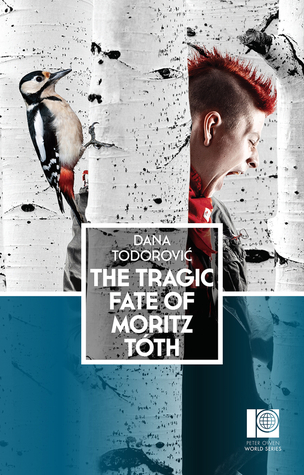
All is riddle: The Tragic Fate of Moritz Tóth by Dana Todorović

At the heart of Puccini’s final opera, Turandot, is a series of riddles which the ice princess presents to Prince Calaf, her eager suitor. Any wrong answer would mean death. When his successful solutions fail to win her affection, he counters with a riddle of his own. And his is a wager with an equally high risk. He tells her that if she can correctly discover his name by the following day, he will die at daybreak. It is perhaps no coincidence, then, that The Tragic Fate of Moritz Tóth, a novel in which Turandot plays a pivotal role, seems to unfold as a number of riddles—or situations that are difficult to explain—that serve to lead and mislead the characters, and the reader, along the way. 

This short but ambitious novel by Serbian writer Dana Todorović, is one of the new titles in the third round of the Peter Owen World Series, published in collaboration with Istros Books. By employing two stylistically different, but interconnected storylines, Todorović crafts an accessible, inventive exploration of a number of classic literary themes: the nature of good and evil, predestination versus freewill, the redemptive power of art, and the soullessness of modern bureaucratic society. The result is an entertaining, thoughtful read, with a twist that few are likely to see coming.

The titular Moritz Tóth narrates his own story. He is a former punk rocker with a tendency to moody melodrama, at a loss following the death of a woman he had loved. He has been though some rough stretches and his past will leak out in erratic confessions over time, but at the outset he is simply in need of a job. When the employment agency calls, he has little option but to answer. And so this most unlikely candidate ends up as a prompter for a forgetful Calaf in a run of Turandot at the Hungarian State Opera House in Budapest. However, Moritz’s first exposure to opera reawakens in him a long forgotten passion for the violin. As a child he had fiddled Gypsy tunes with his musician grandfather until, in the throes of adolescent rebellion, he had traded his violin for an electric guitar and turned his attention to punk.

The second storyline, narrated in third person, has a more directly fantastical and allegorical quality. Tobias Keller, Adviser for Moral Issues with the Office of the Great Overseer has been summoned to appear before a Disciplinary Committee. Against the codified regulations of this bureaucratic version of heaven, Tobias has been charged with engaging his own freewill in an attempt to influence the circumstances of an individual whose activities he was monitoring. To have acted without following protocol and obtaining permission from above, may well cost him his job. He is accused of triggering a sequence of events designed to involve an intermediary to exert an influence on his subject—one Moritz Tóth. But Tobias has no regrets. He is proud of the outcome, even if, in the end, it actually meant following his own beliefs and defying the norms of the celestial bureaucracy in which he was expected to function. He tells the committee:

‘In my youth, while on a perpetual search for new knowledge and insight, I would often wonder if there was a straw we humans could grasp at to give meaning to our lives, considering that we are deprived of the ability to penetrate the truths of our existence.

‘Then I realized that it all comes down to conviction, or faith, if you will, with which methods of reason share no common ground. And my convictions tell me that if we exclude factors over which humans clearly have no influence, such as the laws of nature, if we exclude situations in which the human being is physically prevented from acting upon their will, then it would be far more beneficial for the human race if each of its members carried within themselves the awareness of the freedom to choose as a birthright, or if they prefer, an inherited burden on their shoulders.’

The two narratives alternate, chapter by chapter Tobias faces repeated challenges against his impulsive action in a system in which honourable intentions appear to have no value, while Moritz becomes aware of a strange character who seems to be following him. This creature’s presence and the appearance of a number of signs that seem to hold prophetic significance, deepen his paranoia and anxiety. As he attempts to solve the chain of riddles confronting him, he begins to suspect he’s the victim of a diabolical plot of Biblical proportions. His wild imagination gets the better of him, threatening his rational judgement altogether. But, what is the true connection, if any, between Tobias’ action and the increasingly strange circumstances in which our hapless former punk has found himself?

The exact nature of the connection remains unclear until the closing pages. Todorović manages to build a complex plot that raises some very profound questions, and present them in an original context. This is, however, a first novel and translated by the author herself. It is impossible to know how much the language might be, in such a circumstance, altered for an English speaking audience. It is worth noting that the narrative can, at times, get weighed down by awkward transitions and clichéd metaphors and similes. It is not enough to detract from what is a highly engaging tale, but it can occasionally strike a sour note.

Ultimately, the real charm of The Tragic Fate of Mortiz Tóth lies in the riddles posed, reminding us, as Ralph Waldo Emerson famously advised: “Life is a succession of lessons which must be lived to be understood. All is riddle, and the key to a riddle is another riddle.”

The Tragic Fate of Mortiz Tóth by Dana Todorović is translated by the author and published as part of the Peter Owen World Series: Serbia, a collaboration between Peter Owen Publishers and Istros Books.

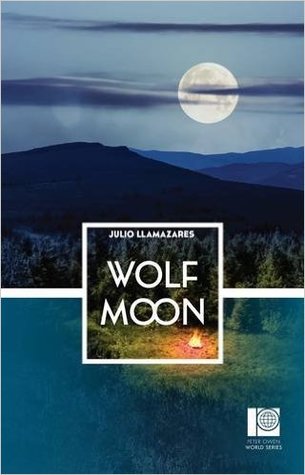
By the “sun of the dead”: Wolf Moon by Julio Llamazares

The moon has not come out tonight either. The night is like a cold black stain on the outline of the beech groves, which climb up the mountain and into the fog like ghostly armies of ice. It smells of rosemary and shredded ferns.

Our boots slosh through the mud searching for the elusive surface of the ground with each step. Our sub-machine-guns shine in the darkness like iron moons.

We carry on climbing towards the Amarza Pass, towards the roof of the world and solitude.

Set in the Cantabrian Mountains of northern Spain in the years following the collapse of the Republican front in Austrias in 1937, through the end of the Spanish Civil War and beyond, the above passage from the early pages of Julio Llamazares’ novel Wolf Moon could stand as a refrain that will echo down through the pages that follow. Inspired, the author tells us, by his childhood hero, Casmiro Férnandez Arias, one of the countless resistance fighters who led his brothers and comrades to seek refuge in the wilderness where they would be relentlessly pursued to their deaths or driven into exile, the result is a skilful blend of thrilling adventure, harsh natural beauty, and heartbreaking loss. An epic tale rendered with power and lyric intensity.

Wolf Moon is part of the Spanish Season of the World Series published by Peter Owen in association with Istros Books. It is in keeping with the high quality established with the debut Slovenian Season issued last fall. Born in Léon Province in 1955, Llamazares studied law but soon left for a career in journalism and literature. He released several volumes of poetry before turning to fiction. His poetic sensibility is especially evident in the present work, his first novel, originally published in 1985.

The desperate circumstances of the four Republicans at the heart of this story is immediately evident from the opening passages. The leader, Ramiro, is hiding in a ruined hut with his brother Juan, a fellow villager, Gildo, and the narrator. They are on their way over a mountain pass hoping to reach a region closer to home. But remaining hidden is critical. They must restrict their travel to the hours after nightfall and they must be on a constant alert for Franco’s Guardia Civil. “Daylight, we are told, “is not good for dead men.” Containment, darkness, and the tedium of waiting are recurring themes as they seek concealment, first in an abandoned mine, and eventually in a camouflaged cave where they will remain for years:

Since we got here I’ve scarcely felt the terrible moaning of the beast in the depths of my stomach, which bayed despairingly so many times in the final months of the war. It was even worse during the five days when we did not eat at all as we fled across the mountains, in the rain, from a more physical beast, more human and bloodthirsty, which pursued us implacably. It is as if the dampness and cold of the cave have penetrated my bones and my soul, imprisoning me here, lying beside the fire day and night with no interest in eating and talking or even peering through the mouth of the cave to look at the hard, overcast sky.

The narrative has a distinctive lyrical quality. This is most apparent in the strong presence of the natural elements. The landscape, weather, flora and fauna are continually evoked. Nature can be seen as a critical protagonist throughout—an aid, a threat, and a constant force to be reckoned with. As an account of years of seclusion in a wild environment this enhances the reader’s sense of connection with the characters and their plight. Wisely, Llamazares has chosen to make his narrator, Ángel, a school teacher. The tension, the emotion, and the striking bucolic imagery all work well through his voice, in tune with his sensitive, poetic personality. Otherwise, the language might risk feeling a little forced or melodramatic.

Over time, the fugitives engage in cautious contact with their home villages and families, but always at great risk to all involved. Tragic losses do occur, and the little band shrinks and becomes more isolated as the guardias continue their pursuit unabated, even after the war ends. The fugitives, the “men from the hills,” have taken on the status of mythic legend over time, fueling the official pressure to drive them out. In the end, those who survive will be those who manage to make it into France where the Spanish resistance will continue into the 1960s. What Wolf Moon captures so effectively is the alternating claustrophobia and physical exposure of life in hiding and on the run. It is a tribute to the incredible endurance of the young men who sacrificed the best years of their lives deep in the mountains—hungry, injured, and clinging like ghosts to the shadows—and the price paid by their families and the rural communities who likewise lived under continual fear and threat during this time.

It is, like many a great epic, a powerful testament to the futility and human cost of war.

Wolf Moon is translated by Simon Deefholts and Kathryn Phillip-Miles.

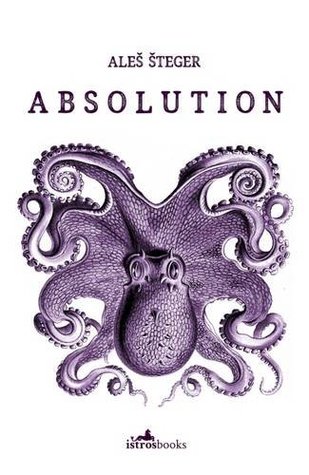
The supernatural power of forgiveness: Absolution by Aleš Šteger

Absolution, by Slovenian poet and writer Aleš Šteger, begins with a dramatic flourish, alluding to the staged performative quality of the story that is about to unfold. Like a grandly conceived morality play, the stage is set:

Silence. Darkness. The stage curtains open, and all we see is a man. He hunches behind the high collar of his winter coat, hands buried in its pockets, black briefcase dangling off his right wrist. He sways a little. The pavement has not been shovelled. The man tries to balance his way along a narrow, already beaten track. He nearly falls. Behind him stretch unkempt art nouveau façades, and in the pallor of the streetlights drizzling rain turns into snow. The few passers-by are quietly spat out by the dusk, only to be swallowed again a moment later, just as quietly. The whole time the silhouette of a woman has been at the man’s heels.

It is Carnival time in the Slovenian city of Maribor. And, with a passing nod to The Master and Margarita, the devil makes a brief cameo in this opening scene. But the man with the briefcase is a more mysterious, strangely possessed visitor than the costumed Beelzebub who stumbles on the icy street.

Returning to his hometown, after sixteen years of exile, Adam Bely is a man with a mission. Together with Rosa, his beautiful Cuban-Austrian companion, he immediately sets to tracking down a series of prominent residents, claiming to be collecting interviews for an Austrian radio special about the city which has come to be known, as the “European Centre of Culture.” Each person they meet with is hypnotized or subdued by force, prodded for information about their current and past lives, and then “absolved”—a process which sets free a host of trapped souls—ultimately leaving the “victim” either dead or a raving shadow of their former selves.

Šteger’s fantastical Maribor is striving to be an ideal model of perfected sterility, but it is a false façade—as false as the masks donned by revellers during Carnival. Corruption runs deep and close to the surface. The threat that Bely has come to confront is the Great Orc, a network of “thirteen bodies inhabited by hundreds, thousands, millions of souls which protect the world from change.” These bodies belong to a cluster of powerful, influential individuals, but none of the members know the identity of all of their twelve cohorts. The octopus is the creature that symbolizes and binds this network. Bely is determined to absolve all of the members, effectively freeing the city from a most unusual curse. His conviction is derived from his involvement with Scientology. Although he claims to have left the sect, he still holds to Hubbard’s contention that people are but human animals inhabited by “flocks of murdered souls.”

I have to confess that I am at a loss to know exactly what Šteger was hoping to achieve with this novel. It is either a piece of speculative fiction, or a parody of the same. The characters are caricatures, intentionally so, but there is something decidedly odd and distasteful to the tone and execution. This is not my genre, so either I am missing the point, or this ambitious idea has missed the mark.

It must be noted that Šteger is a very gifted poet. The translation of his collection The Book of Things won the 2011 BTBA award for poetry and his wonderful collection of short prose pieces, Berlin, was long listed for the 2016 BTBA fiction award. And when he steps away from the forced dialogue and strange plot, poetic moments find their way into the text of Absolution, but for a reader coming to this book from his earlier work, those traces are few and far between.

I am not comfortable writing negative reviews. I am always ready to admit that a book that does not work for me, might be perfect for someone else. After all, this book was well received in Germany. And, for all its awkwardness, there are some very interesting ideas here. In my mind, the most striking is the sense of the compounded layers of death the lie beneath so many cities in Europe. It is tempting to reframe the human costs of centuries of conquest and war in Judeo-Christian shades of good and evil. To take an angle like Scientology (which notably emerged from the mind of the creator of some pretty questionable science fiction) is at least daring, if not entirely successful. When Bely and Rosa visit one of their target citizens, Magda Ornik, the Director of the Maribor Funeral Home, she reflects on the artificially symbolic nature of any designated cemetery:

“First, our entire country is nothing but one big burial ground. We all know that whenever you start digging with a shovel you’ll hit a grave or even a mass grave. The Romans, the Middle Ages, the Ottoman invasions, the First World War, the Second World War, the post-war massacres. Slovenia is at a crossroads. Everything comes together and mixes here, and every era provides its share of the dead.”

As a reader living in Western Canada, where the ground beneath my feet contains a long but much more sparsely distributed human history, the densely compacted strata built of the detritus of war and peace (a dramatization of Tolstoy’s novel also features in Absolution) is virtually unknown. Perhaps, then, Bely’s drive to free his city from the weight of so many murdered souls does not seem so far-fetched. As he says:

“I believe in beginnings. Every moment could be the start of something new, something fateful. If I didn’t believe that it’s possible to change the course of our destiny at any given moment, then I’d no longer be on this planet. And I’m still here. Here and now.”

Absolution by Aleš Šteger is translated from the Slovenian by Urška Charney and Noah Charney, and published by Istros Books in collaboration with Belatrina Academic Press.

Another winter solstice is upon us: 2016 – The year in review

Winter solstice. The longest night of the year.

Moving forward, the days grow steadily longer and, in less than two weeks, we will leave a dark, disturbing year behind us.

But it would be reckless to imagine that 2017 will be brighter. However, with luck, we can be forewarned, forearmed, and determined not to relax our guard. We can stand together against the rising tides of hatred, and remember what is truly at stake.
11229294674_e5844929df_z1

Since I started this blog two and a half years ago, winter solstice has become my annual check-in point. Last December, I reflected on the key elements of a year that began with a move to writing seriously about books and culminated with my first review for Numéro Cinq. Against that trajectory, I wrote about my trip to South Africa, and the pulmonary embolism and cardiac arrest that followed within a few weeks of my return. I imagined that the eventful year I had experienced would not likely, for better or worse, be exceeded this year.

Cue 2016.

This has been a year of heartache, anger, and dismay. Around the world and close to home. I watched the violence in Syria, the outcome of the Brexit vote, and the spectacle of the American election, among the other tragic and unexpected events that have unfolded. And as economic uncertainty and anxiety has grown in my own hometown—a city that lives and dies with the price of oil—the crime and homicide rate has risen sharply this year. It does not feel like the same community any more.

Then there is the lengthy roll call of the writers, artists, and performers who have left us. But to be honest, I cannot say that I have felt these losses as acutely as many others… I’ve been distracted by the immediate, personal losses that marked this year. My mother, my father, and one of my closest friends, all gone within the span of two months. And my grief—that most fundamental human emotion—is complicated, inarticulate, and wearing.

It will take time.
11592010455_89917d80e3_z1

But, 2016 has also been a time of amazing growth and opportunity for me as a writer. I don’t know how often I resolved, with the dawn of a new year that: This year I will write. Last December, with that first critical review under my belt, I could not have imagined that I would have, in addition to regular contributions to Numéro Cinq, published reviews at 3:AM, Minor Literature[s], The Quarterly Conversation, and The Rusty Toque. And I would not have dared to dream that I would see my essays and prose pieces published on line and in print, or that I would be invited to join the editorial team of The Scofield. As 2017 approaches, I have a handful of reviews scheduled and several prose projects underway. I’m also feeling inspired to return to photography after a lengthy hiatus, and to see how I can incorporate photos into my written work.

I have much to look forward to, in spite of, or rather, against the new darkness that threatens.

Art and literature are more important than ever at times like this.

So, this seems to be an appropriate time to look back over this year’s reading, and highlight the books that stand out for me.

I’ve read about 50 books to date, a little more than half of what I read in 2015. I don’t even want to hazard a guess as to how many books I bought, received as review copies, or brought home from the library. I feel, as usual, like I fell short of my intentions. However, I have to remember that I was writing, working on critical reviews, and dealing with considerable life stresses over the past twelve months.

More than ever before, I read like a writer this year. That is, I was especially attuned to voice, structure and approach to storytelling. Consequently, the books that made my year-end list tend to reflect this focus. Of course, any “best-of list” leaves out many excellent books. I’ve managed a baker’s dozen here, and it’s probably a reflection of the increased number of off-blog reviews I wrote that this year’s list is predominately composed of new releases. I was surprised to see that once I’d made my selection.

In reverse chronological order, my top reads of 2016 include the following:

Story of Love in Solitude by Roger Lewinter (France), translated by Rachel Careau
I will write about this collection of three short stories once I have completed The Attraction of Things. My verdict is still out on that title, but this tiny book is simply wonderful.

The Inevitable Gift Shop by Will Eaves (UK)
Fragmentary, cross genre writing that works fascinates me. Billed as a “memoir by other means”, it is Eaves’ unique tone that makes this blend of memoir, literary criticism, and poetry so compelling. His thoughtful reflections on reading and writing made this an ideal meditation to turn to after a year of reading critically and exploring my own literary voice.
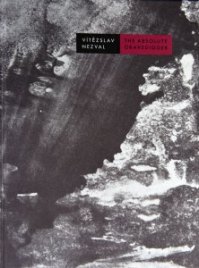
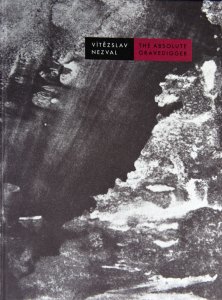
gravediggerThe Absolute Gravedigger by Vítěslav Nezval (Czech Republic), translated by Stephan Delbos & Tereza Novická)
I have found myself turning to poetry more and more as the world seems increasingly unstable and, well, surreal. This newly translated collection of poetry by one of the best known Czech Surrealists should be essential reading at this time. Originally published in 1937, the darkness he could see on the horizon are all too familiar once again.

The Country Road by Regina Ullmann (Swiss), translated by Kurt Beals
I read this collection of short stories when I was in a very low mood. But in the spare, sombre prose of these tales I found a beauty that, rather than deepening my depression, brought strange comfort. Admired, in her lifetime, by the likes of Rilke, Mann, and Musil, Ullmann’s work is mostly forgotten today. This volume, released in English translation in 2015, is a rare treasure—one that I encountered at just the right moment.
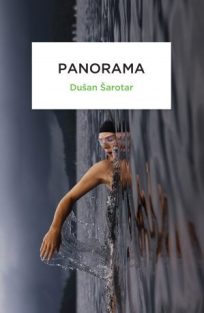
panorama-coverPanorama by Dušan Šarotar (Slovenia), translated by Rawley Grau
For me, as a reader and a writer, one of the most important books I read this year is this literary meditation on migration, language, landscape, and loss. This novel finally broke through my own stubborn determination to hold to a sharp delineation between fiction and nonfiction, and has made me re-evaluate potential approaches to themes I wish to examine. What Šarotar achieves here with his own unique take on what might be deemed a “Sebaldian” approach, is the creation of an atmospheric, captivating, and intelligent work.

The Passion According to G.H. by Clarice Lispector (Brazil), translated by Idra Novey
Oh wow! In a way, I am glad I didn’t read Lispector before writing and publishing my essay “Your Body Will Betray You,” because she is exploring the process of coming into being so beautifully that I might not have been able to write at all after reading this. Employing an unconventional narrative, Lispector’s G.H. experiences a vivid, metaphysical crisis triggered by the sight of a cockroach. The result is a remarkable, thoroughly engaging read. I have at least three more of her books waiting for the new year.

Proxies by Brian Blanchfield (US)
I bought a number of essay collections this year and currently have several on the go. This collection impressed me not only for the way the essays were composed—written without consulting outside sources—but for some of the ideas explored, and for reinforcing the value and possibilities of the personal essay/memoir form. I also greatly appreciated his guiding caveat: Permitting Shame, Error and Guilt, Myself the Single Source.
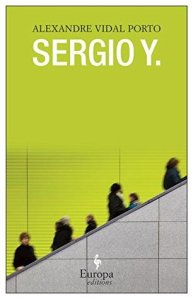
SergioSergio Y. by Alexandre Vidal Porto (Brazil), translated by Alex Ladd
This book is significant and important for dealing with gender identity and transition in a sensitive and original way. I am, as a transgender person, critical of much of what passes as literary writing on this subject. This is a most impressive work with a startling and unique approach. As I noted in my review, Sergio Y. is novel that approaches the transgender experience from the inside and the outside, allowing for the comfort with names and pronouns to vary, over time and from person to person, reflecting the complexities of relationships that others, even loving family members, can have when an accepted and assumed identity is challenged. That is the book’s greatest strength.
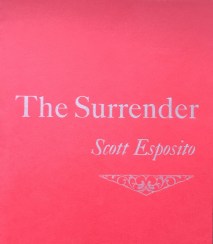
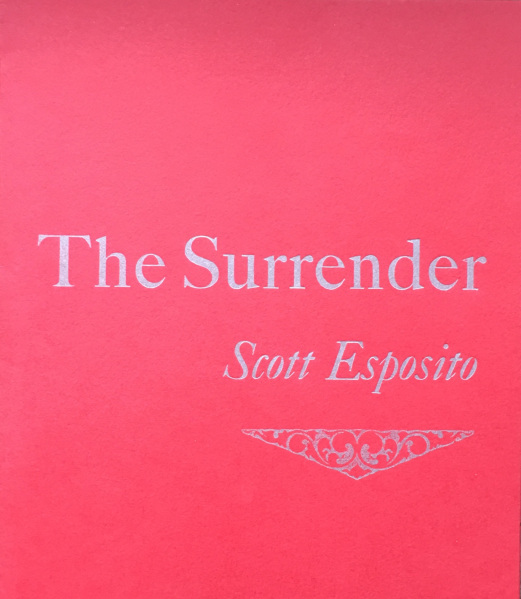
surrThe Surrender by Scott Esposito (US)
This book was on my radar from the moment I first heard of it. Again, despite my typical gender related skepticism, I was drawn to this transgender-themed memoir/film critique/literary diary. I wanted to know how Scott would present his story—one that is not commonly heard. Although his journey is very different than mine, we share a certain sensibility. This is a brave and most wonderful book by a man who has long been one of my heroes. He has since become one of the many literary friends I have come to know and cherish this year.
Layout 1

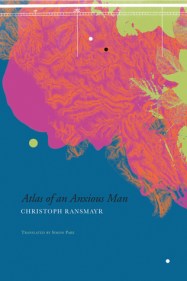
Atlas of an Anxious Man by Christoph Ransmayr (Austria), translated by Simon Pare
This book was a total surprise when it arrived courtesy of the good people at Seagull Books. This most unusual travelogue, a series of brief “encounters” across the globe, contains some of the most stunning descriptive language I have ever read. Each episode begins with the words “I saw…” and ends with a wise, evocative observation. From the North Pole, to South America, from deep inside the mountains of New Zealand, to a parking lot in San Diego, this is a journey that will not be easily forgotten. Highly recommended.

Quiet Creature on the Corner by João Gilberto Noll (Brazil), translated by Adam Morris
My third Brazilian book on this list is this enigmatic novella that led to one of the most entertaining literary discussions of the year. What is it about? Well that is the challenge. I had to read it three times before I could begin to get a handle on it. The narrator, a young man who finds himself in a strange situation that is rapidly growing stranger, is, in his oddly passive tone, almost more disturbing than whatever might be happening. Opaque and surreal, this book gets under your skin.

The Crocodiles by Youssef Rakha (Egypt), translated by Robin Moger
This novel still holds fast in my memory although I read it back in February. It is, as I described it in my review, a prose poem of simmering power, unwinding across 405 numbered paragraphs, tracing a torturous path from the first stirrings of poetic assurance within a trio of young men in the 1990s to the doomed protests of the Arab Spring. It is a dark, intense exploration of youthful political idealism, that builds on repeated images, themes and refrains to create a compelling narrative force as it moves toward its stunning conclusion. Again, this is another work that is increasingly relevant in today’s world.
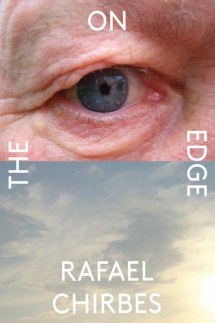
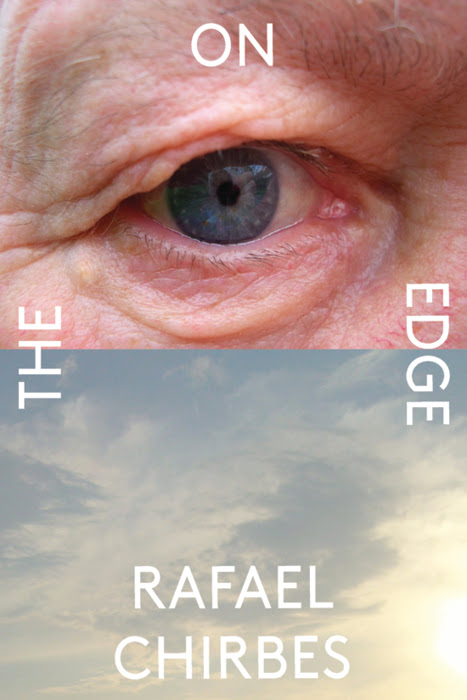
On-the-edgeOn the Edge by Rafael Chirbes (Spain), translated by Margaret Jull Costa
Finally, the very first book I read in 2016 is probably my favourite book of the year. I wrote about this novel at length for Numéro Cinq and I regret that it has not generated more discussion. In what is essentially an extended monologue with brief cameos from other characters, Chirbes creates a memorable, engaging, and tragic character in seventy-year-old Esteban, a man who has lost absolutely everything in the economic collapse of 2008.  Thoroughly human in his wisdom, his resolve, his shortcomings, and his despair; this is a powerful and important book that deals frankly with many of the critical issues—including migration, xenophobia, and economic decline—that are more vital than ever as we step into 2017.


Panorama by Dušan Šarotar—My Numéro Cinq review

My most recent review for Numéro Cinq is now live.

I have only been writing critical reviews for a year and this particular piece represents my most ambitious review to date. The ability to reach into a literary work, to tease out what makes it interesting, what makes it tick, or perhaps what does not quite gel, is a function of a certain chemistry. As a reviewer, when I find that hook— that angle—it is a wonderful feeling. But sometimes the surface is too smooth and I find it difficult to get a critical foothold, and it has nothing to do with how much I might have enjoyed a particular book. I can still write a review, but I wonder if I have done the book justice.

Panorama, by Slovenian writer Dušan Šarotar, is a book that, as a writer, I feel I was meant to read and write about. At the end of the day there was so much I wanted to explore that I wondered if I could pull it off. This is a work that owes an admitted debt to W.G. Sebald; it is a novel that straddles the sensibilities of what we, in English language literature, insist on dividing into fiction and nonfiction—as if one is more true or more valid than the other. This book has, for me, finally opened up and challenged my resistance to blurring those lines in my own writing.

When I think about it now, I am beginning to see this novel as a series of narratives (or if you like vignettes and short stories) recorded by an unnamed narrator. But the narratives function as meditations on a number of key themes, and the stories shared by the characters encountered are neither discrete nor chronological. The narrator’s journey provides an overarching framework, but his account closes, not at the end, but in the middle, and some threads are never fully resolved. Like life, they are left to be.

Here’s a taste of the review, please click through the link at the end to read the rest. A second link leads to an excerpt:

At the Crossing of Words, Landscape & Memory: Review of Dušan Šarotar’s Panorama — Joseph Schreiber

panorama-cover

Some literature defies simple description. Case in point, Panorama, by Slovenian poet and writer Dušan Šarotar. One might be inclined to define it as a meditation within a travelogue within a novel. Or perhaps you would prefer to rearrange those terms, it probably wouldn’t matter, because in spite of its subtitle: A Narrative about the Course of Events, Panorama stands at a curious angle to space and time. It is a novel of remembering, of telling and retelling, narratives within narratives, bound together by a coarse thread of repeating themes that are at once timeless and timely.

One of three Slovenian novels to be released this fall as part of the Peter Owen World Series, a new collaboration between Peter Owen Publishing and Istros Books, Panorama is Sarotar’s fourth novel, and his first to be translated into English. Born in Murska Sobota in northeastern Slovenia in 1968, he studied sociology and philosophy at the University of Ljubljana. In addition to his novels, he has published collections of short stories, poetry, and essays; and has written numerous screenplays. His prose, as exemplified in Panorama, has a poetic and richly cinematic feel.

Continue reading here:

Read an excerpt here:

Innocence betrayed: My Father’s Dreams by Evald Flisar

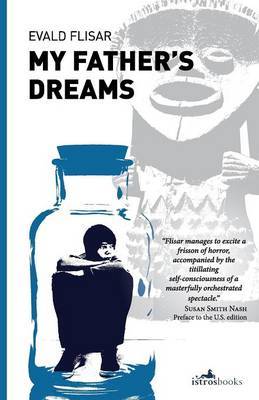
Adolescence is, at the best of times, a period of turbulence. Hormones take over, driving hopes, desires and emotions. For Adam, the fourteen year-old narrator of My Father’s Dreams puberty becomes a twisted, surreal experience as he finds himself swept up in a world in which the line between dreams and reality becomes dangerously blurred. In this dark multi-faceted tale, Slovenian author Evald Flisar sets the stage for a story that is oddly out of time and place—a contemporary novel that evokes, in its backward rural setting and naive tone, a feeling of gothic horror or psychological drama that would be perfectly at home in the literature of the early twentieth century. But themes running through the narrative that are distinctly modern in their context and execution create an atmosphere that is eerily discordant and profoundly disturbing.

fathersdreamsAdam is a loner. He lives with his parents in a small rural village in an unnamed country. He describes his mother as shrill, over emotional and unduly concerned with social appearances. But he adores his father, the local doctor, unreservedly. He is the centre of his universe and he cannot imagine that he would ever cause him any harm. Adam spends his free time devouring books borrowed from his father’s library, a wide range of classic literature that runs the gamut from Zane Grey to Goethe to de Sade and Kafka and more. Not one to make friends easily, his sole confidant is his assumed brother Abortus, a jarred fetus who “lives” in his father’s secret laboratory in the basement of the health centre.

As puberty hits, Adam is increasingly beset by vivid dreams. He is unaware of just how odd and unnerving the content is until he allows it to fuel a school assignment. His teachers and his mother respond with shock. However, his rich dream life quickly becomes an object of fascination—or perhaps manipulation—for his father. Before long Adam finds that he is losing the ability to define the intersection of dreams and ordinary life:

. . . soon I was having too many dreams, and they began to suffocate me. Daily hallucinations merged with nightmares so imperceptibly that I was finding it harder and harder to draw the line between them. Afraid that I would sink in the burgeoning swamp of my own imagination, I began to flee in the direction of hard reality, grasping at anything that could be seen, felt, heard, or smelled. Soon I became so oversensitive that I registered the slightest rustle, the tiniest change in light, the least noticeable smell.

Over the course of the summer, the content of his dreams continue to haunt his days and nights. They regularly feature a familiar theme. Time after time he finds himself observing his father engaged in sexual activity with Eve, an attractive young teenaged girl from the city who is staying with her grandfather for the school holidays.

His father had warned him not to discuss his dreams, but encouraged him to record them. In his journals, Adam documents his thoughts and dreams which, with the blurring of his sense of reality, he has come to understand as being one and the same… the dream context granting immunity from the content of his thoughts which are peppered with images of sexual arousal and a desire for revenge against his parents. He quickly learns that these diaries are better kept hidden. And he has the perfect location—behind his jarred little brother, with whom he shares all of his secrets without reservation. With adults he is cautious to edit his responses to their queries about his dreams which are then subjected to Freudian and Jungian inspired debates. The only adult with whom he dares to approach an honest account is Eve’s kindly grandfather, who listens with a sharp concern that Adam notices but fails to appreciate.

During his strange dreams, Adam sometimes questions his ability to fall in and out of a hallucinatory state as well as his peculiar ability to exercise some agency, but he invariably seems to be able to assure himself that he is dreaming and, as a result, safe from any real danger. He continues to trust his father implicitly even when during an intentional “shared dream” proposed as a potential cure, he finds himself abandoned in a strange town with two young women:

The mist is now all around us, I can feel it on my cheeks; it is cold. The church clock delivers eleven strikes. There is no sign of Father. They are closing the inn, we have to leave. Like shadows we slink off along the the road leading into the centre of the town. It’s a very small town, almost a village. I am tired and sleepy. I am beginning to worry that Father might not return. Where will I sleep? It’s a strange thought, asking oneself where one will sleep in a dream, but the night is cold, and my worry is almost real. We roam around, passing houses, shuttered shops, and silent buildings. The church clock announces the time: half past midnight. And still there is no sign of Father.

Curiously (or not), the dreams involving his father and Eve cease as soon as the latter returns to the city in September. With autumn’s arrival his mother makes increased efforts to salvage the family, while his father’s behaviour becomes more erratic and threatening. Adam’s “dreams” begin to seem more like a protective psychological suggestion or even a defense mechanism evoked to cloud his perception of the events he observes or experiences. But again, he never openly contemplates this. His narrative, offered from a future perspective, looking back, belies a folkloric sense of innocence that cannot entirely be trusted. It casts a strange shadow across the work contributing to the odd tone. Dark topics such as addiction, suicide and pedophilia lurk at the heart of this tale amid the supernatural, surreal and grotesque elements. As a result the reader is left to navigate a slippery substrate that, even as tensions build to to a horrifying conclusion, refuses to yield to clear interpretation. The result is a complex, unnerving, unforgettable novel.

Novelist, playwright, essayist, and world traveler, Evald Flisar is one of Slovenia’s best known writers. Translated from the Slovene by the author and Alan McConnell-Duff, My Father’s Dreams is published by Istros Books. In their new collaboration with Peter Owen Publishers, they will be releasing Flisar’s Three Loves, One Death in November.

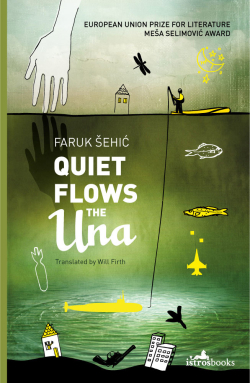
Melancholy is what defines us: Quiet Flows the Una by Faruk Šehić

The Una is a 212 km long river that winds its way across Bosnia and Herzegovina, forming at times, a natural boundary between that country and Croatia. Bosnian writer Faruk Šehić’s EU Prize winning novel, Quiet Flows the Una, allows the passage of this river – gentle and violent as the seasons turn – to carry the narrative of his burdened protagonist as he seeks to heal his troubled past.

1024px-Una(Bih)

“Here at the beginning, it would make sense for me to go back to our origins: to the water we’re made of and the swirling currents of the underwater epic, where I’ll hearken to the anarchist trout and their fulsome chatter. You’ll find out later why the trout are anarchist. ‘Fulsome chatter’ is Rimbaud, I’ll be a hypnotized boat, and the rivers will carry me wherever I wish.”

UnaAlthough the term is frequently evoked, rightly or wrongly, this is a novel that can truly be called hypnotic in the absolute sense of the term. The narrator has surrendered to the direction and influence of a fakir during a sideshow hypnosis session, allowing his thoughts, reflections and memories to be pulled to the surface and recounted under the hypnotist’s guidance. Our Bosnian protagonist, Mustafa Husar, is a haunted man, his wounds run deep – the war and his role in it have sundered the continuity of his existence. To bridge the rift between the leisurely days of his youth and his new life amid the shattered remnants of a world where he is trying to find his adult footing, he knows that he must uncover and bring to light the dark memories that rest uneasily beneath the scars that mark his face and body. By revisiting the bleak, brutal years of the Balkan wars – facing the crimes he witnessed and those he perpetrated – he hopes to find some measure of redemption.

The progress of this novel is not chronological. The narrative, which reads like an extended prose poem, dips in and out of seasons; moves between scenes of idyllic childhood reverie, accounts of wartime brutality, and images of postwar destruction and loss. The river is a persistent presence, it carries the the story. Its relentless flow and the creatures, both natural and supernatural, that inhabit its green waters form the landscape and the mythology by which the young protagonist learns to understand himself. Along the way, his journey is accented with literary and pop culture references – he is a budding poet, he is an earthbound spaceman. And even when the war takes him away from his hometown and the river on which it is anchored, nature is never far from his imagination. Here, for example, his account captures the fragile coexistence of faint beauty and coarse ugliness:

“The sun shone through the leaves covered with transparent-green aphids. It rarely reached the ground, where brown leaves lay rotting in the mud and puddles. Imprints of soldiers’ boots plotted pastel labyrinths, with our lives and deaths in the centre. Our camp lay between wet, forested hills in two valleys connected by gravel paths like spilled intestines. . . . The wind brought whiffs of shit and piss from the latrines on the sides of the hills, where fat white maggots multiplied in the slush. Mosquitoes slept like brooches pinned to the boards of those outhouses, satiated with our blood. A cow with deformed hips hobbled around in the large clearing where we used to line up for the flag salute in the mornings. Its meat ended up in the goulash we had straight before one raid.”

Quiet Flows the Una is an unapologetic indictment against war. The complexities and atrocities that marked the violent dissolution of the former Yugoslavia are woven into the narrative, even if the narrator sometimes affects a stance of emotional remoteness when he recounts his own involvement and ambivalence. His emotions are messy and conflicted. In the end, war reduces action to a matter of survival. He is haunted by a phantom self, an evil force that lurks beneath his wounded skin that, when given voice, spews contempt for the past and a life now lying in ruin, leaving his host with a feeling he vividly describes “as if someone is tattooing you on the inside, on the walls of your internal organs.”

As he grapples with the demons he carries, our protagonist occasionally slips briefly in and out of his hypnotic trance. His persistent efforts to articulate the dark, chaotic details of his experiences during the years of the Balkan War are accompanied by dreamlike, fantastic threads that meander like tributaries off the main narrative flow and by the whimsical illustrations of Aleksandra Nina Knežević that offer a striking visual commentary. The result is an insistent, engaging tale – a celebration of the simple pleasures of childhood, a memorial to the many towns of the region that have been reduced to rubble twice over, and an intimate portrait of a war that pitted neighbour against neighbour, divided along ethnic and religious lines. If there is meaning to be found once the dust of the destroyed buildings has settled, if redemption is to be achieved, Mustafa realizes that it will be found through words:

“I secluded myself among books and other beloved fetishes, and dust collected on them to warn me of the fragility of matter. As soon as you make a world, a house or a hut of sticks, it is doomed to failure; it was already doomed back when it was a black and white sketch in your head. That’s why I began to believe in words. They cannot be destroyed. If you erase them, they come back. Words float in front of your eyes and won’t retreat from the front line. If you set fire to them, they will burn with even greater ardour in your memory, and no memory-wipers like alcohol or narcotics will get rid of them. Words are above destruction. If you erase them, they’re right back on the tip of your tongue again.”

Faruk Šehić was born in Bihac in 1970, and grew up in Bosanska Krupa, a town straddling the Una in what was, at the time, still part of the Socialist Federal Republic of Yugoslavia. He was studying veterinary medicine in Zagreb when war broke out in 1992. He voluntarily joined the army of Bosnia and Herzegovina in which he led a unit of 130 men. After the war, he turned his attention to the study of literature, publishing his first collection of poems in 2000. He has frequently drawn on his wartime experiences to inform his poetry and short fiction. Šehić lives and works in Sarajevo. His debut novel, Quiet Flows the Una (Knjiga o Uni), originally released in 2011, is now available from Istros Books in a crisp, lyrical translation by Will Firth.

An official launch featuring a discussion with the author will be held at the Headquarters of the European Bank for Reconstruction and Development in London, UK on March 31, 2016.

What no love can heal: Dry Season by Gabriela Babnik

Harmattan: A cold-dry trade wind that blows across the West African subcontinent from the Sahara to the Gulf of Guinea during the winter months bringing dust storms, low humidity and an increased risk of fire outbreaks. This is the trademark wind of the dry season.

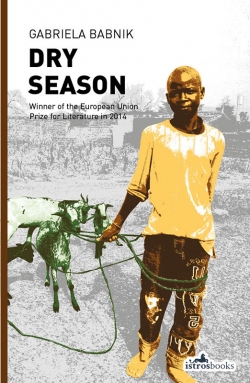
dry-season-cover_54aff6fb99d92_250x800rAs Gabriela Babnik’s novel Dry Season opens, we find a 62 year-old Slovenian woman, Ana, lying in bed with a 27 year-old Bukinabé man, and it is immediately clear that her path to reclaim herself will defy conventions. But then, as we come to know her, we realize that she has long been resistant to the constraints of convention. Ana and the young man, Ismael, are not yet lovers, despite the fact that they awake in the same bed. Their first encounter is uncertain, tentative. Across the boundaries of age, race, class, and culture, they have been drawn to each other with their own dark histories lying twisted inside. As these two disparate individuals take turns addressing the reader – that is the most accurate way of describing the manner in which their stories are uncoiled – we gradually begin to learn more about their pasts and their feelings toward one another.

Ismael and his friend are targeting tourists to rob when he first spots Ana. He is drawn to her but does not see her as a potential mark; he does not sense that she is carrying much of monetary value. It is something else, though he is not entirely certain what that is. For Ana, her attraction to black men is rooted in an earlier time in her life: a chance encounter and subsequent affair with a Sudanese man that has left an unfilled and aching space in her memory. It is not clear that she knows, or is ready to confront, what she truly hopes this young man can heal in her:

“But this sleeping man in front of me was from another time. He had a god drawn on his face. I wanted to say that earlier but it slipped my mind. As I was walking toward him from the other side of the avenue, I felt a strong desire for him to touch the secret territory inside me. Ever since I gave birth thirty years ago, I knew I had to put it aside for a while. I mean touching the silky surface of blades of grass with my palm or licking honey slowly from a metal spoon and then looking at my face in it.”

Ana admits that she has literally walked out on her life in Ljubljana, a life she sees as reduced to the design of illustrated throw pillows, trapped an inherited house with a view of the garden. She is haunted by the suicide of her distant mother, the decline and end of her marriage, the return of her long absent father, and the descent into madness of her only child. Behind all of this is a persistent pain, a bitter groundlessness borne of the fact that she was adopted from an orphanage. It colours, perhaps even distorts, a sense of abandonment that no person, place or career can fill. Her escape to Africa is a deliberate attempt to fill this void.

As Ismael takes up his side of the narrative in turn, it becomes evident that these two unlikely lovers share some common demons. His father is unknown to him and this status defines him and his mother in the village in which they live. They are subject to open shaming and abuse until the day when they are finally rescued and removed to a longed for but equally uncertain life in the big city. They take up residence for a while with a man he calls Baba, and who becomes, over time, a sort of surrogate father whose albino son, Malik, will grow to be both a friend and a recklessly dangerous influence. But in the meantime, Ismael’s increasingly unstable mother will flee to the streets. Together they beg on the roadside and sleep under a bridge until his mother is suddenly killed when he is seven years old.

“Not long before they told me that a lorry had run her over – that it was really her, and not one of the night women or morning women – we had grown apart. Or maybe she had grown apart from me, I am not sure. It is possible that I was a burden to her. In our village seven-year-old boys are already responsible for themselves. They bite into green fruit, never meet their mama except in dreams, and eventually get used to her not being around and start paying attention to the things that are around.”

Suspended between an aborted childhood and a tenuous adulthood, Ismael seeks to fill the mother-shaped hole in his life through several women who look after him for a time. He is eager, hungry to learn to read and write, but his opportunities are limited by his circumstances. He drifts back to the street scene, takes on odd jobs, works for a while fixing up old cars, and eventually falls into the pattern of robbing tourists with his friend Malik. Ana is, for him, a respite, possibly even a path out of a life marked by poverty, loneliness, neglect, and extreme brutality.

Dry Season is, in no small way, a sharp break from what one might expect from the literature of a small central European country. Eschewing a linear narrative and conventional storytelling, we are confronted with an unusual blend of metafictional devices – the fact that the action is occurring within the context of a novel is evoked repeatedly, as is a magical realism common in so much African literature, as a way of seeing and accepting ghosts and magic in the world. It is not the Balkan Wars but the tumultuous recent history of Burkina Faso that forms the critical political backdrop. Sex and sexuality are presented with an overt frankness, from the innocent masturbatory explorations of a young boy to the full fleshed desires and needs of a mature woman. Loneliness drives both Ana and Ismael to seek refuge in one another’s bodies, where they find, for a time at least, an intensely passionate release.

The open relationship between a white woman and a black man less than half her age does not go unnoticed on the streets of Ouagadougou. Ana, as the outsider, is forced to confront the reality of the African society against the mythology that has drawn her to the continent and into Ismael’s arms. Once the veil begins to drop in the aftermath of an attack on a cab in which they were riding, she says:

“I was wrong about you, Ismael. I thought you were a quiet, withdrawn fellow, who still walks in a world of timelessness, of gods, of moral certainties and natural laws, and even such constraints as religion and gender, but now I see you are one of them, one of the bandits.”

He counters:

“I am not what you think. I am a man who walks on a reddish road, the man you saw from the cab. I saw you seeing him. You thought, how backward they are, poor things, they learn on the ground, make love on the ground, eat off the ground, but that ground, that earth, which you take in your hand and let crumble through your fingers, it is all we have.”

She finds herself relying on the assistance of street children, who in turn taunt and mock her. She depends so closely on Ismael to be her guide and protector that she easily loses her way in his absence. The risks that they both ultimately face are significant and potentially devastating. There is no escape to a magical wonderland. Especially when the true trauma, the denied reality, lies inside rather than outside of the person longing to escape.

This novel is a demanding and startlingly rewarding read. Both Ana and Ismael have stories that they urgently need to share, that are weighing them down. Both stories contain hidden corners that must be turned, secrets that are difficult to bear. The narrative threads move back and forth in time, building on past experiences repeatedly to flesh out more detail. The novel that is being created in the present moment, if you will, becomes a space of self-examination and revelation for the two narrators. The separate strands become entwined, creating the effect of a tightly braided cord that then begins to fray as the relationship falls apart. The magic fades but the telling grows increasingly surreal, leading up to an exhilarating and shocking revelation in the final pages.

Another stunning release from UK-based Istros Books, Dry Season will be released on November 16, 2015.

This review has been posted on the blog of the Free Word Centre in London.

In partnership with Istros Books, the Free Word Centre is hosting an evening with Gabriela Babnik and translator Rawley Grau on Monday, November 9, 2015. See details here.

Caught in a vicious circle: Yugoslavia, My Fatherland by Goran Vojnović

As Yugoslavia, My Fatherland, the intensely powerful new release from Istros Books opens, it is the summer of 1991 and 11 year-old Vladan Borojević has, to date, enjoyed an almost idyllic existence in the seaside town of Pula. He and his young friends view the realm of adults as something separate, of interest only if someone is missing an arm or leg, or sports a long beard, excessive tattoos or some other particular curiosity. None of them are aware of the deep seated tensions within their native Yugoslavia that are about to start to fracture and begin a long, bloody period of unrest that will ultimately tear the uneasy Socialist state apart. On the day that he and his friends find the local men gathered around the TV set shouting at the politicians on the screen with an intensity normally reserved only for critical sports matches, Vladan senses something is amiss. His anxiety increases when his father arrives home looking empty and distracted:

“My father never drank at work, and I heard him say, countless times, that only in Yugoslavia would people drink more while at work than after work, and that this would send the country to an early grave. But that day he held me so powerfully in his muscled arms that I thought, in all seriousness, that he must be drunk.”

Vladan’s father Nedelko, of Serbian background, is a proud member of the Yugoslav People’s Army. His mother is a strong willed Slovenian woman, who, against her parents’ wishes, left her homeland and married her young soldier. The stirrings of political insurgency put an immediate end to their happy domestic life in Pula as Nedelko is seconded and the family is moved to a hotel in Belgrade. When it becomes clear that this little trouble is not about to just blow over, Vladan’s father disappears from his life. He and his mother will eventually end up in Slovenia, and within a few years news will come that his father, now a General, has died. Or so he is led to believe.

yugoslavia-my-fatherland_5595627fccf62_250x800rSeventeen years on, Vladan is still living in Ljubljana, Slovenia, but restless and unable to find his footing. He tosses his father’s name into Google. What he discovers turns his fragile world upside down. General Borojević is not dead, but rather he is a fugitive, wanted for war crimes. Rattled by this news Vladan sets out to find his father tracing a trail that links figures from his father’s past, a relative, an assumed identity, and clues to where he lived or may yet be. When his search leads him back close to home, the bits and pieces he gathers raise even more questions, and force him to look deeply inside himself to determine if he even wants the answers he had craved.

This is one of the most impassioned novels I have read in a long time. The author, Goran Vojnović, is a Slovenian poet, screen writer, and film director. He draws on this background to roll out a complex story that deftly weaves back and forth in time, negotiating the highly charged ethnic and geographic divisions that have long defined and divided the Balkan region. With Vladan he has created a recognizable, contemporary narrator who welcomes the reader into his journey with a mixture of vulnerability and wry humour. Traveling on the cheap in a car that just barely manages to cough from point A to point B, his descriptions are often priceless, like this stop at a roadside café:

“I sat at a table covered in a white cloth, as well as aged coffee stains, which lay over an even dirtier red tablecloth. A plastic ashtray sat in the middle, alongside a vase containing plastic flowers from the Yugoslav Mesozoic period. I had to wait, of course, to earn the right to pay for a sour coffee, hand-mixed with a disposable thin plastic spoon, amidst this particular ambience. It was my first time in such a setting.”

Whether he is looking back to his troubled childhood and adolescent years and his increased alienation from his mother, or looking forward to what truths may or may not lie ahead; his emotions are painfully open and honest. Even if he sometimes leans toward the melodramatic, it is hard to resist being pulled into his account of a life torn apart twice over and the pain of the very difficult dilemma he will ultimately face.

Yugoslavia, My Fatherland tells a multi-layered tale. The tragic dissolution of the Borojević family is traced out against the trauma and conflict that would rend the states of the Balkan region apart and still threatens further division in certain areas. He encounters many who bear wounds too deep to heal. But it is much more than that. Questions of personal and national identity are central. Vladan is not only seeking an understanding of himself and his relationship to his ethnic heritage, but he is striving to reconcile his memory of a loving father with a fugitive war criminal. A very human longing for closure and healing drives him to seek out and confront the man who used to be his father, whoever he is. However, somewhere along the way he will have to stop to measure the costs and decide what he is willing to risk.

Translated from the Slovene by Noah Charney, Yugoslavia, My Fatherland is original, ambitious in scope, and another welcome addition to the catalogue of independent UK publisher Istros Books.