Life in a company town: Arvida by Samuel Archibald

You could almost envision Arvida as a town constructed as a backdrop, like a movie set, just waiting to be called upon by a talented story teller; one who would pull and draw legends, myths, and memories out of the woodwork of his hometown and re-imagine them, use them as fuel for his creative fire – a writer like Samuel Archibald. And you would not be that far off. Arvida was, in truth, a company town, founded in 1927 on the banks on the Saguenay River, 240 km north of Quebec City. Archibald describes the town’s genesis as follows:

“The Americans built the town beside the aluminum smelter in a hundred and thirty-five days. There’d been nothing around for 200 million years, then there was the Alcan smelter, and a hundred and thirty-five days later, a town.”

A town with no history suddenly appearing in the middle of nowhere was a haven for those with a past to escape, those who wanted to forget or be forgotten… “a town of second chances”.

arvidaBy the time that Archibald was born 1978, Arvida had been fused with the town of Jonquière and today a number of smaller communities have been amalgamated to form the city of Sanguenay. Arvida, as separate entity, the model town once praised by the New York Times no longer exists as such. But its glory days, its decline, its humanity – and a measure of misguided inhumanity – provide a wealth of inspiration for the stories that make up Arvida, Archibald’s short story collection first published in French in 2011, and now available in English translation. It has been shortlisted for the 2015 Giller Prize.

On the back cover of this book, Samuel Archibald is compared to a “Proust-obsessed Cormac McCarthy”. Stir in a nod to Stephen King and it is not an inaccurate billing. There is a dark heart throbbing throughout these stories, a pulse that binds them together, weaving often disparate tales into a surprisingly coherent and effective whole.

The series is bookended by the first and third parts of the “Arvida” story: “My Father and Proust” and “Madeleines”. Together with “The Centre of Leisure and Forgetfulness” (Arvida II) which appears about two thirds of the way through, we have a fictional glimpse of the author, his family, and his hometown. Funny, sad, and philosophical, this tripartite tale begins with humorous accounts of the narrator’s father’s boyhood penchant for stealing pastries and ends with the challenge of facing Proust’s madeleines armed only with the memory of McNuggets, anchored in the middle with a celebration of the spirit and fortitude of his grandparents and the characters that brighten small town life at its best.

Many of the stories that fill out the collection are decidedly darker. Blood and violence are not unknown. But then neither are dreams and a spirit of magic. “Cryptozoology” features a father and son who live between dream and waking life without holding one as more valid than the other. Sharing a cabin in the woods, 13 year-old Jim is essentially his hard-drinking father’s care taker, driving him home from social gatherings, and cleaning and sobering him up the morning after. On the road and along the traplines he is haunted by sightings of an elusive animal, perhaps a cougar, that cross into his sleeping hours and take on an increasingly mythical significance as Jim himself becomes ill.

“Now Jim is dreaming and listening. He hears what they’re saying about him. He’d like to reassure them, to explain to them. He often has a dream with no up nor down, where the beast attacks him and devours him. It’s a dream of carnivorousness and violence, but not of death. He does not expire while the cougar is annihilating his body, he fossilizes within the animal like a memory of flesh.”

Ghosts are also a featured presence in Arvida, from the old fashioned gothic horror of “A Mirror in the Mirror”, the tale of a woman who wastes away into a state of otherworldliness waiting for her playwright husband to return from an extended stay in Montreal; to the spirits, real or imagined, that haunt and ultimately destroy the family life of a man who takes on the restoration of a crumbling historic mansion. But the horror theme is taken to an extreme in “Jigai”, a gruesome fantastical tale of ritual mutilation set in Japan, safely across the globe from small town Quebec. It is apparently an allegory of an unimaginably brutal story Archibald heard when he was growing up. Placing it in the middle of this collection however, has the effect of providing a powerful counter point to the small moments and the everyday terrors, fears, and passions of life in a remote community.

The fictional Arvida is inhabited by a wide assortment of colourful, often hapless, indiviuals. For example, in “América”, for the promise of three thousand dollars, a pair of young men decide to accept the challenge of smuggling a woman from Costa Rica into the United States. First they enlist a cokehead as an accomplice who turns out to be little more than a burden that must be abandoned, and then neglect to consider the impact that the events of September 2001 will have on their attempt to cross the border in 2002. Later on in another story, “The Last-Born”, a man who is less than a deep thinker, decides he can kill a man, again for a couple thousand dollars. Yet what starts out as attempted murder, turns into an unexpectedly heartwarming tale. Archibald is sensitive to the complicated dynamics of human interaction, allowing his characters to find their own ways in to and, with luck, out of trouble.

Arvida was very well received in Quebec. Archibald worked with translator Donald Winkler for a year to realize the work in English. Hopefully the Giller nomination will serve to introduce him to a wider audience, and to provide a well deserved boost for his small publisher, Biblioasis, who had three titles on the long list this year, two moving on to the short list. The stories in Arvida may be inspired by a particular place, but they vividly evoke the reality of small town Canadian life, especially in the 1960’s and 70’s. They could be set in any number of communities across the country, especially those company towns that rose up around mining or pulp and paper factories. Some, like Arvida have been absorbed into larger centres, while others are fading away.

A delicate exposition of the everyday: Vertigo by Joanna Walsh

“New Year’s Day on the sofa. I folded my life in on itself, seven times. The last few folds only bent. I was surprised it was so bulky.”

The cover of the book is simple. Pale yellow lettering across the horizon that separates a gray sky from the gray waters below. Vertigo. Joanna Walsh. Inside fourteen stories, elemental evocations of a woman’s existence, from the gently dissected vantage point of early mid-life, rolling out, reflecting back on one another, like waves lapping up against the shore. Emerging from the waters as the book draws to close, it is difficult to find words to encapsulate the experience of encountering this work.

vertigoThroughout this spare collection, Walsh demonstrates a stunning ability to pinpoint the imperceptible, bring it to the surface and spin a story around it. Her narrators, who may or may not all be the same woman, perseverate, observe, double check and doubt themselves. They are acutely aware of their bodies: bodies that are aging. They are aware of their clothes, of how their clothes fit, how they arrange their legs, if the man at the next table has noticed their legs. They turn their focus inward to the very act of breathing – in, out, or barely breathing at all. They are mothers, they are wives, they are ex-wives, they are daughters. Perspectives shift, sometimes even within the frame of the same story.

“I say ‘you’. Of course I mean ‘me’.”

The title story, “Vertigo”, is the account of a family vacation. The narrator, her husband and children have travelled to an unnamed country to spend as little money as possible, time is the currency of the holiday. Vertigo, she tells us, is “the sense that if I fall I will fall not toward the earth but into space.” The drive up the mountain to their guesthouse with a drop off to one side of the road is the worst. During the day the family visits a tourist site, ruins where the temptation arises to remove a stone or even a piece of the rubble from the original structure. This stirs anxieties the woman recognizes as echoes of her mother rising through her and creating conflict with her own role now as mother to her children. Meditative, her thoughts roam with the sun drenched unanchored processing that we often fall into when removed from the routine of ordinary life. It feels as if Walsh has simply opened her hands to capture her character’s reflections and spilled them gently across the page. It is almost impossible to pinpoint how it works, but it does.

The minute attention to the inner moment, pared down to its most essential, is the quality that sets these stories apart. The conscious detachment of the self from the body of the mother waiting in the hospital while her son undergoes surgery in “The Children’s Ward” is especially poignant and will ring true for any parent who has placed their emotions on hold, not daring to think too much about possibilities, waiting, just waiting, distracting oneself with mind games when the brain will often not even distract itself with a book or magazine. Waiting for Charlotte (whoever Charlotte is, she does not know) to update her, the mother wonders:

“If Charlotte comes with her words comes to tell me it all went wrong how would my body know it? How long before the parts of my body realized, independently, that something was wrong and arrived, severally, at panic? Panic is still a thing. I have felt it before: each limb nerve organ coming into extreme alert unrelated to any other, ready for action, but who knows what action, as there is no action that could help here.”

Many pieces are very short, prose pieces rather than stories perhaps, each finely honed. The voices are wryly observant, tuned in to an inner monologue that mediates between the self and the self in the world. One becomes ensnared in the mesh of words, even in the simplest of stories. In “Relativity” a woman is traveling by bus to see her mother. She compares herself to her teenage daughter beside her and to the other women on the bus:

“Among other middle-aged women I don’t look too neat, and this pleases me.

I am dressed for, what? For anything that might happen to me: keep it coming! I’ve learned that it does. I am dressed for things that are not. I am not too sexy, not too casual, not too unassumingly unassuming. I do not look like I have made an effort, but I do look like I might have made an effort to look like I have not made an effort, which is only polite. And I will not fall over if required to run in my shoes.”

I don’t want to say too much about the individual stories here. They are best encountered on their own terms. This is a book that invites a slow reading. It is not long, or difficult. But you want to savour each piece. This is fiction infused with fine imagery, charged with an electric current, shockingly alive to new possibilities of rendering the mundane exquisite. If you are not watchful it could leave you with a sense of vertigo.

Or maybe that is the goal.

Vertigo is published by the Dorothy Project in North America. The UK edition will be released by And Other Stories in 2016.

The heartbreak of a parent’s love: Skylark by Dezső Kosztolányi

“How children suffer for their parents, and parents for their children.”

The setting is Sárszeg, a fictional Hungarian town at the turn of the twentieth century, a nondescript dusty community with one black topped road and its own illusions of class and society aspirations – a fine restaurant, a theatre and a gentleman’s club – but for anyone with eyes on true cosmopolitan existence it is but a provincial backwater. To the Vajkays, Ákos, his wife, and his daughter Skylark, it is home. They live quietly, increasingly keeping to themselves over the years. Father has taken an early retirement for health reasons and spends his days pouring over historical volumes, tracing out family trees and studying heraldry. Mother tends house with the assistance, or perhaps under the direction, of her daughter, who, at age 35, can safely be considered a spinster beyond the faintest chance of any marriage prospects.skylark

Unfolding with the feeling, at least on the surface, of a gentle fable, this short novel by Hungarian author Dezső Kosztolányi (1885-1936) covers the span of one week in the lives of the Vajkay family. At the outset Mother and Father (and that is what they are most frequently called) are diligently cramming everything their beloved daughter may reasonably require into an old suitcase in preparation for her visit to her aunt and uncle in the country. The week that she will be away is the longest that they have ever been parted.

As the train carries Skylark away, her parents stand on the platform, rather numb and bereft. How will they make it through the long days ahead? They have always been a unit though, truth be told, fate, not choice has rendered the situation thus. The couple had long since discarded the serious hope that their homely daughter would secure a suitor. Only the vaguest flickers remained and they did not burn bright. And that fact bound them to her ever more closely with each passing year:

“Skylark was a good girl, Ákos would often say, to himself as much as anyone else. A very good girl, his only pride and joy.

He knew she was not pretty, poor thing, and for a long time this had cut him to the quick. Later he began to see her less clearly, her image gradually blurring in a dull and numbing fog. Without really thinking any more, he loved her as she was, loved her boundlessly.”

Skylark’s absence in their home is felt acutely at first. The hollowness weighs in on her parents. Having decided to eat out while their primary cook is away, the couple (referred to as “elderly” though they are only in their late 50s) reluctantly take themselves off to the King of Hungary, the restaurant their daughter has assured them is passable if less than desirable on all counts. It was the best option. Cultivating condescending opinions of almost any aspect of community life was a popular Vajkay family pastime – a practice that achieved little more than to assure their social isolation. Yet, away from Skylark’s influence, Father is soon delighting in the restaurant’s gastronomic offerings, reconnecting with his circle of old friends, and even enjoying a little alcohol and a cigar after a lengthy period of health related abstinence. Their resurfacing in public does not go by unnoticed:

“Strangers turned to look at them as they passed. Not that there was anything unusual about their appearance. People simply weren’t accustomed to seeing them there in the street, like old couches that belong in the living room and look so strange when, once or twice a year, they’re put outside to air.”

Soon the couple is invited to the theatre, Mother buys a crocodile handbag for the occasion and together they are warmly welcomed back into the life of the town. The flurry of excitement they experience, freed from the strict influence of their daughter, surprises them both. But when Ákos returns from his triumphant re-appearance at the local gentlemen’s club’s regular Thursday night dinner obnoxiously intoxicated, Mother and Father are forced to confront an ugly suspicion that both have harboured but neither has dared to speak: Do they still love their daughter? Or has pity has matured into hate? The tension that builds from that point forward takes a sharp twist the following evening when Skylark’s train is greatly delayed.

Filled with a cast of eccentric secondary characters, and fueled by a mildly sarcastic humour, Skylark is tale is told in a highly entertaining, direct manner that moves at a strong, steady pace to a simple yet heartrending conclusion. This is a fundamentally human story. At its core is a poignant truth that each member of this small family carries in his or her own way – a deep sadness that holds them together and defines them in their world.

kosztolanyi2Published in 1924, Skylark was Kosztolányi’s third novel. He started out as a journalist before turning to poetry and then fiction. He was also an important critic and translator and, in 1931, he served as the first president of the Hungarian PEN Club.

1924-ClubThis NYRB edition features an extensive introduction by Hungarian writer Péter Esterházy which not only details the author’s life but examines the significant impact he had on the Hungarian language itself. The translator of the text and introduction is Richard Aczel.

The illusion of reality: A Dream of Horses & Other Stories by Aashish Kaul

“A book is an enigma. Words that fill its pages present a shifty, relative universe. Through a reader, they create constructs where the past attempts to meet the future, the present arranging the meeting. In this present, as the reader receives and breaks apart the text – revives the past, contemplates the future – he, unknowingly merges the two and makes the present fluid, expansive, eternal: he defeats time.”

If the author’s medium is words – words strung together to hold a story until it can be read and unleashed by the reader, the reader who ventures into A Dream of Horses & Other Stories by Aashish Kaul is well advised to be prepared to follow those words on the paths they take, the forks they chose to follow, and the dreamscapes they uncover. And, if I advise said reader that they will emerge, in the final tale, on a boat on a lake listening in, no, almost absorbing, an imagined conversation between Jorge Louis Borges and Samuel Beckett, would that offer an indication of the journey in store? It should, but take that as an enticement. This is magical book. A magical book that celebrates the magic of books and traces the joys and heartaches that are bound to the process of translating the imagination into words on the page.

dreamhorsesThis slender collection of seven stories begins with two short tales, a parable about an archer who embarks on what starts out as way to occupy down time between periods of war, and becomes a mystical quest for knowledge; and a fable of sorts about a young child soldier, who wrenched from the opportunity to continue his education, finds himself ready to kill or be killed for the sake of a book. These stories follow a traditional, almost ancient form of storytelling. But from that point on, the influence of the two literary masters whom we will eventually meet on the boat mentioned above begins to infiltrate and inform the narrators, all writers themselves, who will carry us through the remaining tales.

In his enthusiastic introduction to this volume, Scott Esposito describes this collection as “seven dreams that Aashish Kaul has persuaded us to take for reality” but, as we discover, even the narrators often have a difficult time separating dream from reality in their own existences, creating a shifting maze, or labyrinth that must be negotiated. In the end the reader (and the narrator) can do little more than surrender to this blurred line between truth and imagination, and the experience of fiction is laid bare as an act of the suspension of disbelief.

The longer stories that form the centrepiece of this collection highlight Kaul’s ability to create dreamlike environments – landscapes or cityscapes – that contain and unfold for his characters as needed. The natural settings are typically isolated, atop mountains, amid pine forests or in desolate dry locations. Several stories take place, at least in part, in Paris, a ceaselessly romantic backdrop with bridges, wrought iron railings, gardens and the looming structure of the Eiffel Tour. The former become settings of solitude and refuge from the noise, intensity and heartache of the city. Time functions on different measures in different places, compresses or expands, hanging most heavily over the writer who fears he has lost his voice.

In “The Light Ascending”, a writer who is suffering from a creative block, finds himself retracing his steps daily along paths leading from the Institute where he is staying through forests and up hills, seeking answers, inspiration, a clue to the path he should follow. The one book he has published to date had the primary benefit of connecting him with the famed, but elusive writer “JC”. One night, drawn into the woods by the sound of a flute playing he will lose his way and discover that he is “in a dream, mine or another’s, I can’t tell.” He will find himself in a cottage engaged in a most unusual game of chess with JC himself – a game in which he is compelled to begin naming the pieces: Borges, Joyce, Faulkner… Beckett. As his blockage lifts, he is overwhelmed by the enormity of what he has come to realize about his chosen craft.

There is a melancholy chord that sounds throughout these pages. The question of capturing the moment and transmitting it in the written form becomes a philosophical question and a practical concern for several of the narrators. In the title story “A Dream of Horses” and the longest entry, “Tahiti”, our authors each have a story to tell inspired, no compelled, by a lost romantic experience. In the former story, the narrator is recovering from a long illness during which he was simply unable to write. He wants to recapture a particular autumn in his life, but reflects that we “breathe in the present, but are alive only in retrospect, in a time long lost to that treacherous monster: memory.” How then to do justice to this moment in time? When he finally feels up to the task, he finds that the effort is draining:

“How easily I tire. How difficult it seems to move your pen to shape words, sentences, stories. It has become a labour, a mere physical activity. And yet, I have not written, no scribbled, more than a handful of lines. So much the better to roll out words and sentences in your memory, where they float calmly and because they are formless always retain some element of the truth.”

And here he turns, as if abandoning the pen, to address directly the woman whom he met that autumn. In second person, he is able to unfold the story he wants to tell from her perspective. By the end we see why this is the only sensible way to attempt to tell the truth of what lies ahead.

“Tahiti” also involves a writer with a woman from his past who has returned to haunt his imagination. As the story opens he has sought respite from city life in an unnamed Asian country where he has come to live in a compound high atop a mountain. Here he discovers a library perched on the edge of a precipice over a deep ravine tended by a nearly blind librarian who knows and recognizes every volume on the shelves. In this environment our writer is able to rekindle an energy for writing through his conversations with the librarian and the books he borrows. Woven against this narrative is the story of his love affair with the enigmatic woman who calls herself Tahiti. As he moves back and forth in his story, the boundaries between reality and dreams – or rather, the realistic and the fantastic – begin to blur, raising the question whether a narrator is in control of the story he tells or subject to lose his own grounding in reality, whatever that is, before the tale is over.

For the reader of A Dream of Horses & Other Stories, the lines are so subtly shifted and so evocatively rendered that the sensation, as the last story draws to a close, is one of a renewed appreciation for the power of words and the books that contain them to inform, transform, and entertain. The imagined encounter between Borges and Beckett that rounds off the collection is followed with a brief essay in which Kaul compares the two writers, drawing the parallels that he sees in their work. This concluding piece nicely places into perspective much of the imagery and ideas encountered in the preceding work and brings this book to a satisfying conclusion, leaving the reader free to explore his or her own dreams. Maybe even those dreams that are calling to be put into words.

Born in New Dehli, Aashish Kaul presently lives in Sydney, Australia. A Dream of Horses & Other Stories was published in 2014 by Roundfire Books.

Probing the fantastic imagination: Inside the Head of Bruno Schulz by Maxim Biller

“Schulz was incomparably gifted as an explorer of his own inner life.”
– J M Coetzee

The year is 1938. In the dull light of a basement apartment in the town of Drohobycz a man is anxiously penning a letter to his literary hero Thomas Mann. He works at a desk that is too low for him. When he is disturbed and distressed by the sound of birds pecking at the high windows he slips down onto the floor and continues working there until the falling autumn light forces him back up to the desk. On the walls of his room hang drawings he has made – fantastic dark sketches of domineering women and desperate men.

bruno_schulz_paintingThe man is famed Polish writer and artist Bruno Schulz. As he composes his missive to Dr Mann, German author Maxim Biller is conducting a guided tour to the interior thoughts, fantasies and fears – make that Fear with a capital F – that he imagines fueling Schulz’s surreal and creative imagination. The resulting novella, Inside the Head of Bruno Schulz serves as a delightfully inventive introduction to an original and influential writer.

“Ever since he could remember Bruno – for that was the name of the man with the face like a paper kite – had awoken every morning with Fear in his heart. Fear and he had breakfast together in Lisowski’s tearoom, Fear accompanied him to the High School and looked over his shoulder as the boys put their unsuccessful sketches of animals down in front of him, as well as plaster models, covered with black fingerprints, of their sweet little heads.”

Biller paints a portrait of a deeply anxious man… a character that would be at home in one of Schulz’s own stories. When he meet him he is unsuccessfully struggling with a novel. He lives with his sister and her two sons. She still believes her dead husband will return. His students whom he thinks of as “bird-brained” literally appear to him as birds, at his window and in his room. He has a conflicted affection for a sado-masochistic sports and philosophy teacher whom he describes as beautiful despite her hairy monkey face and filthy matted hair. But more critically, he carries an impending sense of doom as it increasingly seems inevitable that Germany will be moving toward Poland. It is with that in mind that he is writing to Thomas Mann.

inside headA most curious and twisted fellow claiming to be the great writer has turned up in this small town, charming the residents with enticing stories and grotesque gatherings. The fictional Bruno is anxious to alert Dr Mann to the existence of this impostor whom he suspects is actually a Nazi spy, and to beseech him to consider offering a poor Polish writer critical assistance. With an opportunity to publish in a prestigious journal or an introduction to an important publisher, the timid Bruno believes he might find the courage to leave Poland. He has even written a story in German to include with his appeal.

Combining biographical facts with a wildly fantastic vision that echoes Schulz’s own dark, dreamlike work, Inside the Head of Bruno Schulz is a lateral approach to the writer’s restless creative energy. A brief biography and two of Schulz’s own short stories, “Birds” and “Cinnamon Shops” follow the primary text, making this short book which clocks in at under 100 pages, an irresistible invitation to explore more of the work of this important Polish writer. Unfortunately a number of stories and the unfinished novel he was at work on in this tale were lost after his death so what remains is limited. However, Schulz himself has resurfaced and been has been re-invented and re-discovered as a writer and artist time and time again in novels by Cynthia Ozick, David Grossman and Philip Roth among others, as well in plays and film. (See the essay “The Strange Afterlife of Bruno Schulz” by Jaimy Gordon for an excellent overview.)

SchulzBruno Schulz was a Polish-Jewish writer born in 1892 in Drohobycz, a town historically part of the kingdom of Poland,  now part of the Ukraine. During his lifetime he published two collections of short stories, The Street of Crocodiles and Sanatorium Under the Sign of the Hourglass. He was known to be at work on a novel, The Messiah, which has not survived. He worked as an artist and an art teacher for many years. When the Germans moved into Poland during the Second World War, his artwork granted him temporary protection under the auspices of an admiring Gestapo officer in exchange for the painting a mural in the officer’s home. On November 19, 1942, walking home with a loaf of bread, he was shot in the back of the head by another Gestapo officer, a rival of his protector. He was 50 years-old.

Published by Pushkin Press (April, 2015 in the UK/October 2015 in North America), Inside the Head of Bruno Schulz is translated from the German by Anthea Bell. The stories “Birds” and “Cinnamon Shops” from The Street of Crocodiles, were translated from the Polish by Celina Wieniewska and originally published 1963.

Seeking comfort in isolation: Katherine Carlyle by Rupert Thomson

“My disappearance is like a crime without a motive, and they’re notoriously difficult to solve, aren’t they?”

At the beating heart of Rupert Thomson’s new novel Katherine Carlyle, is one young woman’s unshakeable belief that the measure of her very existence rests in a haunting uncertainty that can only be resolved by physically retracing her origins. For the eponymous heroine of this moody and original tale, the journey is one that will lead her to the darkest coldest place she can find. She is convinced that the only way she can feel whole and find peace in the world is by locating a space that might replicate the atmosphere of the first eight years – not of her life – but of her very existence. For she was the product of IVF, back in the 1980s when the science was in its nascent stages. She is deeply troubled, resentful even, of that fact that she was left to endure many long years of cold storage in a suspended embryonic state before finally being implanted into her mother’s womb. It is this complicated obsession with her origins that drives her mission.

kitWe meet Katherine, or Kit as she is called, in Rome. Born in the UK, she moved to Italy with her parents when her mother was diagnosed with cancer. After putting up a valiant, at times ebullient fight against her illness, her mother eventually succumbed to the disease. Her father, a foreign correspondent, was on the road more than he was ever at home, so the loss of her mother was acute and left her to enter young adulthood with a false sense of maturity and an abiding loneliness that no amount of luxury or youthful glamour could assuage. As she begins to encounter random coincidences or “messages” that she interprets as signposts to a potential resolution of her deep-seated unease, she has no idea where these clues may lead. But one thing is certain, she has does not plan to make her way to Oxford where she is due to start University in the fall.

“It was spring when I first started noticing the messages. Back then, they were cryptic, teasing. While crossing the Piazza Farnese, I found a fifty-euro note that had been folded into a triangle. A few days later, at the foot of the Spanish Steps, I found a small gray plastic elephant with a piece of frayed string round its neck. I found any number of coins, keys, and playing cards. None of these objects had anything specific to communicate. They were just testing my alertness.”

With what seems like a willful complacency, Kit opens herself to all possibilities. She takes risks and discards every “lead” – many of which involve men who cross her path – the moment she decides that the clue, person or place is either misleading or has outlived its usefulness. A chance conversation overheard at the cinema about a man in Berlin sparks her curiosity and gives her a first solid lead, if seeking out a complete stranger with only a name and location can be interpreted as solid. Kit is not easily deterred. She disposes of her computer and her phone, clears out her inheritance from her savings account, and heads to Berlin, intent on erasing her tracks behind her. Once she arrives her beauty and her cool attitude serve her well but her openness to coincidence often borders on recklessness.

“That’s what life is like now. I hold myself in a constant state of readiness. Every occasion – every moment – trembles with a sense of opportunity. I have no idea where the next communication will come from, but I know that one will come – perhaps even from the unwholesome, insidious man who is still standing beside me.”

She does have an uncanny number of convenient encounters. In Berlin she manages to secure a Visa and Letter of Invitation to allow her to enter Russia. Her goal is to aim as far north as possible. Her journey is charmed. She does reach a distant and remote outport, but whether she can actually outrun the cold darkness that she holds inside herself remains to be seen.

There is a subdued fairytale quality here and if that was all this book offered it would be a lightweight offering. But there is more. As Kit narrates her journey, she looks back on her mother’s life and death. Even though a number of years have passed, the loss is still an open wound. She carries a sense of guilt, a belief that the pregnancy and birth that brought her into the world, freeing her from her frozen nearly-non-being, was the cause of her mother’s cancer. She has gone so far as to convince herself that her father also blames her. She hates him for that and wants to punish him by disappearing. Yet as she makes her way north she is continually unspooling a cinematic narrative in her head. Scripting her father’s reaction to her absence and the sketching of an increasingly elaborate imaginary pursuit seems to take a more prominent role in her mind as her own life becomes smaller and simpler.

The language is beautiful, the atmosphere is charged with energy (“The night feels brash, dramatic. Nickel plated.”) Thomson is especially adept at evoking a strong sense of place. The sounds, scents, and sights of the many cities, towns, and barren landscapes his heroine passes through are given colour, texture, and weight. A trail of vivid images is left in her wake. In Kit he has created a complicated character, a mix of wisdom and naïveté. At times I did find her voice a little jarring, as if it did not ring true to her age or gender, but as you come to see just how lost and confused she really is, it is difficult not to fall under the spell of Katherine Carlyle and the book that shares her name.

Other Press, October 2015, 304 pp                                                                               Review copy provided by publisher through NetGalley.

Nothing less than the big questions: A reflection on Signs & Symptoms by Róbert Gál

“He who seeks, shall be found out.

What is not worth speaking about, is not even worth keeping silent about.

Consciousness is a disease of the spirit.

If life were bearable, there would be no death.”

This is not a review in the formal sense, but an attempt to formulate an answer to the question: So what do you think of Signs & Symptoms?

symptomsSimple, yes? Well, yes and no. It cannot be answered in this forum without an overview of the book in question so it will look suspiciously like a review. So be it. A few weeks back I read and reviewed a book entitled On Wing by poetic Slovak philosopher Róbert Gál, a recent release from Dalkey Archive Press. Signs & Symptoms was an earlier work translated into English and published by Prague-based Twisted Spoon Press in 2003. My copy and the question above, are courtesy of the author.

First of all, the book itself is beautiful to look at and to hold. Textured covers, French flaps, thick paper and an ethereal series of black and white photographs created specifically to accompany this work. But more about those later.

The text consists of three separate pieces unified by recurring themes. The first section “Epigraffiti”, is a collection of single-line aphorisms composed between 1995 and 2000. There is a distinctly pessimistic tone here in these simple observations about life, death, God, truth and the measure of possibility against faith, hope and the experience of time:

“Where possibility ends, there the past begins.

Reality is a long-forgotten possibility now being fulfilled.

The future never happened.”

A reflective neurotic, sometimes bitter, despondency prevails. Although this is the simplest section to read, I emerged feeling a slight heaviness in my chest. If this work begins, as the author’s note suggests from a “bottom”, a low place, this earliest segment sets the stage.

The centrepiece of the book is the second section, “Signs & Symptoms” which is, in turn divided into four parts or “circles”. The first circle sets off with a series of short prose pieces which open with an anecdotal feel – fragmented stories and conversations that lead into speculative statements. The philosophical observations soon take over completely.

“Panic is the emotional tremor of a short circuit, a protracted slide into permanent irritation. Not daring to say YES is symptomatic of fearing an expected NO. The moment before is firmly decided on taking a risky leap beyond. Signs speak through expression.”

The second and third circles, still maintain the short fragmented format but engage in much more intense, condensed ontological arguments, frequently requiring careful reading and re-reading. Here we are bluntly confronted with statements about the nature of being, existence as measured in hope, pain and desire. The real meaty stuff. This is where a few reviewers I found fell off the map a little. Me, I grabbed my journal, finding in these sections fuel for honing some of the ontological truths I have encountered in my particular experience of being in the world. Observations that I hope to be able to articulate in a writing project of my own.

Finally, the “fourth circle” opens up the atmosphere again, relaxing the intensity with some very striking observations about the reality of human relationships to the self and others.

The book closes with a section entitled “Postludia”, a collection of single sentence aphorisms and fragmented prose pieces. Distant echoes of themes from the earlier sections resurface here but the atmosphere is quieter, wiser, more poetic. If the author’s intent, as he indicates, is to re-imagine Romanian philosopher Emil Cioran, as avant-garde jazz musician John Zorn brought the music of Ornette Coleman “into the present” on his album Spy vs Spy, then it is in this final part of Signs & Symptoms that the contemporary feels especially close at hand and the work as a single experience reaches a sense of completion.

“‘Create a mask in your own image,’ runs the imperative of assimiliation.”

or

“Sympathy means that everyone is to blame for everything. And this excuses us, mitigating our guilt.

Nonethelss, such a purification takes entire lifetimes to carry out…”

Against this philosophical text which, taken as a whole, strikes me as On Wing did, with an inherent musicality (albeit discordant and experimental at times), the illustrations – a series of nude self portraits by Slovak photographer Lucia Nimcová – play against the text like a sort of dance. As illustrations they are intentionally metaphoric, but I found that the contrast of remote or removed images, frequently showing no head or face, against tight close ups, foster a separate and unique philosophical monologue that works well to complement or contradict the text, both being valid and desirable effects.

So, if it isn’t apparent, I would have to say that I found this to be an absorbing and challenging read. It is coming to me just at the right time for a number of reasons. But there is, of course, a fundamental universality to questions about the nature of existence or man would not have been pondering them for millennia. At this moment I am not looking for answers, I am rather focused on exploring and refining a way of posing questions to others.

There was a time, almost 30 years ago I shudder to think, when I completed a degree in Philosophy. It was not my first degree and I proved adept at synthesizing the most complex ideas and re-framing and defending them. I graduated summa cum laude. But I was neither fighting with ideas nor digesting them. On one of my last days I ran into a professor who asked after my plans. I told him I had taken the LSAT and applied to law school (I didn’t go but that’s another story). He nodded and said to me, “Your work is very strong, you can write very well, but you have no questions. A philosopher needs to have questions burning inside him.”

I agreed. He was right. Well, no, I did have questions but they were buried so deep and so close to my identity that I had no words to express them at the time. I did not know you could. As the years went by and those questions finally did break through and my life took paths I had never imagined, I often thought how desperately I would love to be able to go back and do a graduate degree in Philosophy. I had questions, by God! I still do. But by then I was in no position to return to school, I was a single parent and Philosophy is not exactly a fast track to a solid career. Neither is writing, the medium to which I am turning to explore my present questions, but at least I can do it on the cheap.

Signs & Symptoms is a text I suspect I will return to again as I go forward. The translation by Madelaine Hron handles the spirit and the complexity of the material smoothly. With my reading of On Wing, I marveled at the magic maintained in that translation. Here I realized that, of course, translation has long been an intrinsic element in the spread of philosophical ideas. In literary discussions some readers reject works in translation as necessarily less than the original insisting on engagement solely with texts in languages that one can read directly. How myopic to close one’s self off to the exchange of ideas! A book like Signs & Symptoms would have precious little impact knocking around in the borders of a small country like Slovakia where it was first published. Translation into English has set it free to engage a wide and diverse range of readers. A good thing indeed.

So that, Róbert, is what I think about this book. And thank you.

The art of distilling a life lived: A Sorrow Beyond Dreams by Peter Handke

“My mother has been dead for almost seven weeks; I had better get to work before the need to write about her, which I felt so strongly at her funeral, dies away and I fall back into the dull speechlessness with which I reacted to the news of her suicide.”

With this simply stated aspiration, Austrian writer and dramatist Peter Handke set out to capture the essence of his mother’s life and chronicle the painful spiral that swept her into a darkness which would lead her to take her own life at the age of 51. Written over two winter months in 1972, the result is a slight volume, 69 pages, that can be read in afternoon. But length can be deceiving. Tracing out a life that spanned the rise of the Nazis, the Second World War, and the austerity and suffering that followed,  A Sorrow Beyond Dreams is a spare and elegant memoir from which the reader emerges drained and aching alongside its author.

sorrowFrom the outset he admits that he is seeking an element of closure in the act of putting words to paper, but he wishes to avoid an overly sentimental account, concerned that he risks turning his mother, a real person, into a “character.” He intentionally adopts a more distanced perspective. He does not refer to her by name, and when he recounts the events of his early years he is “the child” or one of “the children”. He employs capital letters for emphasis (“she was a woman who had been ABROAD”). But there is another motive as well. He sees in her life an illustration of the social restraints that defined and limited the lives of so many women from poor rural communities such as the small Austrian village where she began and ended her life. As such he wishes to present her life story as one that is at once personal and exemplary.

The portrait he paints of his mother is one of a spirited young woman, who was denied her pleas to be allowed to continue her studies, for an education beyond the basics was not to be squandered on girls or women. So she ran away to the city to study cooking – not exactly an academic pursuit, but again the only option open for her. She thrived in her new environment: a world of new friendships, fashions, opportunity, and the heady comraderie that accompanied the rise of National Socialism.

The outbreak of war only added to the excitement as young soldiers, away from home and lonely, flooded into the city. She met and fell in love with a married man. Before long she was pregnant, but by the time her son Peter was born she had married another man. Her first romance would remain her only true experience of romantic love; what she had with her husband was a disappointing, often hostile, and very lonely existence. After the war the young family spent a few years in Berlin, living amidst the rubble. A second child is born there. (Over the years she will have two more children and secretly abort three others with knitting needles.) In 1948 they flee Germany and return to Austria, where she finds herself back in her family home, trapped again in a restricted environment, her life once more defined by the Catholic shame and guilt of village life.

Economic conditions at this time were harsh and her husband’s drinking and difficulty holding employment did not help. She responded with the only strategy available: “pure scrimping; you curtailed your needs to the point where they became vices, and then you curtailed them some more.” Necessities would be wrapped up and handed out at Christmas. As Handke recalls, “I was sincerely grateful for the most indispensable school materials and spread them out beside my bed like presents.” Yet she did not look to the possibility that life might hold more for her than housework and continually making the rounds required to keep her drunkard husband employed, creditors from the door and paperwork up to date just to assure access to the most basic benefits.

Finally, as modern appliances started to appear in her house, freeing up a little precious time, Handke’s mother took to reading. Not just the newspapers, but books he brought home from university: Fallada, Dostoyevsky, Faulkner and more. She took everything she read very personally as if each book was a commentary on her life. But by doing so she began to find the words to express herself and put voice to her experiences. As she gradually emerged from her shell, her son finally began to learn about her. However they did not give her a vision of hope for her own future, they spoke only to a past:

“Literature didn’t teach her to start thinking of herself but it showed her it was too late for that. She COULD HAVE made something of herself. Now, at the most, she gave SOME thought to herself, and now and then after shopping she would treat herself to a cup of coffee at the tavern and worry a LITTLE LESS about what people might think.”

For a while she become more engaged in the community, showed more compassion to her husband, and things might have improved but the disappointments of home life still seemed to defeat her. She began to have headaches. She started to withdraw from community life. Her spirit sagged and no one could tell her what was wrong until a neurologist in the city identified her condition as a “nervous breakdown”. With the comfort of having an explanation and medication to ease the pain, she eventually improved. There would be a respite. But in the end despair returned. In November of 1971, she wrote farewell letters to her each member of her family. Then one evening after dinner with her daughter and an evening watching TV with her youngest son, she took all of her sleeping pills and all of her antidepressants and laid down on her bed to welcome that final rest.

If Handke had imagined that in writing this account of his mother’s life he would be able to achieve some peace himself, he discovers, in the end, that that is not the case. The story continues to preoccupy him, to haunt him. Facing memories head on is an act of confronting horror but it does not ease it. The horror arises from the persistent attempt to reflect a truth. He admits that at times he longed to be able to lose himself in a fiction, to be able to tell lies for a while, write a play instead. No longer able to stay out of the frame, he closes the book with a collection of images, remembrances, and brief personal confessions.

A Sorrow Beyond Dreams is, as its subtitle indicates, a “Life Story” told with simplicity and honesty. As Handke reflects in an extended parenthetical aside almost halfway through the book, he wanted to pare his mother’s story down, to present her life with a focused clarity. He sees, in the type of project in which he is engaged, two particular challenges:

“These two dangers – the danger of merely telling what happened and the danger of a human individual becoming painlessly submerged in poetic sentences – have slowed down my writing, because in every sentence I am afraid of losing my balance. This is true of every literary effort, but especially in this case, where the facts are so overwhelming that there is hardly anything to think out.”

The result he achieves is a memoir stripped to its essentials, but delivered with stark, beautiful prose. His love comes through in every phrase as he recounts his mother’s story, and the emotions that arise as he sees her through the final rituals of her shortened life are real, complicated and raw.

*A Sorrow Beyond Dreams, translated by Ralph Manheim with an Introduction by Jeffrey Eugenides is published by Farrar, Straus and Giroux.

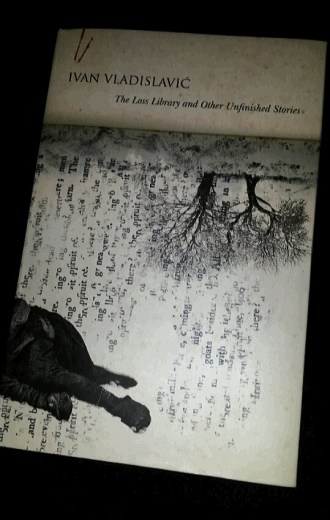
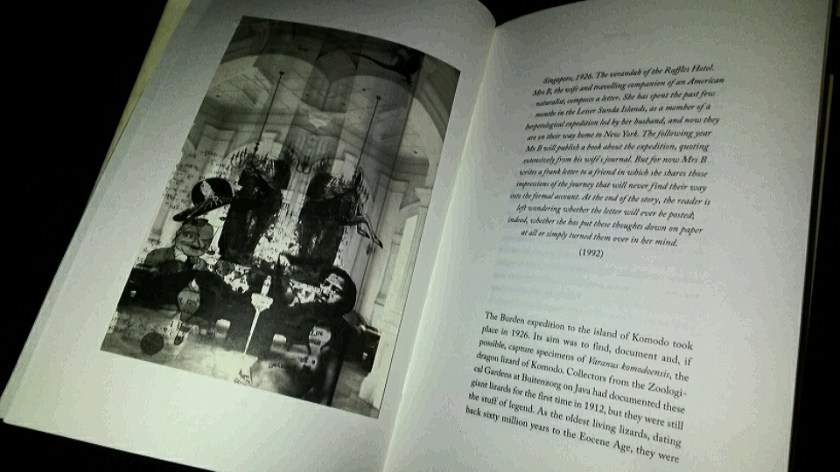
Castles in the air? The Folly by Ivan Vladislavić

Imagine an empty lot. A curious stranger arrives one evening. He steps into the lot and makes his way across the dry winter grass, stopping when he hits a large anthill.

“It seemed a pity to waste this discovery, so he stood on top of the hill and turned his face ceremoniously to the four corners of his inheritance. It was a big face, with a crack of a mouth and a stump of a nose, with unfathomable sockets, craggy brows and a bulging forehead dented in the middle, altogether suited to the play of moonlight and shade. His survey revealed a single tree in the elbow of the hedge, and he chose that spot for his camp.”

As this newcomer sets up camp, the residents of the house next door are settled in front of the TV consuming prepared dinners on tray tables while they watch the usual turmoil and violence exploding on the evening news. Yet for Mr and Mrs Malgas, the quiet, unassuming domestic existence they have enjoyed is about to be changed – disturbed, unwound and distorted – by the very presence of this most unconventional new neighbour.

follySuch is the premise of The Folly. Newly released in North America, this haunting modern day fable, originally published in 1993, was the first novel by South African author Ivan Vladislavić. Mr Malgas, the owner of a local hardware store, reaches out to this oddly eccentric character who has suddenly taken up makeshift residency on the dusty patch of veld next door. He imagines the newcomer with the best intentions, excited when he learns that, true to his name, Nieuwenhuizen does in fact plan to construct a “new house” on the vacant lot. The Mrs will not be appeased. She is suspicious at every turn.

When convenient, Malgas’ enthusiastic assistance is welcomed by his fickle neighbour but the building project is unlike anything he has ever known. Nieuwenhuizen is methodical and will not be rushed. He deliberates, meditates and paces around his piece of land, frequently flinging his ungainly long frame about in the most unusual manner. Prancing, jumping, spinning and throwing himself to the ground. All the while Mrs keeps an anxious eye from behind the lace curtains of her lounge. When the “construction phase” finally gets into full swing things get even stranger.

Nieuwenhuizen is an enigmatic character, he can be pleasant and sociable one moment, suddenly turning to shower insults on his eager helpmate the next. Malgas takes it hard. Back at home his wife feels increasingly powerless against this mercurial influence. One evening when her husband, exhausted from a long day working beside his neighbour, collapses in the La-Z-Boy in front of the TV, she confronts the state she has come to:

“Mrs went into the bedroom, seated herself before the winged mirror of her dressing table, and said, ‘Although I appear to be thin and small, and fading away before your eyes, I am a substantial person. At least, it feels that way to me.’

Her pale reflection repeated the lines in triplicate.

Yet she saw through the pretence. It was clear: she was made of glass. And under the bell-jar of her skin, in a rarefied atmosphere, lashed by electrical storms and soused by chemical precipitations, her vital organs were squirming.”

Parable or fable, comparisons to Borges, Calvino and Beckett have been suggested by reviewers, but this timeless allegory owes its intensity to the brilliant descriptive power and sly humour of Vladislavić’s prose. As this tale rises (and falls?) to a stunningly surreal and dramatic climax, we are, as readers, as completely enmeshed in Nieuwenhuizen’s architectural chimera as the hapless Malgas.

Originally published at a pivotal moment in South African political history, it is tempting to read politics into the allegorical dimensions of this tale. I read it more broadly as a parable of our complex anxieties and attractions to others. Malgas is drawn to Nieuwenhuizen immediately. Mystery, curiosity perhaps, but there is a romance in his simple camp life and his creative fashioning of implements out of found objects and trash that evoke the magic of boyhood adventure. As a man ensconced in a secure, if unexciting, domestic life this appeal sets the groundwork that will allow him to be drawn into Nieuwenhuizen’s scheme. The ephemeral success of the envisioning and realization, however fantastic and temporary, of their dream mansion depends on Malgas’ desperate desire to believe and his longing for companionship. For the Mrs however, the new neighbour is a source of fear at first, of danger, and then of loss. He threatens their privacy, their way of life, and ultimately their marriage. The “other” forever holds that mixed appeal and repulsion.

The past two years have seen a growing awareness of and appreciation for Vladislavić’s work outside South Africa. It is well deserved and long overdue. The Folly was released in North America by Archipelago Books in September of 2015, the UK release from And Other Stories is due in November.

Dark brightness and bright darkness: Berlin Stories by Robert Walser

“Up above is a narrow strip of sky, and the smooth, dark ground below looks as if it’s been polished by human destinies. The buildings to either side rise boldly, daintily, and fantastically into architectural heights. The air quivers and startles with worldly life… And always people are walking here. Never in all the time this street has existed has life stopped circulating here. This is the very heart, the ceaselessly respiring breast of metropolitan life. It is a place of deep inhalations and mighty exhalations, as if life itself felt disagreeably constricted by its own pace and course.”

Great cities have their own personalities and in the company of Swiss writer Robert Walser, Berlin of the early twentieth century becomes a living, breathing entity, a dynamic metropolis drawing in the ambitious, the hopeful and the desperate in equal measure. As a guide to the city, its haunts, and its colourful inhabitants, he is endlessly engaging. His name has been surfacing in my consciousness for a while now, but I had not gotten more than a few stories into this collection before I wondered why it had taken me so long to “discover” him for myself.

BerlinBerlin Stories from New York Review of Books is a collection of short stories composed during Walser’s years in Berlin and the first few years after he left, originally edited and organized by German Walser scholar, Jochen Greven. In her introduction to this edition, translator Susan Bernofsky tells us that, with the beginnings of a literary career underway, Robert Walser moved to Berlin in 1907 at the age of 27. His brother had already enjoyed success as a set designer in the thriving theatre scene. The city was bursting with life. Over the next six years he would record that life in short stories or “prose pieces” and three novels. But financial security eluded him and his own eccentricities did not help him secure the patronage that would have benefited him. He returned to Switzerland in 1913.

The pieces in Berlin Stories are divided into four sections or “movements”: The City Streets, The Theatre, Berlin Life and Looking Back. Most of the pieces are quite short, often no more than a page or two. Narrators who may or may not be Walser himself, wander the streets, ride the trams, or take in theatrical performances while offering attentive discourses on the sights and experiences of city life. He can be thoughtful, melancholy, humourous or sarcastic, sometimes striking playful barbs at contemporaries.

As with any collection of short works, especially one with 38 stories, it is hard to capture a sense of the volume in a brief review. There is so much magic in these pages, it is difficult not to marvel at the acuity of Walser’s observations. He is especially gifted at peering behind the glitz and creating moving accounts of what Bernofsky calls the “humbler aspects of city life”. He has an uncanny eye for the small details that play across the faces and animate the actions of the characters he sketches. Sometimes his observations are direct, at other times his intentions are delivered with a deft backhand as in “The Little Berliner” a story in which he takes the voice of a precocious 12 year-old girl, who enjoys a life of wealth and privilege. But all is not as wonderful as one might suspect. She reports that: “For reasons whose depths I cannot understand and consequently cannot evaluate, my parents live apart. Most of the time I live with Father.” She admonishes herself for confessing to her diary, but Father, for all his wealth and charm, is sometimes a very angry and unpleasant man. The observations and attitudes swirling around in her child’s head present a rather caustic view of the rich delievered in a wonderfully clever way.

Another piece I really enjoyed for its pure descriptive power is “Fire”, in which the narrator and his companion get caught up in the excitement of what must have been a fairly regular occurrence at this time – a house on fire. A spectacle drawing the curious, it is an event at once ordinary and extraordinary:

“an entire street is brightly, garishly lit up by it, it resembles a sunset in the distant south, ten evenings ablaze, a host of suns setting in unison. You see the façades of buildings looking like pale-yellow paper, and the bright red glow of the fire approaches, a thick glowing, wounded red, and beside it the street lanterns look like feebly burning damp matches.”

No one is injured in this instance but a distinguished old piece of architecture is lost, a fact greeted by one of the observers as a healthy form of natural selection, clearing out the dead wood and making room for new construction.

I could go and quote from this work at length, there are little gems nestled in almost every piece. More than 100 years on, his work is vital, entertaining and immensely readable. At the height of his career he was a favourite of Kafka, Musil, Hesse and Walter Benjamin. The resonance of his voice has carried on through the influence of those who admired his work giving it the immediacy that feels so surprising when one first encounters him now. In his lifetime which was increasingly spent in mental asylums, Walser seemed to disappear off the radar. Greven’s German scholarship in the 1950s and the first English translation of his work not long before Walser’s death in 1956, brought him to the attention of a new generation of highly influential writers including WG Sebald, Peter Handke and JM Coetzee.

Now, if you have yet to make the acquaintance of Robert Walser, hurry along and check him out. Personally I’m sold and can’t wait to read more.