Looking back in anger: A personal reflection on World Bipolar Day

You might as well haul up
This wave’s green peak on wire
To prevent fall, or anchor the fluent air
In quartz, as crack your skull to keep
These two most perishable lovers from the touch
That will kindle angels’ envy, scorch and drop
Their fond hearts charred as any match.

Seek no stony camera-eye to fix
The passing dazzle of each face
In black and white, or put on ice
Mouth’s instant flare for future looks;
Stars shoot their petals, and suns run to seed,
However you may sweat to hold such darling wrecks
Hived like honey in your head.

—from Sylvia Plath, “Epitaph for Flower and Fire”

I have known mania, and the imagery in this poem sparks with an intensity that excites and disturbs. When I encounter the words of one of the many poets known (or thought) to share (or have shared) the same affliction, I often find an undercurrent that causes me to flinch for just a second. Not that it diminishes the beauty or power of their words in any way—it is rather an echo in the dark, a faint recognition flashing by.

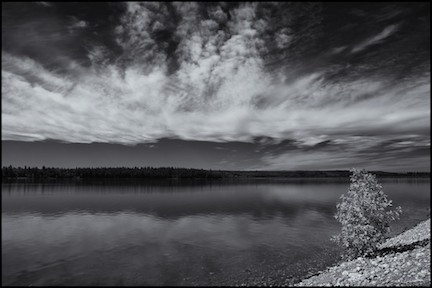
Image copyright Joseph Schreiber, 2012

It is World Bipolar Day, and this is the first time I have stopped to recognize the fact. I have spoken in, and around, my own bipolar diagnosis, but I have never addressed it formally in my writing. Even now I find myself uncomfortable discussing it. On the one hand, I am fortunate. I respond well to medication. I am, to use that distasteful term, “high-functioning.” But I do harbor a deep anger toward this condition that was part of my life many years before I finally careened through a brutal month of manic psychosis and found myself committed, and ultimately diagnosed, at the age of 36. I was, in classic bipolar fashion, the last person to suspect that I had a mental illness. Even though I, and those around me, knew something was terribly wrong, the stigma and lack of understanding around mood disorders—not to mention the radically impaired insight the sufferer has when they are ill—stands as a barrier to timely intervention. And then there is the matter of actually accessing care. One almost has to crash completely—by which time it can be too late.

Between my first manic episode in 1997 and the second in 2014, I experienced more than sixteen years of stability. I transitioned, became a single male parent, built a career out of nothing, and eventually became the Program Manager at an agency dedicated to working with survivors of acquired brain injury. I loved my job. Looking back, I can now see how the last few years of that period were marked by an increasing tendency toward hypomania. With my psychiatrist’s support I cut my medication back. And then things started to fall apart at work—things beyond my control, but it fell to me to try to pull things together. Then I started to fall apart at work, until I spiraled into full blown mania. Not psychotic, but it matters little. The damage was done.

The agency I worked for, dedicated as they are to supporting clients with disabilities including co-morbid mental illnesses, treated me with distrust bordering on contempt. My only contact with them has been conducted through a workplace advocate and my insurance worker. When return to work was discussed they refused to consider any possibility that I could work there again. Almost three years later with long term disability finally at an end, they still have my personal belongings.

Nine years of employment and dedication to that job now stand as a gaping hole in my life—a life already filled with gaping holes. And that is one of the reasons I hesitate to talk about mental illness (although I have never hidden my diagnosis). What can I say? Bipolar is not my identity any more than transgender is. Both fuck up your life. Leave wounds that do not heal. Find you fumbling through mid-life with little to show for your years but a lot of things you can’t talk about. And periods of time you cannot even remember.

So this is why I find it hard to write about my experience with mental illness. There was a time, following my diagnosis, that I devoured everything I could find, just as, a year later I hunted for books on gender identity. Two pieces of a puzzle I had inhabited—the periodic mood swings and the persistent, life-long feeling that I was not the female person everyone else knew me to be—had finally fallen into place. I had two, if you wish to be specific, explanations that come neatly labelled and defined within the covers of the DSM. It was, for a while, a source of relief.

Today I rarely read any literature that deals with mental illness or gender. But I am aware, more than ever, of being doubly stigmatized. And, most painfully, within the spaces where you would expect acceptance—in the human services profession and within the queer community. Thus the anger.

And what is this anger? Grief. The deep griefs I carry, layered now with more recent bereavements. It has become, for me, an existential bitterness that plagues me, an inauthenticity that defines the way I intersect with the world.

The legacy of mental illness is this: after diagnosis I was advised not to dwell on the disease, not to talk to others with bipolar; I was not deemed “sick” enough to warrant outpatient support or psychiatric follow up. I was left, like so many others, to flounder in the dark. It would take seventeen years and a spectacular career-destroying crash before I was able to access proper psychiatric and psychological support. I am still lucky. I am stabilized. And the forced detour into what may become an early semi-retirement has afforded me a space to write.

Now I need to find a way to write my way through this weight of grief. And begin to heal.

I’ll leave the last word to Sylvia Plath, with the final (fifth) stanza of the poem quoted above:

Dawn snuffs out star’s spent wick,
Even as love’s dear fools cry evergreen,
And a languor of wax congeals the vein
No matter how fiercely lit; staunch contracts break
And recoil in the altering light: the radiant limb
Blows ash in each lover’s eye; the ardent look
Blackens flesh to bone and devours them.

—You can find out more about the International Bipolar Foundation here, and a prose poem I wrote to honour a dear friend who lost her desperate and brave battle to bipolar last year can be found here.

On being lonely, and attempting to write my way out: A brief reflection

Words are lumpy, awkward, and unwieldy these days. Frozen, they neither form nor flow. I would like to blame it on the times, the weather—anything but this emptiness I can’t shake.

I used to say: I’m a loner, but I’m never lonely.

These days I’m lonely, even when I am not alone.

8460394828_a318b259c7_bI am reluctant to write about this. I can remember listening to others complain about being lonely—even when their lives were filled with activities and people—and wonder how they could talk that way. More critically, I blamed them. It must be something in them, I reasoned, a bitterness or despondency that drives others away.

And now that person is me.

I understand the sense of alienation—and the way it can so easily be reflected in a coldness borne of anger and pain. Loneliness engenders a void that fills the space between the self and others. A space that grows and pushes the lonely person farther away.

I’ve been reading about loneliness of late. In an essay published on Aeon last July, Cody Delistraty argues that for all its pain, loneliness can build character. It can be a positive experience.

Assuming one emerges, that is.

Depression, cognitive damage, and suicide are very real risks for those for whom loneliness becomes chronic. Delistraty’s thesis is self-serving. He goes to Paris seeking a period of solitude and finds himself irritated by a lonely woman who desperately craves someone to talk to. Choosing to isolate one’s self for a period of time—to recharge, to create, to write—is a deliberate, and hopefully productive, act. In The Lonely City, for example, Olivia Laing chronicles her experience being alone in New York City. I read it last year and related to her observations, but at that time I was still grounded by two important people in my life. One year later, both of them are gone.

And loneliness is very hard to bear.

As a loner, I was always careful to balance my tendency to isolate against work that was people focused. When I unexpectedly had to leave my workplace several years ago, I instantly became aware of the void that had developed over years of living closeted, as a man with no past. Unable to work, I sought to find a community where I could be out, be myself, but that seems to be a space that exists most authentically only when I write. In my experience, the LGBT “community”—at least in my age range, in my city—is not as supportive of diversity as one might imagine.

So if it is in writing that I find the freedom to be myself, how to exist beyond the page? Alone?

I will have to find a way to write through, above and beyond this loneliness, I suppose.

And find out where it takes me.

*Photograph by Joseph Schreiber, copyright 2013

Looking ahead to 2017: Finding light in the darkness

It may be a reflection of the year we have just endured as a global community, or the uncertain variables that cause 2017 to look like such a grey zone, but many people I know seem to be afraid to make any resolutions or commitments moving forward. A month or so ago, when I was still buried under a black cloud of grief and depression, I could not even imagine the utility of existing into the new year. I was in a peculiar space. I was receiving enthusiastic feedback for my work as a writer and critic—even selling a few pieces—but I felt empty and hollow inside. I could stand back and observe my malaise, but I could not bring myself to find an essential light to believe in.

Then, as suddenly as it had settled in, the darkness lifted. My parents are still dead, my friend is still gone, and I have not yet found a job. However, the stubborn, stupid optimism I always cherished as part of my character has returned. Wiser and soberer perhaps, and not at all naïve about the very real threats that the coming year holds. But with good books and the comradery of the many people I have come to know and respect, at home and afar, over the past couple of years, I resolve to try to read and write and photograph my way through 2017, come what may.

31760687801_ea5acb48c8_b

I have been making piles around the house lately and considered photographing them but have decided against being that committed in a public way. Suffice to say there is a healthy stack of fiction including a fair number of recent releases or purchases to which I am adding other titles I feel most guilty about ignoring to date. I have also been reading a good deal of poetry lately, new and classic, so I keep those handy. And then there is a growing collection of essays and memoirs which reflects my own interest, as a writer, in the variety of ways that personal experience or observation can be addressed. As much as I flirt with ideas of writing fiction, I seem to fall back into essay, at least as a starting point. If I end up taking a piece in the direction of storytelling or prose poetry, all the better, but the process has to be dynamic. I am learning to let my writing follow its own course as much as my reading does.

And this leads me to what might be thought of as my resolutions:

Reading: Some surprises surfaced when I added up my completed reads from 2016. I discovered that I read more German literature, than I had expected—11 titles, not including some Sebald that I am presently dissecting or the Kafka that I am always reading. I read 12 English language works (more actually, I have several essay collections and other books in process) and 8 translated from French. As for the balance of the translated literature I read, Spanish, Catalan and Portuguese accounted for a total of 10 books with many more waiting, while I read three Slovene, two Czech, and one each from Dutch, Korean, Arabic, Bosnian, Italian, Icelandic, Hebrew, and Polish.

Contrary to my previous pattern, I only read one South African, title though I added more and still have an embarrassing number of books crammed on to my bookcase. I had also intended to read more Arabic and North African lit and, again, failed. There are also a few key independent publishers I did not read from this year. So, all of these considerations will, if nothing else, be reflected in the piles I build. As to what I read—well, I’ll see…

Writing: I want to continue writing critical reviews but I am being very selective. Looking ahead I am especially excited about writing about new releases from Can Xue and Fleur Jaeggy for Numéro Cinq, while I also have a couple of other interesting reviews booked or underway. I continually debate the value of critical writing (this month the “Top of the Page “at Numéro Cinq features seven reviews—including one of my own—that I selected to highlight some books and reviews that impressed and inspired me). So often critics seem to be held in disdain and yet to write about a book sensitively and intelligently is challenging and creative—but it can be draining. Nonetheless, I have learned so much from the writing and from being edited, all of which has helped make me a better writer. Now that I am also involved with The Scofield as an editor I have further opportunities to continue to grow and contribute to the vital community of online literary magazines.

On the other hand, I am hoping to shift the focus of my blog a little, away from attempting to “review” books that I read (unless it seems appropriate). Rather I would like adopt a more personal reflection on the reading experience—try to pinpoint why the writing works, what ideas are generated, or simply celebrate reading for reading’s sake. I don’t ever want to feel obligated to write about everything I read, but at the same time I am increasingly reading books written by writers who are becoming friends and mentors. I want to be able to write about this work, in an informal, yet valuable way.

Finally, with what I call my “creative work,” I have several projects in mind or in process. One is an experimental, constraint-based project in honour of my father which may or may not lead to anything of interest to others. Otherwise, as much as I thought I was done with writing about the body, it seems that there is still a lot of unfinished business or baggage. It is inextricable from either my interest in being and authenticity, or my now expanded and complicated grief work. I am fortunate to have been approached by several online journals/sites that have invited my contributions and I am very excited about being able explore some ideas in smaller creative spaces to see where they take me. At the same time, I have a few other topics that I want, or even need to examine within, shall we say, a more conventional personal essay format.

Photography: After a long hiatus, I am inspired and eager to return to photography. A dear friend has kindly suggested —insisted— that I should incorporate more images into my writing. This possibility excites me and offers not only a direction for myself as a photographer, but also provides an opportunity to repurpose older shots, cropping and radically reprocessing images that were average and turning them into an integral part of a larger project.

So, even though it is impossible to know what the new year holds, I want to aim to face 2017 ready to build on what I have learned over the last two years which have held, for me, some of the most difficult and most rewarding moments of my life. It is really the only way I can think of to navigate what is bound to be a most interesting and surreal time.

In good company: The Walk by Robert Walser

On Christmas Day, sixty years after Swiss writer, Robert Walser, took his fateful last winter stroll, I went for a walk through my neighbourhood. It was cold, -23C, but the low sun shone on a fresh 15 cm of snow, making it an ideal day for photographs. This being the first Christmas after the deaths of three of the people closest to me, it was a time of invigorated spirit and creativity mixed with sadness. Not entirely unlike the emotions recounted in the book I opened after returning home—Walser’s novella, The Walk.

walkNotably the first of Walser’s work to be translated into English, the path that led to the present edition of this book, a part of New Direction’s Pearl series, is interesting and informative. The original translation by Christopher Middleton was published 1955, and based on the 1917 stand-alone publication of The Walk. When the same piece was released as part of the 1920 collection, Seeland, the author had edited his first version—streamlining some sections, padding out others. With this in mind, translator Susan Bernofsky, applied Walser’s edits, only as necessary, to Middleton’s work. The resulting volume is a unique collaboration and, as Bernofsky notes in her introduction, the two versions offer fascinating insight into Walser’s “evolution as a writer.”

The narrator is a writer and a self-styled flâneur whose environment is not the bustling metropolis, but a semi-rural/semi-suburban setting featuring bucolic scenery and peopled with eccentric characters. The novella opens with our hero leaving the gloomy isolation of his daily confrontation with the empty page, to set off on a series of errands. He is in a jaunty, positive mood. It’s evident that being out on the street is where he feels most free, confident, and at ease.  Opinionated, observant, and self-conscious, the narrative that unfolds is marked by an excessive chattiness. Whether he is addressing the reader or someone he encounters, a certain manic energy drives the perambulator’s account:

In the water of a fountain a dog refreshes itself, in the blue air swallows twitter. One or two ladies in astonishingly short skirts and astoundingly high, snug, fine, elegant, dainty colored booties make themselves as conspicuous as anything else. Moreover two summer or straw hats catch my eye. The story about the straw hats is this: it is that in the bright, gentle air I suddenly see two enchanting hats; under the hats stand two fairly prosperous-looking gentlemen, who by means of a bold, elegant, courteous waving of hats seem to be bidding each other good morning, which is an occasion upon which the hats are evidently more important than their wearers and owners. The writer is nonetheless very humbly asked to be a bit careful to avoid jokes as well as other superfluousnesses. It is hoped that he understands this, once and for all.

This excessive attention to detail, and the tendency to address himself in the third person with slightly self-deprecating humour, creates a distinctively Walserian tone that would influence Bernhard and be so admired by Walter Benjamin and W.G. Sebald.

As he continues on his walk, Walser’s narrator, will stop into a bookshop and bakery, dine with a female friend, and attend to a variety of errands. He waxes lyrical, sometimes taking his praise well over the top when describing some of the houses, gardens, and natural settings he passes by, while he explodes with outrage at the slightest provocation. Inspired to impromptu speech-making, he bends over backward to flatter several women he encounters, and recites from memory a long-winded insulting diatribe to the unknown recipient of a letter he mails:

“He who works honestly, and devotedly exerts himself, is in the eyes of people like you, an outspoken ass. In this I do not err; for my little finger can tell me that I am right. I must dare to tell you to your face that you abuse your position because you know full well how many annoyances and tedious complications would be entailed if anyone were to rap your knuckles. In the grace and favor which you enjoy, ensconced in your privileged prescriptive position, you are still wide open to attack, for you feel without a doubt how insecure you are.”

In his outbursts, it becomes increasingly apparent that the writer/walker is channelling his own insecurities such as in the much-foreshadowed incident in which he angrily confronts a tailor whom he is determined to take for task for the fit of a suit—one it’s uncertain he either wants or, more likely, can afford. At his next stop, he proceeds to grovel before a tax official, explaining how his writerly profession does not provide a reliable income and he thus requires that he be taxed at the lowest feasible rate. When the taxman points out that he always seems to be out walking rather than plying his trade, the narrator launches into a detailed explanation of the critical importance of his daily excursions to the gathering and processing of the ideas that he will commit to paper when he returns to his dwelling:

“Walk,” was my answer, “I definitely must, to invigorate myself and to maintain contact with the living world, without perceiving which I could neither write the half of one more single word, nor produce a poem in verse or prose. Without walking, I would be dead, and would long since been forced to abandon my profession, which I love passionately.”

As the narrator reaches his destination, the end point of his outing where he will rest and reflect, all pomposity and bravado give way to the underlying sadness and loss that he carries with him. He walks then, not just for inspiration, but to try escape a gloom that is not confined to his room alone.

31036737474_a1cd68f48e_b

The Walk was the only one of Walser’s works to be published in English during his lifetime. Now, sixty years after his death, his many novels and short story collections continue to appear regularly in translation. For a man who spent so much of his life confined to mental health facilities, nearly forgotten, and who fell silently in the snow on a solitary walk, this particular novella, so lovingly tended by two of his best known translators, is a fitting honour to his memory.

Another winter solstice is upon us: 2016 – The year in review

Winter solstice. The longest night of the year.

Moving forward, the days grow steadily longer and, in less than two weeks, we will leave a dark, disturbing year behind us.

But it would be reckless to imagine that 2017 will be brighter. However, with luck, we can be forewarned, forearmed, and determined not to relax our guard. We can stand together against the rising tides of hatred, and remember what is truly at stake.

11229294674_e5844929df_z1

Since I started this blog two and a half years ago, winter solstice has become my annual check-in point. Last December, I reflected on the key elements of a year that began with a move to writing seriously about books and culminated with my first review for Numéro Cinq. Against that trajectory, I wrote about my trip to South Africa, and the pulmonary embolism and cardiac arrest that followed within a few weeks of my return. I imagined that the eventful year I had experienced would not likely, for better or worse, be exceeded this year.

Cue 2016.

This has been a year of heartache, anger, and dismay. Around the world and close to home. I watched the violence in Syria, the outcome of the Brexit vote, and the spectacle of the American election, among the other tragic and unexpected events that have unfolded. And as economic uncertainty and anxiety has grown in my own hometown—a city that lives and dies with the price of oil—the crime and homicide rate has risen sharply this year. It does not feel like the same community any more.

Then there is the lengthy roll call of the writers, artists, and performers who have left us. But to be honest, I cannot say that I have felt these losses as acutely as many others… I’ve been distracted by the immediate, personal losses that marked this year. My mother, my father, and one of my closest friends, all gone within the span of two months. And my grief—that most fundamental human emotion—is complicated, inarticulate, and wearing.

It will take time.

11592010455_89917d80e3_z1

But, 2016 has also been a time of amazing growth and opportunity for me as a writer. I don’t know how often I resolved, with the dawn of a new year that: This year I will write. Last December, with that first critical review under my belt, I could not have imagined that I would have, in addition to regular contributions to Numéro Cinq, published reviews at 3:AM, Minor Literature[s], The Quarterly Conversation, and The Rusty Toque. And I would not have dared to dream that I would see my essays and prose pieces published on line and in print, or that I would be invited to join the editorial team of The Scofield. As 2017 approaches, I have a handful of reviews scheduled and several prose projects underway. I’m also feeling inspired to return to photography after a lengthy hiatus, and to see how I can incorporate photos into my written work.

I have much to look forward to, in spite of, or rather, against the new darkness that threatens.

Art and literature are more important than ever at times like this.

So, this seems to be an appropriate time to look back over this year’s reading, and highlight the books that stand out for me.

I’ve read about 50 books to date, a little more than half of what I read in 2015. I don’t even want to hazard a guess as to how many books I bought, received as review copies, or brought home from the library. I feel, as usual, like I fell short of my intentions. However, I have to remember that I was writing, working on critical reviews, and dealing with considerable life stresses over the past twelve months.

More than ever before, I read like a writer this year. That is, I was especially attuned to voice, structure and approach to storytelling. Consequently, the books that made my year-end list tend to reflect this focus. Of course, any “best-of list” leaves out many excellent books. I’ve managed a baker’s dozen here, and it’s probably a reflection of the increased number of off-blog reviews I wrote that this year’s list is predominately composed of new releases. I was surprised to see that once I’d made my selection.

In reverse chronological order, my top reads of 2016 include the following:

Story of Love in Solitude by Roger Lewinter (France), translated by Rachel Careau
I will write about this collection of three short stories once I have completed The Attraction of Things. My verdict is still out on that title, but this tiny book is simply wonderful.

The Inevitable Gift Shop by Will Eaves (UK)
Fragmentary, cross genre writing that works fascinates me. Billed as a “memoir by other means”, it is Eaves’ unique tone that makes this blend of memoir, literary criticism, and poetry so compelling. His thoughtful reflections on reading and writing made this an ideal meditation to turn to after a year of reading critically and exploring my own literary voice.

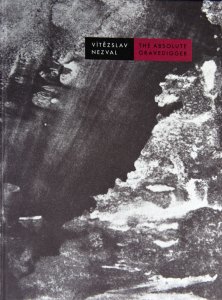
gravediggerThe Absolute Gravedigger by Vítěslav Nezval (Czech Republic), translated by Stephan Delbos & Tereza Novická)
I have found myself turning to poetry more and more as the world seems increasingly unstable and, well, surreal. This newly translated collection of poetry by one of the best known Czech Surrealists should be essential reading at this time. Originally published in 1937, the darkness he could see on the horizon are all too familiar once again.

The Country Road by Regina Ullmann (Swiss), translated by Kurt Beals
I read this collection of short stories when I was in a very low mood. But in the spare, sombre prose of these tales I found a beauty that, rather than deepening my depression, brought strange comfort. Admired, in her lifetime, by the likes of Rilke, Mann, and Musil, Ullmann’s work is mostly forgotten today. This volume, released in English translation in 2015, is a rare treasure—one that I encountered at just the right moment.

panorama-coverPanorama by Dušan Šarotar (Slovenia), translated by Rawley Grau
For me, as a reader and a writer, one of the most important books I read this year is this literary meditation on migration, language, landscape, and loss. This novel finally broke through my own stubborn determination to hold to a sharp delineation between fiction and nonfiction, and has made me re-evaluate potential approaches to themes I wish to examine. What Šarotar achieves here with his own unique take on what might be deemed a “Sebaldian” approach, is the creation of an atmospheric, captivating, and intelligent work.

The Passion According to G.H. by Clarice Lispector (Brazil), translated by Idra Novey
Oh wow! In a way, I am glad I didn’t read Lispector before writing and publishing my essay “Your Body Will Betray You,” because she is exploring the process of coming into being so beautifully that I might not have been able to write at all after reading this. Employing an unconventional narrative, Lispector’s G.H. experiences a vivid, metaphysical crisis triggered by the sight of a cockroach. The result is a remarkable, thoroughly engaging read. I have at least three more of her books waiting for the new year.

Proxies by Brian Blanchfield (US)
I bought a number of essay collections this year and currently have several on the go. This collection impressed me not only for the way the essays were composed—written without consulting outside sources—but for some of the ideas explored, and for reinforcing the value and possibilities of the personal essay/memoir form. I also greatly appreciated his guiding caveat: Permitting Shame, Error and Guilt, Myself the Single Source.

SergioSergio Y. by Alexandre Vidal Porto (Brazil), translated by Alex Ladd
This book is significant and important for dealing with gender identity and transition in a sensitive and original way. I am, as a transgender person, critical of much of what passes as literary writing on this subject. This is a most impressive work with a startling and unique approach. As I noted in my review, Sergio Y. is novel that approaches the transgender experience from the inside and the outside, allowing for the comfort with names and pronouns to vary, over time and from person to person, reflecting the complexities of relationships that others, even loving family members, can have when an accepted and assumed identity is challenged. That is the book’s greatest strength.

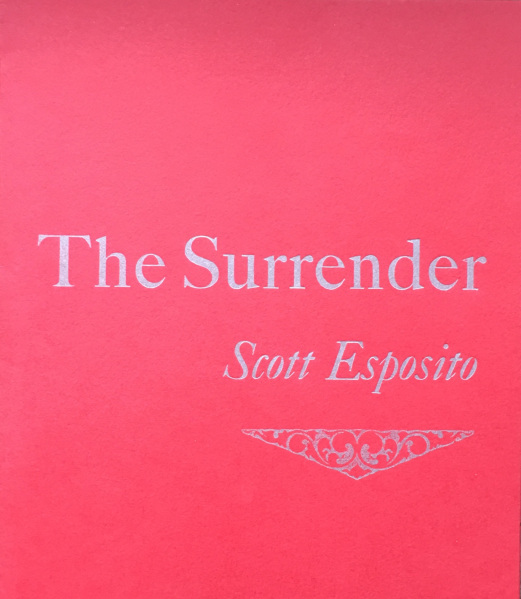
surrThe Surrender by Scott Esposito (US)
This book was on my radar from the moment I first heard of it. Again, despite my typical gender related skepticism, I was drawn to this transgender-themed memoir/film critique/literary diary. I wanted to know how Scott would present his story—one that is not commonly heard. Although his journey is very different than mine, we share a certain sensibility. This is a brave and most wonderful book by a man who has long been one of my heroes. He has since become one of the many literary friends I have come to know and cherish this year.

Layout 1

Atlas of an Anxious Man by Christoph Ransmayr (Austria), translated by Simon Pare
This book was a total surprise when it arrived courtesy of the good people at Seagull Books. This most unusual travelogue, a series of brief “encounters” across the globe, contains some of the most stunning descriptive language I have ever read. Each episode begins with the words “I saw…” and ends with a wise, evocative observation. From the North Pole, to South America, from deep inside the mountains of New Zealand, to a parking lot in San Diego, this is a journey that will not be easily forgotten. Highly recommended.

Quiet Creature on the Corner by João Gilberto Noll (Brazil), translated by Adam Morris
My third Brazilian book on this list is this enigmatic novella that led to one of the most entertaining literary discussions of the year. What is it about? Well that is the challenge. I had to read it three times before I could begin to get a handle on it. The narrator, a young man who finds himself in a strange situation that is rapidly growing stranger, is, in his oddly passive tone, almost more disturbing than whatever might be happening. Opaque and surreal, this book gets under your skin.

The Crocodiles by Youssef Rakha (Egypt), translated by Robin Moger
This novel still holds fast in my memory although I read it back in February. It is, as I described it in my review, a prose poem of simmering power, unwinding across 405 numbered paragraphs, tracing a torturous path from the first stirrings of poetic assurance within a trio of young men in the 1990s to the doomed protests of the Arab Spring. It is a dark, intense exploration of youthful political idealism, that builds on repeated images, themes and refrains to create a compelling narrative force as it moves toward its stunning conclusion. Again, this is another work that is increasingly relevant in today’s world.

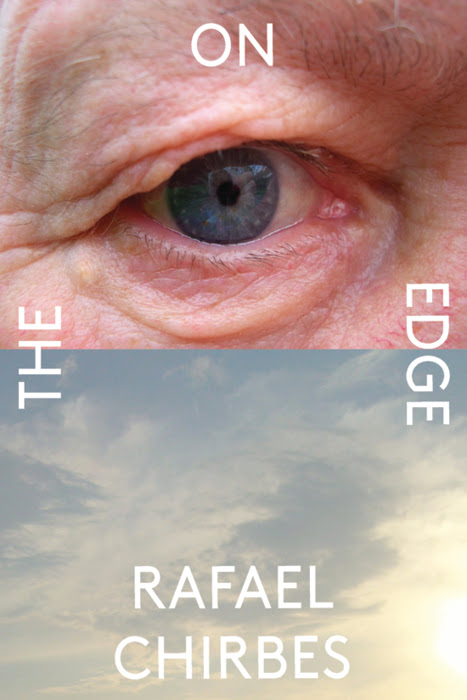
On-the-edgeOn the Edge by Rafael Chirbes (Spain), translated by Margaret Jull Costa
Finally, the very first book I read in 2016 is probably my favourite book of the year. I wrote about this novel at length for Numéro Cinq and I regret that it has not generated more discussion. In what is essentially an extended monologue with brief cameos from other characters, Chirbes creates a memorable, engaging, and tragic character in seventy-year-old Esteban, a man who has lost absolutely everything in the economic collapse of 2008.  Thoroughly human in his wisdom, his resolve, his shortcomings, and his despair; this is a powerful and important book that deals frankly with many of the critical issues—including migration, xenophobia, and economic decline—that are more vital than ever as we step into 2017.

Beginning to write through grief: A reflection & link to my poem at the Sultan’s Seal

I am, as many know, dealing with a multi-layered, complex grief—my mother, my father, and one of my closest friends—all lost within the last six months. When my parents died in July, I entertained an immediate grief project, my own mourning diary, an echo of Roland Barthes. I started with a subdued passion, an ache as intellectual as emotional. In truth, my emotions were, I can now see, constrained and intellectualized.

I was numb.

Others reached out to me in those early weeks, sharing their own stories. The terrain of grief is rocky, I was warned. The journey long. The pain uneven. But, although I am in mid-life, a loss of this nature—doubled and complicated—was something I had never faced.

Then my friend took her own life sometime on September 1st. Even though I knew, in my heart, that such an event was almost inevitable, the pain and anger tore me apart. I knew she had tried every available option she could afford to fight an erratic and devastating variation of bipolar disorder, and I fully respected her decision and her right to make it. But suddenly my world was a darker, lonelier place.

And she had lived half a world away.

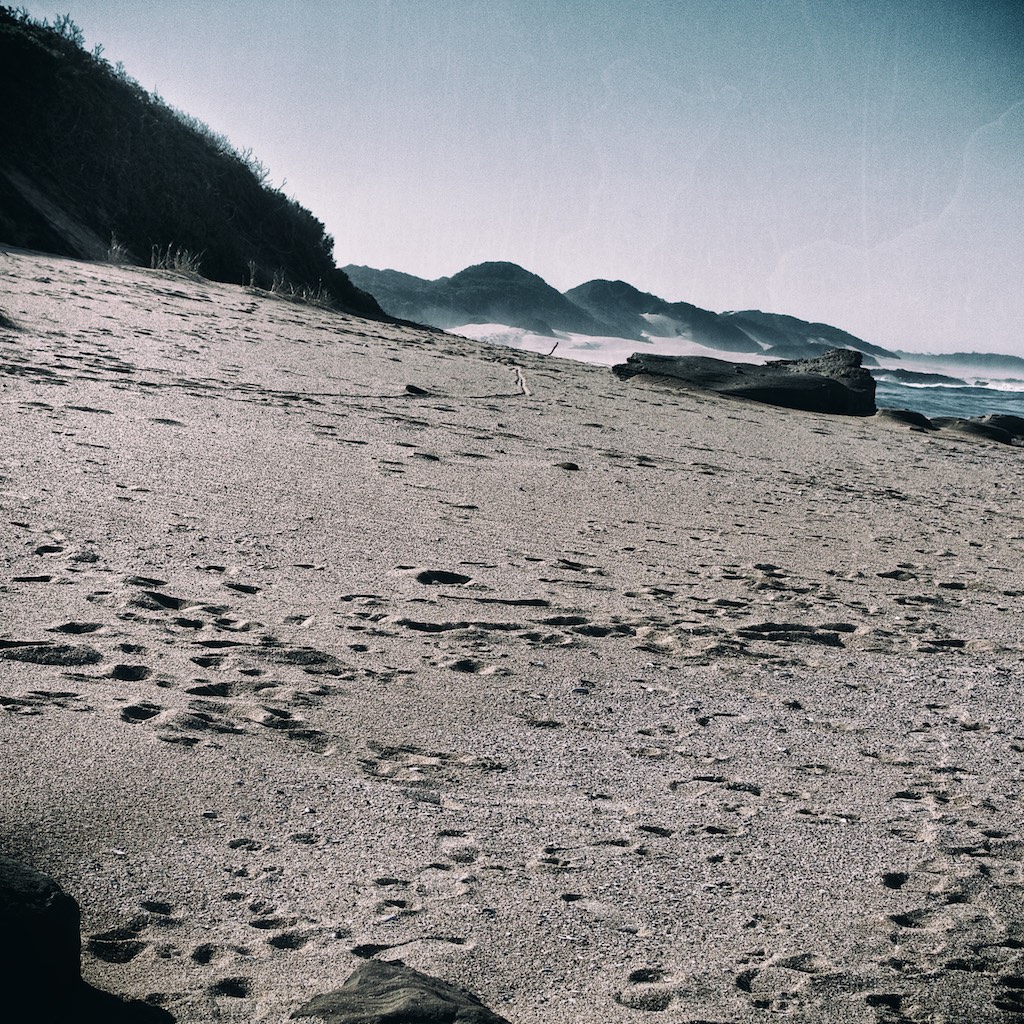
Again, the first thing I thought of was to write. This time, my distance from her demanded and informed my need to write—and I knew exactly what I wanted to do. I wanted to gather words and sentences from her writing and our communications, and together with some photographs from my trip to visit her in South Africa, create an elegy.

An offering.beach

Drawing inspiration from a prose piece by Breyten Breytenbach, and the sound driven writings of my friend, Daniela Cascella, I set to work. And I knew exactly where I wanted to publish this memorial if I was able to realize my vision—The Sultan’s Seal, a most wonderful space created and curated by Egyptian writer, Youssef Rakha.

The result, “And I will Tell You Something,” was published this past weekend. Three hundred words, five images and almost three months shaping, reshaping, listening and accepting the silence that emerged. This is perhaps the most emotionally demanding piece I have ever written. Yet, now five days after my words were finally set free in the world, I feel a tremendous sense of rightness. An element of peace. I still ache, but, with this prose poem, I feel I can begin to heal.

And I hope that others may find something in it too.

Surfacing: Some reflections on the general messiness of life

I have been quiet these last few days. Not entirely absent, but definitely lying low. I’ve needed to claim a little cleansing time, hold social media at arms length for a while and, you know what? It feels really good. My life has taken on a fine shade of hell lately–at the least serious end a recalcitrant major household appliance, and at the most serious, an alcoholic adult child who confessed to making active suicidal plans. And since this is real life, there have been a few more critical pressure points in between, familial and financial.

6973525896_ddfab62c43_b(1)

With the worst of the most critical crises calmed, but of course not “over,” I thought I would emerge a little and take a deep breath.

Today I submitted my latest outside review and I am looking forward to spending a little time reading simply for the sake of reading. I may write about what I read, I may even write reviews, but I am keen to lose myself in words and ideas for a while without the pressure of dragging a notebook along. Fortunately I have no reservations against marginalia, love a book with a few blank pages at the end for notes, and never read without a pencil handy.

I have recently acquired a number of collections of short stories and essays that I am anxious to explore, I realize that I am almost a year from my trip to South Africa and I have barely touched the stacks of books I dragged home, and I am presently making my way through some works that I hope will contribute to my own writing. So I will not be at a loss for reading material, which is a good thing because my book budget has just been ruthlessly slashed by unexpected expenses.

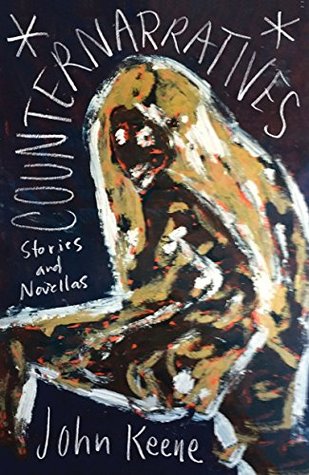
CounternarrativesBut first and foremost I am caught in the absolute brilliance that is John Keene’s Counternarratives. This collection of short stories and novellas has me captivated. After noting it in my peripheral vision for months I finally bought a hardcover copy just before the paperback was released. Now that I am into it, I take it everywhere on the chance that I might have even a few minutes to slip back into it. I can’t remember the last time a book had me in it’s thrall like this one.

And when I am finished I might even write about it. But for now I just want to read.


PS. Warm thanks to DC, MM and JT for supportive words over the past few days. Who says you can’t meet some fine folks on Twitter?

Reading into writing: Two years of roughghosts

Beyond the ear there is a sound, at the far end of sight there is a view, at the tips of the fingers an object—that’s where I’m going.

At the tip of the pencil the line.

Where a thought expires is an idea, at the final breath of joy another joy, at the point of the sword magic—that’s where I’m going.

– Clarice Lispector, “That’s Where I’m Going”

Today is the second anniversary of the rather haphazard and ill-defined birth of roughghosts. The evolution of this space that I tend has far exceeded my expectations. When I look back at my very first post, a quick note to self, I talk about having long put aside the desire to write so as to live a little first, acknowledging that life had given me more material than I was comfortable addressing–a theme I’ve revisited since. My first year of blogging saw a collection of random observations and occasional book related posts develop into increasingly structured book reviews interspersed with the occasional reflective essay. Looking ahead to my second year I had hoped to broaden my reading while privately I was more actively playing with ideas that I hoped would eventually lead to a serious creative effort of some measure. But as much as I had been filling notebooks, I was writing more about wanting to write as if wishing could make it so, rather than believing that I would ever offer something beyond the confines of this blog.

For me, my blog, no matter how seriously I consider every word I offer here, no matter how many hours I spend constructing essays or reviews, has always been a twilight place. It belongs to neither the day nor the night but sits at the intersection of the two: a place where I can imagine that I am not quite exposed to the full light of day, a place where the darkest truths remain unspoken. For that is the realm of real writing and what am I, editing my efforts and posting them myself, but pretending to the art?

I know, of course, that this is not true.

The past twelve months have changed everything, and in more ways than I might ever have imagined.

Writing is the conscious attempt by the human to participate in his fate, that ‘story’ written from birth to death. Casting spells, exorcising, whistling in the dark, inventing the textures and structures of consciousness, keeping a backdoor open to memory, getting to know who or what we are, both reflecting what is and shaping the new. Memory is nothing but dead time, but death seeds the soil: from forgetting new shapes sprout. . .

For writing is a means to transformation: using words and their interacting combinations—the meanings, the feel, the sounds and the shadows—to broaden our scope of apprehending and understanding ourselves and others, and in the process creating new spaces and references. Sometimes looking down into hell.

– Breyten Breytenbach, Intimate Stranger

Last year, on July 7 to be exact, with the majestic Table Mountain rising in the background, I started to write the essay I had been toying with for over a year. It was my last full day in South Africa and looking back over the preceding year I envisioned this grand narrative that would guide my writing, shape the story I wanted to tell. On July 27 a pulmonary embolism caused me to go into cardiac arrest. I stared into the abyss, metaphorically speaking, that is, because I have no memory of the event or of the days immediately before or after, but I do know that if my son had not been home that night I would not be here.

And I know that every idle word to page before that moment was precious more than wishful scribbling. To write, honestly and openly, was now critical.

My path from the confines of my blog to the publication of my first piece of essay/memoir writing earlier this month has been quite remarkable. Doors have opened, starting with Douglas Glover at Numéro Cinq where I am proud to be on the masthead. I have since published reviews for several other sites or publications and have more forthcoming, and I have another piece of creative writing that will be in the Seagull Books Catalogue this fall. It does mean that my attention is necessarily diverted from my blog at times but I will link to new pieces as they appear and have created a page of links to outside writing. I never would have dared to dream that I would need such a page at this time last year. Nor did I imagine that I would now call myself a writer.

I derive a great deal of satisfaction from the challenge of writing longer critical reviews. To read and engage with a text at a deeper level opens an entirely new appreciation of language and literature. It fuels and, I hope, enhances my own ability to write. And over the past year I have been fortunate to become acquainted with some truly gifted thinkers and writers who inspire and encourage me, as well as building stronger intellectual and readerly camaraderie with fellow bloggers.

Copyright JM Schreiber

I don’t know where fiction is born, but I am certain that the best essay/memoir writing does not have its roots on our brightest days. Rather, it emerges from the shadows, when we are wounded, grieving, shaken to the core. We write to make sense of pain, of confusion, of loss. We write out of the darkness toward the light. We write in the in-between spaces—daybreak, twilight—find the patterns, themes, edit, shape, refine and edit again, careful to leave room for tension, friction, the beating heart.

And, of course, we write because we have to.

Here’s to a new year, so to speak.

Immersed in the moment: Incidents by Roland Barthes

In his Publisher’s Note to the French edition of Roland Barthes’ Incidents, a collection of essays published shortly after the theorist’s death in 1980, François Wahl suggests that the four very different texts assembled form a coherent whole because each piece “strives to grasp the immediate”. These are not theoretical or critical investigations in any sense, rather, in each text, Barthes is immersed in the moment, observing, reflecting, and recording his reactions. There is an unchecked flow and intimacy, by turns nostalgic, sensual, and melancholic but always tuned to the instance of occurrence: to the incident.

2016-05-19 21.38.01These are works that invite the reader to engage with all five senses, mediated through words and memory–they are not formal pieces but rather take the form of journal entries, diary writing, and fragmented travelogue. Barthes writes people and he writes place, never really entirely at ease with too much of either. Delight, boredom, and sadness filter through his reflections creating an immediacy that is at times startling. He is not writing for posterity, he is writing for himself.

The collection opens with “The Light of the South West”, an evocative essay/memoir, a personal tribute to the south west region of France. He writes about the experience of traveling south from Paris. Passing Angoulème he becomes aware that he is on the “threshold” of the land of his childhood. It is the quality of light that defines the place:

. . . noble and subtle at the same time; it is never grey, never gloomy (even when the sun isn’t shining); it is light-space, defined less by the altered colours of things . . . than by the eminently inhabitable quality it gives to the earth. I can think of no other way to say it: it is a luminous light. You have to see this light (I almost want to say: you have to hear it, hear its musical quality). In autumn, the most glorious season in this land, the light is liquid, radiant, heartbreaking since it is the final beautiful light of the year, illuminating and distinguishing everything it touches. . .

He goes on to turn his attention to the elements of the south west that resonate with different aspects of his childhood, to reflect on the way that memories formed in childhood inform way we remember the places associated with that time, the magical spaces and the difficult times will each carry their own tone, their own qualities.

2016-05-19 21.41.06The title piece is the earliest in the book. Recorded in 1969 when the author was in his mid-50s, “Incidents”, as the name implies, captures moments from an extended stay in Morocco through an incidental series of fragmented encounters and experiences. Here, people form the scenery; with a special attention reserved for young men. Barthes demonstrates a a particular eye for detail (and somewhat of an obsession with hands) in these passing observations, combined with an acute sensitivity for scents and colours. The vibrancy, shades and contrasts of the country come alive. As a reader you become aware of the blinding light, the dark shadows–they are not described, you sense them in the background.

A young black man, wearing a crème de menthe-coloured shirt, almond green pants, orange socks and, obviously, very soft red shoes.

A handsome, mature looking young man, well dressed in a grey suit and a gold bracelt, with delicate clean hands, smoking red Olympic cigarettes, drinking tea, is speaking quite earnestly (some sort of civil servant? One of those who track down files?), and a tiny thread of saliva drips onto his knee. His companion points it out to him.

Some young Moroccans–with girlfriends they can show off in front of–pretending to speak English with exaggerated French accents (a way of hiding the fact without losing face that they will never have a good accent).

The art of living in Marrakesh: a fleeting conversation from open carriage to bicycle; a cigarette given, a meeting arranged, the bicycle turns the corner and slowly disappears.

The Marrakesh soul: wild roses in the mountains of mint.

The third essay, “At Le Palace Tonight . . .” is a tribute to a Paris club in a converted theatre. He describes the ornate detail, the mood and the atmosphere of this place where he seems to almost prefer to be an observer, watching the dancers and the human interactions rather than taking part. And as in the first essay, we find once again a wonderful evocation of light, this time light as informed by the interior of a structure:

Isn’t it the material of modern art today, of daily art, light? In ordinary theatres, the light originates at a distance, directed onto the stage. At Le Palace, the entire theatre is the stage; the light takes up all the space there, inside of which it is alive and plays like one of the actors: an intelligent laser, with a complicated and refined mind, like an exhibitor of abstract figurines, it produces enigmatic shapes, with abrupt changes: circles, rectangles, ellipses, lines, ropes, galaxies, twists.

This collection closes with “Evenings in Paris” a series of journal entries from 1979 that open with words Schopenhauer wrote on a piece of paper before he died: “Well, we’ve escaped very nicely.” The Barthes who comes through in this selection is tired, often impatient with colleagues and irritated by noise. A certain loneliness and dissatisfaction underscore his descriptions of dinners with friends, failed attempts to win the affections of the younger men he covets, and an unresolved mourning for his beloved mother. Most nights he finds himself heading home alone, half despairing, half relieved, to settle into bed in the company of Pascal, Chateaubriand, Dante, or the echoing ghost of Proust. Although he still enjoys longingly watching attractive men, he has little patience for crowds or social functions. This is a heavier, more emotionally intense offering, the intimacy of “the immediate” weighs heavily as Barthes commits his thoughts to paper, unaware in the writing as we are in the reading, that he is nearing the end of his life.

2016-05-20 02.33.11And, because he is recording the ordinariness of the daily encounter of the self with the world, there is the possibility of shock waves that ring down the years with a new intensity in light of the incidents (that word again) that have unsettled Paris in recent years:

The guy who sells Charlie-Hebdo walks by; on the cover in the publication’s idiotic style, there’s a basket of greenish heads that look like lettuces: ‘2 francs the head of a Cambodian’; and, right then, a young Cambodian rushes into the café, sees the cover, is visibly shocked, concerned, and buys a copy: the head of a Cambodian!

Not without a little social commentary, even in a deeply personal journal, Roland Barthes, remains ever relevant down the years.

Reading Incidents is, in itself, a sensuous experience, it is doubly so in this edition from Seagull Books. With a sparkling fresh translation by Teresa Lavender Fagan and illustrated with the evocative photographic images of Bishan Samaddar, this collection of writings becomes one that can, as Barthes himself would have intended, be savoured.

Beginning to find my voice: Reflections on publishing a piece of essay/memoir writing

We should only believe in our feelings, after the soul has been at rest from them; and express ourselves, not as we feel, but as we remember.
– Joseph Joubert, Pensées

Late last month I wrote about voice, about how I have recently been focusing more attention on voice; not only in literature, but as it pertains to meaning, sounds, and silences. I was, at that time, anticipating the publication of my first piece of non-review writing–not the first that I have written, there is a related piece, a parable, that will appear later this year–but rather the first to be published.

I was extremely anxious in advance of the release. I knew that I would be laying forth an aspect of my experience of being in the world that few people were aware of. I am not talking about my queer identity, that is something I have spoken of from time to time although it rarely impacts the books I chose to read and write about. I am referring to the fact that this short essay addresses my complicated relationship with my body in very bold terms.

It can be found here. (The journal that published my piece is under reconstruction so I have reproduced the essay below.)

Now that the piece is out there, granting me the necessary distance, I am extremely pleased with the results. It is raw and honest, but I feel comfortable that I have touched the heart of my experiences while maintaining a healthy and comfortable boundary. I am not a fan of confessional memoir/autobiographical fiction that tends to the revelation of excessive, unguarded intimate information. It is a delicate balance to measure vulnerability and self respect when writing about the personal details of one’s life. And, I would argue, it is essential to remember that there are limits to what we can ever really know about ourselves and if we remember that we can more honestly write from the heart.

Solitary daisyI have found that I am most comfortable leaning toward a more spare prose the closer I come to the self in my writing. I am hoping that it is a style, a voice if you like, that I can build on. But a detailed account of my life is not my goal in writing–my interest is more philosophical in nature.

I have to say that I am overwhelmed by the positive response to this piece. It is far beyond anything I could have hoped for. And I feel very excited about where I can go from here with further explorations. So much of my reading and the conversations that I’m having in the virtual sphere seem to be converging at this moment. Or perhaps I am simply in a fertile state of mind. It is not, however, an overnight phenomenon, these ideas have been growing for a long time, knocking around in awkward, unfinished form. I am grateful to everyone who has offered inspiration, support and encouragement to this point. I trust they know who they are.

May the conversations continue.

As published on Minor Literature[s], May 6, 2016.
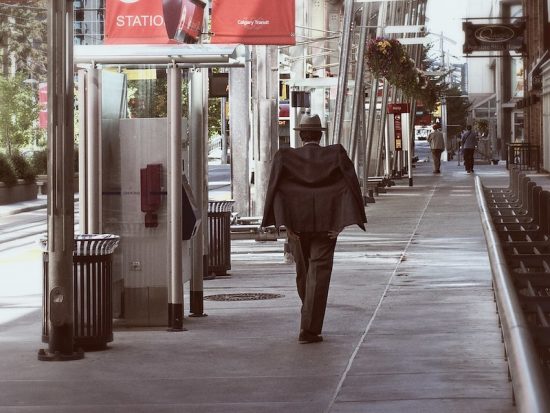
Your Body Will Betray You — Joseph Schreiber

“From the inside out, but from which inside to which outside?”—Róbert Gál, On Wing

This is not the story of my life but the story of my living it, of my being in it.

And that’s a different story altogether.

I am, for lack of a better term, a differently gendered man. No, maybe there are better terms, more common terms—transgender, or queer, perhaps. I use these too. At least, when it’s expedient to do so or when I choose to take my place under a larger umbrella. But by their very inclusiveness, these terms are rendered senseless. Defining the self for one’s self requires an explicit ownership of the language employed. The words I embrace are mutable, evolving, even in the act of committing them to paper or speaking them aloud. Labels can only take us so far.

History is subjective. We can only know what we think we know.

And that isn’t very much at all.

This is what I do know:

I lived, for almost four decades, defined by the parameters of the body in which I was born. I recall the sensation of harbouring a fugitive being—an early social memory (at four? Five? Six?) This someone inside me was not with me, he was me. I saw him in my eyes and I wanted him gone. I wanted to be the girl my mother longed for—the one whose gender mattered solely because her first child, the sister I never knew, was stillborn.

I was not a tomboy. I did not wish to be a boy. I wanted to be the girl I confronted in the mirror, the one whose authenticity no one else questioned. I imagined that feeling female was something you learned, like tying your shoes or riding a bicycle. Yet, although I passed in the world of girls and women, this passing was a measured performance. The rules remained opaque.

The company of boys and men became a refuge—the space where my otherness was validated, where no one would ever question whether I was really female. Sexual attraction to men was a precious counterpoint to my persistent gender insecurity. Never mind that the romantic encounters between men in Mary Renault’s historical fiction held a far more desperate appeal that anything encountered in the pages of a typical boy-girl romance.  I reasoned that if I had a boyfriend, I must truly be female after all.

I married young and disappeared.

You have to understand, when I was growing up, in the 1960s and 70s in rural Canada, no one talked about ‘gender identity’ at all. And they certainly never suggested that it could differ from biological sex. Even now many choke on the concept, quote Bible and verse. My upbringing was liberal, neither fundamentalist nor homophobic, but still, my ‘out of placeness’ was my own, the faint light in the dark room. An old story, but I had no idea that there were others like me.

Self-defined gender insecurity continued to haunt me. It prescribed my path. Twice I walked away from graduate studies, turned down admission to law school, all because the more I exercised my intellect, the less energy I had to devote to maintaining the fragile equilibrium of being female in the world. I retreated to the most unequivocally female spaces I could imagine. Eventually, against my natural instincts, I decided to have children, and that was the beginning of the end—the beginning of the end of my ability to hang on to any reconciliation of my internal identity with the life I had constructed.

I fell apart.

Only in cobbling myself back together, in the aftermath of a breakdown, could I finally openly face the two fundamental notions that had driven me into mania—sexuality and gender. I realized that they were not going away, and that one could not make sense without the other.

Please note, in today’s world where trans* is appended to all manner of identities, where sexuality is no longer narrowly delineated and gender is something to defy, it may seem impossible to imagine that I could crack my head against the wall for so long before the light broke through. But mine was a different time.

I found myself in the library with a copy of Transgender Warriors and learned, for the very first time, what a few years of testosterone could do to transform the outside and fuel the inside of a female-born man. I understood, in that instant, that there was no other option. I finally had a name, a label for myself, and everything else started to fall into place.

I am not reckless. I knew there would be compromises. I knew what surgery could offer and what, at best, it could only approximate. I knew that the scalpel exacts more than its pound of flesh, that healing well is not the best revenge, and that there would be limits to the choices I would make. But none of that was on my mind as I waited for my first injection of the right hormones, the ones I had been craving, body and spirit, for so long.

That was fifteen years ago now. I was forty years old. And in puberty—even when you are old enough to know better—everything seems possible.

Today: 

On the street, I am invisible.

To see me, you would never suspect the truth of my history, the convoluted path to the dream of my genesis. Even those who do know, if they didn’t know me before, don’t ever think of me as any different from any other man.

I just am.

And yet I am not.

I am at once more, and less, than the sum of my parts.

Always have been. Always will be.

For a long time I believed that what I had rendered visible was the true me, the authentic self made flesh, but it’s not that simple. There is an inherent groundlessness, an embodied inauthenticity at play.

I am always in the process of coming into being.

The (meta)physicality of it all: 

I hold a life contained within a life—a life disjointed and hybridized, receding and resurfacing against the passage of time. That other life never leaves me, but with distance I can touch it less and less, as if it never was mine. Now it feels as if it belongs to someone else. It belongs to those who hold it in their memories—my parents, my siblings, my children—but what, if anything, does it mean to me?

It’s as if I own the inside, but not the outside, of the first forty years of my life.

So what do I have now? A more coherent existence, absolutely, but with the knowledge that a fully whole experience is not something I will ever have. My body is disfigured; not by choice or wilful design—it is simply the best I can achieve. And in the end as in the beginning, the body is only an echo of what I am, a reminder of what I have been.

You can change your face but your body will betray you.

The further I proceed, the more I realize that I will never arrive. Transition is an experience that is always in the reframing and redefining of boundaries.

Borderless, I am forever a migrant—endlessly coming into being.

Being cannot be measured.

Being cannot be reduced to the change of a marker on a passport.

On the street I am invisible.

And here lies the crux of the matter. Invisibility, once achieved, is deemed to be a mark of success. That’s what a person in transition means when they say: I pass. To pass is to be seen, without question, at one with a gender identity that feels true. And it is more than an ability to disappear in a crowd. There is an internal completeness that comes with the hormones and the pronouns and the new name—a levelling, a sense of peace.

But the body, the body is another matter. Only now, the axis of discord has shifted.

For those of us who traverse the visible lifeline from female to male, there is a sacrifice. The journey is forever written on the body, no matter how far one is able or chooses to travel. We are at once dramatically transformed and decidedly unfinished or differently designed. Scarred. I accepted that cost, assumed it would not matter.

Fifteen years on, it matters. At least, it does for me.

Don’t get me wrong. I made no mistake. This is the only path I could have taken once I found it on the map. I am infinitely happier, more settled than I might ever have imagined I could be. But if I long for anything, it’s the life I never had, the boy’s life—or any life, male or female—that might have been coherent, sex and gender, gender and sex. As much as the two are divided, the physical and the psychological, they are not separate in the living, in the experience of being. We exist as embodied minds, or if you prefer, embodied spirits, in the world.

Pre-transition, there was an internal fracturing of being. I struggled to align the outside world with the inside space I inhabited. I was an awkward misfit. Nothing made sense. Even the glam rock and punk of my teen years offered little more than a glimmer of hope before fading away. For years I fancied myself a Cartesian dualist. The ontological reality I experienced was akin to being tethered to a body that could never be a home. Over the years I began to talk about this body, to describe it as a distinct entity. I would catch myself at moments feeling like I was consciously moving my hips and propelling my legs forward, like an injured person re-learning how to walk. I floundered in pregnant form. By then I was at a complete loss.

Recognizing myself as transgender, that is, understanding that the real me was the male identity inside and learning that the outside could be modified to conform, was sufficient to see me through a divorce and launch me on my way into a new life. In the early years there was so much to look forward to, so many changes, and so much random strangeness. Puberty at forty is intense and wild and weird. For years I threw myself into work, measuring my worth by the title on my business cards, and finding validation in the sole corner of my life in which no one knew my past.

My transition was a textbook success. Or so it seemed.

I made no close friends, took no lovers, dared not risk the delicate balance of finally existing as a man in society. I sacrificed newfound authenticity for another superficial truth—one coherent with an implied history that would not threaten to expose me. The wall I had once constructed on the inside, I reconstructed on the outside.

Now I have dismantled and deconstructed it again.

But I still find myself troubled by a restless inauthenticity of being. It worries its way into the tension between my desire to blend and my need to be true to a life lived against the grain. It is looking for a voice.

On the street I am invisible.

I am. And I am not.

I am at once more, and less, than the sum of my parts.

Always have been. Always will be.

Here I am writing about my life, opening up the veins of the story without fleshing out the details. I have offered scraps and fragments, just enough to begin to frame a question, to try to begin to articulate my hybridized experience of living—then and now.

This is a sketch. That is all.

I am forever in the process of writing myself into being.

Postscript:

If the apex of manhood is to stand to pee, the nadir of manhood is to be gay and to understand that you will always arrive short-handed.

The bride stripped bare by his bachelors. Even.