Anyone familiar with the unbroken, single paragraph monologues that characterize the typical novel by late Austrian writer, Thomas Bernhard, might find it hard to imagine how his work could be realized in the medium of the graphic novel. I mean wouldn’t there be too many words to corral on the blank page? How could the intensity of the original be translated? For Austrian cartoonist and animator Nicolas Mahler it’s simply a matter of focusing on the essentials of the story and letting his quirky illustrations and creative use of space do the rest. As a result, his graphic interpretation of Bernhard’s Old Masters: A Comedy is, well, something of a small masterpiece. One suspects that the author himself, and his alter ego characters, Reger and Atzbacher, would secretly agree, despite their shared conviction that a true artistic masterpiece is impossible to achieve, let alone imagine.
Rendered in stark black and white drawings playing on extremes—massive architectural details, characters who are tiny and squat, elongated and thin, or large and corpulent, often grotesque, appear against golden yellow highlights (a distant echo of the artwork in Ludwig Bemelmans’ Madeline series)—Mahler allows his images to complement and amplify the ridicule, humour and disgust so intrinsic to this and the majority of Bernhard’s idiosyncratic prose. Frequently recurring of images—the museum security guard, Irrsigler, seems to spend an inordinate amount of time disappearing into the men’s room—visually mimic Bernhard’s fondness for repeating phrases and motifs. As the blurb on the back of the newly released English language translation of this comic-book take on a comic classic states: “The Master of Overstatement meets the Master of Understatement.”
And it’s a match made in, well, the Art History Museum in Vienna.
There is precious little action in Old Masters and little obvious plot. It is, however, a spirited takedown of Bernhard’s favourite targets: the Catholic Church, the State, the arts and artists—his characteristically dark, satirical look at the world in general and Viennese society in particular. But it is also, in the end, a touching, sad and surprisingly romantic tale.
The story unfolds, if you will, at the musem, on a bench in the “so-called Bordone Gallery” directly across from Tintoretto’s White-Bearded Man. Here sits Reger, as he is wont to do every other day. Meanwhile, the narrator, his long-time friend Atbacher, observes him, just out of sight, from the “so-called Sebastiano Gallery” waiting for exactly eleven thirty, the time at which the two men have agreed to meet. Reger’s invitation is out of character because the they had met there just the day before and this second consecutive rendezvous was not in keeping with the typical pattern of either man. Curious as to the reason for Reger’s invitation to break from habit, Atbacher has arrived an hour early so as to watch his friend undetected. Naturally, this provides him the opportunity to launch into a lengthy account of Reger’s family history, his opinionated views, and his predilection to spend every other day at the museum, seated across from Tintoretto’s White-Bearded Man. In the novel this monologue consumes the bulk of the text. The same is true in this version which contains roughly the same number of pages, but much, much fewer words!We learn that Reger, the museum regular, has been visiting the Art History Museum for over three decades. Yet his attitude toward great art, the work of the “so-called” old masters, is one of disdain. Philosophically, he muses that a detail might be perfected, but the whole of any painting, sculpture, or other artwork ultimately leaves us appalled:
There is no perfect painting and there is no perfect book and there is no perfect piece of music, said Reger, that is the truth.
None of these world-famous masterpieces, no matter who did them, is actually something whole and perfect. That reassures me, he said. In essence, this makes me happy.
Only when we unswervingly come to the realization that there isn’t this whole or perfect thing do we have a possibility of survival.
And that has been the reason why I have gone to the Art History Museum for over thirty years…
As one might a expect, a number of artists, writers, and thinkers are subject harsh, and often hilarious, criticism as Reger, speaking through Atbacher’s account, expresses his unbridled opinions. Nineteenth century Austrian author, Adalbert Stifter, for example, is written off as a “kitsch master” with “enough kitsch on any random page to satisfy more than one generation of poetry-thirsty nuns and nurses” and then, strangely, compared to Heidegger, that “National Socialist, knickerbocker-wearing Philistine.” No one tosses out an insult like a cranky Bernhard character!There is, of course, much more below the surface than insults and irritation. That is where his peculiar wisdom lies. And, in this story, we learn that our irascible main character Reger’s antipathy to the old masters, and artists in general, has its roots in an emptiness they cannot fill. One that speaks to his, and our, need for love.One does not need to be familiar with Old Masters in its original form to enjoy this book (I wasn’t), but exposure to Bernhard in his full verbal intensity probably is. The satire, the heartbreaking warmth of the ending, and the sheer feat of rendering the mood and spirit of the Austrian writer’s pessimism and bleak humour into a graphic novel is not likely to be fully appreciated otherwise. I am a huge admirer of Bernhard, but I confess I’ve never really been drawn to graphic novels (pardon the pun). But the other night, when my son found this book on the doorstep of my old house where it had been left by a courier, I was immediately captivated. It has been a difficult few weeks and Bernhard’s misanthropic humour, oddly, is always strange comfort at such times. The beauty of this book is that it is not only a delight to read and look at, but I can imagine myself returning to it and rereading it many times (after all it doesn’t take very long—it’s akin to an instant hit of Bernhard relief).
Thomas Bernhard’s Old Masters, illustrated by Nicolas Mahler, is translated from the German by James Reidel, and published by Seagull Books. Essential medicine for any Bernhard fan, I’d say.
Since I finished Esther Kinsky’s magnificent novel River, it has been difficult for me to contain my enthusiasm for this work, and yet, with a major review on the way, I wanted to refrain from talking at length about my reading of this languid, mesmerizing meditation on the relationships we have with place—those we live in, pass through, or linger in uncertainly during points of transition. That review is now live, and yet Kinsky’s book is still working its way through my system.
River is a slow read; immersive, poetic, attentive to detail. It creates an atmosphere of intimacy with the spaces the unnamed narrator traverses during a time of restless displacement in a community on the edge of London; a time of gathering and preparation for leaving the city where she has lived for a number of years. Some of these spaces are immediate, defined by the course of the river Lea. Others exist in the distance, temporally and physically. And yet, although there are clear parallels between Kinsky’s own life history and the locations her narrator visits, River occupies an intentionally indistinct borderland between fiction and memoir, focusing on experience in the moment over biographical background and detail, resulting in a narrative that flows, organically, like the rivers than run through it.
My review of River can be found at the online site of the singular journal Music& Literature. The opening passages are reproduced below, you can read the rest of it here.
A mood, an atmosphere, rises up from the opening pages of Esther Kinsky’s River—a melancholy that unfolds so softly, so insistently that I repeatedly had to remind myself that I was reading words that originally existed in German. I found myself wondering: What would the German feel like in my hands? How would its texture taste, guttural tones against the back of my throat? These are questions that, in their asking, underscore how River is a text to linger in, to touch, to absorb, and recognize one’s self in. We follow the narrator as she temporarily suspends her life, settling for a time in a marginal community on the edge of London, so she can slowly disengage herself from a number of years spent in the city, and prepare, mentally and emotionally, to take her final leave. The process she details seems to be one we, too, undergo in reading River.
Under a pale sun and in the whitish, shadowless light peculiar to this place and these seasons, I took to following tracks which, time and again, led me back through the alder grove. This partly mutilated wetland wood with its childhood flowers and wild birds secretly appealing to my memory was my gateway to the lower reaches, to the path downstream that gradually taught me, during the final months of my stay, to find my own names for a city I had already spent many years labouring to decipher—names only walking and looking could force me to extract and reassemble from a web of trickling memories, a debris of stored images and sounds, a tissue of tangled words.
River by Esther Kinsky is translated from the German by Iain Galbraith and published by Fitzcarraldo Editions in the UK and Transit Books in North America.
It’s summertime, somewhere in the vast Hungarian plain, and this one’s a scorcher. The heat presses down on the residents of an unnamed village and threatens to reduce the river—the refuge and solace toward which the winter weary turn to enjoy what little holidays they can scavenge—into a fetid stream. But at the nearby üdülő, the local holiday site with its beach and bar and holiday homes on stilts, seasonal activities will not be curtailed:
On weekdays it was still quiet in the üdülő, but the bar already smelt of what had been left behind from the weekend: spilt beer, sweat, the girls’ summer perfumes, the exhaust clouds of the motorcyclists and helpless chlorine bleach with urine. Around midday clouds appeared over the bend in the river. The sky turned white, the river dark, the heat did not abate, became dense, bright, the poplar leaves rustled, sounded like whirring metal scarecrow strips. The small boats lay pale grey by the bank, motionless, congealed into a river panorama, from which only a powerful gust of wind or the hand of a wrangler or rower could awake them.
On the beach and back in town this will be a summer filled with drama, heartache, and melancholy—business as usual, but with a twist. This year there is a stranger in their midst, the New Woman, who has arrived from afar and settled in with Antal, the mason, who has in turn abandoned his wife and son. Such is the basic outline of Esther Kinsky’s first prose work, the novella, Summer Resort, a short, playfully poetic fable filled with a seemingly endless cast of tragicomic characters and bursting at the seams with striking and delightful wordplay.
With the attention that has come with the publication of River (see my review at Music & Lietrature), Kinsky’s only other translated work to date is likely to attract renewed interest. Compared to River, this earlier novel lacks the emotional resonance and meditative depth that one looking backward might hope for, but what it does offer deserves to be appreciated in its own terms, as an exuberant display of highly-charged linguistic energy, and a clear indication of the animated imagination, attentiveness to nature and the astute eye for detail that will characterize the prose in her longer, more serious work.
Summer Resort is an exercise in tight, contained story telling peopled with eccentric characters. Many exist almost as caricatures, like the Kozac boys who maintain a certain status in town and at the beach—admired, tolerated and resented in turn—the Onion Men, and the generic Marikas and Zsuzsas in their bikinis and glitter sandals. Others fall into closer focus. Lacibácsi the scrap yard dealer who runs the bar at the üdülő each summer aspiring to be a “manbytheriver, a poplarshadowman, a confidant of drunks,” his wife Éva (christened Ruthwoman by the New Woman) and Krisztí, the leather-clad woman who settles herself at the bar, a welcome if uninvited assistant. But at the heart of the story are Antal, his ex-wife Ildi, and son Miklós who each take a brief turn directly narrating pieces of their lives, now forever changed by the insertion of the mysterious New Woman into their midst.
More than anything though, this village and its inhabitants serves as a broad tapestry for Kinsky to weave her poetic magic. Her characters are the ordinary folk, the policeman, the railwayman, the small-time hustlers, the day labourers and the farm workers. Victims of shifting economies, closing industries and faded hopes. The üdülő is a place to lose themselves, to play and dream, but this year of heat and drought, is marked by fires, a shrinking river, and restless bodies tossing between sweat soaked sheets. There is an affectionate sadness that rolls across the surface of the narrative, and a quiet resignation that seeps into the dialogue. But the language is fierce, the imagery vivid: “Katica’s mouth was rose red with lipstick, there was so much red on it that it stood out in the üdülő like a wound.”
This is a startlingly sensual work. Here we find the elements that will later become so essential to the absorbing intensity of River. Kinsky has an unwavering awareness of detail, colour, scents, and sounds. Nature contains both the beautiful and the bleak, the lighthearted and the devastating. As is the case with the river that here, on this flat, unforgiving landscape, is a primal force:
What belongs to the river, what to the land? The floods come swiftly and silently. The river swells up, in the course of a night it casts of the sham cloak of gentleness, bursts its banks, spills over tops of embankments, carries off objects, animals, people. The undertow and thrust of the water changes the landscape. Sky, water, destroyed treetops, helpless house roofs as far as the eye can see. Then the river creeps back into its gentle course, trickles sweetly between the devastated rampant undergrowth of the bank which sticks this way and that, reflects the sky and sun, has long ago secretly discarded in the bushes what it has snatched away, where it is transformed, missing persons first become foul impediments, the vermin of the riverbank and water meadows gathering around them in great clouds, then pale, hollow bodies, through which the wind blows the quiet music of melancholy, which always lurks here in the undergrowth.
Esther Kinsky is a German poet, writer and translator. She has translated literature from English, Russian and Polish, including works by Olga Tokarczuk and Magdalena Tulli. Folkloric tones, reminiscent of some of their work come through here, perhaps, as does a pure poetic sensibility. A restless incantation for the loves and lives that collide in the course of one brittle, unrelenting summer, Summer Resort is a work well worth visiting for anyone interested in tracing the headwaters of River. And anyone else who simply enjoys a good tale.
Summer Resort is translated by Kinsky’s late husband, Martin Chalmers, and published by Seagull Books.
One week into Women in Translation Month and I’ve yet to jump into the conversation. I’ve been reading German author Esther Kinsky, her novel River for review and Summer Resort for background. However, since the North American release of River is not until early September, I don’t know if my review will actually run this month. But then, if it isn’t possible to pack August with translations of female writers, it is a consideration that can be worked into one’s reading year round. To that end I thought I’d share some of the posts I’ve written about works by women in translation that I’ve enjoyed since last August:
A Working Woman — Elvira Navarro (Spain, tr. Christina MacSweeney) The Iliac Crest — Cristina Rivera Garza (Mexico, tr. Sarah Booker) Malina — Ingeborg Bachmann (Austria/German, tr. Philip Boehm) Hair Everywhere — Tea Tulić (Croatia, tr. Coral Petkovich) Endless Summer —Madame Nielsen (Denmark, tr. Gaye Kynoch) – linked to external review SS Proleterka — Fleur Jaeggy (Italy, tr. Alistair McEwen)
Poetry: Before Lyricism — Eleni Vakalo (Greece, tr. Karen Emmerich) Third-Millenium Heart — Ursula Andkjær Olsen (Denmark, tr. Katrine Øgaard Jensen) – linked to an external review
This year I’ve gathered a stack of possibilities—not that I expect to get through even half of them, but I like to have choice. And, because there is a lot going on in my life these days and a handful of other English language titles vying for my attention, I’ve selected relatively slender fare. Finally, because it is still Spanish and Portuguese Literature Months, this collection includes five Spanish, one Portuguese,one Bengali, two French, and three German language books.
And because poetry occupies more of my readerly attention these days, I’ve pulled out two poetic contenders:
Negative Space is translated from Albanian, Hospital Series from Italian. Both titles are from New Directions.
It was Wolfgang Hilbig’s story collection The Sleep of the Righteous, published in 2015 by Two Lines Press, that brought the late German author and his translator, Isabel Fargo Cole, to my attention. It might seem as if they arrived hand-in-hand, after all her translation of his novel I (Ich) appeared from Seagull Books around the same time, but of course, she has translated works by a variety of German language authors before and since those two titles emerged. But it would be fair to say that her efforts to champion Hilbig, her deep appreciation of his work, and her ability to be able to bring his convoluted sentences and filmic imagery to life in English continue to win him more admirers with each subsequent release. Most recently, she was awarded the Helen & Kurt Wolff Prize for her translation of Old Rendering Plant.
Photo credit: Emma Braslavsky
I have had the pleasure of interviewing this gifted translator twice now, and both times, when her generous responses to my questions arrived in my email, I read them with excitement and renewed appreciation. The latest interview was published at Splice this past week. In this piece, we talk about the most recent Hilbig release, The Tidings of the Trees, and the ways in which this work differs from last fall’s Old Rendering Plant. My questions were derived from my own reading of the book and were not sent until my review had been submitted for publication.
In the years since our first contact, I have read and reviewed Isabel’s translations of Klaus Hoffer and Franz Fühmann, and have added the works of several other authors she has translated to my library as well. But Hilbig remains central. So I am thrilled and honoured to be speaking with her in person in San Francisco on Tuesday night, July 24, as the Center for the Art of Translation celebrates her work, her recent award, and the release The Tidings of the Trees.
UPDATE:
The online journal Splice was hosting no longer appears to exist, so I have reproduced the original interview with Isabel as it first appeared below:
Wolfgang Hilbig, The Tidings of the Trees.
Translated by Isabel Fargo Cole.
Two Lines Press. $12.95. Buy direct from the publisher.
Isabel Fargo Cole grew up in New York City and studied at the University of Chicago, but she has lived in Berlin as a writer and translator since 1995. In 2013 she received a PEN/Heim Translation Fund Award to translate Franz Fühmann’s At the Burning Abyss for Seagull Books, and in 2014 her translation of Fühmann’s The Jew Car was shortlisted for the Oxford-Weidenfeld Translation Prize. More recently, she has published several translations of the works of Wolfgang Hilbig, and she won this year’s Wolff Translator’s Prize from the Goethe Institut for her translation of Hilbig’s Old Rendering Plant, published by Two Lines Press.
Her latest Hilbig translation is The Tidings of the Trees. Reviewing the book for Splice, Joseph Schreiber praised it as “a tale rich with fantastic imagery that openly explores the ability of fiction to preserve the past, mediate the present, and offer hope for the future.” Concurrent with the publication of Trees, Isabel Fargo Cole generously gave her time to correspond with Joseph via email and offer her take on working with Hilbig’s words.
TheTidings of the Trees, newly released from Two Line Press, is your fourth published Wolfgang Hilbig translation. Would you mind taking a moment to frame this novella within his body of work? When was it released and where does it fit?
The German edition (Die Kunde von den Bäumen) first appeared in 1992. It’s the last of a number of novella-length works Hilbig wrote in the 1980s and early 1990s. In terms of subject matter, it fits into a broader complex of works, culminating in the story collection The Sleep of the Righteous (2015), which explore Hilbig’s home town of Meuselwitz and the industrial wasteland around it. Hilbig returns time and again to the same landscape to explore different aspects and develop different metaphorical images.
.
This novella is described as one of his most accessible works. On the surface, perhaps, relative to the very close, internalised monologue of Old Rendering Plant(2017), it might appear to be a more straightforward, less claustrophobic tale. It’s a multi-level narrative wherein the main character, Waller, is telling his story to an unidentified narrator who records the account. We can place him in time, we know how old he is, and we have passing outside observations of his actions and behaviour as he is speaking. However, as much as time, space, reality, and fantasy are blurred in both novels, Waller is less able to follow and make sense of his own memories, and seems as concerned with touching abstract truths as he is with tracking down his own lost time. Consequently, much is left unresolved, unresolvable even.
Can you comment on the similarities and differences between these two novels with respect to the way reality is disrupted, and the challenges raised for yourself as translator?
Actually there’s just one narrator who sometimes refers to himself in the third person, as “Waller”. In many of Hilbig’s works — notably in ‘I’ (2015) — the author shifts between first and third person as a way of embodying how his narrators reflect on themselves or relate to their past, how writers observe and fictionalise themselves almost to the point of schizophrenia. In comparison with Old Rendering Plant, the landscape is more minimal, the language is a bit sparer; Hilbig is working with a more reduced and clear-cut palette of imagery and symbolism. This foregrounds the narrative structures, the interplay of perspectives and time frames. This is a story about storytelling, or rather its impossibility: the narrator tries to evoke the chopped-down cherry trees that once lined a road that led to a village that has vanished as well, swallowed by strip mines, and to describe the circumstances of these disappearances. This shifts to an effort to recall the taboo subject of Germany’s division and the disappearances it entailed.
On a number of levels, it’s about the difficulty of finding the right place to write from: “A place to sit! I’d lament, circling my empty chair.” Of course, the chair is just a metaphor or an alibi; the question is how to find the right perspective from which to reconstruct the memory or tell the story. And so the narrator shifts into the third person voice, as though that might help, or as though to watch himself writing; or he tries to adopt the perspective of the “garbagemen” who sift through the refuse of the past and seem to possess secret knowledge. Hilbig explores the question of adopting a persona or shifting personae to tell a story from, and the dangerous disorientation this can entail. And he explores how a writer devises and manipulates “figures” to act out his story: Figur in German is the standard word for a fictional character, but Hilbig exploits its literal sense of physical shapes that are seen from outside and remain rather alien, like puppets. Hilbig’s narrators find it difficult to relate to other people at all, and struggle with the sense that, in writing about them, they are producing mere simulations. In Trees, this takes physical form as the narrator arranges discarded store mannequins in tableaux in an attempt to communicate with the inscrutable garbagemen — an absurdist metaphor for storytelling.
These senses of simulation, unreality, dissociation, and an unstable “I” goes along with an unstable sense of time. Storytelling both asserts and complicates the notion of a linear timeline with a clear sequence of events bound by cause and effect — a story has to assume these things to some degree to have any coherence, but the very act of telling a story complicates the timeline and the causalities by situating a storyteller somewhere within or outside it. In Tidings of the Trees, Hilbig plays with the tension between the notion of a coherent “story” that exists out there, or within the memory, and simply needs to be recorded, and the teller’s actual struggle to grope toward this story and piece it together out of fragmented bits of time and space.
This is a struggle for the translator as well, as the often paradoxical-seeming tense shifts need to be attended to; the labyrinth of nested flashbacks and flashes of déja-vu is very much intended, and just as intentionally left without a resolution. In the end, the narrator comes to see the course of events as cyclical, narrated in “a language of return”, and he cedes the act of storytelling to the trees themselves: “storytelling without motive, a stream of story that followed only the slow rhythms at work in the place where the trees were.” The vanished trees write their story in their own ash upon the narrator’s empty page.
.
On a related note, I would like to ask you about the prose style in The Tidings of the Trees. In my reading, I sensed more variation in pace and tone than in some of Hilbig’s other stories and novels. There seems to be a more measured tone to much of Waller’s discourse; one finds more short sentences, less of the long, winding, stuttering flow of words. This is perhaps because the protagonist is trying to make himself understood to his audience. However, he has a hard time orienting himself within his own story and has an admitted disregard for reality. And there are many passages of exceptional urgency and poetic energy. How would you describe the differences in this narrative?
As you noted above, there is less of the intensely sensual, immediate, stream-of-consciousness style that you find in Old Rendering Plant or The Sleep of the Righteous. Perhaps the narrator of Trees is trying to access that more immediate mode of writing, but failing (at least until the very end, when he lets the trees speak). He has a greater detachment from the writing process; he’s reflecting on the act of writing, or rather his inability to perform that act: “But when storytelling reconstructs — or, in my case, manufactures — the problems of telling stories, it’s the pinnacle of self-circumscription. … I don’t know. Literature like that is unworthy of interest.” He’s ironising the postmodern irony of writing about writing — but taking it so far that irony turns into existential urgency. At the same time, Trees has more actual story, asserts more concrete, external goings-on (however fantastical and jumbled) than, say, Old Rendering Plant, which feels like a pure interior monologue.
.
Both Waller and the narrator of Old Rendering Plant are drawn to mysterious social outcasts, and, in each case, these elusive characters — the garbagemen who salvage goods from the ash heaps on the outskirts of town and the men who work in the depths of the rendering plant in the abandoned coal factory — are imagined in grotesque, surreal terms, and inspire some of the most exhilarating passages in each work. However, Waller’s identification with the garbagemen is more complicated, at once strange and enigmatic, and yet in their actions he sees a clear model for his intended act of preservation through storytelling. How do you see the roles, political and aesthetic, that these types of characters play in Hilbig’s work?
Hilbig was an outsider himself, as a self-taught non-conformist working-class writer in East Germany and as a working-class East German writer in West Germany. So it’s not surprising that he tended to write about outcasts — often his narrators are loners on the margins of society who become fascinated by people even more radically marginal than they are. Those marginal figures seem to represent, or have access to, things that society would prefer to forget, down to the crimes of the GDR and Nazi dictatorships. Interestingly, it’s hard to pin them down either as victims or perpetrators. In Old Rendering Plant, they might be war fugitives from Eastern Europe, or they might be old SS or Stasi men. In Trees, they seem to be in a state of exile from society, sifting through its detritus on the outskirts; on the other hand, they apparently act as an integral part of society’s digestive system, performing a function that remains constant across historical eras. They’re the people who quite literally do society’s dirty work.
.
Wolfgang Hilbig has a tendency to create narrators or protagonists who share basic biographical details very similar to his own, even if it is not made explicit. Their stories generally explore variations on a common theme — the search for identity in a society that enforces a rigid conformity of thought and action — and yet, each story or novel follows its own distinct path. Tidings is no exception, but this novel is also very explicitly about the responsibility of the writer and the enormity of his (or her) task. Waller’s twenty missing years form, in no small part, a severe case of writer’s block. Here he is, in mid-life, staring at the same sentence: “The cherry trees have vanished!” The question of the missing cherry trees that once lined the road to the nearby village, now also gone, represent a much larger, more vital story — about preserving memory, history, and hope. Would it be fair to say that this portrait of the writer’s task, if not his relative productivity, makes Waller an especially personal alter-ego for Hilbig?
I feel he’s actually a less personal and more abstract alter-ego: the Writer. There’s less of the texture of Hilbig’s own memories and biography, and he keeps stepping back from the narrator, referring to him in the third person, seeing him from the outside, actually spotting him in the distance, as a kind of doppelgänger. And he puts him in absurd situations that feel more consciously constructed, with more ironic detachment.
I think the cherry trees are in fact central: they are the story — or the storyteller, as the end hints. The cherry lane is one of Hilbig’s rare (but crucial) images of pure, innocent natural beauty, of a small paradise that existed within memory. It may have vanished, but it dominates the story, and in the end it prevails: the eternal, cyclical language of nature takes over the task of the writer.
.
Finally, you have recently been awarded the prestigious Helen & Kurt Wolff Prize for your translation of Old Rendering Plant. Congratulations! With another Hilbig translation, The Women, due later this year, the appetite for his work among Anglophone readers seems to be solid and growing stronger. There must be considerable satisfaction in this positive reception, and in being recognised for your intuitive and sensitive renderings. How do you feel about his reception? And more critically, in light of the disturbing political trends we’ve been witnessing in the West of late, do you think his message has a new relevance?
Thank you! I’m thrilled to see his work finally getting the English-language readership it deserves. I certainly think he has a lot to say to us about the cruel and unsavoury sides of social orders; about the way historical traumas are passed down and continue to do harm even (and especially) as they are denied and repressed; about the sheer mass of depression, anger, and hopelessness that can build up among people who feel alienated from their societies, from each other, and from their natural surroundings; about the (self-)destructiveness that results. I don’t think he has a “message” in the sense that he’s asking us to understand x so we can do y. But perhaps he asks us simply to recognise the dark shadows and the “garbage” on the outskirts of town as something integral to the human experience. Those strange sinister characters out there, whether they’re victims or perpetrators or both, aren’t “the other” — they’re alter-egos, reflections of ourselves and our own potentialities. Facing the darkness won’t perform some kind of therapeutic magic and automatically empower us to transcend it, but it could help us to proceed from a position of humility, a deeper understanding of our own and others’ limitations, absurdities, and burdens. At least that’s the best way I can think of to explain why I personally find his work moving and bracing, if not exactly comforting, at this particular time.
.
Joseph Schreiber is a writer based in Calgary, Canada. He is Criticism/Nonfiction editor at 3:AM Magazine. His reviews and essays have been published in a variety of literary sites and publications including Numéro Cinq, Quarterly Conversation, Minor Literature[s], and RIC Journal. He also maintains a literary site called Roughghosts and tweets @roughghosts.
He may confound some readers, but for my money, the enigmatic East German writer Wolfgang Hilbig is fine company. His landscapes are evocative, filmic spaces, obscured by the mists of a troubled history of secrets and shame. His narratives are restless. His characters are misfits, unable and unwilling to conform. Their tales explore the dynamics of loss from personal, social and political angles. And even within the scope of a novella, these stories expand far beyond the confines of the pages, haunting and reworking themselves within the reader’s mind long after the book is finished.
Or, at least, that has been my experience.
The most recent Hilbig release from Two Lines Press, The Tidings of the Trees, traverses a terrain at once familiar and yet quite distinct from the watery byways of Old Rendering Plant. This is a complex, magical tale that examines the importance of stories to hold onto and preserve the memories that the State is intent on erasing. As ever, translator Isabel Fargo Cole deftly captures the unique rhythms and energies of this text, and Hilbig fans will be pleased to know another work, The Women, is forthcoming in November.
I wrote about this book for an online journal run by the UK publisher Splice. It seems to no longer be online, so I’ve reproduced the original page and review below.
Wolfgang Hilbig, The Tidings of the Trees.
Translated by Isabel Fargo Cole.
Two Lines Press. $12.95. Buy direct from the publisher.
When the Berlin Wall was closed in August 1961, effectively sealing the final point of exit for East German citizens seeking asylum in the West, Wolfgang Hilbig was just shy of his twentieth birthday. With this action, the GDR became a completely contained state, isolated from the rest of the world. In The Tidings of the Trees (trans. Isabel Fargo Cole), the latest Hilbig translation to be released from Two Lines Press, this moment and its impact open a vortex around which the protagonist’s crisis of identity spins. Described as one of Hilbig’s most accessible works, Tidings proceeds on a somewhat different note than last year’s release, Old Rendering Plant, but ultimately it follows a route no less oblique or circuitous. Powerful and more overtly political perhaps, it is also a tale rich with fantastic imagery that openly explores the ability of fiction to preserve the past, mediate the present, and offer hope for the future.
Whereas Old Rendering Plant was a deeply immersive first-person monologue slipping at times into pure stream-of-consciousness, TheTidings of the Trees presents a multi-level narrative with an unidentified narrator who records the first-person account of the central character, Waller, occasionally breaking in to describe the actions and behaviours observed as the story is being related. It can be argued that Hilbig’s protagonists tend to be, to a greater or lesser extent, shadows of himself, and Waller is no exception. He is an aspiring writer of approximately the same age, who lives with his mother and grandmother in a small industrial town surrounded by forests and the physical legacy of strip mining. Like his cohorts he is apprenticed into work at a local factory after finishing school, but over time this work gradually loses its relevance as he becomes more deeply absorbed in a desperate effort to write — to secure his story on the page. At the time of this recorded account, one can assume the frustrated storyteller is about forty years old, an age by which Hilbig had already abandoned the factory for a writer’s life and relocated to East Berlin. Our hero in this novel is finding that transition much more agonising, and yet for Waller, as for his creator, writing is an act of defiance and self-preservation:
Write… write, I say to myself, or everything will whirl into forgetfulness. Write so the thread won’t be severed… a thousand stories are too few. So the flow won’t be broken, so the lamps over the desks won’t go out. Write or you’ll be without a past, without a future, nothing but a will-less plaything of bureaucracy.
However, no matter how long he sits hunched over a desk, the words fail to come. The empty pages and scratched-out lines drive the would-be writer out, night after night, in search of his own story.
Waller’s regular expeditions lead him to an area on the outskirts of town, where an expanding field of garbage and ash has encroached on a roadway once lined with cherry trees. It is an abiding groundlessness that draws him here; for twenty years he has felt he has had “no place to sit”, as he puts it, nowhere to belong. This desolate area holds an attraction and, he hopes, the key to his own nebulous history, now strangely distorted by his alienation from community engagement within a society where collective historical amnesia has long been encouraged. The expanse of refuse which had originated as a disused strip mine, filled in initially with the rubble of bombed-out buildings, then successive layers of garbage and ash, carries an aura of stagnation and weighted silence. In this Waller recognises the ghosts of the past, his own included. But more specifically he is fascinated by the garbagemen who scour the discarded remains to salvage whatever they can. First presented as wraith-like spectres moving over the landscape, they are depicted as outcasts, as scavengers who have formed their own inaccessible culture. Yet, as Waller’s account proceeds, he is pulled closer into their orbit.
The other focus of his habitual visits to this location at the edge of the ash heap is an ongoing search for the cherry trees that he remembers from an earlier time. He was searching for them, he advises us, even when they still existed, and he continues, having come to the conclusion that, in most instances, reality “has been debased to a worthless product of language.” It is as if Waller imagines his mission to find his own story — that is, to grasp sensible hold of his own memories — as part of a greater effort to preserve and capture the memories of a time and place nearly forgotten. To that end, the proud and beautiful cherry trees stand as symbols of everything he has lost — youth, promise, and hope in the future. They haunt him. And he is determined to attempt to write them back into existence:
And the story might tell of a time ten years ago, or might date back two or three decades; the sentence I set down at the top of the page — twenty years or two days ago — made no difference whatsoever: The trees of the cherry lane have vanished! There can exist, it seems to me, an infinite series of stories telling how this happened. … I can fit only a fraction of them beneath that opening sentence. Or perhaps a barely graspable shadow of ash, light as a breath… for the cherry trees to return, I’d have to tell all the stories about them.
This endeavour to tell even a handful of the possible stories of the trees, has, over time, become entwined in Waller’s memory and imagination with a series of possible stories about the garbagemen. His willingness to embrace uncertainty contributes to the magical and disorienting qualities of his tale. He is not simply laying out one story, unwinding one single thread, but rather telling multiple variations of his own stories to find, he hopes, some truth, and release the barrier that has blocked the flow of words onto the page.
The Tidings of the Trees is a tale of dislocation, in time and space. Waller struggles with temporal context, not only in writing, but in recounting his story. His account stalls several times. His interlocutor notes that it seems as if he is uncertain about what time frame he should follow. He frequently repeats his conviction that twenty years of his life seem to have lost their meaning, passing in a haze, one moment blurred into the next, leaving his memories and time confused. He continually attempts to re-enter the story at different points because his own internal chronology is unreliable. The only clear point of reference he can hold to is that fateful summer when the borders closed, the “summer of the Wall.” From that point, his life began to take on a fictional tone. His thoughts became confused as reality started to slip its moorings. While everyone else seemed to move forward and forget how life used to be, Waller found himself tangled in a grey zone. And it has continued to become greyer.
Once East Germany is firmly sealed off, he is struck with the disheartening sense that his future is fixed, pre-written. This is the initial trigger of his retreat from town and factory life. If one feels trapped in a rigid, scripted narrative, the only rebellion is to attempt to seize control of one’s own story. For Waller, the answer seems to lie in writing. Yet, as his fellow citizens settle into a pattern of State-dictated ideals, routines, and conventions, he realises that they defy his attempts to craft characters and build stories around them. Where can he take them? The GDR encouraged a form of worker’s literature, a celebration of Socialist norms and values, but for Waller, as for Hilbig, art cannot be thus constrained. “Normality was normal”, we are told, “because it had lost its stories… [and] only when the mask of normality was torn off did reasons for stories exist once again.”
Stories, then, in the context of this novella, serve multiple functions, individual and societal. In the garbagemen, our dispirited writer sees a metaphor for the process of the preservation and maintenance of the past. As these marginalised individuals dig through the ash to retrieve discarded objects — utensils, tools, clothing, and an unseemly number of mannequins — Waller imagines that they are essentially performing a communal act of remembering, of keeping alive a history that would otherwise be buried and lost. Afraid that he too is at a loss, that critical events have slipped from his memory’s grasp, he is drawn to these enigmatic characters who are, he believes, incapable of forgetting. He finds himself moving among them, slowly assuming a similar appearance, and ultimately taking refuge in their storage shed during a storm:
Here I was… I’d been here for a near-eternity, and already I was almost a ghost… a monster, shaped from the substance of eternity, a sculpture of ash muffled in ancient ghostly garments… and the garbagemen, who believed in mythical creatures, had long ago accepted me as their ghost, slinking around me breathlessly and on tiptoe; and they’d consigned the citizens from the shop windows to the garbage, for I was the true artwork of their time, I was the statue which alone fulfilled all their time’s aesthetic requirements, their time that was no time at all… the trees of the cherry lane have vanished; this single sentence, long since extinguished and grown cold, stood there upon the page, and they’d given me infinite time to write a second one.
In classic Hilbig fashion, the narrative regularly loops back on itself, images are revisited again and again, and a restless, searching energy courses through the prose. Yet unlike the fluid, meandering flow of Old Rendering Plant, there is a greater variation of pace and tone, and a distinctive urgency and poetic passion to Waller’s discourse. Place is also a vital presence, but with Tidings, an emptiness or absence dominates. The vast field of refuse, home to little more than coarse shrubs, is a denuded environment. However, as the resting ground of discarded objects with a link to the past, it contains an existential element. This is realised not only through the actions of the garbagemen, but in the accumulated ash that hangs in the air, and clings to Waller and his surroundings. And then, of course, there are the cherry trees, natural and spectral at once, imagined alive, destroyed, or gone wild, the lost messengers whose tidings our protagonist so anxiously pursues.
Finally, as the fourth Hilbig translation to be released in English, The Tidings of the Treesis a testament to translator Isabel Fargo Cole’s exceptional acuity to the nuances of the late German author’s idiosyncratic prose. Although Hilbig typically starts with a character in a setting that has roots in his own life experience, once set in motion, his narratives each follow their own unique course. Where a predictable sameness might be expected to settle in, Hilbig’s ability to create strangely engaging characters and evoke distinct environments of oppressive beauty, in concert with Cole’s sensitive translations, ensure that each encounter with his work feels fresh and vital.
.
Joseph Schreiber is a writer based in Calgary, Canada. He is Criticism/Nonfiction editor at 3:AM Magazine. His reviews and essays have been published in a variety of literary sites and publications including Numéro Cinq, Quarterly Conversation, Minor Literature[s], and RIC Journal. He also maintains a literary site called Roughghosts and tweets @roughghosts.
In advance of the announcement of this year’s BTBA finalists for fiction and poetry, I wanted to share a few thoughts about the nominated titles I have had a chance to read. I read almost half of the poetry long list and almost six of the 25 fiction titles—I say “almost” because there is a title on each side that I have not yet finished. I don’t have posted reviews for all, but I do have a few favourites going forward.
What I love about this award is that it invariably draws my attention to a few titles that I might never have encountered and, because it is based on titles released in the US, I can generally get my hands on the books that interest me. This year, because I turned my focus to poetry, the experience has been especially rewarding. Here are the books I’ve read, in whole or in part, with links to the reviews I wrote (where applicable) and some thoughts about the books read and not yet reviewed:
Fiction:
Bergeners by Tomas Espedal, translated from the Norwegian by James Anderson (Norway, Seagull Books)
I have not quite finished this book, and therefore cannot judge it fully. I am pleased to see it on the list; it’s an interesting blend of genre and so far I am enjoying it. However, as it is my first experience with Espedal, I have no context to place it against.
I Am the Brother of XXby Fleur Jaeggy, translated from the Italian by Gini Alhadeff (Switzerland, New Directions)
Ghachar Ghochar by Vivek Shanbhag, translated from the Kannada by Srinath Perur (India, Penguin)
The Iliac Crest by Cristina Rivera Garza, translated from the Spanish by Sarah Booker (Mexico, Feminist Press)
My Heart Hemmed In by Marie NDiaye, translated from the French by Jordan Stump (France, Two Lines Press)
Hands down this is my favourite title of all that I have read, a book that I absolutely adore. Above I have linked the argument in its favour that I wrote for the Three Percent site. I would have to say that this and My Heart Hemmed In are two books I really love and hope make the cut. Both, it happens, are from the same publisher, in this case Two Lines Press—a circumstance echoed on the poetry side of the equation.
*
Poetry:
Because this is where I spent most of my energies, this is where my attention will focus.
Paraguayan Sea by Wilson Bueno, translated from the Portunhol and Guarani to Frenglish and Guarani by Erin Moore (Brazil, Nightboat Books)
Raining. Winter wet pluries of southern hemispheric June in the beach town. Dense fog, tick, a sort of paste of days when the rains start to soak even gardens and streets. An evocation of fairies through the windows: all marrying winter, leurs sombreros s’embracent in an orgy of wet leaves. I swear.
I have not yet finished this most unusual book—an extended prose poem that employs a delicious blend of languages to tell a strange narrative tale. Very intriguing, it would be good to see it make the cut.
Hackers by Aase Berg, translated from the Swedish by Johannes Goransson (Sweden, Black Ocean Press)
I am
inside you
Where nobody expected
Looneysingapore
Hovered down through
The Phillipine
storm
cat-soft
toxoplasma
schizosex
Endorphoria
never kills
its host world
Of the poetry I read, this book was the least successful for me. The imagery—parasites, computer viruses, hackers, movie and pop culture references—did not resonate with me. I could admire it, the translation is slippery and solid, but I don’t feel I would be drawn back to it so readily. It is a quick read, so another visit is likely in order. But not yet.Before Lyricism by Eleni Vakalo, translated from the Greek by Karen Emmerich (Greece, Ugly Duckling)
The plants in the garden
Give a first impression
Of peace
Even more so than pets
But that impression changes
As evening falls
And the garden seems to have multiplied
In the movement
Of proportions of changes
You understand
At such times I try not to look
In case someone is hiding there
As it often seems
Though in morning the garden
Will be once more
Like the slanting line on the cheeks
Of very young girls
When the light strikes them from the side
—from “Plant Upbringing”
I did not have time to review this book, but probably will write more soon. This is a magnificent collection of six early book length poems by Eleni Vakalo, presented with great attention to placement and space on the page, and intended to be read as complete pieces. One of the exciting encounters of my recent BTBA poetry excursions.
Things That Happen by Bhaskar Chakrabarti, translated from the Bengali by Arunava Sinha (India, Seagull Books)
I am so pleased to see an Indian author in translation on each list. This collection strikes a melancholic tone and speaks to very human emotions—loneliness, loss and nostalgia. It speaks to the diversity represented by the BTBA selections.
Adrenalin by Ghayath Almadhoun, translated from the Arabic by Catherine Cobham (Syria, Action Books)
If it isn’t clear from my recent review, I love this book. It is a vital collection and so very timely. I would be quite happy to see this take the award. I certainly hope it makes the short list, along with my other favourite, also from the same publisher, Action Books (in this case a joint publication with Broken Dimache Press in Europe).
Third-Millennium Heart by Ursula Andkjær Olsen, translated from the Danish by Katrine Øgaard Jensen (Denmark, Action Books & Broken Dimanche Press)
You were inside me like I was a house; that does not
mean I know what’s going on inside you. A house
does not know the interior of its resident.
That is the other wall for loneliness.
To irradiate.
My x-ray/loneliness.
Your loneliness/grass.
If you are to be tortured, I must
teach you to sing: as I walked out one midsummer’s morning
it will keep them out.
You make me think, as I walked out, I must learn to sing
double with one voice,
whose song will fan in to seven voices
whose songs will each fan into seven voices
whose songs will each fan into seven voices, whose songs will
make the air solid and prevent any movement. No one can move.
No one can harm you.
I have read this book many times, my copy is exploding with marginalia and sticky notes, and in response, I wrote an experimental review that has been published at Minor Literature[s] . In the meantime, I will say it is at once spare and epic. A post-human vision that moves beyond patriarchal and matriarchal physical, social, and political dynamics—edgy, unnerving and ultimately inspiring. A challenging work, I love it as a piece of literature, and find it endlessly fascinating as a person with a bi-gendered life experience and a history of heart-stopping re-awakening (in literal terms).
I am not certain what has become of the person who first alerted me to the poetry of Georg Trakl, but it wasn’t very long ago and came backward through an interest in Celan. Then, over the last few years, Seagull Books released three volumes containing all of Trakl’s poems including significant variants and early versions, in new translations by James Reidel. I read and wrote about them all even though I had no particular confidence in myself as a reviewer of poetry. I’ve also explored other translations and biographical accounts of the troubled Austrian poet’s short life. So when I became aware of At the Burning Abyss: Experiencing the Georg Trakl Poem by Franz Fühmann, my interest was piqued. Finally, to be fully prepared, I recently read Fühmann’s autobiographical story cycle, The Jew Car.
I thought I was ready.
But no, nothing could have fully prepared me for the experience of experiencing At the Burning Abyss.
Fühmann was an important literary figure in postwar East Germany; a gifted, versatile writer who was no stranger to either reading poetry or fledgling efforts to write it when he first encountered Trakl. It was early May, 1945, just prior to the surrender of the Wehrmacht. As a young soldier in the German army, Fühmann had been granted a few days sick-leave following a stay in the hospital, and was taking advantage of the opportunity to visit his family. As bleak as things looked for Germany at the time, a reckless hope was still smoldering. Sitting with his father after dinner on the evening before he was due to leave for Dresden, he opened the volume he’d chanced to pick up in a used bookstore on his way home. One poem in particular, ominously titled “Downfall,” resonated:
Over the white pond
The wild birds have taken flight.
In the evening an icy wind blows from our stars.
Over our graves
The night bends its broken brow.
Under oak trees we sway on a silver barge.
The city’s white walls ring for ever.
Under vaults of thorns
O my brother we blind clock-hands climb towards midnight.
He knew nothing of Trakl but a conversation with his father that night revealed that the latter had served alongside “daft old Georgie” in the early days of the First World War. But beyond recollections of an eccentric character, Fühmann learned no more about the poet for many years. He would never see his father again, and his poetry book would be abandoned along with his coat and backpack a few days later. But the verse had worked its way into his consciousness and would keep him company and inspire his own desperate scribblings during his years in a Soviet POW camp in the Caucasus.
The Franz Fühmann who emerged from captivity in 1949 was a born again Socialist. He had seen the error of his ways, faced the reality of the horrors of Aushwitz, and rejected the false tenants of Nazi ideology on which he had been raised and indoctrinated. The final story in The Jew Car depicts the arrival of his fictional alter-ego in East Germany, his train journey into a new homeland marked with the composition of a suitably ambitious piece of Socialist-inspired realist poetry. However, his reunion with the decidedly anti-realist imagery of Trakl would soon occur.
Slowly, and steadily, the poems will challenge everything that he thinks he knows about reading and writing poetry, ultimately challenging his Socialist idealism and his own self-awareness.
At several points in At the Burning Abyss, Fühmann reminds his reader that the he is not writing an autobiography, insisting that he is engaged in a meditation on the experience of reading Trakl. However, this experience acts as a fundamental force within his own biography and cannot be read apart from it. His account of his personal response to Trakl is presented in first person singular against a broader examination of how a poem, and a couple of select pieces in particular, can and should be understood. This second thread is conducted as an extended first person plural conversation with the reader. His questions and concerns become our questions and concerns, we are invited to seek answers together.
He wants to know how the poem works on the unconscious, what gives it meaning, and what allows it to work across time and place. At the core of his examination is a conviction that the experience of a poem is necessarily subjective; that:
… a poem does not become a poem because it fulfils certain formal rules, but because a reader constitutes it. Until then it merely appears to belong to the genre of poetry, a dead form, interesting only once the interest in the poem as an artwork awakens.
The reader may take decades or even a century to appear, but if he does not, the poem does not come into being as poetry: there is no objective poetic form that legitimizes something a priori as a poem in the sense of an artwork.
This is then, a highly idiosyncratic engagement with the Trakl poem, but one that assures the reader that his own personal engagement with a poem, any poem, has its own validity. One should not be afraid of understanding wrong, or relating to something others eschew as unworthy. For, as he quotes Rilke in the opening sentence of the book: “poems are not feelings…they are experiences.”
For Fühmann, “Downfall” is the first Trakl poem that strikes him, across two decades from the time of composition, to capture the very moment in which he came to it. The blind clock-hands toward midnight climbing recur and echo throughout the text, joined in time, by other lines from other poems that become refrains, driving and troubling the attempt to resolve the dissonance that grows the further he explores Trakl’s poetry and life.
In his reading, an indication that the Trakl poem might reflect Decadence triggers his initial crisis of faith, if you will. Anxiously, Fühmann opens his text and lands, randomly on a poem filled with shocking imagery—“Night Romance.” He finds a “dreaming boy” with a “face decaying in the moon,” a murderer, a dead man, and a “nun with lacerated flesh” praying “naked before Christ’s travails.” All the features of decadence assembled and yet, somehow, the verses hold an undeniable appeal. Thinking of other poems, Fühmann’s anxiety increases:
What was this morass on which I’d lost my way?
And so it goes. The discussion turns to meaning. How literally can images be understood? Much of the focus turns on the poem “Decay,” but Fühmann insists that Trakl’s entire oeuvre can be seen as one great poem, so the discussion has broad application. Images of decay in all its aspects frequent his poetry, as do “autumn, “evening,” and “garden.” What weight can be applied to the startling images that appear, and to what extent is an exact explanation—a resolution of poetic riddles—possible or even desirable? If a mystery can be answered, is it answerable universally or for the reader alone? And, what role does the poet have in relation to the misery he or she records?
Of course, the questions, Fühmann raises are directly related to the threat Trakl poses to his schooling in the Socialist poetic form encouraged within the GDR. There is no place for mystery—a poem should be understood “at first go.” To rid himself of this contrary influence, Fühmann tries to destroy his Trakl books, but find himself unable to do so. He looks for comfort elsewhere, translating Vitězslav Nezval into German, for example, and finds himself sliding headlong in Surrealism! He seeks refuge in alcohol. For a long while, he struggles to mediate the conflict between the literature (and the grounding ideology) to which he is committed and this Austrian poet about whom, apart from his father’s cryptic recollections, he knows little. Having long professed to having little interest in the writer’s life, he suddenly desires to know all he can.
Shocked by his first encounter with Trakl’s awkward visage inside the covers of the slender biography he finds, Fühmann makes his way through the book in a single, fevered night. He is drawn into the account of “an unliveable life: an existence that fell to poetry.—An existence that fell to drugs and incest; a fall into decay, a plunge into suicide; a life at the zenith of European poetry.” What follows then, is a biography within this memoir, which includes the complete text of the sole eyewitness account of Trakl’s final days in a Krakow hospital.
Continuing to alternate between the analysis of what poetry can tell us about its author and, more critically, what it reveals about ourselves, Fühmann’s personal journey of self-discovery moves forward with an intensity that is powerful, irresistible and fundamentally human. The experience of the Trakl poem changes him and allows him to heal in a way doctrine never could. The reader can feel his pain and his passion, appreciate his conflicts and share his exhilaration when everything finally falls into place. “I believe in poetry,” he says, “because it works like fate—provided you stand within its magic circle.”
Well said, indeed.
At the Burning Abyss by Franz Fühmann, is translated with great dedication and affection by Isabel Fargo Cole, and published by Seagull Books.
For months The Jew Car, Franz Fühmann’s autobiographical story cycle, sat on my shelf unread. I had bought it in anticipation of the recent release, in translation, of his last major work, At the Burning Abyss: Experiencing the Georg Trakl Poem. However, for some reason, I could not bring myself to read it. I have never been especially attracted to World War II literature, and with the current resurgence of neo-Nazi sentiments and far-right movements in North America and Europe, I was uncertain if I wanted to venture into a series of stories in which an East German writer traces a path from his enthusiastic adoption of fascist rhetoric as a youth, on through his experiences as a German soldier during the war, to his eventual rejection of Nazi ideology and acceptance of socialism in a Soviet POW camp. I wondered if I had the heart for it, and yet the translator of both volumes, Isabel Fargo Cole, advised me that Fühmann’s personal reflections in At the Burning Abyss would have greater impact and resonance with the background afforded by The Jew Car.
Born in 1922, Fühmann grew up in the predominantly German Sudetenland region of Czechoslovakia, the son of an apothecary who encouraged the development of a strong German nationalism. From the age of ten to fourteen, he attended a Jesuit boarding school in Kalksburg but found the atmosphere stifling. In 1936, he transferred to a school in Reichenberg, where he lived on his own for the first time and became involved in the Sudeten Fascist movement. After the annexation of Sudetenland in 1938, he joined the SA. 1941, he was assigned to the signal corps serving in various locations in the Ukraine before being moved to Greece as Germany’s fortunes declined. He was captured by Soviet forces in 1945. During his years spent as a POW, he would embrace socialism and upon his release in 1949, he finally found himself on German soil for the first time, settling in the GDR where he would spend the rest of his life.
Originally published in 1962, the stories in The Jew Car, which is subtitled Fourteen Days from Two Decades, follow the trajectory of Fühmann’s life between the ages of seven and twenty-seven. Presented with dramatic colour, they offer an attempt to explore the progression of his ideological development during this period. Through an engaging, often ironic voice and well-framed narratives, we watch Fühmann’s fictional alter-ego confront the psychological seduction of the persistent propaganda machine and engage in the mental gymnastics required to continually readjust to accommodate or explain away any evidence that failed to fit with what he has been led to believe.
The title story opens the collection. Set in 1929, the seven year-old narrator is caught up in a wave of rumours sweeping through his grade school. The children listen with a mixture of rapture and fear, to breathless tales of a four Jews in a yellow car who are said to have been travelling through the surrounding countryside, snatching and murdering innocent young girls. When our hero happens to spy a brown car carrying three people one afternoon, it becomes, in his imagination, vividly transformed into the feared mysterious vehicle exactly as described. At school the next day, he is the centre of attention, holding his classmates in thrall until the one person he dearly wishes to impress the most, the girl “with the short, fair hair” neatly puts him in his place. Yet rather than causing him to question his hasty assumptions about the car he actually saw, his humiliation is turned into an increased, abstracted hatred of Jews.
And so the process begins.
Fühmann manages to capture the mixture of naïve enthusiasm, patriotic fervour, and boredom that he and his friends regularly encounter as the tides of history are building around them. He is young, the air is charged with excitement mingled with fear of the dreaded Commune and the anticipation of liberation. At times his young narrator is surprised to catch the worried looks on the faces of his parents and other adults. His faith in the Führer is unshakable and he believes that the German Reich will not abandon the Sudeten German population to murderous cutthroats. This conviction is well captured in the story “The Defense of the Reichenberg Gymnasium.” (September, 1938) Although no violence has yet occurred in his corner of the region at this point, when an alarm summons him and his comrades from the Gymnastic Society to defend the Reichenberg gymnasium from imminent attack, he is ready and eager:
I was excited: I’d never been in a battle like this; the occasional school scuffles didn’t count, the scouting games and the stupid provocations of the police in which I and all the others indulged; now it would turn serious, a real battle with real weapons, and I felt my heart beating, and wondered suddenly how it feels when a knife slips between the ribs. My steps faltered; I didn’t think about the knife, I saw it, and as I passed Ferdl, a sausage vendor who stood not far from the gymnasium, I even thought of stealing off down an alley, but then I scolded myself and walked quickly into the building.
But, as uneventful hours begin to stretch well past lunch time, boredom and hunger start to set in. Ultimately it is decided to send forth a series of provisioning parties to remedy the situation. Young Fühmann is assigned to the third group:
It was a puerile game we were playing, childish antics, and yet murderous, and the awful thing was that we felt neither the puerility no the murderousness. We were in action, under orders, advancing through enemy territory, and so, the five-man shopping commando in the middle and the three-man protective flanks to the left and right, we casually strolled up the street, turned off without incident, made our way back down the parallel street through the tide of workers, Germans and Czechs coming from the morning shift, cut through the arcade, side by side, and at discreet intervals each bought twenty pairs of sausages with rolls and beer.
Fühmann is a gifted storyteller whose poetic prose and ironic tone are pitch perfect, especially in the earlier stories. He creates a portrait of his younger self that is not sentimental or idealized. His moments of empathy for individuals otherwise thought to be inferior are quickly reframed with racist convictions. He does not speak too much about his involvement in direct anti-Semitic actions (though he will in later works). What comes through most strikingly in The Jew Car is the sense of rational isolation that surrounds the individual. Information is strictly mediated, so that otherwise intelligent individuals lose any frame of reference or develop extreme responses to the continual routine of work and deprivation. His steadfast devotion to the military structure will start to weaken as he discovers poetry, although his first published efforts during the war are very much on message. Fühmann will not become a dissident poet until much later, long after the war is over.
The tone of the later stories is soberer, more contained. The narrator describes his conversion to Socialism in terms that border on the religious. He talks about having “scales fall from his eyes” during his training, describes reading Marx, encountered before but now understood in a new light. But he never provides detailed justification—he believes with conviction and is not ready to be swayed. The final tale which describes his arrival in East Germany after his release from imprisonment to join his mother and sister who have been relocated there, is forced and marked by Soviet style melodrama.
In his afterword to the 1979 reissue of The Jew Car, which aimed to address some of the editorial changes made to the original publication, Fühmann noted a shift in tone that impacted the overall flow of the collection:
Probably even while writing I began to sense the inconsistency in this work, expression of a fractured mindset, a switch from self-irony to affirmative pathos that had to lead to a decline in literary quality such as that between the first and last story…
However, although they are autobiographical in nature, these stories are essentially fictionalized—this is not an essay or memoir. That lends the collection a particular power and energy. Yet, there is a clear sense that the ending is idealized and incomplete, as indeed it is. As Isabel Cole’s Afterword goes on to explain, Fühmann’s infatuation with the socialist vision of the GDR will fade as he chafes against the rigid restrictions imposed on individual and creative expression. He will, nonetheless, remain in East Germany for the rest of his life. In 1982, two years before his death, he will publish an in-depth exploration of his personal evolution through his discovery of and affection for the poetry of Georg Trakl. To that work, At the Burning Abyss, my attention can now turn…
The Jew Car by Franz Fühmann is translated by Isabel Fargo Cole and published by Seagull Books.
This review, together with my review of Malina by Ingeborg Bachmann represents my contribution to this year’s German Literature Month. Also related: See my recent interview with translator Isabel Cole, primarily regarding Wolfgang Hilbig, but also touching on Fühmann, which was published at 3:AM Magazine this past month.
As far as I’m concerned no one has ever died and very rarely do I consider anyone alive except in the theatre of my thoughts.
Coming to the close of Ingeborg Bachmann’s 1971 novel, Malina, one might be inclined to wonder if there is anything that can be said about the reading experience. The deeply internalized, fragmented, and operatic-toned narrative, can be—has been—parsed, analyzed, and examined and yet it retains a certain incorruptible integrity. It’s not an easy read, not so much for its technical difficulty, as for the absorbing, exhilarating, and disturbing intensity that pulls you in and holds you hostage until the surreal, dramatic finale in which the narrator virtually writes herself out of existence.
Malina is simultaneously invigorating and draining, richly detailed and frustratingly opaque. To read it is to be caught up in the narrator’s increasingly desperate effort to command her own narrative. And there is an uncommon grief that lingers long after the last notes are struck.
The novel, the only one Bachmann completed before her tragic death at the age of forty-seven, begins almost formally, with a list of characters. There is Ivan, born in Hungary, who works with money at a business that, to protect his future, is designated an “Institute for Extremely Urgent Affairs.” His young sons, Béla and András, who live with his ex-wife, spend time with him regularly. The titular character, Malina, is a forty-year-old civil servant who works at the Austrian Army Museum. Reserved and cerebral, and he shares an apartment with the narrator—a woman who refers to herself only as “I” (Ich—a writer of some renown, although, as in all things, she routinely absents herself, even from the opening credits where she describes in her vocation simply as “a profession (crossed out twice and written over).”
The time is: “Today,” the place: “Vienna.” The narrator’s anxious nature is evident from the first pages of the introductory section which sets the stage for the drama that will unfold in three acts. As she sketches out the essential map of her Vienna neighbourhood and draws the basic lines that connect her to Ivan, her love interest, and Malina, her housemate, she finds grounding in Place that eludes her in Time. “Today” is an almost overwhelming quality for her from the outset—an indication that this “today” will become an increasingly unstable measure as the narrative progresses. “I’m just afraid ‘today’” she warns us, “is too much for me, too gripping, too boundless, and that this pathological agitation will be a part of my ‘today’ until its final hour.”
Malina is then, in a sense, a persistent unravelling of time and the narrator’s psychologically fragile relation to it. Its threads, wound around Ivan in the beginning, and lost through the nightmarish middle chapter, will never quite be gathered again as her personality slowly disintegrates in the final part.
In the first chapter, “Happy with Ivan,” the narrator recounts her first fortuitous first encounter with Ivan in front of a florist’s shop and her immediate knowledge that she is meant to be with him. As far as she is concerned he has rediscovered her, reanimated her buried self, and made her feel whole. He completes her, she claims, in a way she longs to be completed:
At last I am able to move about in my flesh as well, with the body I have alienated with a certain disdain, I feel how everything inside is changing, how the muscles free themselves from their constant cramps, how their plain and diagonally striped systems relax, how both nervous systems convert simultaneously, because nothing takes place more distinctly than this conversion, an amending, a purification, the living, factual proof which could also be measured and labelled using the most modern instruments of metaphysics.
It is a relationship of physical convenience, no matter how the narrator revels in the perfection of their mutual understanding. Ivan is an unadventurous man. He offers little, but expects her to maintain a pleasant demeanour, present a feminine appearance, accompany him on outings with the children, and write joyous stories, rather than the morbid-titled tales he notices in her room. One senses he would prefer her to conform without question, and in her insistence that this is exactly what she wants as well, the narrative takes on a forced, uncomfortable tone. Meanwhile, Malina is, initially, an ambiguous presence who together with Lina, the housekeeper whose name curiously mirrors his own, provides order to what would otherwise be a chaotic home. He looks after her with a detachment that belies the long-standing intuitive connection she claims they have. As a result, we encounter a very strange dynamic within which the narrator herself is a continual source of uncertainty. It is at once unnerving and irresistible.
Malina’s fragmented, inventive text continually defies narrative expectations. One-sided phone conversations, unfinished letters, portions of a story the narrator is writing to please Ivan, and the transcript of an interview are woven in to what is at times a frenetic, highly descriptive narrative—an episode where the narrator is left alone to care for the children for a few hours is priceless. Gaps, unfinished sentences, and repeated efforts at composing correspondences leave curious spaces that can’t quite be filled in. Is the narrator being intentionally elusive, or is her memory or concentration slipping? Is she addressing a reader or talking to herself?
In the second chapter, ‘The Third Man,’ everything shifts. Place and Time are no longer fixed and a long series of nightmarish dreams, punctuated by Malina’s bedside interrogations and ministrations, unfolds like an extended feverish psychosis. The narrator’s father is a persistent cruel and violent presence. He repeatedly tortures, rapes and murders her childhood self in scenes that echo the atrocities of the Second World War as much as the complicated emotional brutality of familial dysfunction implied by the recurring allusions to settings from War and Peace. The imagery is relentless, hellish:
When it begins the world is already mixed up, and I know that I am crazy. The basic elements of the world are still there, but more gruesomely assembled than anyone has ever seen. Cars are rolling around, dripping paint, people pop up, smirking larvae, and when they approach me they fall down, straw puppets, bundles of raw wire, figures of papier mâché, and I keep going in this world which is not the world, with balled fists, arms outstretched in order to ward off the objects, machines which run into me then turn to dust, and when I’m too afraid to go on I close my eyes, but the colours, glaring, explosive, raving, spatter me, my face, my naked feet, I again open my eyes to see where I am, I want to find a way out of here, next I fly up high into the heavens because my fingers and toes have swollen into airy, skycoloured balloons and they are carrying me to the heights of nevermore, where it’s even worse, then they all burst and I fall, fall and stand up, my toes have turned black, I can’t go on anymore.
This stream of torment and horrific dreams, is regularly interrupted with segments of dramatic dialogue in which Malina alternately calms and challenges her. There is little comfort to be found:
Malina: You don’t have to believe everything, you better think about it.
Me: Me?
Malina: It isn’t war and peace.
Me: What is it then?
Malina: War.
The final chapter, “Last Things,” brings with what appears to be a resumption of calmer, more rational narrative, but the illusion is short lived. The recorded dialogues between the narrator and Malina continue and become a more prominent feature of the text—almost a necessary prop against which she can frame her thoughts. They also take on a denser, more philosophical tone and, as her relationship with her housemate takes on a greater, more threatening quality, Ivan’s influence declines, and her own grip on her own identity starts to slip. Security in her own gender shifts, she finds it difficult to write, and becomes aware of the changing nature of sentences of all sorts. As a writer, she is acutely sensitive to sentences as if they have a tangible existence and are, for her, part of the very fabric of reality. Early on in the novel she marvels at the perfection of the sentences she and Ivan have shared access to—they hoard telephone sentences, chess sentences, sentences about life in general—but she worries, quite tellingly, that they have no feeling sentences. During her dream sequences, when her father has her imprisoned, her sentences take on an animated form, keeping her company and rising up in her defense, and later, arriving as messages inscribed on stones (“Live in wonder,” “Write in wonder”). But as her affair with Ivan grows cold it is reflected in the way their sentences change (“the chess sentences are lying fallow”), and as her fragile personality starts to disintegrate written sentences also begin to fail her.
One could argue, or at least I would, that Malina is, most strikingly, a novel of the marvel, the power, and the betrayal of the sentence. That may sound self-evident, of course, it is after all, composed of sentences. Dazzling sentences. Sentences that call and echo across the whole of the unconventional narrative expanse. There is an inherent musicality at play, not only through the direct musical notation and cuing that infiltrates the text toward the end, rising to a devastating crescendo in the closing passages, but throughout the work which can be read as an elaborately staged performance. Bachmann commands a wide range of sentence styles—long and winding, rushed and impertinent, suspended and unfinished—to orchestrate a rich and troubling exploration of the dynamics between men and women, the limits of personal identity, and the question of what it means to be alive.
Malina was intended to be part of a proposed Death Styles trilogy. The other novels exist in unfinished form and carry elements and stories of characters that pass through this one. It is unfortunate that the complete effect will forever remain unrealized. That in no way diminishes the power or impact of Malina, or the influence it has had on many other writers including Thomas Bernhard, Christa Wolf, and Peter Handke.
Translated by Philip Boehm with an illuminating afterword, “Death Arias in Vienna” by Mark Anderson, Malina is published by Holmes & Meier.

 Rendered in stark black and white drawings playing on extremes—massive architectural details, characters who are tiny and squat, elongated and thin, or large and corpulent, often grotesque, appear against golden yellow highlights (a distant echo of the artwork in Ludwig Bemelmans’ Madeline series)—Mahler allows his images to complement and amplify the ridicule, humour and disgust so intrinsic to this and the majority of Bernhard’s idiosyncratic prose. Frequently recurring of images—the museum security guard, Irrsigler, seems to spend an inordinate amount of time disappearing into the men’s room—visually mimic Bernhard’s fondness for repeating phrases and motifs. As the blurb on the back of the newly released English language translation of this comic-book take on a comic classic states: “The Master of Overstatement meets the Master of Understatement.”
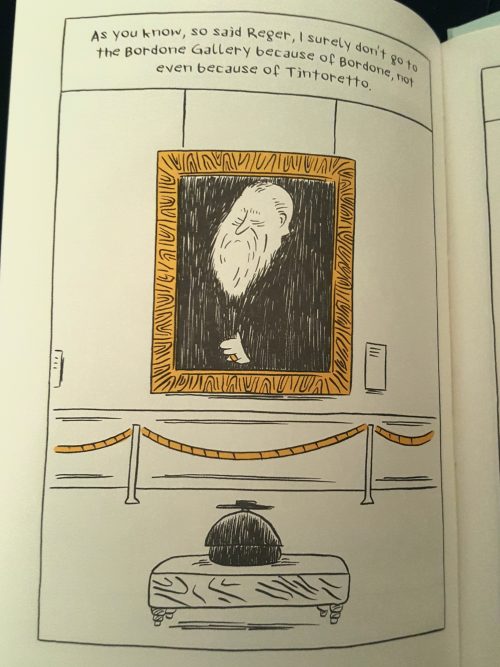 The story unfolds, if you will, at the musem, on a bench in the “so-called Bordone Gallery” directly across from Tintoretto’s White-Bearded Man. Here sits Reger, as he is wont to do every other day. Meanwhile, the narrator, his long-time friend Atbacher, observes him, just out of sight, from the “so-called Sebastiano Gallery” waiting for exactly eleven thirty, the time at which the two men have agreed to meet. Reger’s invitation is out of character because the they had met there just the day before and this second consecutive rendezvous was not in keeping with the typical pattern of either man. Curious as to the reason for Reger’s invitation to break from habit, Atbacher has arrived an hour early so as to watch his friend undetected. Naturally, this provides him the opportunity to launch into a lengthy account of Reger’s family history, his opinionated views, and his predilection to spend every other day at the museum, seated across from Tintoretto’s White-Bearded Man. In the novel this monologue consumes the bulk of the text. The same is true in this version which contains roughly the same number of pages, but much, much fewer words!
 We learn that Reger, the museum regular, has been visiting the Art History Museum for over three decades. Yet his attitude toward great art, the work of the “so-called” old masters, is one of disdain. Philosophically, he muses that a detail might be perfected, but the whole of any painting, sculpture, or other artwork ultimately leaves us appalled:
 One does not need to be familiar with Old Masters in its original form to enjoy this book (I wasn’t), but exposure to Bernhard in his full verbal intensity probably is. The satire, the heartbreaking warmth of the ending, and the sheer feat of rendering the mood and spirit of the Austrian writer’s pessimism and bleak humour into a graphic novel is not likely to be fully appreciated otherwise. I am a huge admirer of Bernhard, but I confess I’ve never really been drawn to graphic novels (pardon the pun). But the other night, when my son found this book on the doorstep of my old house where it had been left by a courier, I was immediately captivated. It has been a difficult few weeks and Bernhard’s misanthropic humour, oddly, is always strange comfort at such times. The beauty of this book is that it is not only a delight to read and look at, but I can imagine myself returning to it and rereading it many times (after all it doesn’t take very long—it’s akin to an instant hit of Bernhard relief).

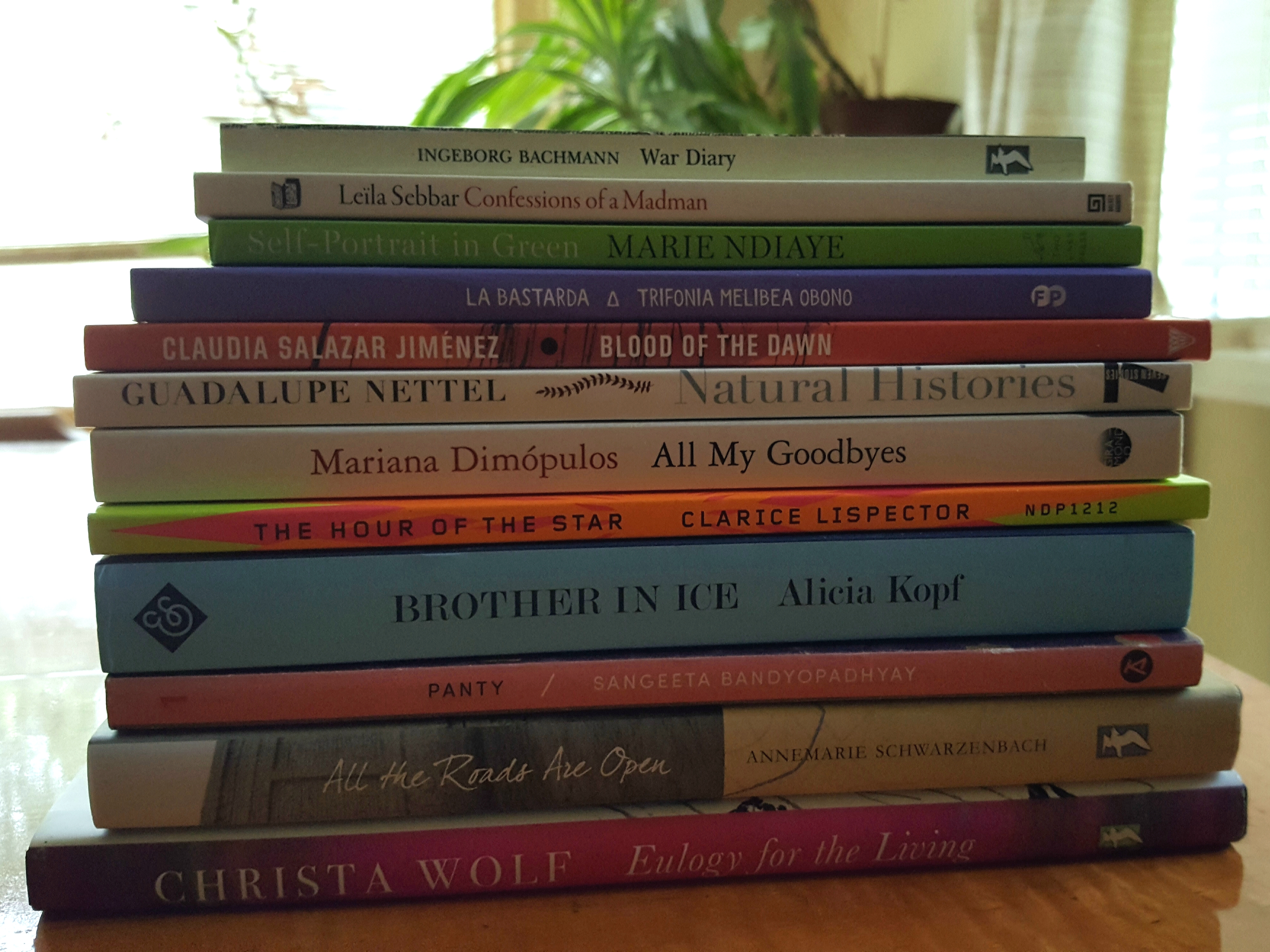
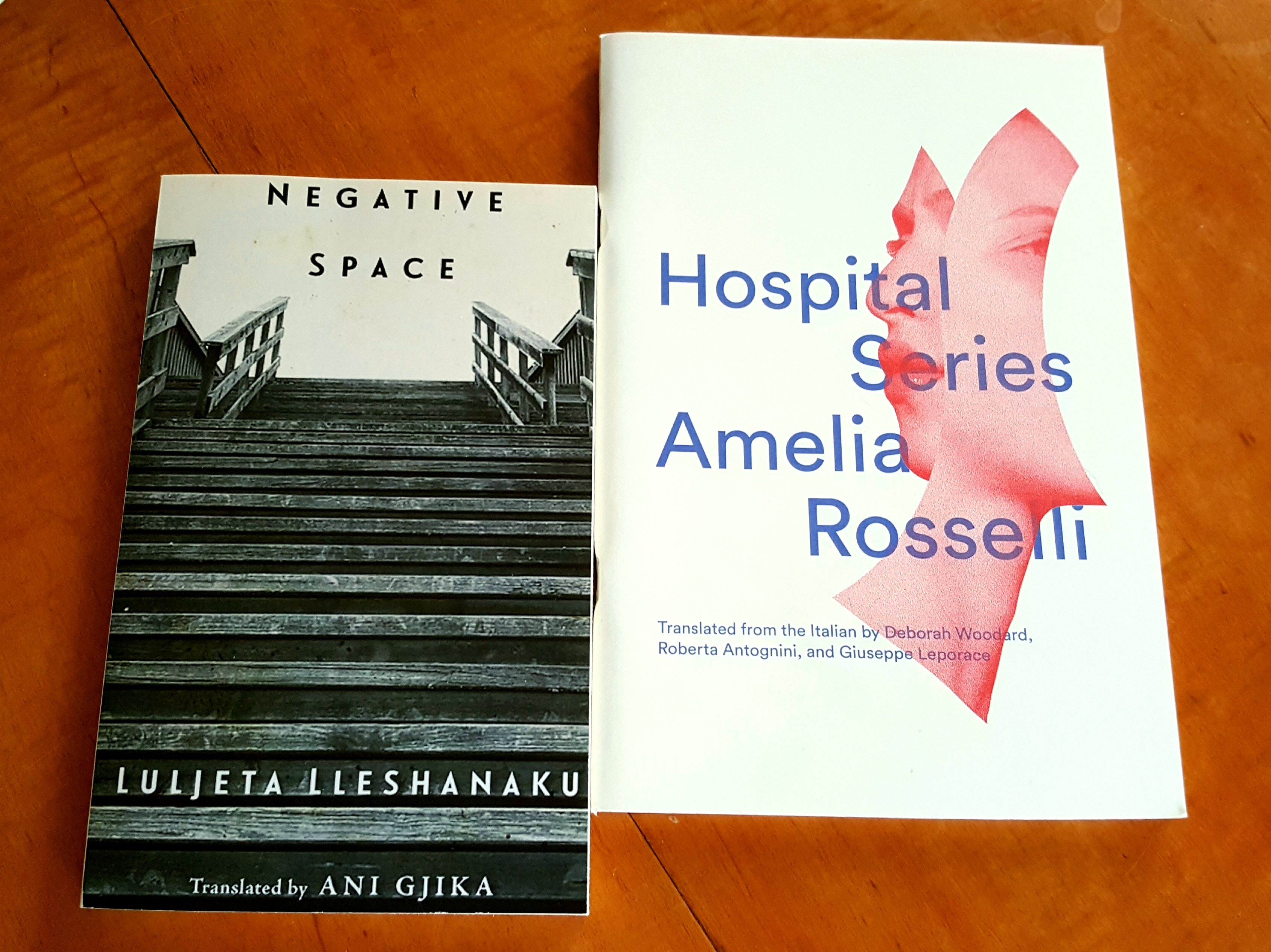




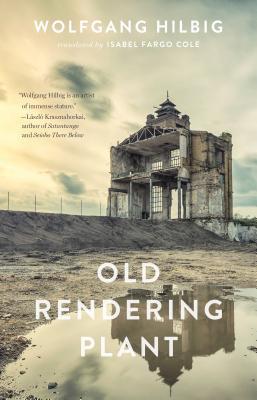
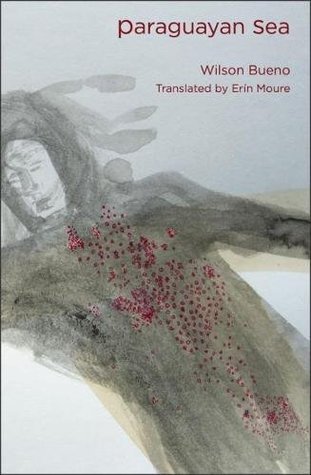

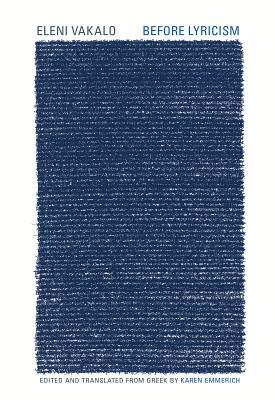

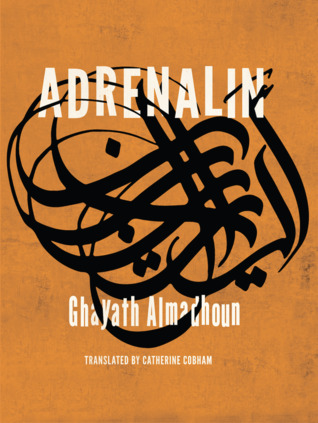
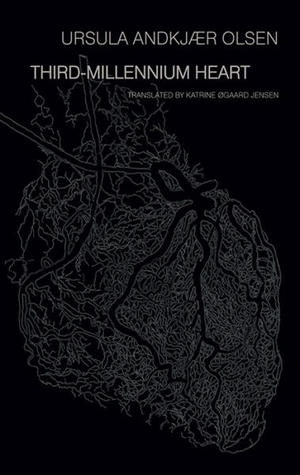
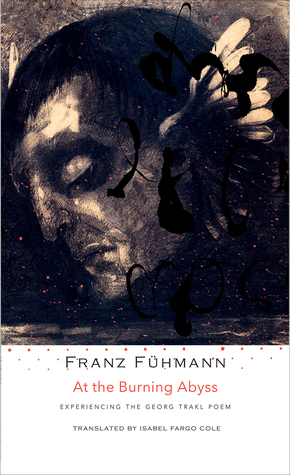


 roughghosts