Bohemian dreamer: A Gothic Soul by Jiří Karásek ze Lvovic

“Fiction is eternal; reality perishes” we are warned in the preface of A Gothic Soul, “Invented forms live, real ones vanish. Truth is ephemeral; illusion everlasting.” What follows in this classic of Czech Decadent literature, originally published in 1900, revived in a new translation by Kirsten Lodge and lovingly presented by Twisted Spoon Press, is a poetic account of the emotional and philosophical torments faced by a troubled young man who struggles to place his disaffected existence between real life as lived by others and the internal world of his dreams.

2015-05-19 19.33.24One can sense from the outset that this is not a happy story. The author has already made it clear that it will not be a “story” in the typical sense at all but rather a journey of internalized reflections. A romantic darkness and decay looms large, it is hard to imagine sunlight filtering through. The humour, the playful nods that the narrator directs to the great French Decadent writers, is very black indeed. And yet this work is permeated with a remarkable beauty.

The hero of A Gothic Soul is the last of his line, raised by maiden aunts after his parents’ death. His childhood is gloomy and oppressive, haunted by a fear of inheriting the religious mania that drove a cousin to take his own life. He responds to the external world with an affect of remote deadness while allowing to flourish, within his soul, an internal reality filled with light and magic. Each time he resolves to engage with world, to seek an end to his lonely isolation, he ends up retreating into his dreams to seek comfort. A deep conflict arises when his natural misanthropy clashes with his abiding desire for a true and perfect companion, a male friend and lover with whom he can meld body and soul. On the few occasions when he meets a potential friend, his fear and shyness drive him away.

“But everything was so distant. He was sick – he felt it. He could find no peace. It was as though all the atoms of his soul had been vapourized. He could no longer calm himself. He longed for a friend, a kindred soul. How beautiful to give himself to someone and to feel that he had given himself to someone. His life would immediately acquire meaning. What happiness! What charm!”

Early in his self-exploration he believes that the ultimate respite for his agonized soul lies in the Church, in monastic life. But his nihilistic temperament causes him to lose his grasp on his faith, to fall away from the idols and saints that once gave him comfort and to question what it means to believe in God. Spirits now begin to follow him through the streets and into his ancient family home. Fears of madness return.

His reflections then turn to the role that his Czech identity plays in this wretched existence to which he seems to be condemned. His Czechness, his city, become entwined with his struggle to make sense of his inability to live life fully. Is his nation seeking its own medieval traces, its own Gothic soul? Does the fate of his nation trying to define a space for itself in the Austro-Hungarian Empire mirror his own search? Some of the most stunning passages in this novella read like a heartbreaking ode to his native city.

“And now the evening bells rang out over Prague. A weight, darkly clanging and tragic, fell from their harmony. And unexpected numbness imbued the air. Stifling shadows hung drowsily over the rooftops. Not even a wing of a belated bird moved in this air. Everything suddenly seemed to be standing stock-still to listen to the conversing bells. Iron strokes broke through the windows of belfries and towers. The resonant sound cascaded down before dying out in the distance, flowing haltingly over the city’s rooftops.”

As the story progresses, our hero continues to overthink his dilemma as he wanders the streets of the city or takes refuge in his rooms. His reasoning pivots between optimism and despair. He realizes that he is losing his grip, that a life unlived is his likely destiny.

2015-05-19 19.38.39Jiří Karásek ze Lvovic (1871-1951) was an instrumental figure in the formation of the Czech Decadent movement. In a fascinating Afterword and author’s Biography, translator Kirsten Lodge describes the nature and development of this movement. In contrast with other strains of the same tradition, for the Czech Decadents the themes of despair and death are taken to the level of national obsession. For Karásek, his homosexuality also deeply informed his conception of Decadent thought. A desperate homoerotic longing runs throughout A Gothic Soul. This is complimented in this gorgeously presented publication by a series of illustrations by artist Sascha Schneider (1870-1927).

Twisted Spoon Press is a small independent publisher based in Prague. This is my first encounter with one of their publications. I was drawn in by the sheer beauty of this book. It is a joy to read and an important literary work that still resonates 115 years after it was first published. Trust me, an electronic copy would not be the same. You will want the hard cover version.

Collector of Corpses: Zone by Mathias Énard

Where to start with Zone by French author Mathias Énard?

“I climb into the trans-Italian express that must have been the zenith of progress and technology ten years ago for its doors were automatic and it went faster than 200 kilometers per hour in a straight line on a good day and today, a little closer to the end of the world, it’s just a train”

Imagine you are on a train bound from Milan to Rome, trapped inside the head of a French Intelligence Service agent, hung over and pumped up on amphetamines, who by reckless dalliance has missed his fight and is, as a result, having to make this critical trip by rail. Which gives him plenty of time to perseverate while he clutches a suitcase filled with documents graphically detailing war crimes, witnessed or reported to him during his time in the “Zone”, an area stretching from the Mediterranean to Central Europe. At the end of his journey he intends to sell the secrets he has collected, effectively resigning with a final act of treason, and disappear into a new existence with an identity assumed from a man long condemned to an asylum. And as the reader you are bound to the narrator, Francis Servain Mirković, for one breathless 517 page sentence.

zoneAs he streams forth a catalogue of brutal visions from his own memories, from history, art and literature, there is no respite. Even his love affairs are recounted with a desperate intensity. This not a book of bitter humour, it is a chronicle of horror, a memoir of regret. Francis is longing to be released from the burdens of his experiences, but that end is all very vague, growing even more so as he nears Rome. In the meantime, unable to sleep, to turn off his fevered brain, he is assaulted by grotesque images of his time on the battlefields of Bosnia with a Croatian militia unit. His lost comrades haunt him, his lost lovers loom large and through it all run threads of historical violence – decapitation is a particular obsession that he sees in, yet seemingly shares with, Caravaggio. Warriors of antiquity, martyred saints, Nazi war criminals all cast long shadows across the path of his racing thoughts. Violence is vividly described, and is often up close and personal.

This is not a leisurely read.

As a small concession to the reader, the single sentence is divided into chapters and periodically broken with segments of a novel about a female Palestinian fighter but there are times where one gets the distinct feeling that facts, and at times, streams of words words words are being employed as filler, as if anything less punishing than 500 pages would have been unthinkable. The risk however, is that the power of the images will be diluted, reduced to noise, numbing the reader, or worse, driving him or her away. Even the literary detours that turn toward Cervantes, Malcolm Lowry, William S. Burroughs, Jean Genet, James Joyce, Ezra Pound, Cavafy are typically delivered as measured portraits of ugliness and depravity.

If you have ever been in a room with someone who is in a manic state, you will know that they fill the space, suck up all of the available air. Such is the sensation of spending time in the presence of the narrator of Zone. Left to my own devices I am not sure I would have been inclined to open this book (sometimes size matters) or at least may well not have ventured past the first 150 pages or so. I may have disembarked at the next available station. And that would have been a shame.

Somewhere, two thirds of the way in maybe, the pressure begins to dissipate, perhaps as the drugs wear off, and the pace of the monologue eases, opening up space for more personal reflection and musing, more meaningful literary diversions and a sober assessment of his last serious love affair gone wrong. Even a little touch of humour. Mind you we are not exactly tripping through fields of daisies but the relentless deluge of decapitated heads, eviscerated corpses and raped women does ease to a slower flow of grisly images, as the full weary weight of the life Francis is longing to step away from settles in on him.

Zone 2

This novel, ably translated by Charlotte Mandell, was added to our IFFP Shadow Jury longlist when several members of the group argued that it had been sorely overlooked by the official jury. And it made the cut for our version of the shortlist. Given what I know now about the difference between the Independent Foreign Fiction Prize and the Best Translated Book Award, I feel that this is the type of book that more appropriately belongs to the latter. However in North America, Zone was released by Open Letter in 2011 (and, in fact, another Énard title was longlisted for the BTBA this year) whereas its eligiblity for the IFFP is based on the 2014 UK release from Fitzcarraldo Editions.

So what did I really think? My overwhelming first impression is that this book is one of style and literary merit but that at times it feels contrived. Perhaps, someday, when I look back I will think, yes, that was quite the experience. I may think back on Francis stepping forth at the end of his journey, reborn or perhaps beaten into the pavements of the Eternal City, with a sympathetic fondness of sorts.

I don’t know.

Reality is a miracle… Things Look Different in the Light by Medardo Fraile

In a story titled “The Sea”, a couple vacationing on the Mediterranean make their way to the seashore each day where the husband joins the line of humans on the beach who sit staring at the water, mesmerized. The experience fills him with a sense of unease.

“The waves were never the same, although they may have repeated themselves in similar cycles. The meaning of the wave never went beyond being a rather comforting mystical murmur. But the sea seemed to express itself in ways superior to the wave, in whole unintelligible paragraphs and speeches, as rich in modes and forms as it was in depths and fishes. On the other hand, I understood nothing of what it said.”

thingsLike the vast sea with its hypnotic surface and hidden secrets, reality is a shimmering quantity in the hands of Spanish author Medardo Fraile. A master of the short story, he is able to distill an experience or sketch out an entire life span within a handful of pages. In this collection, Things Look Different in the Light, he breathes life into a wide variety of unforgettable characters – young or old, ordinary or eccentric. We meet weary professors, crafty spinsters, uncommunicative middle-aged couples, meek bachelors and curious children who don’t quite understand the world of adults. We even encounter inanimate objects that take on lives of their own rich with meaning and emotion, bound to and yet separate from the human with which they are associated.

Consider “A Shirt”, the simple fable of sailor who, after a single love affair, returns alone to his hometown to take up the life of a fisherman. Each day he dons the same tartan shirt until one fateful day when shirt is left behind on the line:

“At around four o’clock in the morning, with no wind to speak of, the shirt began to move. It flapped wildly about, anxious and empty, as if wanting to break free of the pegs gripping its shoulders. The flailing sleeves rose and fell, filled by the invisible lament of some terrible tragedy. They occasionally joined wrists or else stretched wide, arms spread.”

Or share the frustration of the lingerie salesman in “The Lemon Drop” who had imagined a literary career for himself and can’t quite come to terms with the place where life has left him. He wonders what happened to the scabby-kneed boy who used to go bird’s nesting and smoke on the sly:

“Now I never smoke. I used to own a pellet gun. I have big hands, like cowboys in the Wild West. And by ‘I’, I mean this person who is me. This weary fellow who walks home bent beneath the weight of his briefcase, which, one day, grabbed hold of his hand like a dog and feels equally weary.”

From the opening story about a tongue-tied man at a baby’s birthday party, set on edge by a woman he cannot bear to face, to the chillingly beautiful “Last Shout” in which a child recalls a beloved grandmother’s final months; you know you are in the presence of a gifted storyteller. He manages to adjust the focus to bring to light the details that are essential to the tale he wishes to tell. No more, no less. Simply perfect.

Born in Madrid in 1925, Fraile started his career in experimental theatre, a background that may well account for the spare, magical quality of many of his short stories. He left Spain in the 1950‘s, and although he would ultimately settle in Scotland, his work was not made available to English speaking readers until the release of this wonderful collection from Pushkin Press, translated by the renowned Margret Jull Costa, with a warm and enthusiastic introduction by Ali Smith. A fellow blogger, Jacqui at JacquiWine’s Journal first drew my attention to this book so I knew it was one that I wanted to read (sooner rather than alter, that is)  when it was longlisted for this year’s Best Translated Book Award. Things Look Different In the Light has progressed to the shortlist.

Medardo Fraile died in 2013.

How do you see me, anyway? Sphinx by Anne Garréta

“What I was feeling for A*** needed its own embodiment; the pleasure I took in A***’s company demanded is own fulfillment. I wanted A***, it was true, and all my other desires, needs, and plans paled in comparison. Suddenly, the obsessive clamor for amorous possession took hold of me.
I was surprised to find myself desiring, painfully. In a sudden rush of vertigo, I was tantalized by the idea of contact with A***’s skin.”

What we have here is the impassioned confession of the unnamed narrator of Sphinx by Anne Garréta. A*** is the object of this sudden and intense desire. Neither are defined by sex or gender. This factor, acts as a constraint that places this French novel within the ranks of the works of the OuLiPo group of authors (though,written in 1986, it predates the author’s admission to this famed group). Yet in the end, Sphinx requires no such designation to work as a powerful literary, darkly existential meditation on memory, attraction and identity.
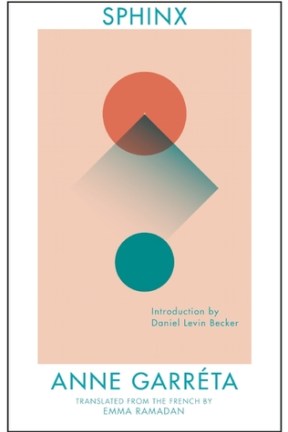
sphinxThe more I heard about this book, a new release from Deep Vellum Publishing, the more conflicted I felt about whether or not it was something I wanted to read. My reasons for that uncertainty are deep seated and will be discussed below, but let’s get one thing out of the way first… Sphinx is one stunning, dynamic and important novel. To finally have it available in English, and in a world in which the public understanding of sex and gender is evolving, serves as an invitation to approach this work as more than either a literary challenge in itself or a polemic of feminist/queer theory.

Oh, wait a minute. Is it a good story? One that stands on its own merits? At first blush, the set up sounds, and at points may even feel artificial, but that oddness passes quickly. The narrator is a young student of Catholic theology who is drifting without strong direction and, through a series of unusual, even disturbing, coincidences ends up working as a DJ at an after hours Paris nightclub. This serves as an introduction to a new world, an alternate reality that opens late at night, to unwind in the very early hours of the morning. Our narrator demonstrates a tangible ambivalence toward this radical change of lifestyle.

“I acquiesced to whatever presented itself without much arm-twisting, and I neither suffered from nor reveled in it: I was spared the exhaustion of searching and seizing. I was giving up a state of being that was in turn abandoning me and sliding into another that slowly, imperceptibly came to envelop me.”

In learning to navigate this world, an identity that may or may not be valid or true, is adopted to serve as a barrier, a means of mediating an alien environment. Within this identity a certain boundary, a sober vantage point is maintained until A***, an exotic dancer at a strip club, comes into the narrator’s life. At first their friendship is platonic, existing in a stylish public sphere. The narrator realizes it is not built on strong romantic or intellectual engagement. The attraction is one of opposites – race and personality – until sexual desire arises abruptly, throwing the narrator’s carefully constructed identity into a crisis which is heightened as A*** initially refuses to take their relationship to an intimate level.

When it is ultimately consummated, a highly charged sexual and romantic liaison develops, enduring several years marked by turns of passion, jealousy and domesticity. As might be anticipated in a union built on obsession rather than common interests, cracks and fissures begin to grow. This is heightened as the narrator seeks to revive abandoned theological pursuits, carving out time to focus on an essay, quite fittingly, on the apophatic tradition – the attempt to describe God only by negation. Later on, after the tragic end of this ill-fated love affair, the narrator will sink into a deeply existential rumination on love and loss. No sexual encounter, romance, intellectual or academic pursuit will fill the void left behind. A restless wandering overtakes our hero, driving a spiral into ever darker self exploration. Without the “other” as a frame of reference, it becomes increasingly evident that the self is isolated, disconnected.

“Had I confided more in A*** than in anybody else? What had I revealed? Had I unmasked myself? No, more likely I had exposed my own collapse, the ruin of the edifice I had so painfully constructed out of rhetoric and made to stand for an identity.”

At heart this is a novel of obsession, of memory, of mourning. The language is rich and sensual, with an intensity that is visceral and emotionally powerful. For that alone, Sphinx is a work worth attention.

But what about the matter of sex and gender?

I suppose it will come down to how important it is to have a fixed image of the protagonists in your mind as a reader and how fluid your conception of gender is in relation to sex and sexuality. Are they bound together, or three separate aspects of identity? For the majority of people, biological sex conforms to gender identity. They are experienced as one and the same. Sexuality hinges on the sex and gender of the persons to whom one is attracted. Transgender is an umbrella term for those for whom sex and gender do not fit exactly. The range of gender expressions, identities and bodies under that umbrella is wide and the intersection with sexuality can further complicate the issue. Queer theory aside, a novel like Sphinx opens up the potential for a completely free reading experience. One can choose gender, sex and sexuality as desired, play with alternatives in the reading, or re-encounter the work with repeatedly different contexts. Garréta has incorporated enough ambiguity to open up all possibilities. The decadence of club life is contrasted with the sober pursuits of the serious intellectual and blended with domestic engagement and the dynamics of extended family.

For a queer reader like myself it is a glorious opportunity, one I would have loved to encounter back in my isolated teenage years. Even into my 20’s and 30’s as I sought to make sense of a physically gendered space that felt fragile and ungrounded at its core, distorted and confused by my ostensible sexual orientation. Now in my 50’s, 15 years after transitioning, Sphinx speaks to me on yet another level. I can and have easily existed in the world as a gay transgender man without outing myself on either count unless I chose to (like I am at the moment). I am invisible not only online but in the real world. Yet the challenge arises in the building of close and honest relationships with others. I cannot talk about my past, my marriage, my subsequent affairs without resorting to a vagueness, to the construction of a gender neutral self-imposed witness protection program. If I am sexually attracted to someone an entirely different level of discussion is required. Coming out is a constant and continual process. Sometimes it is easier to retreat. And while English does not create as much difficulty for the moments in literature or life when genderlessness is preferred as French, a recent conversation with a young gay man from Mexico who is not out brought home to me the more profound challenges of a Spanish speaker who cannot even talk about a “partner” or “friend” without indicating gender!

I do not believe that the loneliness and ennui that seep into the narrator’s very marrow as Sphinx progresses are unique to queer experience. We all long for human contact and when you find yourself single when you had not expected to be alone, it becomes easy to imagine yourself undesirable, to berate yourself for not making the most of moments or opportunities that may be past, or seek fleeting satisfaction in meaningless encounters or distractions. However, the arrival of this novel at a moment when discussions and awareness of identity and sexuality have progressed well beyond where they were almost 30 years ago, is especially timely and exciting.

The anxiety with which I approached Sphinx was admittedly specific to my personal life history. I have been routinely disheartened by the way matters of sex and gender are presented in literature. I suspect that the author’s theoretical grounding would diverge from mine, but there is not, as I had feared, a perceivable political agenda that interfered in any way with my full enjoyment of this book. Thanks to a fellow blogger (Tony Malone) who challenged me in what was, in my time zone, a late night twitter conversation to give Sphinx a read – believe it or not it was his nod to Camus that sold me – I have become an enthusiastic supporter. I am writing this before I see his review but I am certain he will cover other angles.

Thank you to Deep Vellum for bringing this important work to an English language audience. Emma Ramadan’s translation is most wonderful. As she describes in her afterward, Garréta was forced to employ a great deal of ingenuity and creativity to avoid revealing the narrator’s gender. In English genderless narrators are not unique. A*** has to be presented with more care and less depth. But that is in keeping with the narrator’s own lack of understanding of A***. It all falls together beautifully with an intensity which is meditative, unsettling and, at times, deeply moving.

Witness to old times: Harlequin’s Millions by Bohumil Hrabal

“…what is human happiness? Whatever it is, unhappiness is always lurking just around the corner…”

One of the last novels by Czech author Bohumil Hrabal, Harlequin’s Millions opens as an elderly woman and her husband have settled into an old Gothic castle which has been converted into a pensioners’ home. This fantastical seniors’ residence, once the resplendent abode of Count Špork, is perched on the edge of a small town, a little place where, we are told, “time stood still”. From the opening pages, the reader is swept into the meditative melancholy reminisces of a once proud and self-centred woman. As she looks back on her own life and the way that history has formed and reshaped her hometown, and in fact, her country; images, phrases, and characters flow through her account echoing the serenade that is piped throughout the premises and lends the novel its name:

“The string orchestra curls gently around the old tree trunks and ‘Harelquin’s Million’s’ climbs like old ivy into the crowns and trickles down along the leaves, the corridors of the home are filled with a pleasant phosphorescent gas, with the scent of cheap perfume, so no one is really aware of the music, only when there’s a power failure and ‘Harlequin’s Millions’ is suddenly cut off, stops short, the way everything stops as if by magic in the tale of Sleeping Beauty, all the pensioners glance up, they look up at the speakers and the sudden loss of the music feels to them like when the lights go out and everyone longs to hear it again, because without it the air in the castle and along the paths in the park is unbreathable.”

HMThe gentle narrative flow will not be rushed. Each chapter is one long languorous paragraph. Our unnamed narrator is by turns sentimental and shrewd. Toothless, wrinkled and defiant, she casts her keen eye on her fellow pensioners and systematically dissects her own life and marriage. Her husband Francin remains glued to the radio, following all the news he can access from afar and looking ever to the future, while she realizes that she has become increasingly enamoured with the history of her town, with the past. Her guides are three eccentric male residents of the seniors’ home, her “old witnesses to old times” who periodically wax lyrical about the milestones that have passed, the characters who have come and gone, the memories that risk being erased like the weathered sandstone statues in the park and the cemetery headstones that are ultimately removed and carted away. It is difficult not to get wrapped up in this reflective monologue, swept away with her musings about joy, vanity and loss.

But be assured that this is not a novel without humour. In one particularly hilarious episode, a handsome young doctor who fills in for the regular octogenarian physician, arrives and shakes up the sleepy environment of the home. He cuts back sleeping medications, advises his male patients to smoke and drink more, and inspires this female patients to powder and preen. Then, as an antidote to the ceaseless string orchestra theme that filters through the grounds, he heads into the former banquet hall with a phonograph and an armful of records. Beneath the ceiling painted with glorious battle scenes from ancient Greece, the music he plays stirs in his ancient patients memories of youth, passion and the glory of war. But it is the doctor himself who snaps from the intensity of emotion, setting off on a wild rampage, trailed by his female admirers, like a hoard of crazed aged groupies. Needless to say, in the end, the medication regime is resumed, “Harlequin’s Millions” once again pours forth from the ubiquitous speakers, and order is restored.

An ode to his own hometown, Hrabal offers, in Harlequin’s Millions, a deeply affecting meditation on collective versus personal memory. For this little “town where time stood still”, time is only standing still for the observer. In the rooms and halls of the Count’s former castle, each elderly resident wanders lost in his or her own thoughts, passing time, waiting until it is their moment to move on. The past belongs to the community but its experience is in the sole possession of the individual. It is at once resilient and transient.

Stacey Knecht’s sensitive translation brings to life the beautiful, hypnotic prose of this wonderful novel – my first encounter with the work of Bohumil Hrabal and with another fine not-for-profit press, Archipelago Books. I am most impressed by both.

A little radiance: Farewell, Cowboy by Olja Savičević

“Everything’s the opposite of what it seems: hell is a comfort to the living, while heaven is ordinary blackmail.”

A deeply personal piece of unfinished business draws Dada, the spirited heroine of Farewell, Cowboy, from the towers of Zagreb, back to the grimy streets of her hometown on the shores of the Adriatic in this debut novel from Croatian poet and writer Olja Savičević. Once she arrives her first task is to relieve her older sister of the responsibility of keeping track of their mother who seems to be surviving on a routine of pharmaceuticals, soap operas and bi-weekly treks to the cemetery to visit the graves of her son and husband. But at the heart of Dada’s return to the Old Settlement is a need to lay to rest her questions surrounding the suicide of her beloved younger brother Daniel several years earlier.

2015-04-27 23.09.41Dada is feisty, in keeping with her fiery hair, an attribute she shared with Daniel and their late father who succumbed to at an early age to asbestos poisoning. An aficionado of the western film, spaghetti and American classics alike, her father spent his final years working at the local movie theatre and then, after the war, in a video store. He bequeathed to his son his love of western heroes and a jammed Colt pistol.

Upon her return to the Old Settlement, Dada settles in to her room under her brother’s fading movie posters, gets an old scooter running and cruises through town on her mission to piece together the past. She recalls the eccentric playmates with whom she roamed the streets and encounters a most beautiful young man who appears and reappears, usually playing a harmonica. Meanwhile it seems that a movie crew has moved in to shoot a film on a drab grassed expanse that will double as a prairie for a project spearheaded by no less than a legend of the bygone era of the spaghetti western.

The primary focus of Dada’s pursuit however, lies closer to home. The family’s neighbour, known to most as Herr Professor, a veterinarian who had befriended Daniel, has resurfaced. After a violent attack triggered by rumours about his sexual proclivities, he had disappeared. Months later, seemingly without warning, 18 year-old Daniel threw himself beneath a speeding express train. Now the old vet has returned. And Dada is certain he holds the key to her brother’s death; in fact she is bitterly obsessed with a desire to confront him, to confirm that he is the author of a cryptic typewritten letter that arrived a few weeks after the funeral, a letter that seemed to indicate that Daniel had been trying to contact the sender. Face to face over cake and barndy she cannot quite say what she wants. She grinds her teeth over his melancholy insistence that “I don’t ask anything of life other than a little radiance.” What on earth is that radiance he asks for, she wonders.

This postwar Balkan world is one of decaying architecture, graffiti scarred walls and woodworm rotted buildings. Tourists are moving in or passing through. Modern technology and old customs exist side by side. Dada is a most engaging heroine, her voice rings through the grime and dust of her environs with a cool crystalline clarity and youthful spirit. For example, after tracking down her former room-mate she recalls that her friend had considered herself the last emo-girl:

     “ ‘You’re certainly the oldest emo-girl, and probably the last’, I said.
I imagined her as a little old Gothic lady, but little old ladies, at least the ones here in the Settlement, are generally Gothic in any case, it’s in their dress code.
My room-mate and my Ma would get on well, I reflected. They could go to the graveyard together and shave their heads in keeping with the Weltschmerz.
I’m thinking as though she had settled in my head, I reflected, immediately after, anxiously. I really am my sister’s sister.
Sar-cas-ti-cal-ly, I reflected, in syllables.”

Savačević continually surprises with the originality and energy of her prose, translated skillfully by Celia Hawkesworth. Images are revisited, lines repeated, like refrains, throughout the novel, creating a very dynamic and original flow. Tragedy lurks in these pages, but what could be a dismal heartbreaking tale is lifted with humour and thoughtful asides. And that is the sense that lingers.

Farewell, Cowboy is another terrific offering from Istros Books, one of the wonderful independent publishers that can be harder, but not impossible, to source on this side of the Atlantic. And well worth the effort.

Do you see ruins? Pushkin Hills by Sergei Dovlatov

“ ‘Pushkin too had debts and an uneasy relationship with the government. Plus the trouble with his wife, not to mention his difficult temperament…
‘And so what? They opened a museum. Hired tour guides – forty of them. And each one loves Pushkin madly…’”

As Pushkin Hills opens, Boris Alikhanov is on his way to what he hopes will be a chance to pull the unravelling threads of his life together. He intends to secure a summer job as a tour guide at the Pushkin Preserve, a rambling estate dedicated to honouring and celebrating the life and memory of the famous Romantic Russian poet. He himself is writer whose literary ambitions have remained unrealized while his journalistic endeavours have raised a few official eyebrows. His marriage is in shambles, his refuge is the bottle.

As familiar as the tale may be, it is evident from the earliest pages that we are in the company of a narrator who is out to chart his own decline with a dry sardonic wit that manages to be, in turn, political, philosophical, and laugh out loud funny. Accepted on a trial basis by the collection of Pushkin fanatics in charge at the tourist centre – most of whom seem to be rather desperate middle aged women – Boris settles into ramshackle accommodations in a nearby village with a landlord even more decrepit than his abode. He then sets out to learn the tour guide’s script and routine.

PushkinHis stint at Pushkin Hills begins well. He masters the art of herding groups of tourists around the estate, riffing on the script when required and suffering the most foolish inquiries with surprising equanimity. Until his wife arrives. She is determined to move to America with their daughter, eager to follow the waves of immigrants leaving Russia, but Boris is bound by some attachment that he is not ready to cut. She asks him to join them or set them free, he begs her to stay. Yet once it becomes clear that she is committed, in fact even happy to be moving on with her life, he quickly begins to lose his precarious footing.

The end may seem almost inevitable. But the magic of this novel lies in author Sergei Dovlatov’s keen eye and ear for character and dialogue. Boris’ world, past and present comes alive in striking detail. At one point he reflects back on his courtship, such as it was, with his wife Tanya, noting the one time she called him. He arrives, after a little liquid fortification, to find her cousin waiting to meet him:

“The lad looked strong.
A brick-brown face towered over a wall of shoulders. Its dome was crowned with a brittle and dusty patch of last year’s grass. The stucco arches of his ears were swallowed up by the semi-darkness. The bastion of his wide solid forehead was missing embrasures. The gaping lips gloomed like a ravine. The flickering small swamps of his eyes, veiled by an icy cloud, questioned. The bottomless, cavernous mouth nurtured a threat.”

The purpose of this encounter is soon revealed:

“‘Why haven’t you married her, you son of a bitch? What are you waiting for, scumbag?’
‘If this is my conscience, ‘ a thought flashed through my mind, ‘then it is rather unattractive.’
I began to lose my sense of reality. The contours of the world blurred hopelessly. The cousin-structure reached for the wine with interest.”

Boris, for all his shortcomings is a deeply human and likeable protagonist. Even for a reader who lacks the depth of background in Russian literary and political history to pick up on all the allusions and often intentional misquotes in the text, Pushkin Hills is an intelligent, entertaining read. (An unobtrusive series of footnotes add basic background where relevant.) Originally published in Russian in1983, this translation by the author’s daughter, Katherine Dovlatov, brings to life a novel that manages to feel fresh and vital more than 30 years later and 15 years after the author’s death. As the translator notes in her acknowledgements, being able to work with her father’s rich material has allowed to her to continue a precious dialogue. A special gift indeed.

Pushkin Hills has been longlisted for the 2015 Best Translated Book Award (BTBA).

In the window of a passing train: Faces In the Crowd by Valeria Luiselli

“All novels lack something or someone. In this novel there’s no one. No one except a ghost that I used to see sometimes in the subway.”

Faces in the Crowd, the debut novel from the young Mexican novelist Valeria Luiselli, is indeed a book of ghosts. The narrator is a young wife and mother living in Mexico City. As she tries to carve out time and space to write a novel, she draws the reader into a reflective exploration of ghosts – the ghosts that haunt her present house, the ghost of a life she fell into living and working in New York City, and the ghost of Gilberto Owen, an obscure Latin American poet who lived in Harlem in the late 1920s.

And for a book of ghosts it is brilliantly, shockingly alive.

crowdThe novel opens with a deceptively simple narrative feel. Contemporary domestic life is played out against her reflections on her past life in New York City when she was younger, unencumbered and working as a translator for a small independent publisher. She catalogues the friends and lovers that drifted through her spare apartment. One day she happens to encounter the work of Gilberto Owen on a search for potential material for translation, but before long her professional interest turns into an obsession. She tries to pass off her translations of his work as translations by a better known poet, an attempt that comes dangerously close to succeeding. She rescues a dead plant from the roof of the building he once lived in. She imagines that she sees him in the subway – more than once. Finally it is clear to her that she must leave:

“In the subway, on my way home, I saw Owen for the last time. I believe he waved to me. But by then it did not matter, I’d lost my enthusiasm. Something had broken. the ghost, it was obvious, was me.”

For all the empty space in her earlier life, married life is clearly suffocating our narrator. She continually finds herself unable to breathe, struggling to focus on her writing in a large house, cluttered with toys, distracted by the demands of her children – simply referred to as “the boy” and “the baby” – and the jealous curiosity of her architect husband. As the fictionalized first person account of Owen’s life begins to assume a greater prominence within the story, her marriage starts to unravel (or perhaps she simply writes her husband into the background) while the overall narrative structure seems to disintegrate, boundaries blur. The novel within the novel becomes enmeshed with her day-to-day life, folding back on and re-envisioning the experiences recounted from her earlier life in New York. Or was that Owen’s life?

Echoing the continually reshaped game of hide and seek between mother and son running throughout this novel, Faces in the Crowd lays out a metafictional game of hide and seek. Can a horizontal novel be told vertically? How is such a story to be read? Where in translation does truth lie? And when can you play with truth? It winds up to a delightfully oblique ending. Or lack of ending – rather, an invitation to imagine, to reread.

I opened this book completely unprepared for the heart-stopping luminosity of the prose or the way that the narrative is fragmented and rebuilt to create a rich meditation on the nature of story telling. Valeria Luiselli demonstrates a maturity and confidence that belies her age without ever falling into a heavily somber tone. The translation by Christina MacSweeney maintains the lively, poetic flow of this impressive debut. I was pleasantly surprised by this intelligent and enjoyable read.

Faces in the Crowd has been longlisted for the 2015 Best Translated Book Award (BTBA).

Faces in the Crowd by Valeria Luiselli, translated by Christina MacSweeney                Coffee House Press, 2014

There are no roads here: The Last Lover by Can Xue

To enter into the pages of The Last Lover by Chinese author Can Xue, is to surrender yourself to a shimmering, surreal dream world – a space where human souls cross paths with animal spirits, experience love and loss, and embark on journeys that intersect with some measure of a real world then cross back into magical landscapes. There are no clear parameters to follow, once you feel you are beginning to make sense of things, the floor falls away beneath you or you find yourself trapped in a labyrinth, or both at once. Nothing is what it seems, and the main characters are equally confused, conflicted, uncertain about whom to trust or what is happening to them.

Does it all come together at the end? Brilliantly yes. Perhaps. And I’m not entirely certain.

lastTo attempt to outline the plot of The Last Lover would be fruitless. Essentially the novel revolves around several key couples living in an unnamed ostensibly western country. The central figure, if it is possible to see him as such, is Joe. He is an avid reader, capable of losing himself in books, forever weaving a story of his own from the threads of the stories he reads. His wife Maria is a housewife who weaves images into tapestries and seems to have a capacity to channel mystical energies. Daniel is their teenaged son who drops out of school to take up his passion for gardening full-time. The dynamic between the three family members shifts – close on some levels but following separate trajectories on others.

Vincent is Joe’s employer, the owner of a successful clothing company. He seems distracted and at odds from the onset, while his intense wife Lisa is convinced he is having an affair. Apparently he also appears to be able to be in two places at once, a remarkably common occurrence in the world of The Last Lover. Vincent and Lisa are deeply in love but wrestling with the demons of their own peculiar mid-life crises.

Reagan, a client of Vincent’s Rose Clothing Company, is the 50 year-old bachelor and owner of a rubber plantation south of the city where the others live. He is drawn to Ida, a young woman of obscure Asian origin, who is working on his farm. Theirs is probably the most overtly surreal of all the relationships, but that is not imply that any couple has anything approaching a routine domestic existence. The overlapping and entwined connections between the six key characters forms a strong thread that pulls the reader into and through this anfractuous tale.

Winding in and out of the lives of the key figures is an ambiguous cast of other entities – mysterious Asian and/or Middle Eastern women, odd servants and drivers, eccentric loners, beautiful street cleaners with curious doppelgängers and a host of cats, snakes, birds, mice, insects and other creatures. Earthquakes rumble throughout the novel, shaking some characters to the core while passing unnoticed by others. Fires rage, floods wash mountainsides away, roses exert magnetic energies, and dream worlds collide – not just with assumed reality, but between dreamers. Sexual desire arises frequently – at times characters are surprised by the intensity of the arousal, the unexpected gender of their object of attraction and the insubstantiality of most ensuing encounters.

As the story unfolds, moving through of layers of unreality, the tendency is to try look for clues, to assign meaning and value. My thought is that meaning is a slippery concept here, amorphous and shifting. Can Xue herself has advised that modernist literature requires the reader to turn inward to seek the structure of time and space within one’s soul, to be able to grasp the structure of the work. But structure is one thing, meaning is something else entirely. I would argue that this a work that will open itself up to the receptive reader, and be met by each reader on his or her own terms with what they bring to the experience.

I took pages and pages of notes, delighting in tracing connections, amazed by the depth of reading possible. In the end I was most keenly aware of themes of migration, the sense of a lost connection with a home left behind, the loneliness of love, the ambiguity of remembering and forgetting, and the increasingly virtual quality of our connections with others in our modern world. But those are my perceptions at this moment. Can Xue, (her real name is Deng Xiaohua, her pseudonym meaning “dirty snow that refuses to melt”) is a self taught writer. The Cultural Revolution abruptly ended her education after elementary school, so she took to educating herself, reading poetry and fiction and steeping herself in the classical Western canon and Russian literature. She has cited Kafka, Borges, Cervantes and Dante as influences. Echoes of Calvino are strong and I could not help but think of contemporary writers like Ben Okri and Sjón among others.

This is actually my first encounter with contemporary Chinese literature. This morning it was announced as a contender for the Best Translated Book Award (BTBA), making it the one title to appear on both major annual translated fiction award longlists. Annelise Finegan Wasmoen’s translation is clear, spare and lyrical. She maintains a steady pace and brings to life the sounds that reverberate throughout the text – the su su rustling of pages, si si hissing of snakes, the cha cha whisper of snow – preserving what one imagines might approach the sensory experience of reading The Last Lover in the original Chinese.

Independent Foreign Fiction Prize 2015 / Best Translated Book Award 2015: A demanding read that defeated a few members of our IFFP shadow jury, this was a highly rewarding reading experience for me. I will definitely seek out more of Can Xue’s work. A taste of her short stories, some of which can be found on line and this insightful feature from Music & Literature were helpful, though I avoided reading other interpretations closely before finishing the book. I would encourage a reader interested in a challenge to persevere, open to the riches that this type of literature can offer.

Update: The Last Lover has been awarded the 2015 BTBA Award. Of the six of the ten shortlisted BTBA titles I read it was my favourite all along. Congratulations to Can Xue and Annelise Finegan Wasmoen!

Imagining a life lost: In the Beginning was the Sea by Tomás González

For aspiring novelists, the greatest inspiration sometimes lies very close to home – at the heart of their own families. And most often, it is not a happy circumstance they are seeking to reconcile when setting pen to paper.

seaIn the late 1970s Colombian author Tomás González was struggling to build a career for himself as a writer. The murder of his brother Juan, on a farm where he had retreated to find a refuge, would provide the central focus of his debut novel In the Beginning was the Sea, first published in 1983, but not released in English until 2014.

There is a distinctly sober, calculated tone to this tale of J. and his girlfriend Elena, two faded hippies who seek to escape a life of drugs, alcohol, and partying in Medellín by purchasing and moving to a remote tropical farm. J. dreams of a simpler life, a new beginning. It soon becomes clear that he has absolutely no business sense at all. He repeatedly allows himself to be swindled and makes a series of reckless investments. As his debts mount, he demonstrates an uncanny ability to dig himself in deeper, disregarding the warnings of those around him. To add insult to injury, Elena and J. have a volatile relationship at best – one that the isolation of their new home does nothing to mediate. She tends to be caustic and unpleasant, especially to the native blacks who work for her or live in the area. The dislike is instantly reciprocated. J. is much more affable with the locals, a nature lubricated by increasingly copious quantities of cheap alcohol. But as time goes on, his world continues to spiral downward. In the end, as we are repeatedly warned, it will cost him his life.

As the story unfolds, González maintains an emotional distance from his subjects, but he excels at bringing the tropical farm to life. His language is highly evocative.

“Smells. The murky smell of the mangrove swamps carried sometimes on the breeze. The musky, resinous smell of crabs, dead and still raw. The smell of paddocks pounded by the immovable hammer of the noonday sun. The smell of mingled smoke and coffee from the kitchen. The lunchtime smell of fried fish, fried plantains, the heavy scent of
coconut rice. The smell of the suntan lotions and the moisturizers that made Elena’s skin more perfect.”

If there is a weakness here, it is the lack of a solid reference for the hostile and unpleasant behaviour Elena demonstrates throughout this novel. From the opening scenes where her precious sewing machine is damaged, we see a woman who refuses to tolerate any perceived incompetence in others. One is left to wonder what is behind this and what she ever saw in J. A history of divorce and depression is hinted at. His weaknesses are examined a little more closely and we know that he is torn between attraction and frustration with Elena, and that he harbours a deep personal sense of despair and failure. But again, the why’s are never fully explored.

Though some factors or circumstances may, in truth, defy full explanation; In the Beginning was the Sea does draw to a close with an imaginative and heartbreaking elegy, perhaps the one of the finest moments in the entire book.

Independent Foreign Fiction Prize 2015: Pushkin Press deserves to be praised for bringing long ignored works and authors to an English speaking audience. Frank Wynne’s translation is clear and vivid. I hope we will see some of González’s more mature work available in the future.