People look so human: Becoming Animal by Teresa Präauer

Just exactly where can we draw the line between human and animal, man and beast, and exactly how fuzzy (or furry?) is that line? How has our understanding of movement across that line changed over time? And what about those beings, those creatures that have been understood, or imagined to stand somewhere in between? These are the kinds of questions that Austrian writer and visual artist, Teresa Präauer, entertains in her charming, yet focused philosophical and cultural essay, Becoming Animal. The terrain she explores is one populated by a host of liminal creatures—hybrids, monsters, and chimeras— the sort of beings that have continued to inspire both our scientific and artistic imaginations from Antiquity through to the present.

Präauer begins with the harpy, one of the most distinctive figures to appear time and again in early efforts to catalogue all known living beings—factual, mythological, and “exotic” alike—that occupied artists and thinkers from the Medieval era on into the Age of Discovery.

In the Historia naturalis animalism, a seventeenth-century treatise on natural history by John Johnston, there is a bird-like creature with a human head. This ‘Harpyie’ or ‘Harpyia’ has a sceptical, not unfriendly face and long, flowing locks that are gently tucked behind one ear and extend halfway down her body—a bird’s body, of course—the plumage growing thicker and darker towards the back. Compact like a small chicken, the harpy sits atop a pair of enormous talons that could just as easily support a bird of prey.

It’s not her first appearance in natural histories, she has been depicted and evolving for a century. From our scientifically “sophisticated” vantage point today though, such a creature and many of her companions depicted in such volumes seem fanciful, but were they any more so than the angels and demons that also figured in many hierarchical systems? And early Modern scholars often had to work from accounts and drawings made by those with direct experience of the animals in question, as well as reports from travellers often carried second or third hand over time or distance, as they strived to catalogue and categorize all forms of life—mineral, vegetable, animal, and magical. Many of these life forms sat on the edge of classifiably, “pretty monsters” like the harpy and, as time went on and naturalists became more rigorous in their efforts, the fanciful creatures began to be weeded out, but others, like humans with hirsutism, found themselves defined as distinct from their hairless brethren, but like all humans, still very different from other primates. Yet, now, with the ability to study DNA, we know we share 99% of our genes with chimps and bonobos and suddenly the need to once again draw a clear boundary between ourselves and animals has become more important—and more difficult to maintain.

A relatively brief work, only 96 pages long, Becoming Animal is not a chronological survey of the development of taxonomical conventions—although Linnaeus makes more than one appearance—but rather a varied account that moves back and forth, from Michelangelo to contemporary literary theorists, from prehistoric cave paintings to “furries.” It is an engaging flow of ideas that pulls in scientific elements along with literary sources such as Ovid, Kafka, Nabokov, and Inger Christensen to explore the many facets of our connection with and within the natural world. It is the kind of entertaining exercise that can’t quite be pinned down, but Präauer’s primary interest ultimately lies in the space between human and animal, a space that can be approached from either direction. It is a space of movement. She notes that French theorists Deleuze and Guattari, when speaking of “becoming-animal,” perceived it as one of many forms of being, as a “demand for a mode of writing that moves within transitions and liminalities,” however:

Becoming is a verb, a doing that does not mean being. I write ‘becoming animal’ as two separate words, not joined by a hyphen. Animal is noun, and becoming is a verb. When I am becoming animal, I am not an animal. I am in transition. An animal that is becoming human is also in such a transition, albeit in a different way.

This thoughtful essay ends, as it opened, with the author observing the myriad forms of life visible from her window, leaving her reader with much to contemplate about this world in which we are just one element of a much larger whole.

Becoming Animal by Teresa Präauer is translated from the German by Kári Driscoll and published by Seagull Books.
Counting, accounting and recounting: The Folded Clock by Gerhard Rühm

two!
one two  –
one two  –  three!
.        two
one two three  –   four
.       two

“a recounting,” the first number poem you encounter in Gerhard Rühm’s The Folded Clock, opens with a lengthy note explaining exactly how the piece should be recited—volume and intensity directed and measured—before erupting across the following five pages as numbers, spelled out, descend, rise, and repeat. Finding the flow and riding it (guided with a few more directives along the way) is not difficult, especially if you allow yourself to read aloud and, there are you are, from the very beginning, not simply reading but actively engaging with the poem.

And there are ninety-nine more, each one involving numerical elements in some shape or fashion. Some are sequential, others visual, still others are in verse form. Clever or funny or profound, it is amazing just how far numbers can take you.

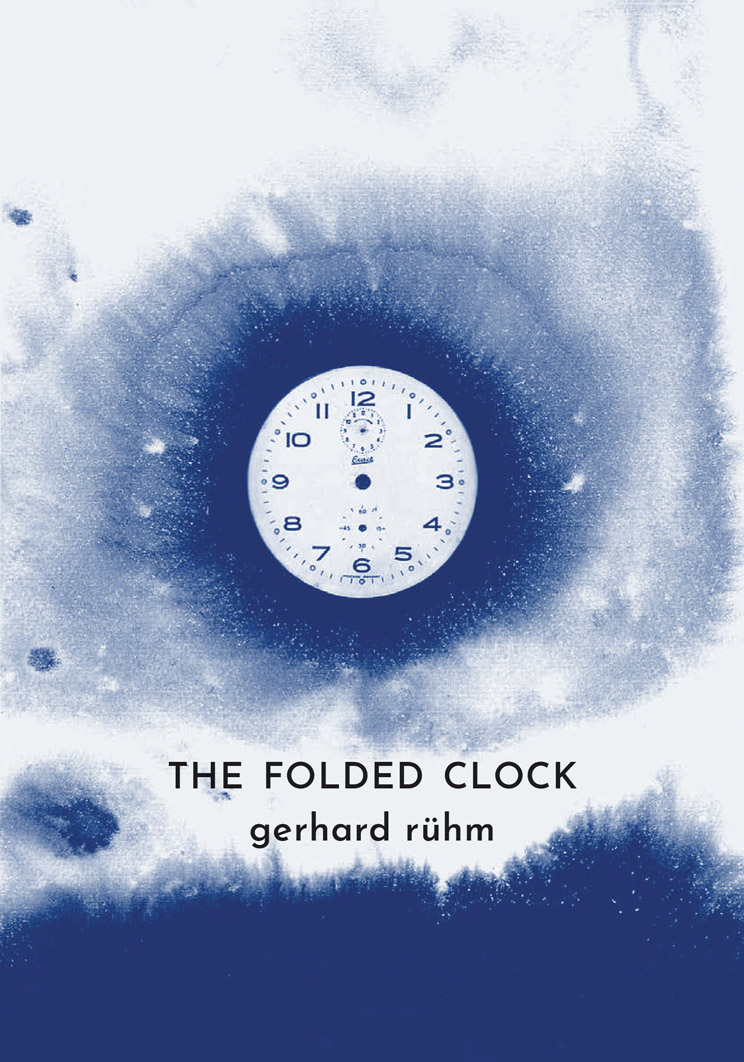
Born in Vienna in 1930, Rühm, who recently celebrated his ninety-fifth birthday, is an author, composer and visual artist. His poems reflect all of these interests. He was an early practitioner of concrete poetry and an original member of the influential Wiener Gruppe. His interest in numbers as “the most pared-down and at the same time most universal element of design” goes back to the early 1950s. When he composed his first number poems in 1954 he was unaware of Dadaist Kurt Schwitters’ own explorations in this area, but he has continued to incorporate numerals and digits into his spoken and visual poetry, expanding the possibilities numbers offer. The Folded Clock, newly released from Twisted Spoon Press in Alexander Booth’s translation, gathers one hundred of these poems in a handsome volume.

Many of Rühm’s poems play with the rhythm and sound of numbers in various sequences and patterns. Others exploit visual qualities and double meanings that arise from the titles and the images or words they are paired with. And a sly humour surfaces throughout, as in “imperfect counting poem”:

one
two
three
four
five
six
seven
eight
nine
toes

one’s missing

Or “sixty-nine pairs of lovers” which depicts, inverted on their side, six rows of ten and one row of nine (sixty-nine) 69’s.

But, Rühm is also inclined to employ numbers and words to make thought provoking statements about the world. “time poem”—another piece that begins with a note on recitation—takes on cosmic dimensions starting with:

1 january, 12:am: bang!
2
3
4

And so on, counting down one calendar year, day by day, marking the significant events, from the Big Bang to the first moon landing. Given that fish don’t begin to swim in water until December 19, the final day of the year opens up, first by hours, then half hours, and by 11:30 pm, minutes, until the final minute opens up into seconds to allow human history from the first cave paintings to space exploration to fall int place. (You can read this poem online here.) Elsewhere he allows climate change, odd historical facts, and interesting news stories inspire poetic creations. Ruminations on living also fit well with the measurement of one’s personal relationship to time as in “sense of time”:

a week ago i was still a child
five days ago i  was an adult
four days ago was the time of the “vienna group”
three days ago i was living in berlin
for two days now i’ve been in cologne
everything since the turn of the millennium happened yesterday
since early this morning i haven’t aged at all

The variety of poems in this collection is wide and endlessly entertaining. They range in length from just a few numerals, to pieces that extend for several pages, to sketches and collages. Even if you fear you might be intimidated by avant-garde or experimental poetry (or poetry at all), this is a work that is not only intelligent and entertaining, but that contains many pieces that you could easily find yourself unable to resist reciting aloud.

The Folded Clock: 100 number poems by Gerhard Rühm is translated from the German by Alexander Booth and published by Twisted Spoon Press. (Excerpt and images can be seen at the publisher’s website.)

A Viennese Odyssey: Ulysses by Nicolas Mahler after James Joyce

James Joyce’s Ulysses is a monumental work of Modernist literature, dense with detail and interior narrative,  so when an illustrator and author known for a characteristically minimalist style of graphic storytelling decides to reimagine this classic what could possibly go wrong? Nothing if it’s Austrian illustrator and author Nicolas Mahler holding the pen.

This ambitious volume is my second encounter with Mahler’s ebullient art and wit. The first was his delightful take on fellow Austrian Thomas Bernhard’s Old Masters, a work that didn’t have to break with location or language in its reincarnation. However, this time he is transporting another equally idiosyncratic writer from Dublin to Vienna and from English to German (translated back into English in this edition by Alexander Booth). This is a retelling “after Joyce” as liberally inventive as the original. As one can imagine, the medium necessitates some streamlining of the story, so Stephen Dedalus is left out (although there is a nod to his tower abode) and some key scenes in which he appears are reimagined in a wild exposition of our German Bloom, Leopold Wurmb’s sexually frustrated, guilt-ridden fears and obsessions. But the parallels with Joyce’s masterpiece are wonderfully realized; after all, the visual medium can reproduce the overlay of experience and internal monologue in a remarkably efficient manner. As they say, a picture is worth a thousand words.

So we find ourselves tailing along after Wurmb (who unfortunately resembles his implied namesake  Wurm” or worm) as he makes his way around Vienna on June 16, 1904. While Bloom was an advertising canvasser with the Freeman’s Journal in Dublin, Wurmb is similarly employed by the Viennese Neuigkeits-Welt-Blatt. Headlines, excerpts and image offsets from the June 16, 1904 edition of this paper are used to great effect in the chapter where our hero goes to the office. Mahler also draws on images and advertisements from some other Vienna publications from the same day and finds German names for key characters from the same archival sources. But he also adds a really special touch to his Ulysses. Joyce’s novel was first published in 1922, at a high point in the history of newspaper comics, so we find in the pages of this graphic variation many of the cartoon characters who were popular at the same time. Most notably, Olive Oyl stars as his secret romantic pen pal, while Popeye takes on the role of the garrulous sailor W. B. Murphy who regales Wurmb with unlikely tales of adventure in the bar.

If some of the fun of reading Joyce’s novel is looking for the echoes of Odysseus’ journey in the narrative, some of the fun here is marveling at how cleverly Mahler manages to echo key features of Bloom’s journey in his Austrian themed tribute. Wurmb, like Bloom, is trying to avoid going home, knowing that his wife Molly, a singer, will be having sex with her manager Berlyak that afternoon. The impresario’s posters haunt him on his wanderings and reminding him he’s a cuckold, while recurring thoughts of sexual frustration, bitterness and depression mark his day. He mourns his infant son, dead now eleven years, attends a friend’s funeral, takes care of bodily functions and finally, after a day of work, social engagements and some wild, guilt driven fantasy, returns home without his key and is forced to break into his own home. From her bed Molly then takes the stage, so to speak, with a version of her infamous soliloquy which, if necessarily abbreviated, is not devoid of much of the key imagery and sentiment.

Of course, Ulysses is a novel famous for the use of stream of consciousness. Bloom’s inner thoughts are injected into the events of the day (or vice versa). One might wonder if a graphic novel, and one that leans toward a relatively spare open form, can reproduce this effect. Mahler’s solution is to project Wurmb’s thoughts in large, bold letters, across sparsely illustrated pages and over cartoon-strip style interactions when his thoughts wander. Obsessions are illustrated boldly. Thus his inner world takes precedence, as it should, if you want to do justice to Joyce’s masterpiece. Mahler’s variation on this classic is inventive and funny without undermining the sadness and ordinariness of the Everyman at its heart and might even inspire a few readers who have not yet read (or, ahem, finished) the Irish original to pick it up.

Ulysses by Nicolas Mahler, after James Joyce, is translated from the German by Alexander Booth and published by Seagull Books.

Is he really gone: Requiem for Ernst Jandl by Friederike Mayröcker

The loss, he says, the loss of someone so
close, the loss of a HAND and HEART
PARTNER is something so completely and
utterly devastating, yet it may be, we may be
able to keep right on speaking with this HEART and
LOVE PARTNER continue conversing and may
even expect a response from this person.

I’ve long had an interest in literary expressions of immediate grief, a much more elusive task than one might imagine until actually faced with the intensity of loss and the longing to express that experience at its most raw. Then it seems almost impossible, yet Friederike Mayröcker’s Requiem for Ernst Jandl may be one of the most successful unmediated responses to the loss of a loved one that I have encountered.

Paperback edition, German List

Mayröcker met fellow Austrian poet and writer Ernst Jandl in 1954. They both left marriages to be together, but did not marry or share a home. Theirs was a deeply creative lifelong partnership, they supported one another’s work and collaborated on radio plays and other projects over the next forty-six years. When Jandl died on June 9, 2000, she was devastated by the loss yet miraculously she was able to channel it into a series of poems composed within the first months after his death. The rawness and confusion of grief is evident. Her characteristic, experimental style which employs capitalization, italics and numerals, and often incorporates fragments of private conversations and excerpts from letters and diaries, serves to heighten the anxiety, confusion and emotion of this period of early grief. Also woven into the series of poems that comprise this requiem is an earlier piece that captures the nature of the interplay of the their creative energies.

There is a sense throughout this slender collection of words and emotion spilling out on the page, gathered up and coming loose again. The great love, the completeness of the loss, and the exhaustion of caring for a weak and dying man all have to be released, repeatedly, in the tumult of grief and guilt that colours these early months. Each poem approaches these conflicts, but the final long piece in the book, the prose poem “’the days of wine and roses’, for Ernst Jandl,” reflects this emotional urgency with particular power. Here Mayröcker seems to be sorting out a flux of memories, thoughts and feelings as expressed to a friend, Leo N.

And what about the pencil, I say to B., why
on the morning of his death did he draw a
pencil on a piece of note paper, I say to B.,
why did he ask for a pencil, there were
plenty of pens on the little table next to his
bed, the quill of the Holy Ghost lingered
longer on Job’s sorrows than it did on the
delights of Solomon, B. says, I tell Leo N.,
is he really gone, is he really in heaven now,
a heaven you yourself believe in, the
passageway into the other world, says Leo
N., is described as stepping through a
waterfall, and the vulture flies through the
sun, I went up to his room, up to a bed that is
empty and say to him I feel better today, but
I am thinking: I NO LONGER have any hope
for this life, at 3 o’clock in the morning…

In the crush of the weeks and months following Jandl’s death the voices of some friends and phone calls from others rise and fall. This is a loss both deeply personal and shared with a community of artists, and at times a tension is evident, one senses that the poet both welcomes the company and wants to be alone. Needs the comfort and doesn’t know what to do with it.

Of course, the death of her companion and creative partner did not silence Mayröcker. She continued to write startling, challenging and innovative poetry and prose right up until her death last year at the age of ninety-six. Jandl continues to appear and inspire along the way but never in such an open, unabashed lament as in this Requiem—one that fittingly closes with one of his best known poems, the humorous sound poem ottos mops complete with Mayröcker’s original reflection on the composition written in 1976, long ago she admits, adding that if she could have one single year from that now distant time back, “how intensively I would live it, how tenderly and how happily.”

Requiem for Ernst Jandl by Friederike Mayröcker is translated from the German by Roslyn Theobald and published by Seagull Books.
Reading Women in Translation: Looking back over the past twelve months

For myself at least, as Women in Translation Month rolls around each August, there is, along with the intention to focus all or part of my reading to this project, a curiosity to look back and see just how many female authors in translation I’ve read since the previous year’s edition. I’ve just gone through my archives and am pleasantly surprised to find twenty titles, the majority read in 2022. Within this number are several authors I’ve read and loved before and a number of new favourites that have inspired me to seek out more of their work.

First among these is Lebanese-French writer Vénus Khoury-Ghata, whose The Last Days of Mandelstam (translated by Teresa Lavender Fagan) so thrilled me with its precision and economy that I bought another of her novellas and a collection of poetry, Alphabet of Sand (translated by Marilyn Hacker). I’ve just learned that another of her Russian poet inspired novels, Marina Tsvetaeva: To Die in Yelabuga, will be released by Seagull Books this fall. I can’t wait!


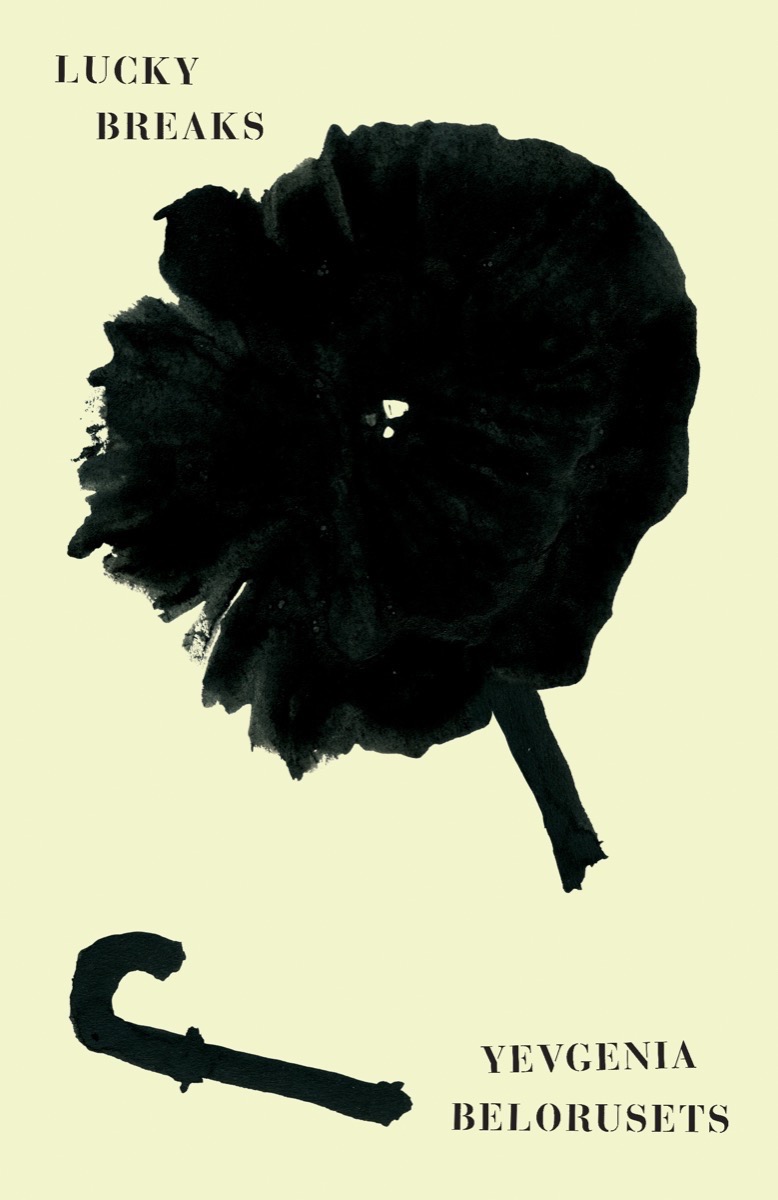
The advent of the war in Ukraine instantly drew my attention to a tiny book I had received from isolarii books. The name Yevgenia Belorusets became suddenly and tragically familiar as her daily diary entries from Kiev were published online. I read that small volume, Modern Animals (translated by Bela Shayevich), drawn from interviews with people she met in the Donbas region and as soon as it became available I bought and read her story collection Lucky Breaks (translated by Eugene Ostashevsky). Although both of these books reflect the impact of war in the east of the country, they could not be read without the context of the full scale invasion underway and still ongoing in her homeland.

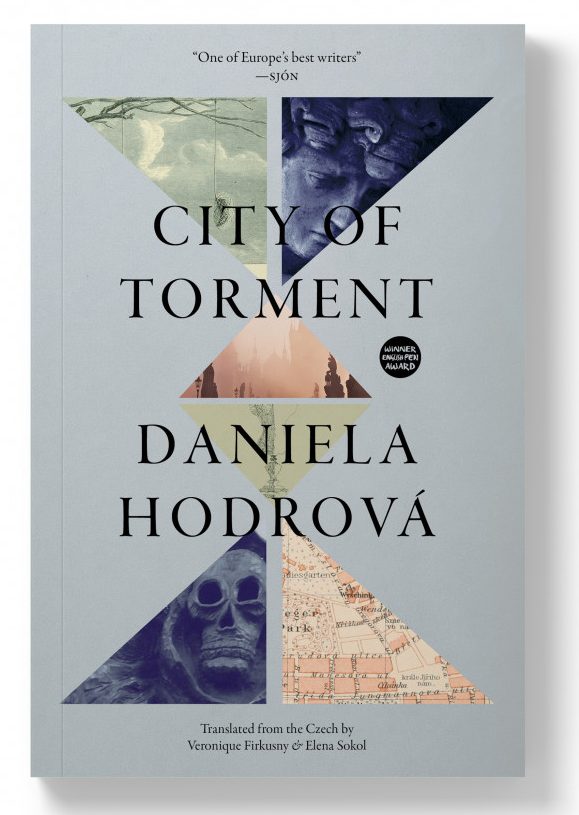
Another author I encountered for the first time that inspired me to read more of her work was Czech writer Daniela Hodrová whose monumental City of Torment (translated by Elena Sokol and others) is likely the most profoundly challenging work I’ve read in along time. Upon finishing this trilogy I turned to her Prague, I See A City… (translated by David Short and reviewed with the above) which I happened to have buried on my kindle. A perfect, possibly even necessary, companion.

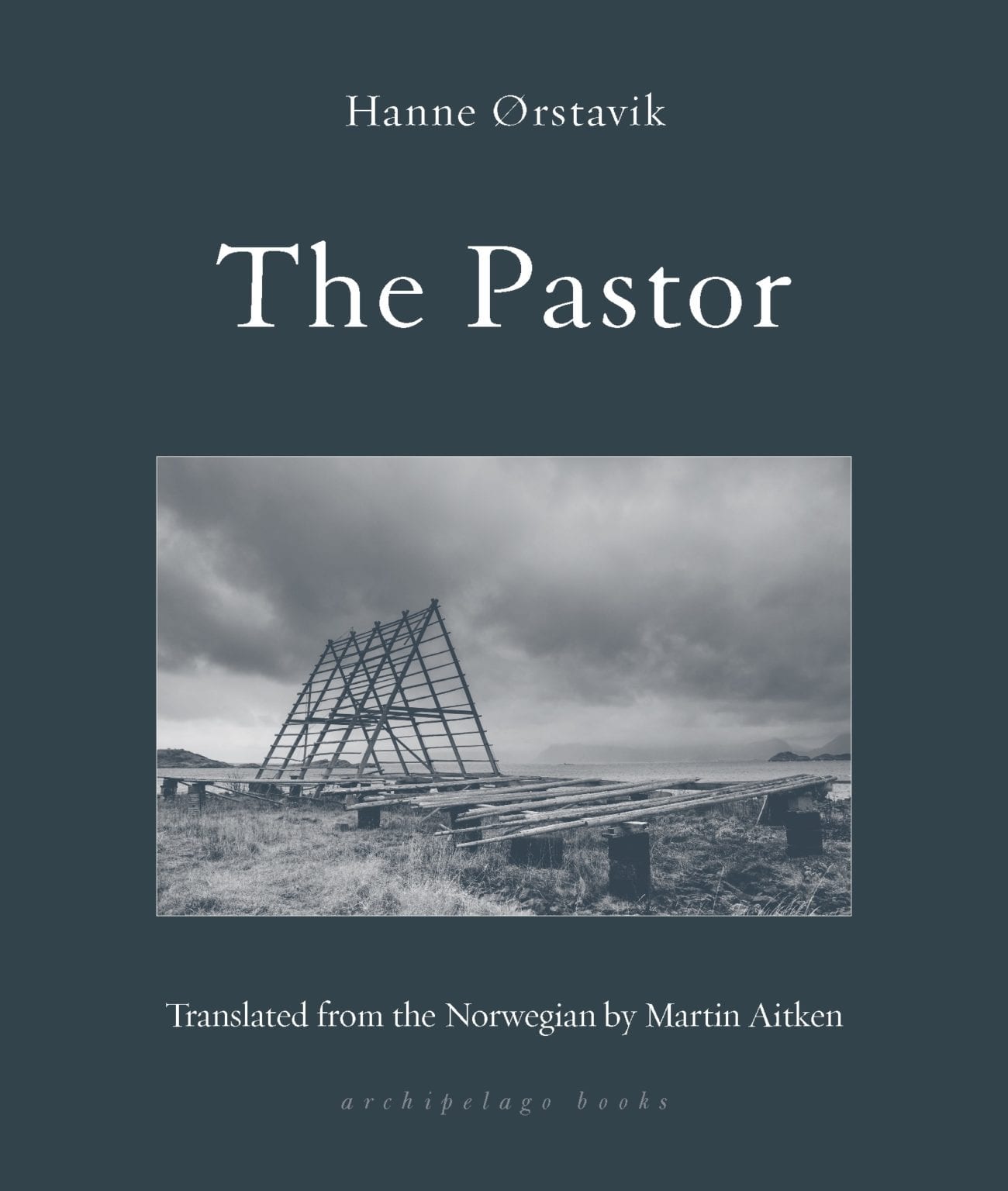
My personal Norwegian project introduced me to Hanne Örstavik, whom I had always meant to read. I loved her slow moving introspective novel, The Pastor (translated by Martin Aitken) and have since bought, but not read, her acclaimed novella, Love. However, lined up to read this month, I have her forthcoming release in translation, Ti Amo, a much more recent work based on her experience caring for her husband as he was dying of cancer. The only other female author I brought into this project was Ingvild H. Rishøi whose collection Winter Stories (translated by Diane Oatley) was a pure delight. I have been making note of other female Norwegian writers to fill in this imbalance in the future.

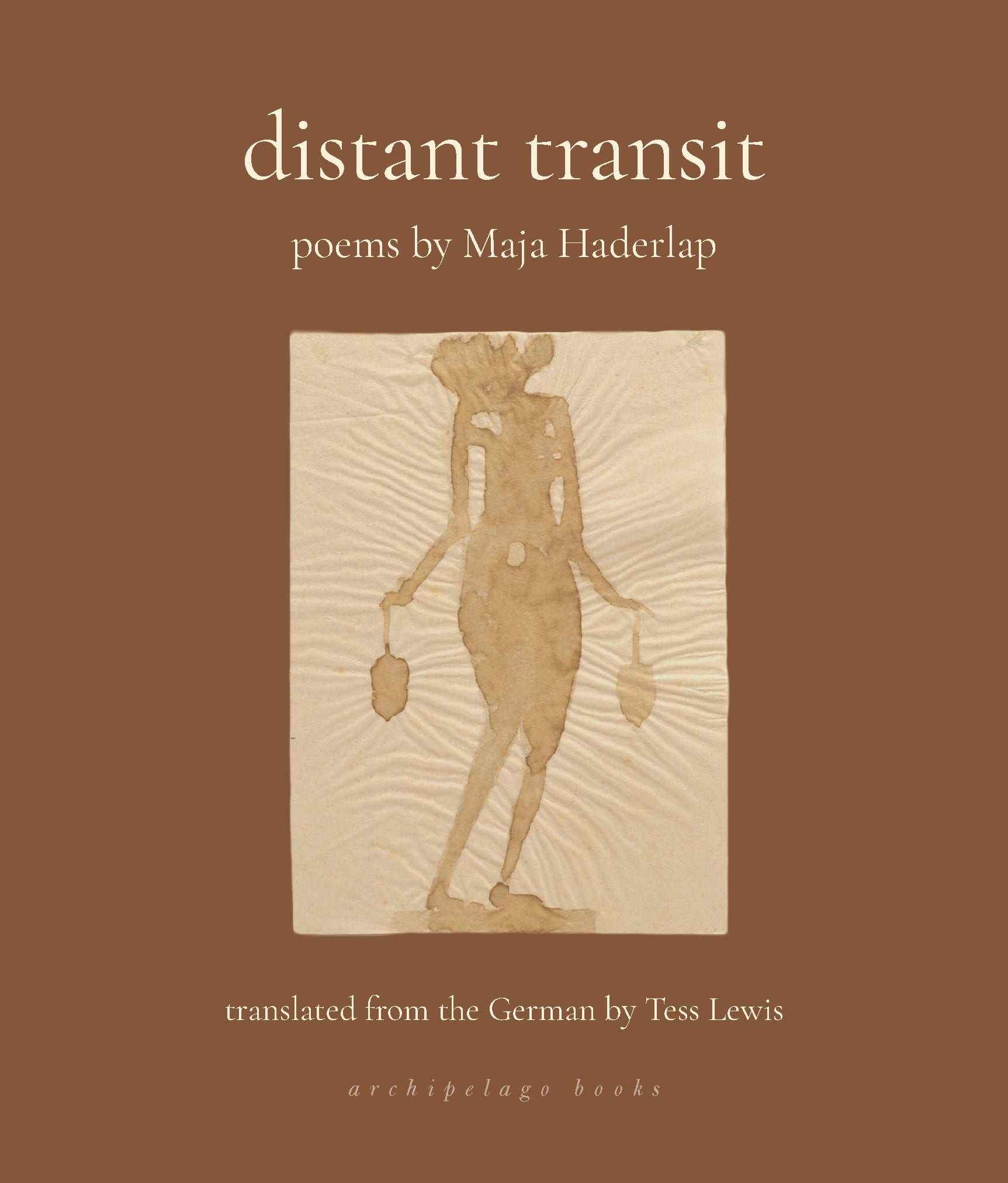
The past year also brought new work by two of my favourite poets: a book of prose pieces by Italian poet Franca Mancinelli, The Butterfly Cemetery (translated by John Taylor), and the conclusion to Danish poet Ursula Andkjær Olsen’s epic experimental trilogy, My Jewel Box (translated by Katrine Øgaard Jensen). In May I had the honour of speaking with Olsen and Jensen over Zoom for a special event—it was a fantastic opportunity I won’t soon forget. I also became acquainted with a new-to-me Austrian poet, Maja Haderlap, through her excellent collection distant transit (translated by Tess Lewis) and have since added her novel Angel of Oblivion to my shelves.

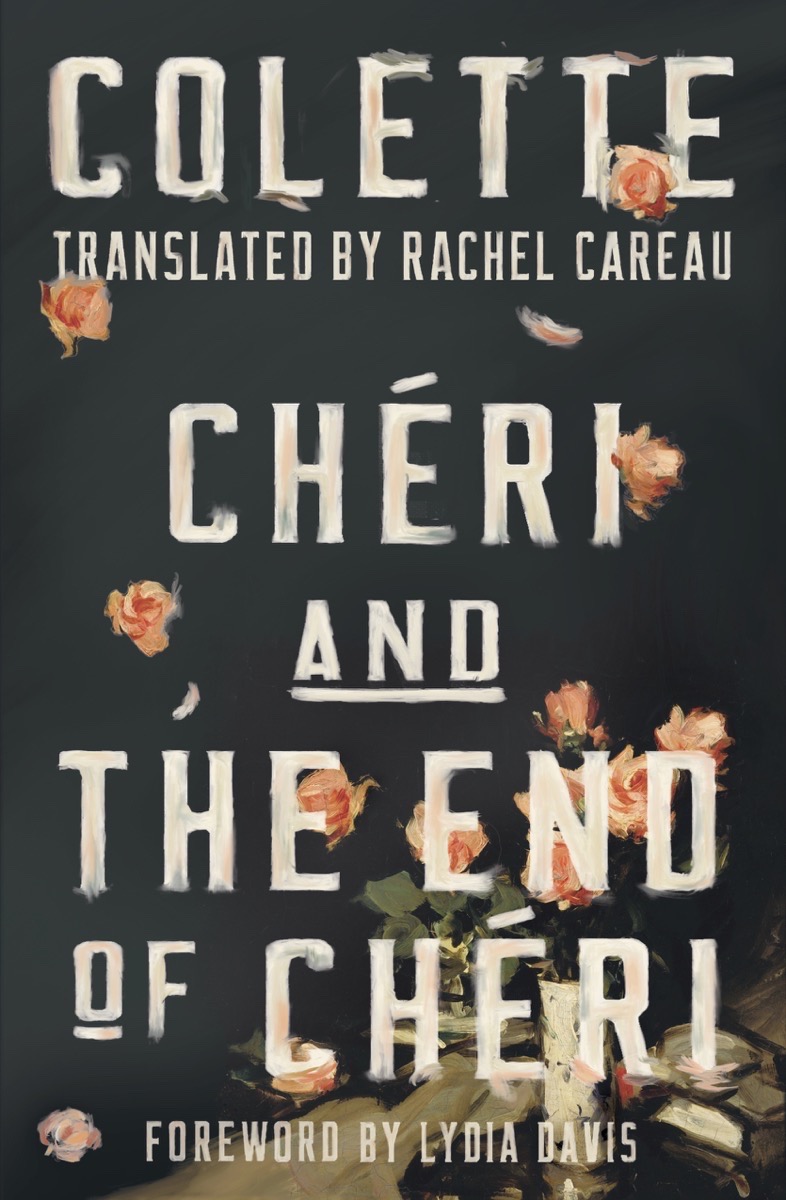
Among the many other wonderful women in translation I read over the past year, Geetanjali Shree’s International Booker winning Tomb of Sand (translated by Daisy Rockwell) needs no introduction—it is an exuberant, intelligent and wildly entertaining read. On an entirely different note, Rachel Careau’s brilliant new translation of Colette’s classic Cheri and the End of Cheri completely surprised me. I had no idea what a sharp and observant writer she was, in fact I didn’t know much about her at all and I discovered that she was quite the exceptional woman. Changing direction again, In the Eye of the Wild, French anthropologist Nastassja Martin’s account of her terrifying encounter with a bear in a remote region of Siberia (translated by Sophie R. Lewis) approaches the experience in an unexpected manner that I really appreciated.

Keeping with nonfiction for a moment, Grieving: Dispatches from a Wounded Country by Cristina Rivera Garza (translated by Sarah Booker), a collection of essays about contemporary Mexico, was a difficult, necessary read. Annmarie Schwarzenbach’s account of her overland journey to Afghanistan with Ella Maillart in 1939, All the Roads Are Open (translated by Isabel Fargo Cole) was another book I had long wanted to read that did not disappoint but which carries much more weight given the more recent history of that region. Finally, My Life in Trans Activism by A. Revathi (translated from Tamil dictation by Nandini Murali) offers vital insight into the lives of hijra and trans women and trans men in India from a widely respected activist. Tilted Axis in the UK will be releasing this book to an international audience later this year.

Rounding out the year, were three fine novels. First, I after owning it for years, I finally read Seeing Red by Chilean writer Lina Meruane (translated by Megan McDowell) and was very impressed. Last, but by no means least, I read two new releases from Istros Books who have an excellent selection of women writers in their catalogue. Special Needs by Lada Vukić (translated from the Croatian by Christina Pribichevich-Zorić) captures the slightly magical voice of child narrator with an undisclosed disability in a remarkably effective way, while Canzone di Guerra by the inimitable Daša Drndić (translated from the Croatian by Celia Hawkesworth) offers a fictionalized account of her years in Canada as a young single mother that was most enlightening for this Canadian reader.

I have, at this point, seven books selected for this year’s Women in Translation Month (#WITMonth) and we’ll see how I manage—and now I also have a goal to exceed for the eleven months before August 2023! I would, by the way, recommend any of the titles listed above if you are looking for something to read this month.

“a translation of myself”: distant transit by Maja Haderlap

is there a zone of darkness between all languages,
a black river that swallows words
and stories and transforms them?
here sentences must disrobe,
begin to roam, learn to swim,
not lose the memory that nests in
their bodies, a secret nucleus.

(from “translation”)

Maja Haderlap was born Carinthia, the southern-most province of Austria, into the Slovenian-speaking minority community that served in the resistance against the Nazis during the Second World War. As a result, they suffered repression during the war and ongoing persecution in the decades that followed. Haderlap was raised in this hostile borderland environment and educated in both Slovenian and German, two languages burdened with conflicting histories and dynamics in the region. She first established herself as a poet with several Slovenian-language collections before releasing, at the age of fifty, her acclaimed German-language novel, Angel of Oblivion. According to her translator, Tess Lewis, her decision to write about her family and community history in German, was controversial, but guided by a desire to reach as wide an audience as possible with a story that was largely ignored or unknown. Now, with distant transit, she has returned to poetry, but, for the first time, through the medium of her second language.

The fact that these poems were composed and published in German adds an extra layer to the themes Haderlap explores. Language and the translation of identity and self-understanding inform the poet’s reflections on home, relationships, and belonging—experiences grounded in her Slovenian culture and heritage, but examined through German and all that that language has afforded her beyond her rural roots. The tension between the two forms of expression comes through in Lewis’ perceptive translation, heightening the emotional impact of this work.

Haderlap’s poetic diction and simple, lowercase form, reward careful engagement. I found that the style encourages a close reading to follow the rhythm and the division of thoughts or sentences. Her imagery is rich, inspired by the natural beauty of her native countryside, yet filled with longing and questioning. Language is an ever present element—what does it contain, preserve and lose as one grows and moves between vocabularies and grammars? And what does it mean to be at home in any one place or community?

                                 language opens
rotted doors, thrusts the dusty boards
from their brackets, reveals the buried stone.
it flies at my face like a flock of startled
swallows, confronts me as the smell of mold,
drops from the jagged armor and
hulls of kids’ stuff like silt shed from all that was.
as soon as its bird heart beats calmly,
it shows its skin, appears unscathed and
hardly used. keep me safe, language,
wall me off against time.

(from “home”)

This collection is steeped in the landscape and mythologies of Haderlap’s Slovenian youth, carrying that foundation into adulthood in an evolving relationship with language—hoping and trusting words to carry memories forth into another time and tongue. It is an uncertain faith. Yet her poetry so vividly captures the possibilities and limitations of translation, that I would suggest that one does not need to likewise live between two languages to recognize the nature of the dilemma. Any one of us who trusts our own memories, emotions and experiences to the vagaries of words—even if in our sole language—worries those same words onto the page. The writer is always recognizing the permeability of the borders and boundaries within their own experiences, translating and transcribing themselves into being, seeking to find preservation and refuge in words. Haderlap speaks to this so acutely.

the shore path is now built up, shifted,
torn out of the meadow and discarded.
i, too, have emerged repeatedly
as a translation of myself,
transferred and rewritten
i appear in a new transcription
although in similar form.

(from “on the shore path in the evening light”)

The poems that comprise distant transit speak to a personal political reality in intimate, yet recognizable terms, echoing the transitions we all experience as we grow into adulthood, away from home and search to find ourselves in the world. More specifically and powerfully though, Haderlap animates the mystery, power and baggage that a language can carry with it, how words and sentences are laden with implications for understanding the past and the present, to articulate one’s identity as an individual torn between two tongues.

distant transit by Maja Haderlap is translated from the German by Tess Lewis and published by Archipelago Books.

A different kind of time made visible: The Desert of Lop by Raoul Schrott

Many things are contained within others, and not only in names; in the north there is also a south and a west. The Badrain Jaran desert is indeed to be found within the Gobi desert. But it too contains within it the Takla Makan. And within that again, somewhere there, even if not precisely there and now, lies the untouched centre of the earth, the Desert of Lop.

What is the meaning of home? Is it a place, a person, a state of mind? Some know without question. For others it is an idea that is impossible to hold on to—like a handful of sand, it slips through your fingers. That is the essential spirit that comes through in Raoul Schrott’s delicate, spare novella, The Desert of Lop. Over the course of 101 very short chapters, almost prose poems but not quite, it traces one man’s relationships with three women, the places those relationships take him and the way they became undone. Detail is scant, connections are sketched and filled in with images of sand—dunes, storms, waves of shifting sand.

Schrott, an Austrian poet raised in Tunis, has an interesting background. He studied philology, had a strong interest in Dada and surrealism, has translated and adapted Homer and Gilgamesh in German and speaks a number of languages including Breton, Basque, Corsican and Gaelic. I first encountered him through his extraordinary, sensual unclassifiable work The Sex of the Angels, The Saints in their Heaven, a collaboration with Italian artist Arnold Mario Dall’O which was published by Seagull Books in 2018. Loving it, I immediately sought out any other available works in English. The Desert of Lop, written in the same general time as Sex of the Angels, but published in 2004 (and likewise translated by Karen Leeder), was all I could find and, even then, it took some time to track down a copy.

In simple terms is about a man named Raoul Louper who is living in a village near Alexandria in a simply furnished room. The only described decorations are three objects in the window—a pine cone, a gree-gree (an African charm) and a stone—mementos of three women he once loved. Francesca, Arlette and Elif. Each week he takes the bus to Cairo. He meets with Török, a Hungarian professor with whom he visits geological formations in the area. They share an obsession with sand. Sometimes he joins the professor and the Egyptian woman he lives with for supper. As his story unfolds, they offer a solid counterpoint to Raoul’s restlessness. They have created a home, the very ideal Raoul seems to long for and yet cannot realize. They listen to him, challenge him, and all though his wandering carry him around the globe, it is in their kitchen that his life seems to have any tangible form at all.

His first wife he met near Grosseto on the Mediterranean. Francesca, is a free spirit when he they meet; he is equally ungrounded. Once he has made enough money he leaves for Japan—images from the country punctuate the text but his stay is not described—and when he returns he and Francesca make an effort to make a life together. Without success.

His second wife, Arlette, he meets in a bar in Quimper, a city in Brittany in northwest France. He finds work on a trawler out of the French islands of St Pierre and Miquelon off the coast of Newfoundland, across the Atlantic. With his pay he drives across the US to see the western edge of the Pacific and slowly makes his way back to Quimper where, before long, the walls close in on his relationship with Arlette.

In Raoul Louper’s love for Arlette there was always something that was still waiting to change shape. It was like one of the drawings of a Necker cube that one finds in magazines sometimes; its upper edges can only be held in the foreground if one concentrates hard.

He sometimes looked at Arlette absent-mindedly. She did not know what to make of it; she thought when he looked at her it was always with questions.

Raoul avoided giving an answer; there are some things one does not say to a woman if one wants to love her.

The third woman, Elif, comes in to Raoul’s life in Iquito, Peru. Twice abandoned by love, he has accepted a job offer from a man who, having won the lottery, left Naples to set up a hotel in South America. Elif is working as a guide in the National Park, but it turns out that she grew up in Toulon, Raoul’s birthplace, and that they share a birthday. Despite being very different, these unlikely similarities lead, in time, to love. This, is the relationship that will cover the most mileage, first back to France when Elif’s job ends and eventually on a  journey into the desertified heart of China where too much togetherness threatens to push them apart.

Like Sex of the Angels, this is a very sensual work, not just in the remembered intimacies of love, but in the description of sand, deserts and the dunes that rise and fall across the landscape. Scientific descriptions are woven into the overall narrative, at times directly, at other times in the observations of Török or others, but always with such a light, poetic touch, that it never feels contrived. Sand, sculpted by wind and time, is an essential element of this tale, a story that builds layer by layer, but retains a haunting sense of instability and incompleteness.

Is a sand dune ever a finished object?

A dried-up riverbed, or the arms of a delta, drought; a bush, some pebble or other, even a termite mound, sometimes: it’s all the wind needs.

In the wind cornices line up and grow into dunes; they form chains and banks, they take on the shape of an egg, a heart or a star.

The suspended load of the wind; it blows each grain of sand from the windward, hardly higher than a foot or two off the ground, until they are pressed together on the crest, only to slip down the steep face in its lee; it is just the same as with waves.

The Desert of Lop maintains its inherent spaciousness through its narrative voice. The elusive narrator speaks of Raoul in third person, telling his story for him from an uncertain vantage point—sometimes slipping into a scene or adding a comment in first person, as if a companion on some outing or otherwise present—but the exact connection is unknown. Yet the haziness of the boundary is acknowledged: “It is no longer me telling this story. It has long since grown beyond the evenings in Cairo, the table with its chessboard pattern of tiles.”

As spare as it may be, especially for readers unaccustomed to checking a map or slipping down rabbit holes, this is not a directionless narrative. China is on the horizon throughout. Elif and Raoul embark on a journey to Dun Huang, the ancient city on the edge of the Gobi desert with its Caves of the Thousand Buddhas. With their guides they travel through distant provinces—Kamul, Tangut—in the footsteps of Marco Polo, following after Genghis Kahn, moving inexorably toward the extinguishing of anything that might hold them together against the shifting sands of time. Along the way: Lop Desert. Barren. Flat. Once the likely location of a lake, and of life more plentiful and diverse than that which remains, it became, as many other desolate locations have, ideal testing grounds for nuclear weapons. For we allow imitations of our destructive potential to proceed in the natural spaces we consider empty enough to bear the weight of our sins. As the desert will test Elif and Raoul. And his longing for some vestige of home.

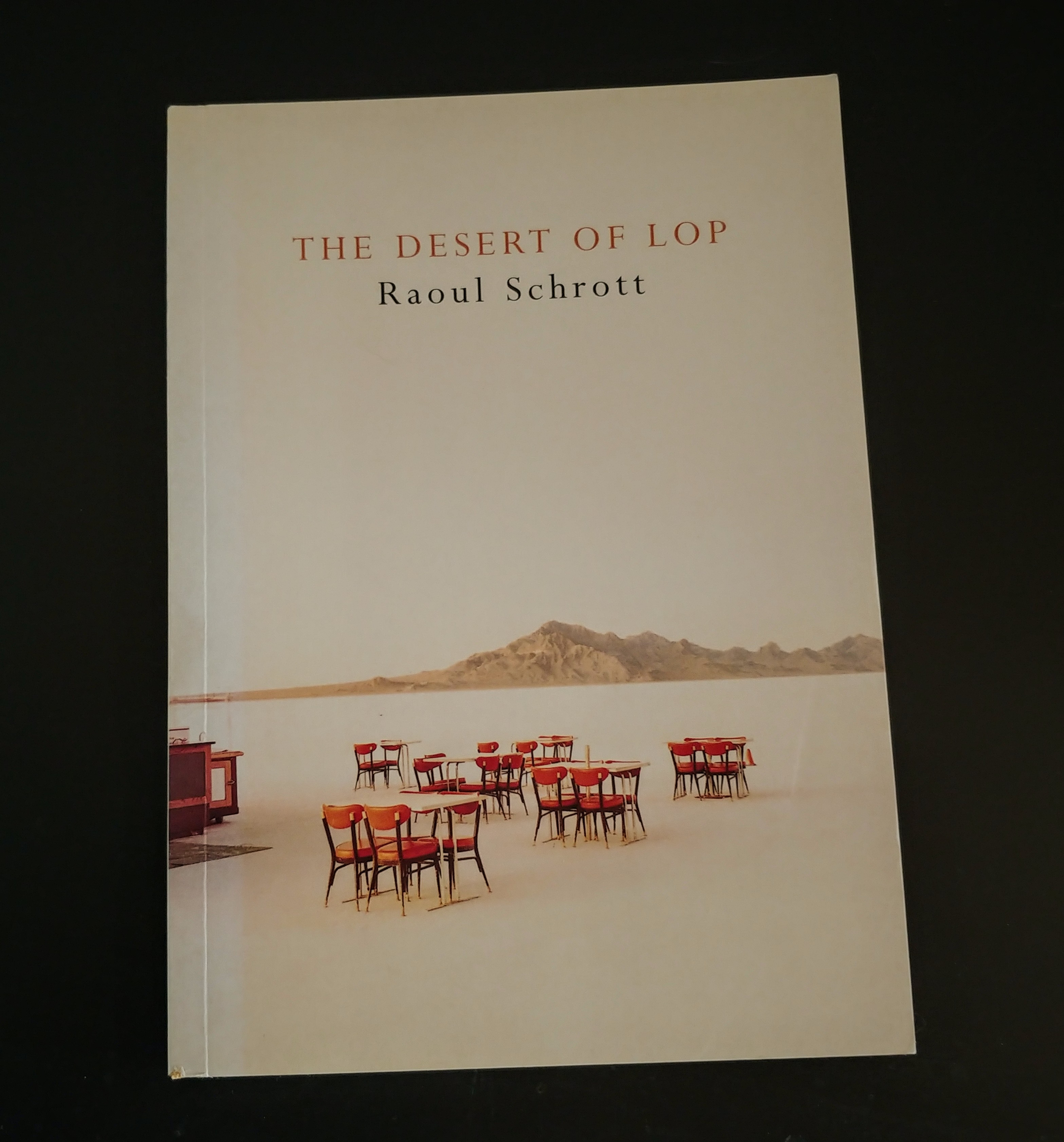
The Desert of Lop by Raoul Schrott is translated from the German by Karen Leeder and published by Picador.

Eating Cheaply: The Cheap Eaters by Thomas Bernhard

A new edition of a lesser-known Thomas Bernhard novel is, for those of us who collect his varied works, a reason to be excited. Originally published as  Die Billigesser in 1980, The Cheap-Eaters rests more than midway through the Austrian writer’s career, and offers another nourishing helping of his idiosyncratic style of long-winded, circuitous, single-paragraphed fictional expositions of human eccentricity. Now in a fresh new translation by Bernhard enthusiast Douglas Robertson, Spurl Editions has served up this novel, or novella, in a handsome, nearly pocket-sized volume—a virtual literary take-away, the perfect companion for, say, a saunter to a nearby park for a little open air reading in these days of pandemic defined recreation.

Coincidentally, it is a walk to a park that stands for Koller, the protagonist of The Cheap-Eaters, as the single most important factor leading to the discovery and facilitation of his life’s work. As our unnamed narrator, an old school friend, explains at painstaking length, his, Koller’s, chance divergence from the park that was his usual destination to another where he encountered Weller, an industrial glassmaker, and his dog was a pivotal event. A most fortunate misfortune. The dog bit Koller’s leg which in turn had to be amputated, and this injury not only provided, via a lawsuit, a guaranteed income for life, but it also caused him to happen upon the cheap-eaters when, after his release from the hospital, he stopped into the Vienna Public Kitchen, or VPK. The four regular diners welcomed him, one-legged and with crutches, into their fraternity and over time they became the subjects of what was soon to become his obsession: his so-called Physiognomy.

For years he had fraternized with the cheap-eaters and had eaten cheaply with the cheap-eaters, had eaten more cheaply with the cheap-eaters than anywhere else and actually he had never eaten both as cheaply and as well anywhere else, for in the VPK he, Koller, had always eaten cheaply and well and he had never yet been able to eat both more cheaply and better anywhere else. He said that he actually owed to the VPK nothing less than the fact that he was still alive today; nothing less actually than the fact that I still exist! he had once exclaimed in my presence, and nothing less than the fact that he had made it through so many appalling Viennese years…

More than a place to partake of the cheapest of the available cheap meals with such suitable companions, Koller credits the VPK with his bodily existence, and more critically, his very intellectual existence.

At the point in time when our narrator is winding and unwinding his long-winded account of his somewhat repellent and yet somehow appealing friend, this friend, Koller, has already devoted himself to his particular studies for sixteen years. He is now, he says, ready to begin to unveil his findings. It is, of course, perfectly fitting that a Bernhardian hero should be consumed with an appropriately outdated pseudoscience like physiognomy, the supposed practice of determining a person’s personality from their external appearance, especially facial characteristics. Koller speaks of his Physiognomy with reverence; he approaches it, as one would expect, from the altitude of his superior intellectual energies, devoting his full attention to understanding it through careful study of his constant dining companions.

If The Cheap-Eaters purports itself to be a novel about the four men who gather together, with Koller, to eat cheaply at the VPK, it is, yet it is more explicitly an expose of Koller’s own eccentricities as recounted by a narrator whose own attraction to his subject is as curious and questionable as Koller himself. And given the way our one-legged hero is portrayed, one might even suggest that the cheap-eaters who so dominate his thoughts are remarkably normal by comparison. But then, this is Bernhard and would one expect anything less?

He had always felt sorry for so-called healthy people because in his view they never emerged from the swampy lowlands of absolute intellectual torpor and moreover were condemned to languish all their lives in this brutish intellectual torpor of theirs, no matter who they were and no matter what they did, and he despised them quite openly and invariably seemed to derive a certain enjoyment from this contempt of his for these miserable, good-for-nothing, mind-damaging creatures as he had actually once described them to me verbatim.

Anyone familiar with Bernhard in his longer form work, will not be surprised to find that the narrative progresses in a doubly-, sometimes triply-nested and convoluted fashion, treading over the same well-travelled ground repeatedly, slowly adding new details and bits of commentary along the way. Robertson’s translation handles this labyrinthine movement nicely. And, of course, all this wandering is rewarded as everything begins to take shape, the cheap-eaters are finally given individual dimension, and then—well, you have to read it yourself to find out how the story concludes.

I will say that The Cheap-Eaters by Thomas Bernhard, translated from the German by Douglas Robertson and published by Spurl Editions, is a welcome addition to my own curious and eclectic collection of Bernhard’s work.

Summoning the celestial: The Sex of the Angels, The Saints in their Heaven by Raoul Schrott

If absence makes the heart grow stronger, absence tinged with the uncertainty of love returned can lead the heart and the imagination to wander into realms beyond the merely mortal. To contemplate romantic perfection. To be filled with a longing for something that may no longer exist. To attempt to counter the earthly with the heavenly. To trust in angels.

The wonderfully titled The Sex of the Angels, The Saints in their Heaven is essentially a series of missives from a lovelorn poet to a mysterious red-haired beauty from whom he has been separated by time, distance and, perhaps, some recklessness on his part. He is writing from County Cork in the south of Ireland, a place which is not his home, where he is exiled, or has exiled himself, sending into the nightly blackness a chain of love letters ever so loosely disguised as a sensual, passionate and mildly profane angelology accompanied by miniaturized hagiographies. Originally published in German in 2001, this extraordinary work by Austrian writer Raoul Schrott, with its arresting illustrations by Italian artist Arnold Mario Dall’O, is now available from the inimitable Seagull Books in Karen Leeder’s delicately rendered translation. Fictional, but not a conventional novel, essayistic, but meditative in style, this book is an engaging blend of philosophy, mythology, the classical sciences, saintly heroism, and earthbound human romantic longing.

Our narrator begins, as one would expect, with Dionysius the Areopagite—not the saint, but the fifth century Syrian Neoplatonist who, writing in the name and style of his sanctified predecessor was the first to craft a hierarchy of angels and demons, a celestial stepladder to God for dark times.  Within Pseudo-Dionysius’ model of an angel-sustained universe, he locates himself and his own angelic entity:

For Earth he chose only a single one, which he placed in the lower arc of my ribs where I can feel it now, hard as a little planet. I carry it with me (even now in the train it keeps to its orbit) and sometimes I can see it before me: its mouth, black brows and a storm of red hair over its freckles, an incarnation of St. Elmo’s fire.

Captive and captivated, he writes as if possessed, bringing the Aurora Borealis, Samuel Johnson, Greek and Babylonian mythology and more into his musings as he tries to make sense of his fate, this spell of infatuation under which he is labouring. His thoughts never stray far from his beloved even though his letters have yet to elicit a response. He is continues his conversation into the silence, remembering their moments together. It is not entirely clear how much he really has to build on, how much they ever had, a quality that amplifies the sense of yearning:

Then as I sat next to you in the great hall, I heard you more than saw you beside me; I listened to you; wings folding shut. Do I bore you with all these sophistries and sentimentalities? It is only because the post takes so damned long, because I don’t know whether you will ever respond, not how; because I must eke out the little that I have to create a picture of you: little stones for a mosaic. The angels help me lay it out.

As he wanders the past and waits in the present, meditating on the nature of the role of angels in the affairs of humans, especially his own, our poet paints an image of a windswept remoteness, an isolation actual and emotional. He references local towns, harbours and natural features, like the aptly named Mount Gabriel. The ocean is never far away, and water is a major presence in his memories, his sense of loss, and much of the mythology he calls on. His heartache is pervasive, and achingly beautiful:

I walk through the grass; it brushes against my shoes. All is still, and I wish your voice was with me now, whispered and low so that only I could hear it. Instead the moon starts off on a soliloquy. Where it stands, stubbornly apart, is the southwest and somewhere behind is where you are, as if only I had to concentrate to see that far, peer over the curvature of the earth. But where you are it is an hour later, I only wish I knew how to catch up that hour.

Because the distance that haunts him is temporal, in more than one sense of the word, trusting the angels, even if as he admits, he does not believe in them, has a certain logic. A comfort.

Turning to John Scotus Eriugena, the ninth century Irish theologian, best known for translating and commenting on Pseudo-Dionysius, the narrator reflects on the inverted balance existing between humans and their heavenly counterparts:

the angel finds its form within humankind through the spirit (intellectus) of the angel that is in the man; and man comes into being in the angel through the spirit of humankind within him and so on and so forth for all eternity without a single Amen being granted to us in Eriugenia’s scholastic permutations. We are nothing but the imaginings of angels; and angels exist only in our thoughts: that is our paradox not theirs.

He has entrusted his love and his beloved to the care of angels, to hold her for him in their thoughts. And yet, as her own distinction from the angels becomes less clear in his letters, one has to wonder how much she has begun to exist only in his thoughts. If she, in her epistolary silence is possibly not thinking of him, what existential questions does that raise? For him? For any of us who has ever loved hopelessly another who will never return our affection? At heart, he knows, it seems.

And: no, I am not writing for writing’s sake; no, if my letters were in any way beautiful, there were so only on account of you; no, they are not complete in themselves; all they do is beg for the answer and conceal best they can the question (they tiptoe in stealth as I know they are trespassing on your territory). No, your cheeks were so warm that it felt as if I could have woken up next to you; no, there is nothing that could possibly dis-appoint you from the rank of the angels; no, the Amores will never run out of arrows, although I make a rather unholy Sebastian; and no, the angels will not wear themselves out with words; writing to you brought at least a few hours relief, then you started up again humming in my ears.

The Sex of the Angels, The Saints in Their Heavens reads like an extended meditative conversational prose poem, a playful interplay between earth and the heavens, grounded in the inescapable humanness of romantic love. The rich illustrations and micro biographies of the lives and martyrdom of the saints accompanying the text work together to form a running commentary on the interrelationship between love, spirituality, literature and art. This book could almost be, if one didn’t know better, the work of the angels themselves.

Comic relief: Old Masters by Thomas Bernhard, Illustrated by Nicolas Mahler

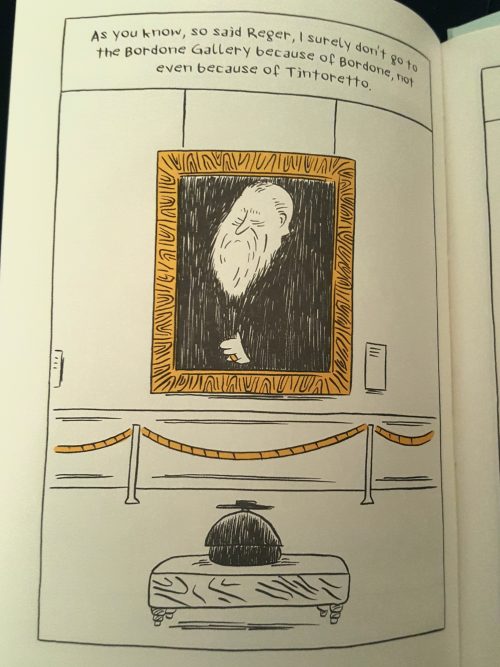
Anyone familiar with the unbroken, single paragraph monologues that characterize the typical novel by late Austrian writer, Thomas Bernhard, might find it hard to imagine how his work could be realized in the medium of the graphic novel. I mean wouldn’t there be too many words to corral on the blank page? How could the intensity of the original be translated? For Austrian cartoonist and animator Nicolas Mahler it’s simply a matter of focusing on the essentials of the story and letting his quirky illustrations and creative use of space do the rest. As a result, his graphic interpretation of Bernhard’s Old Masters: A Comedy is, well, something of a small masterpiece. One suspects that the author himself, and his alter ego characters, Reger and Atzbacher, would secretly agree, despite their shared conviction that a true artistic masterpiece is impossible to achieve, let alone imagine.

Rendered in stark black and white drawings playing on extremes—massive architectural details, characters who are tiny and squat, elongated and thin, or large and corpulent, often grotesque, appear against golden yellow highlights (a distant echo of the artwork in Ludwig Bemelmans’ Madeline series)—Mahler allows his images to complement and amplify the ridicule, humour and disgust so intrinsic to this and the majority of Bernhard’s idiosyncratic prose. Frequently recurring of images—the museum security guard, Irrsigler, seems to spend an inordinate amount of time disappearing into the men’s room—visually mimic Bernhard’s fondness for repeating phrases and motifs. As the blurb on the back of the newly released English language translation of this comic-book take on a comic classic states: “The Master of Overstatement meets the Master of Understatement.”

And it’s a match made in, well, the Art History Museum in Vienna.

There is precious little action in Old Masters and little obvious plot. It is, however, a spirited takedown of Bernhard’s favourite targets: the Catholic Church, the State, the arts and artists—his characteristically dark, satirical look at the world in general and Viennese society in particular. But it is also, in the end, a touching, sad and surprisingly romantic tale.

The story unfolds, if you will, at the musem, on a bench in the “so-called Bordone Gallery” directly across from Tintoretto’s White-Bearded Man. Here sits Reger, as he is wont to do every other day. Meanwhile, the narrator, his long-time friend Atbacher, observes him, just out of sight, from the “so-called Sebastiano Gallery” waiting for exactly eleven thirty, the time at which the two men have agreed to meet. Reger’s invitation is out of character because the they had met there just the day before and this second consecutive rendezvous was not in keeping with the typical pattern of either man. Curious as to the reason for Reger’s invitation to break from habit, Atbacher has arrived an hour early so as to watch his friend undetected. Naturally, this provides him the opportunity to launch into a lengthy account of Reger’s family history, his opinionated views, and his predilection to spend every other day at the museum, seated across from Tintoretto’s White-Bearded Man. In the novel this monologue consumes the bulk of the text. The same is true in this version which contains roughly the same number of pages, but much, much fewer words!We learn that Reger, the museum regular, has been visiting the Art History Museum for over three decades. Yet his attitude toward great art, the work of the “so-called” old masters, is one of disdain. Philosophically, he muses that a detail might be perfected, but the whole of any painting, sculpture, or other artwork ultimately leaves us appalled:

There is no perfect painting and there is no perfect book and there is no perfect piece of music, said Reger, that is the truth.

None of these world-famous masterpieces, no matter who did them, is actually something whole and perfect. That reassures me, he said. In essence, this makes me happy.

Only when we unswervingly come to the realization that there isn’t this whole or perfect thing do we have a possibility of survival.

And that has been the reason why I have gone to the Art History Museum for over thirty years…

As one might a expect, a number of artists, writers, and thinkers are subject harsh, and often hilarious, criticism as Reger, speaking through Atbacher’s account, expresses his unbridled opinions. Nineteenth century Austrian author, Adalbert Stifter, for example, is written off as a “kitsch master” with “enough kitsch on any random page to satisfy more than one generation of poetry-thirsty nuns and nurses” and then, strangely, compared to Heidegger, that “National Socialist, knickerbocker-wearing Philistine.” No one tosses out an insult like a cranky Bernhard character!There is, of course, much more below the surface than insults and irritation. That is where his peculiar wisdom lies. And, in this story, we learn that our irascible main character Reger’s antipathy to the old masters, and artists in general, has its roots in an emptiness they cannot fill. One that speaks to his, and our, need for love.One does not need to be familiar with Old Masters in its original form to enjoy this book (I wasn’t), but exposure to Bernhard in his full verbal intensity probably is. The satire, the heartbreaking warmth of the ending, and the sheer feat of rendering the mood and spirit of the Austrian writer’s pessimism and bleak humour into a graphic novel is not likely to be fully appreciated otherwise. I am a huge admirer of Bernhard, but I confess I’ve never really been drawn to graphic novels (pardon the pun). But the other night, when my son found this book on the doorstep of my old house where it had been left by a courier, I was immediately captivated. It has been a difficult few weeks and Bernhard’s misanthropic humour, oddly, is always strange comfort at such times. The beauty of this book is that it is not only a delight to read and look at, but I can imagine myself returning to it and rereading it many times (after all it doesn’t take very long—it’s akin to an instant hit of Bernhard relief).

Thomas Bernhard’s Old Masters, illustrated by Nicolas Mahler, is translated from the German by James Reidel, and published by Seagull Books. Essential medicine for any Bernhard fan, I’d say.
This is my first offering for German Literature Month 2018.