What is important is to love: The Worst Thing of All is the Light by José Luis Serrano

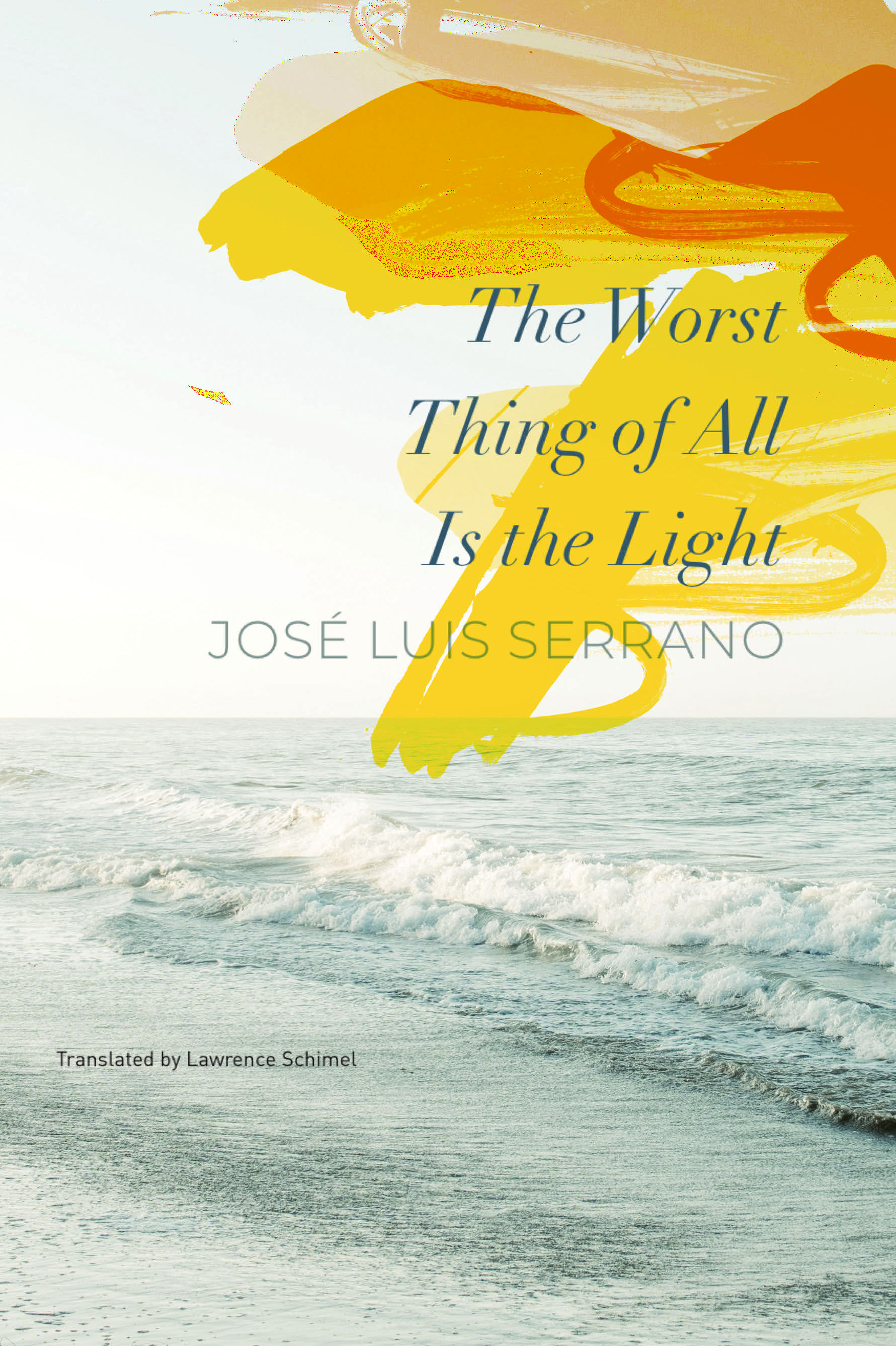
The worst thing of all is the light because it’s always the same, but we are not ever the same, and then that light reminds us of the others we were before, once, those others who did things that now we would not do, that we don’t admit to having done. In spring, the light of a clear, bright day, when the wind has left the air clean and pure, leads us to clearer days, days of youth, of holidays. Or that yellow light of autumn, also clean, sharp at the final hours of the afternoon.

Light, light, light. Such is the thread along which the thoughts of Edorta, a middle-aged man, run through the course of his free-flowing poetic reflections, a diary of sorts, addressed to, but not meant to be read by, his long-time friend Koldo. As he reaches for a way to understand and articulate his tangled and conflicted feelings, light serves as a mechanism of memory, sometimes consoling, at other times cruel. But Edorta’s musings are only half of The Worst Thing of All is the Light, an inventive, metafictional novel that sets an exploration of the boundaries between friendship and desire against a parallel examination of the relationship between imagination and reality.
Edorta and Koldo are the creations of Spanish writer José Luis Serrano, but within this double stranded novel, they are also the evolving characters taking shape in the mind of an “author” who is, presumably, a fictionalized representation of Serrano himself. In a series of journal entries, the author/narrator records the activities and conversations that mark each day of a vacation he and his husband are spending in Bilbao. His report, which details where they go, what they eat and what they talk about, is addressed to his husband directly, with the all familiarity two decades together has wrought. These dated entries, each illustrated with a scenic photograph, occur over the course of ten days in August of 2014 and appear to set up the proposed novel the author is planning to write: the story of a very close friendship—one that might even be described as love—between two heterosexual men. He’s not sure if he will be able to pull it off (his husband is even more skeptical) but he knows it will require an inventive approach, perhaps one that plays a fragmented diary of some kind against an author’s journal within which the potential narrative structure and details are formulated and debated. His husband plays the foil, devil’s advocate and, sometimes, the anxious spouse:

“But then, aren’t you going to write a normal novel?”

“I never write a normal novel. What’s more, I’ve always made it clear that I’m unable to tell a story, There will just be snippets, bits of what could have been the novel. Perhaps a diary by Edorta.”

“And these dialogues.”

“That’s right. Perhaps not these, but others I make up based on these.”

“And will I be myself? I’m worried about being myself in your novel, worried that you’ll put me in your novel.”

With chapters that alternate between the author’s journal and Edorta’s diary, the novel that exists is the one that the author is planning to write—the final project and a self-conscious analysis of that project in its formative state. This is where the metafictional game lies, where the boundary between literature and reality blurs and where questions about the “fictional” characters, their relationship, and the nature of love and attraction arise. As the author and his husband debate the possibility of platonic desire between men from the outside in so far as they can intellectualize beyond their own homosexuality, Edorta explores the matter from within, in trying to articulate the quality of his affection for Koldo while holding to an assumption of his own heterosexuality.

Edorta’s diary offerings are undated; each one is named after a song released by the Bristol-based UK independent Sarah Records(1987–1995), and opens with the artist name, catalog number, and a few lines of lyric. These sections resemble a form of stream of consciousness, admittedly composed in writing, but unfolding without clear direction or specific chronology as if Edorta is trying to sort out his feelings on the page. Consequently, allusions—to the light in particular—and scenes from the past are revisited repeatedly. Where he is writing from, temporally speaking, is intentionally vague, though he does often correct himself, pulling out of his revery to recall that adult life, relationships, and children have made the endless days of youth but a memory. Their occasions to actually be together are now few and time-constrained. His longing is palpable, his prose dense with fervid imagery:

Today I lug the grief of not being able to say the unsayable, fighting with the anguish of being and not wanting to be, of sinking into oblivion forever or of turning back, before even being, before myself, where there is not even oblivion. Life breaks loose from the poplars in tatters, and the branches, outlined in green-black shadows, shrink inward in their extinction of dying rapture, paralysed, surprised by the cold of November, overwhelmed in its frozen casket of gargoyles and waits.

The confluence of a grown man’s sense of loss with an adolescent ardor enhances the interrupted, unstructured memories and reflections that the novel’s “author” seems to want to capture with Edorta’s diary passages.

The two alternating streams form an intriguing novel that presents itself—openly—as a meditation on the nature of attraction, love, and memory within a discussion of the questions that arise in the process of formulating a story that a writer wishes to tell. But does it work as a cohesive whole? Certainly neither half of the equation—the author’s descriptive vacation diary or Edorta’s endless poetic entreaties to Koldo—would hold as a sufficiently interesting narrative on its own. Yet together they complicate one another, less to provide one complete story (even with the metafictional reshuffling of expectations that occurs as the novel nears a close) than to continually raise questions about the exercise of creating and inhabiting characters to flesh out a story that an author may or may not be able to realize. As such, much hinges on the idea of platonic love and the degree to which sexuality influences the way one conceives of and is able to realistically depict an attraction that differs from one’s own.

Are Edorta’s feelings for Koldo of a different order than anything his friend can ever return? On several occasions he tries to reassure himself that they are not. Certainly he recalls and cherishes moments of intimacy that seemed to have distressed and embarrassed Koldo. But he is unable to let go of the need to define and claim his love, whatever it may be, even if he would not be the first person, regardless of orientation, to be hopelessly attracted to someone who, shall we say, plays for “the other team.” Of course, as the author’s creation, one has to ask, who exactly—Edorta or his creator—is unable to accept that their affection for the other might just be of a different order? The author’s admitted obsession from the very beginning of the novel is: “What is important is to love whether or not it’s reciprocated.” However, if, at the end of the day, to love truly is enough is a question that may prove easier to ask than to answer.

The Worst Thing of All is the Light by José Luis Serrano is translated from the Spanish by Lawrence Schimel and published by Seagull Books as part of the Pride List.

Things that will come to pass and cannot be stopped: January by Sara Gallardo

What is a day? What is the world when everything inside you shudders? The sky darkens, houses swell, merge, topple, voices rise in unison to become a single sound. Enough! Who is that shouting? Her soul is black, a soul like the fields in a storm, without a single ray of light, silent as a corpse in the ground.

Sixteen year-old Nefer has a secret. A secret growing inside her body that is pushing her away from her family and deeper into herself. Desperate to resist the abrupt transition to womanhood that has been thrust upon her, her predicament is the central focus of Argentinian writer Sara Gallardo’s January. Originally published in 1958, when Gallardo was only twenty-seven, this unsparing novella about rape, pregnancy and abortion in a world where a woman’s body and being was strictly defined by church and convention, has come to be regarded as required reading in her native country. It has now been released in Frances Riddle and Maureen Shaughnessy’s English translation.

This brief novella simmers with stark intensity as it follows Nefer’s conflicted and tumultuous emotions as she struggles to cope with her unfortunate circumstances alone in a deeply religious rural community in mid-twentieth century Argentina. The youngest of three daughters, her life on her family’s farm is one filled with hard work and constant expectations. She admires her disabled father’s quiet dignity, resents her sister’s fulsome beauty and fears her mother’s large, threatening presence. And, in spite of her condition, she nurses a hopelessly passionate crush on her handsome neighbour, Negro. In her mind, in fact, it is he who is responsible for her pregnancy although the child is not his. She had invested so much time and desire into the design and creation of a dress for her eldest sister’s wedding imagining it might magically catch his eye and, had she not been so intent on making an impression, she believes she would not have inadvertently attracted the attention of the older man who forced himself that day.

Playing out against a landscape defined by blistering heat, vast open spaces, sparse shade and clouds of dust, Nefer’s experience of her surroundings is highly charged and fragmented. She swings from rage to fear to jealousy to waves of crushing guilt. Unable to escape the stain of her strict Catholic upbringing, the sorry state of her soul is a constant concern. Anxiety eats away at her. She cannot help but think back to a time when she was carefree, when the world still held promise. But she remains determined to face her fate on her own terms, no matter where it takes her. Gallardo brings us right into the heart of her effort to assert control over her mind, her body and her life, as in this scene where she slips out during siesta to sneak into town in search of a possible medicinal intervention:

She kicks and takes off at a gallop, steering toward the thick grass that will absorb the footfalls. She doesn’t want to think about the end of her journey, about the old lady she’s never seen but with whom all her hope now lies. Her eyes pick out objects one at a time, attributing an exaggerated importance to each. Thistle, she thinks, thistle partridge, dung, anthill, heat; and then she hears – one, two, three, four, one, two, three, four – as the hooves hit the ground. Slowly, sweat begins to appear behind the horse’s ears and runs in dark strands down his neck where the reins chafe against his coat, churning up dirty foam. Little voices, little voices speak to Nefer, but she continues her journey indifferent to them. Cow, she thinks, a Holstein, and another and another. That one’s overheated. Lapwings. Two lapwings and their chick. Those piercing shrieks!

In less than 120 pages, January offers a vivid, internalized account of a young woman facing impossible odds. Gallardo was born in 1931 to a wealthy Buenos Aires family with broad agricultural interests and this, her first book, shows a clear sensitivity to the social dynamics impacting disadvantaged rural communities and the suffocating influence of the Catholic mission churches. But beyond the constraints of her time, it is Nefer’s private horror, as reflected in her relationship to other people and to the natural environment, that makes this such a compelling—and timeless—read.

January by Sara Gallardo is translated from the Spanish by Frances Riddle and Maureen Shaughnessy and published by Archipelago Books.

Women in Translation Month 2023: Some suggestions from the past year of reading

August. Another Women in Translation Month is upon us. I have already read my first contribution to the annual project with a review to come in a few days but, as usual, there will be a few non-women read and reviewed this month as well. Nonetheless, I hope to make a good showing.

Looking back over the reviews I posted since last year’s edition, I see that I have read less women in translation than I expected—less women over all, perhaps, but my reading has been governed a little more by review copies and release dates than usual, something which can be offer opportunities and present restrictions. However, I have read some excellent books since last August and if you are looking for suggestions, I have linked them here:

Eastbound by Maylis de Kerangal, translated by Jessica Moore (French)             — A spare, yet intense thriller. (Archipelago)

Balkan Bombshells: Contemporary Women’s Writing from Serbia and Montenegro, compiled and translated by Will Firth — A  surprisingly sharp, strong collection introducing many new voices. (Istros Books)

Grove by Esther Kinsky, translated by Caroline Schmidt (German) A novel born of grief and a healing sojourn in Italy by one of my favourite contemporary writers. (Fitzcarraldo /Transit Books)

Rombo by Esther Kinsky, translated by Caroline Schmidt (German) — Again Kinsky’s acute sensitivity to landscape writing frames this fictionalized account of a year of devastating earthquakes in northern Italy. (Fitzcarraldo/NYRB)

The Book of Explanations by Tedi López Mills, translated by Robin Myers (Mexico/Spanish) — A highly original collection of essays that I simply loved. (Deep Vellum)

Mothers and Truckers by Ivana Dobrakovová, translated by Julia and Peter Sherwood (Slovak) — Five stories, five difficult, complicated women you won’t easily forget. (Jantar Publishing)

The Geography of Rebels Trilogy by Maria Gabriela Llansol, translated by Audrey Young (Portugal) — A surreal, immersive tale of saints, heretics, philosophers, strong-willed women and what it means to write. Quite unlike anything I’ve ever read. (Deep Vellum)

Requiem for Ernst Jandl by Friederike Mayröcker, translated by Roslyn Theobald (German) — A collection of poems Mayröcker composed after her long time partner’s death, perhaps the best place to start with her idiosyncratic work. (Seagull Books)

Hospital by Sanya Rushdi, translated by Arunava Sinha (Australia/Bengali) — Rushdi, a Bangladeshi Australian writer draws on personal experience to capture the reality of psychosis with humour and grace. (Seagull Books/Giramondo)

Twilight of Torment I by Léonora Miano, translated by Gila Walker (Cameroon/French) — Over the course of one night, three women with a connection to a man who is absent, tell their stories of love and determination. (Seagull Books)

Marina Tsvetaeva: To Die in Yelabuga, by Vénus Khoury-Ghata, translated by  Teresa Lavender-Fagan (Lebanese French) — Another favourite author offers an intense, short fictional account of the life of the tragic Russian poet.

If you are looking for Women in Translation Month inspiration, I can recommend any one of these wonderful books.

“I have ghosts inside my head”: The Enlightenment of Katzuo Nakamatsu by Augusto Higa Oshiro

The feverish paragraph that extends across the first six pages of Augusto Higa Oshiro’s The Enlightenment of Katzuo Nakamatsu opens rather innocuously, with the titular character walking through the Parque de la Exposición in Lima, Peru on a pleasant afternoon. Suddenly the restrained and mild-mannered professor experiences a terrifying break with reality:

In the eternity of the instant, in a manner of speaking, the green of the afternoon flickered out, the park’s babbling was erased, as if the world had taken flight, the pebbled paths disappeared, no serene gardens, or laughing families, or murmuring young couples, or ponds full of fish: the only thing in the air now was the sakura tree, its branches and its luminous flowers. And in that fragment of afternoon, from that imperturbable beauty, Nakamatsu noticed, sprang a death drive, a vicious feeling, like the sakura were transmitting extinction, a shattering destruction.

The ominous atmosphere that descends on him triggers a panic attack that sends him raving through the streets of the city. Or perhaps he’s dreaming, it doesn’t matter, for his nightmare is only just beginning.

Not long after this first premonition of death, Nakamatsu finds that he has been forced to retire from his position at the university due to his age. He is fifty-eight. This leaves him with empty hours to fill as his anxieties and paranoia continue to grow. He returns to working on a novel based on the life of a friend of his father’s, Etsuko Untén, traces an endless network of named streets and alleys, and visits the cemetery where he pauses at the graves of his mother, father and his long dead wife. Self-exiled from his siblings and fellow members of the Japanese-Peruvian community, he seems to be engaged in a battle with his own Asian identity. Throughout his long days, he continually seeks to clear his mind of thoughts, exercise discipline over his imagination. When he doesn’t wish to go out, or watch TV, he crochets squares for a blanket that will never be finished, losing himself in the rhythms of the task. But hallucinations find him all the same.

They arrive as the sounds of birdsong and nature emanating from his bedroom. When he goes to investigate he finds himself surrounded by a chorus of song and babbling water so impossibly realistic that he is momentarily swept away:

It might have been a brief second, five minutes perhaps; in reality Nakamatsu, surprised, withdrawn into himself, couldn’t pinpoint exactly how long the happening lasted, the miracle occurred again and again over the next two weeks, intermittently, whether in the morning, in the afternoon, or at any hour of the night, and every time he was left astonished by that sensation of unusual beauty.

But astonishment eventually turns into uncertainty, and Nakamatsu begins to doubt his sanity. Soon he is back out seeking escape on the streets. At night he is troubled by horrific dreams, and as they intensify he grows increasingly despondent. And estranged. He purchases a felt hat, long coat and walking cane, affecting the 1940s style of both his father’s friend Utsén and his favourite poet, Martín Adán who had waged his own battles with alcohol and madness. Under this new guise, Nakamatsu’s wanderings become nocturnal and more torturous. He takes to hanging out in the dark corners of the city where prostitutes, addicts and homosexuals gather, always watching from the sidelines, engulfed by his own darkness, ever struggling to find a point of stillness.

This hypnotic novella moves with a steady, tumbling pace, intensifying as it traces the protagonist’s descent into madness. There is, at first, an odd uncertainty to the narrative, a speculative quality, that is explained when the narrator is revealed as a colleague of Nakamatsu’s who has taken upon himself to prepare this report. Because he is not exactly a friend, his account carries a slight tone of cynicism that only serves to heighten the crumbling state, mentally and physically, of a man who has long cut himself off from a natural support system, pursued and driven mad by the strangled ghosts of his father’s generation—the Japanese labourers who found themselves stranded in a distant hostile land where many managed to build lives and futures, but some never managed to adapt.

Born and raised in the working class centre of Lima in 1946, Higa Oshiro was the son of immigrants from Okinawa. His early writing was inspired by the neighbourhood in which he grew up, but after spending a year and a half doing factory work in Japan, he began to explore the experiences of the Japanese-Peruvian community, aliens in their New World home yet alienated from their ancestral land. The Enlightenment of Katzuo Nakamatsu, originally published in 2008, belongs to this latter period of his career and represents his first publication in English translation. Sadly, Higa Oshiro died on April 28, 2023, just two month shy of its May 30th release. Translator Jennifer Shyue’s Afterword describes her 2019 meeting with the author and his warm support and generosity so hopefully we can look forward to further translations of his work.

The Enlightenment of Katzuo Nakamatsu by Augusto Higa Oshiro is translated from the Spanish by Jennifer Shyue and published by Archipelago Books.

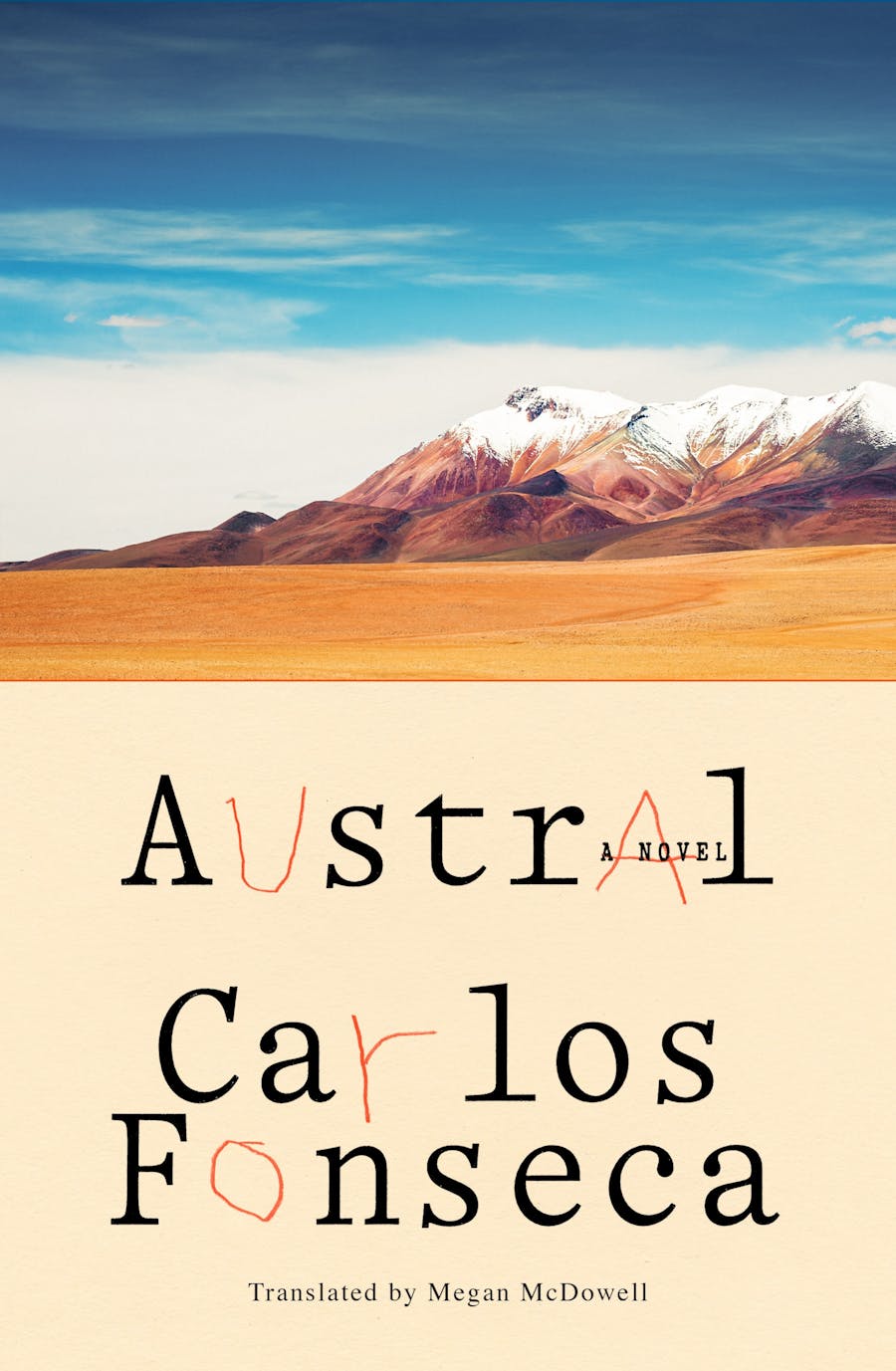
In the end, only the laughter remains: Austral by Carlos Fonseca

“Only someone who knows he is condemned can clearly see the path to salvation.”

Carlos Fonseca is a writer who delights in spinning complex webs that blend history, fiction and a distinct fondness for archival elements to create a framework within which important ideas and themes can be explored. As with his earlier works, Colonel Lagrimas and Natural History, his new novel Austral reaches across time and space to craft a unique literary environment complete with eccentric characters and grand schemes that gradually reveal the secret of their connections. But this time, the key to the puzzle the narrator is seeking to understand lies closer to home than he suspects when he is first drawn into this most unusual mystery.

Julio Gamboa’s world is unravelling when an unexpected summons arrives from his past. His distant past. The letter, postmarked in Argentina, bears an unfamiliar name, but the contents inform him that his friend Alicia—or Aliza as he had known her—Abravanel has died following a long illness that had, ultimately, left her almost entirely mute. However, as the letter writer, Olivia, assures him, she remained perfectly lucid to the very end. And, in passing, she entrusted a most important task to Julio, even though it had been more than thirty years since they last spoke or saw one another. An invitation to visit Aliza’s home in Humahuaca accompanies this curious missive and, with winter taking hold of Cincinnati and the future of his recently fractured marriage uncertain, Julio imagines not only a welcome reprieve, but a potential return.

Julio had met Aliza as a teenager in his native Costa Rica. To him she was exotic—a British girl bursting with poetry and stories of punk music who had run away from home at seventeen in pursuit of freedom and adventure. By contrast, he was cautious and uncertain, reluctantly committed to trying to meet his parents’ expectations that he pursue an academic future. Knowing that a scholarship awaited him, Julio and Aliza headed off on a last road trip up through Central America, finally ending in Guatemala during the volatile years of the early 1980s. That is where they parted ways, Julio leaving an angry and disappointed Aliza behind. Over the decades that followed, he moved to the US where he studied, got married and eventually settled into life as a professor of literature. Aliza, on the other hand, stayed in Latin America, changed the spelling of her name and began to write and publish novels in Spanish. When a stroke left her with a progressive form of aphasia, she moved to a commune in northern Argentina to try to complete the last installment of an ecologically themed tetralogy. But that goal had perhaps been too ambitious so her focus changed and she turned her attention to a new project. When she died, she left that manuscript with the explicit instruction that Julio was the only person who could edit it.

Upon his arrival in Humahuacha, he is given Aliza’s text—memoir or fiction, he is left to decide—and he begins to read a most remarkable account of Karl-Heinz von Mühlfeld, an anthropologist who travelled to Paraguay in the 1960s seeking the ruins of New Germany, the failed utopia founded in 1886 by Elisabeth Nietzsche, sister of Friedrich, and her eugenicist husband Bernhard Förster. But Karl-Heinz’s intended research takes a different turn when he meets Juvenal Suárez, the last surviving member of an indigenous tribe and only living speaker of the Nataibo language. Over several subsequent visits, the anthropologist’s efforts to record and preserve this soon-to-be-lost language increases while his sanity deteriorates. Aliza’s father comes into the picture a number of years later when he is invited to meet with the anthropologist in the Swiss sanitarium where he lives. He is inspired to carry the torch he believes the older man is attempting to pass him—a destructive path that left him ever changed but may have kindled his daughter’s attraction to Latin America.

As Julio makes his way into Aliza’s manuscript, titled A Private Language, he is impressed by the richness of the writing given the author’s declining ability to communicate while haunted by the notion that he is dealing with a work somehow composed in a “private key”—a text that “all could read but only one person could understand.” As her chosen reader, he feels that Aliza is offering him precious insight into the girl he once knew, but wonders what deeper message she might be sending him after all these years. Then, at a party, he learns of a companion piece she was working on, a dictionary of sorts. It is suggested that an indigenous man who visited the commune daily might know more. The following day, as Julio sets off by bus for Salinas Grande in search of this man, Raúl Sarapura, he is beset with his own linguistic anxieties:

Though he wouldn’t say so, he was bothered by that sense of foreignness that fell over him every time he came back to Latin America. That feeling of never really returning. An anxiety over belonging that occasionally even translated into grammatical errors and pronunciation mistakes, making him feel that little by little he was losing his language, and the last traces of his past along with it.

He returns bearing Dictionary of Loss, a notebook filled with almost child-like collages featuring images and entries with meanings, etymologies and commentaries for various words. If the key to understanding one text, and Aliza herself, lay in the other, and it was now Julio’s task to find the key to unlock the secret buried within this dual project.

Such a journey, of course, will lead Julio into a labyrinth lined with historical, philosophical and literary references, all somehow inextricable from his memories of his time with Aliza. But from his sofa back home in snowy Cincinnati, the logic connecting it all eludes him. Until he realizes that the roads he seems to be wandering down all lead to Guatemala, to the site of a village destroyed during the genocide, where a man he read about in the Dictionary, has constructed a memory theatre containing images, objects and recorded recollections—a space where fellow survivors of the war can honour their lost community and, through sharing memories, heal their trauma. Julio is certain that this is where he will find the answers he needs to complete the posthumous request his friend has made.

Austral is, clearly, a book about language, about the relationship of language—on an individual and societal level—to memory and legacy. It offers much to contemplate, but at the centre is the question of what can be done, in the face of the loss of language, to preserve the memory of a person or a people. Language does not exist in a vacuum, it needs to be spoken or read or committed to memory. Language is a link between the past and the future. A key image, repeated twice in the text, drawing on the work of Swiss linguist Ferdinand de Saussure (1857 – 1913) depicts a sketch of two rivers, one representing thought and the other representing language. The caption reads: “The trick, then, would be to learn to pass from one bank to the other without ceasing to speak.” For Saussure, language was a social phenomenon, in Austral the isolation of one speaker from a social network that has completely disappeared is mirrored by the potential loss of the ability of another speaker to navigate an existing system because the tools make that language possible have become inaccessible to her. But where an attempt to record a dictionary to preserve a dying language without a community fails, a dying speaker losing language is able to employ a community to reach an audience of one.

Fonseca, like his protagonist, is also from Costa Rica although he spent much of his adolescence in Puerto Rico, and Austral marks his first return to Central America in his writing. He notes in an interview that it meant a lot to finally feel comfortable “narrating from a region that I recognise as home but which I left long ago.” It may have taken three novels to get back there, but, having read and loved both of his previous works, I would suggest that this

is perhaps his strongest, most focused and most rewarding to date. Sometimes you can go home again.

Austral: A Novel by Carlos Fonseca is translated from the Spanish by Megan McDowell and published by Farrar, Straus & Giroux.

Reading Women in Translation: Looking back over the past twelve months

For myself at least, as Women in Translation Month rolls around each August, there is, along with the intention to focus all or part of my reading to this project, a curiosity to look back and see just how many female authors in translation I’ve read since the previous year’s edition. I’ve just gone through my archives and am pleasantly surprised to find twenty titles, the majority read in 2022. Within this number are several authors I’ve read and loved before and a number of new favourites that have inspired me to seek out more of their work.

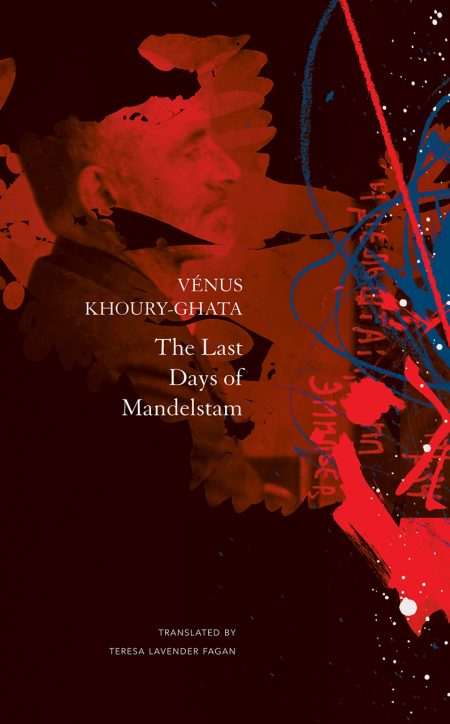
First among these is Lebanese-French writer Vénus Khoury-Ghata, whose The Last Days of Mandelstam (translated by Teresa Lavender Fagan) so thrilled me with its precision and economy that I bought another of her novellas and a collection of poetry, Alphabet of Sand (translated by Marilyn Hacker). I’ve just learned that another of her Russian poet inspired novels, Marina Tsvetaeva: To Die in Yelabuga, will be released by Seagull Books this fall. I can’t wait!


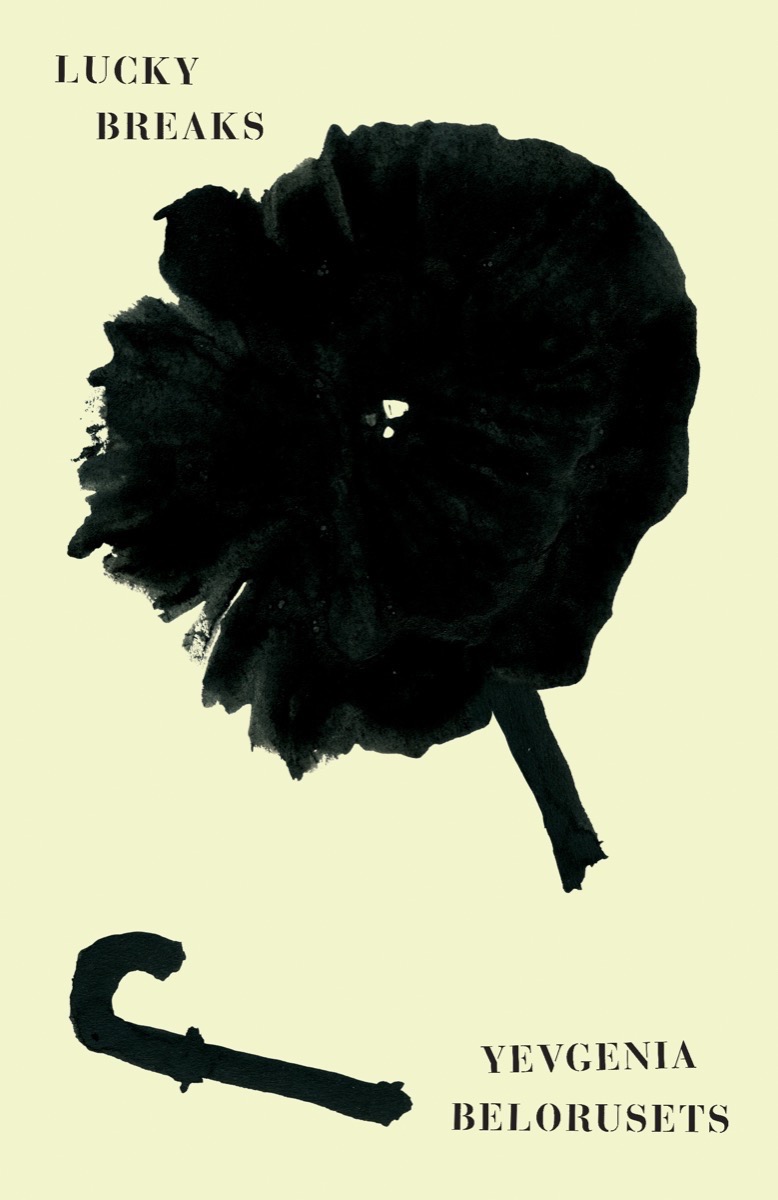
The advent of the war in Ukraine instantly drew my attention to a tiny book I had received from isolarii books. The name Yevgenia Belorusets became suddenly and tragically familiar as her daily diary entries from Kiev were published online. I read that small volume, Modern Animals (translated by Bela Shayevich), drawn from interviews with people she met in the Donbas region and as soon as it became available I bought and read her story collection Lucky Breaks (translated by Eugene Ostashevsky). Although both of these books reflect the impact of war in the east of the country, they could not be read without the context of the full scale invasion underway and still ongoing in her homeland.

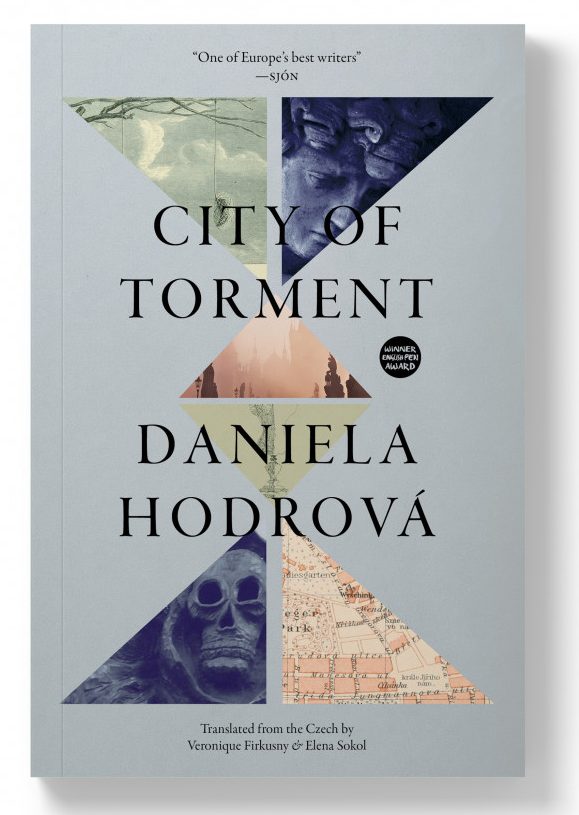
Another author I encountered for the first time that inspired me to read more of her work was Czech writer Daniela Hodrová whose monumental City of Torment (translated by Elena Sokol and others) is likely the most profoundly challenging work I’ve read in along time. Upon finishing this trilogy I turned to her Prague, I See A City… (translated by David Short and reviewed with the above) which I happened to have buried on my kindle. A perfect, possibly even necessary, companion.

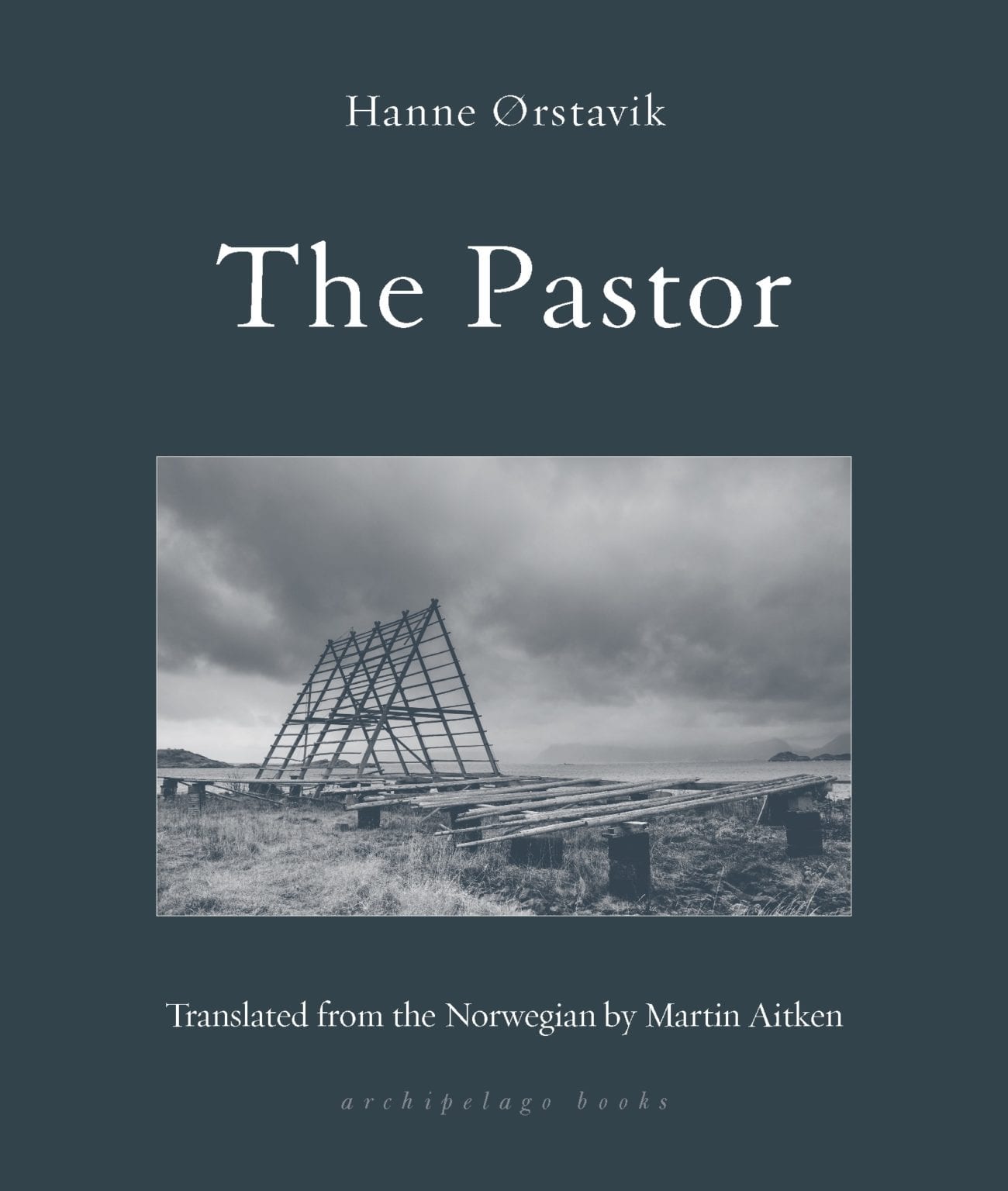
My personal Norwegian project introduced me to Hanne Örstavik, whom I had always meant to read. I loved her slow moving introspective novel, The Pastor (translated by Martin Aitken) and have since bought, but not read, her acclaimed novella, Love. However, lined up to read this month, I have her forthcoming release in translation, Ti Amo, a much more recent work based on her experience caring for her husband as he was dying of cancer. The only other female author I brought into this project was Ingvild H. Rishøi whose collection Winter Stories (translated by Diane Oatley) was a pure delight. I have been making note of other female Norwegian writers to fill in this imbalance in the future.

The past year also brought new work by two of my favourite poets: a book of prose pieces by Italian poet Franca Mancinelli, The Butterfly Cemetery (translated by John Taylor), and the conclusion to Danish poet Ursula Andkjær Olsen’s epic experimental trilogy, My Jewel Box (translated by Katrine Øgaard Jensen). In May I had the honour of speaking with Olsen and Jensen over Zoom for a special event—it was a fantastic opportunity I won’t soon forget. I also became acquainted with a new-to-me Austrian poet, Maja Haderlap, through her excellent collection distant transit (translated by Tess Lewis) and have since added her novel Angel of Oblivion to my shelves.

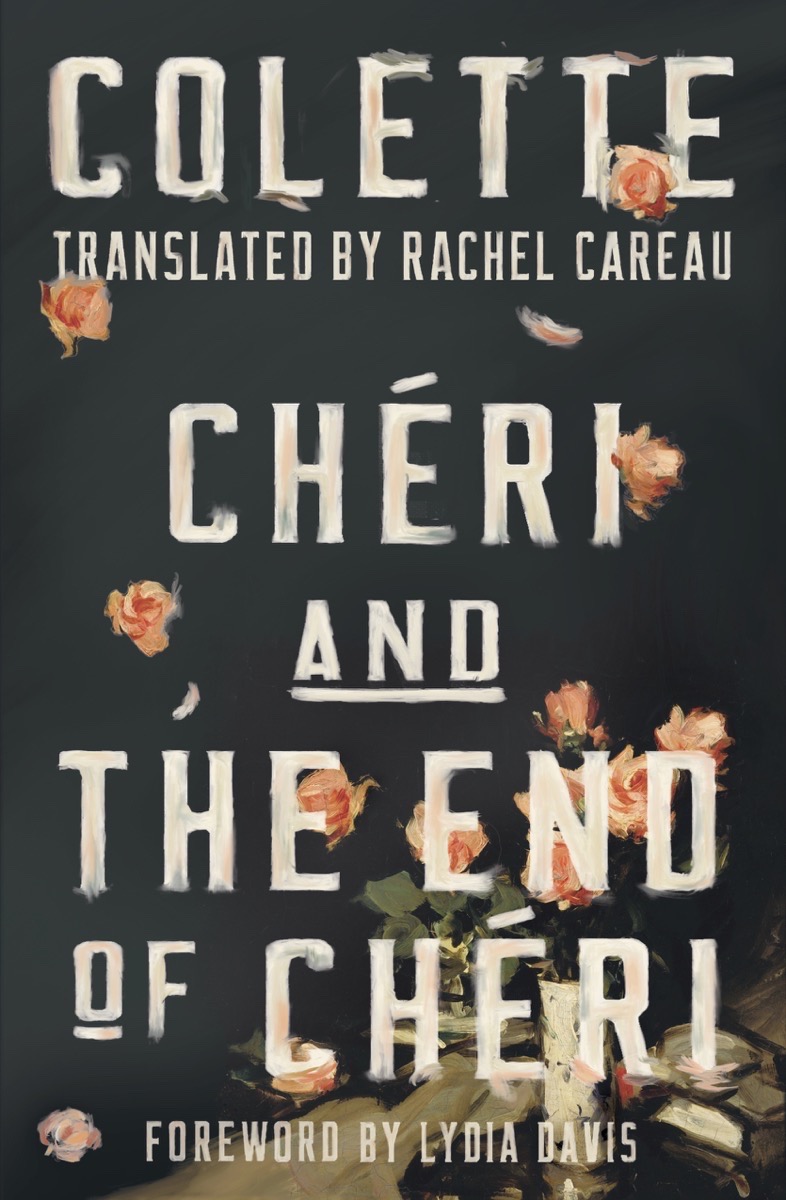
Among the many other wonderful women in translation I read over the past year, Geetanjali Shree’s International Booker winning Tomb of Sand (translated by Daisy Rockwell) needs no introduction—it is an exuberant, intelligent and wildly entertaining read. On an entirely different note, Rachel Careau’s brilliant new translation of Colette’s classic Cheri and the End of Cheri completely surprised me. I had no idea what a sharp and observant writer she was, in fact I didn’t know much about her at all and I discovered that she was quite the exceptional woman. Changing direction again, In the Eye of the Wild, French anthropologist Nastassja Martin’s account of her terrifying encounter with a bear in a remote region of Siberia (translated by Sophie R. Lewis) approaches the experience in an unexpected manner that I really appreciated.

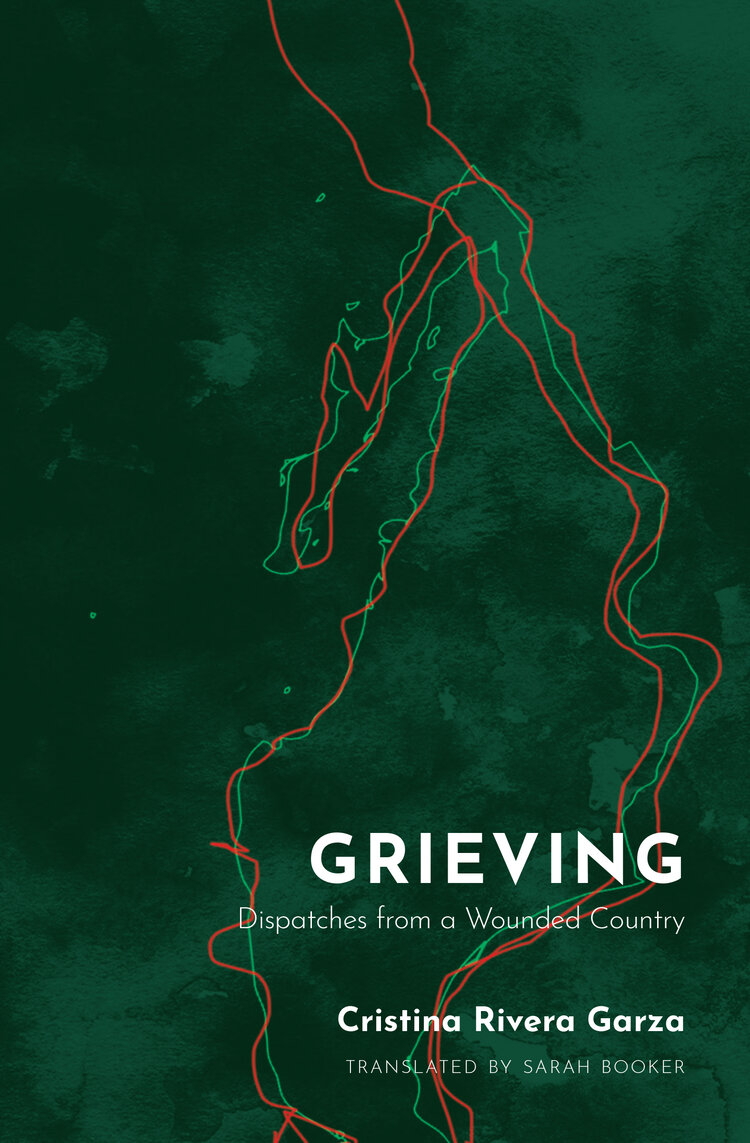
Keeping with nonfiction for a moment, Grieving: Dispatches from a Wounded Country by Cristina Rivera Garza (translated by Sarah Booker), a collection of essays about contemporary Mexico, was a difficult, necessary read. Annmarie Schwarzenbach’s account of her overland journey to Afghanistan with Ella Maillart in 1939, All the Roads Are Open (translated by Isabel Fargo Cole) was another book I had long wanted to read that did not disappoint but which carries much more weight given the more recent history of that region. Finally, My Life in Trans Activism by A. Revathi (translated from Tamil dictation by Nandini Murali) offers vital insight into the lives of hijra and trans women and trans men in India from a widely respected activist. Tilted Axis in the UK will be releasing this book to an international audience later this year.

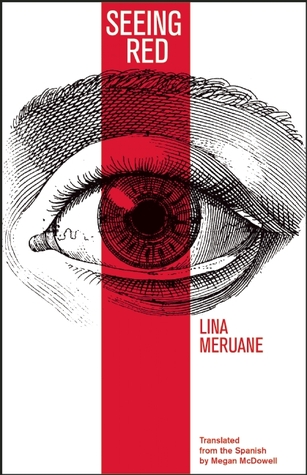
Rounding out the year, were three fine novels. First, I after owning it for years, I finally read Seeing Red by Chilean writer Lina Meruane (translated by Megan McDowell) and was very impressed. Last, but by no means least, I read two new releases from Istros Books who have an excellent selection of women writers in their catalogue. Special Needs by Lada Vukić (translated from the Croatian by Christina Pribichevich-Zorić) captures the slightly magical voice of child narrator with an undisclosed disability in a remarkably effective way, while Canzone di Guerra by the inimitable Daša Drndić (translated from the Croatian by Celia Hawkesworth) offers a fictionalized account of her years in Canada as a young single mother that was most enlightening for this Canadian reader.

I have, at this point, seven books selected for this year’s Women in Translation Month (#WITMonth) and we’ll see how I manage—and now I also have a goal to exceed for the eleven months before August 2023! I would, by the way, recommend any of the titles listed above if you are looking for something to read this month.

Love is blind too: Seeing Red by Lina Meruane

The claustrophobic atmosphere of Lina Meruane’s compelling novel, Seeing Red, envelopes you from the first lines. The narrator, Lucina, is distraught. Sentences end mid-thought. Unfinished. A party is in full swing, only a room away, but she is suddenly alone, isolated.

I had to give myself an injection at twelve o’clock sharp but now I wouldn’t make it, because the pile of precariously balanced coats let my purse slide to the floor, because instead of stopping conscientiously, as I should have, I bent over and reached to pick it up . And a firecracker went off in my head. But it was no fire I was seeing, it was blood spilling out inside my eye. The most shockingly beautiful blood I have ever seen. The most outrageous. The most terrifying.

A diabetic diagnosed with a serious condition affecting her eyes, Lucina had been warned against leaning over and now one thoughtless movement has left her eyesight, her work and her normal connections to the external world threatened by a curtain of blood. What follows is a deeply internalized monologue that builds in neurotic intensity, narrated by a woman struggling against her worst fears with a rapidly diminishing reserve of dignity and grace.

Inspired by her own real-life episode of blindness, Seeing Red is not exactly an autobiographical novel. In an interview, the Chilean author and essayist explains that she began writing what she thought would be a memoir, but as the relationship with truth began to interest her less, it quickly became a piece of fiction. She was, however, keenly interested in capturing the experience of blindness as “seen” from the perspective of the unseeing person—something raw that would be in contrast to the tendency in Latin American literature to present blind characters from view of the outsider.

Set in the early 2000s, Lucina, the protagonist of Seeing Red is, like her creator, a writer (writing under the name “Lina” Meruane) who lives in New York City with her boyfriend Ignacio, an academic. Their relationship is only about six months old and they are just about to move to a new apartment when her sight starts to rapidly disappear. She faces an uncertain prognosis, and a delay before the doctor will be able to consider operating, but they are bound to one another by the intense emotion of a new romance. That’s a good thing, because Lucina will test it, especially when she flies home to Chile to visit her parents—both of whom are doctors—while Ignacio attends a conference in Argentina. He soon joins her as they to try to salvage a vacation they’d planned, one that is now restricted to Chile, primarily to her family’s Santiago home, because of her fragile condition. Relying on her memory, she guides her partner through a city he has never visited, trying at the same time to blindly negotiate an emotional minefield of complicated family dynamics and past relationships.

The narrative style cleverly enhances the increasingly unreliable nature of Lucina’s connection to the world around her. Through a series of unbroken single-paragraph sections, each two or three pages long, we are held hostage to her unseeing perspective. Thoughts unspoken race through her mind, as she imagines how those around her are reacting, picturing their expressions and adding to their words her own visualized commentary. She second guesses herself. She second guesses everyone and everything. One can only imagine how her patient partner or her aloof mother really feel as everything is channelled through Lucina’s  personal filter. Her reconstructions. Her cynical digressions. Her abruptly aborted sentences.  As readers we have to trust her descriptions which are themselves coloured by her anxieties and growing agitation.

Aren’t you dying of cold? Ignacio insisted, rubbing his hands together as if lighting a fire. I was trained to resist the damp air that was seeping into his bones. His teeth chattered. He got up from the chair and bent his legs to wake them up. He rummaged quickly in a packet of cigarettes, the match scratched my ears, and I heard him suck on the cigarette in spite of his imaginary flu. I could envision him forming fragile smoke rings that his forced cough then tore apart, his dry cough and the beaten voice of a bellyaching Galician. Winter in my Santiago made him remember winter in his own, in Compostela, and he told me again how as a boy he’d slept beside a wall that let water filter in from outside, how he’d spent his whole childhood sick, covered in rashes, his ears hardened by chilblains. He exaggerated his hardships, or invented them, all so as not to talk about our own.

The question of her relationship with Ignacio, and whether it will stand the strain, haunts Lucina. She wants to give him the freedom to decide if he would be willing to stay, even if the unthinkable happens and her sight never returns, and yet they are each terrified of being alone, lost and overwhelmed by the enormous implications that hang over them both. Conversations begin but are quickly aborted. Strange sexual urges obsess her. Once back in New York, with surgery ahead, the narrative only becomes more charged and visceral and surreal. In Megan McDowell’s excellent translation, none of the energy or intensity is lost. Lucina is a complex, difficult, thoroughly compelling character. Her story vividly demonstrates the fear of losing control, the limitations of relying on the mind’s eye and the extreme pressures a person in crisis can put on those close to them.

Seeing Red by Lina Meruane is translated by Megan McDowell and published by Deep Vellum.

Night / falls / slowly: Dream Pattering Soles by Miguelángel Meza

I was long asleep within me.
Emerge to keep vigil,
move.
Yes I was asleep within me.
I am truly alone.

(from “Appear”)

It may be small, but this trilingual chapbook contains an entire world in the span of ten poems. Here Guaraní poet Miguelángel Meza calls on the traditional mythology and cosmology of his Indigenous Paraguayan culture to speak to contemporary issues. This project, named in full Ita ha’eñoso / Ya no está sola la piedra Formerly and Again Known as Pyambu / Dream Pattering Soles has its origin in a dual language Spanish translation by Meza along with Carlos Villagra and Jacobo Rauskin first published in 1985. The original Guaraní was revisited and edited by the poet for this double bilingual edition which includes both the Spanish version and an English translation by Elisa Taber (each running alongside the original from the opposite end of the book). As a writer, translator and anthropologist born in Paraguay, Taber is especially well suited to take on this project. She was able to access the original poems directly and via the Spanish, check with the poet as needed, and edit the final version, allowing a uniquely interwoven translation to emerge.

The English title Dream Pattering Soles is a literal translation of the original title Pyambu, that, as the translator indicates in her Note, evokes an auditory image of “menacing presences, deities turned human.” The Spanish title that translates as The Stone is No Longer Alone calls to mind comforting presences, the “humanity of the nonhuman.” Together, the titles selected for the two translations embrace two essential elements of the grounding mythic narratives and the poet’s approach to rendering them. As Taber says:

Meza’s central figures of speech are metaphors and metonymies used in conjunction. Something substitutes another which is part of a whole. The attribute of a particular god is identifiable in a human and that of any human is identifiable in an animal or a thing.

As such, the journey of the poet, and by extension his community and the reader, is one of moving from being with to becoming in the other.

In the opening poem, Meza, takes on, as “I”, the voice of the fundamental essence—the first  ñe’ë, or world-soul, that arises with the beginning of the world. Nature is, as one would expect, an abiding presence in this sequence, and even without a detailed knowledge of Guaraní mythology, the mournful beauty speaks across a wide geographical and cultural expanse.

I suffer, moon.
Wrung firefly falls.
Earth will turn to dust, they say.
End. Then,
who will you, daughter, orbit?
I suffer:
The sky wrecks the rivers.
Sadness’ dust falls.
Ashes cover the fields and
the vast forest.
And you seem to spin back
into the sky’s depths.

(from “Moon”)

In this conception of the world, we see ancient wisdom meet modern concerns. The delicate, haunting images seem speak to our changing planet in the uncanny way traditional mythology so often does. In these uncertain times—the slogan of the 2020s it seems—this unique volume is a timely invitation to listen.

Dream Pattering Soles by Miguelángel Meza is translated by Elis Taber and published by Ugly Duckling Presse.

We mourn us: Grieving: Dispatches from a Wounded Country by Cristina Rivera Garza

I don’t quite know where to begin to attempt to write about this book. The historical roots and global and economic crosscurrents that course through the so-called War on Drugs that has openly threatened the fabric of Mexican society since 2006 go back much further. Yet, as I understand it, when President Felipe Calderón sent troops to his home state in a bid to end the longstanding drug violence there, the action initiated the ongoing conflict between the government and the drug cartels, that has effectively brought an unspeakable brutality out of the margins and into the daily lives of the country’s citizens. It has become a war against the Mexican people, and a war against women.

Cristina Rivera Garza’s hybrid essay collection Grieving: Dispatches from a Wounded Country gathers twenty-eight pieces—some personal, some journalistic, some literary—as a tribute to the power of language in the face of unrelenting fear and violence, and at times her words leave you gasping for breath. It is not a comfortable read. She writes about the barrage of visceral attacks that reduce human beings to unrecognizable bodies, tortured and mutilated, and of the killings, targeted and incidental, that rob mothers of their children, communities of their respected members, families of loved ones. And she writes about femicide, the murder of women, that too often goes unpunished. Like that of her own sister.

But what to do? How to address this accumulating pain, the pain of an entire people? Grieving in this context is not a mere process of coming to terms, to peace with a loss. There is no peace, the losing is relentless, the grief exponential. In Rivera Garza’s passionate, gut wrenching Introduction she speaks of the importance of recognizing the shared experience, the shared voice:

When everything falls silent, when the gravity of the facts far surpasses our understanding and even our imagination, then there it is—ready, open, stammering, injured, babbling—the language of pain, the pain we share with others.

And this is the importance of suffering, for where suffering lies, so, too, does grieving: the deep sorrow that binds us within emotional communities willing and able to face life anew, even if it means, or especially when it means, radically revising and altering the world we share. There, where suffering lies, so, too, does the political imperative to say, You pain me, I suffer with you, I grieve myself with you. We mourn us.

The texts that follow include published and unpublished essays, poems and crónicas, Spanish pieces translated Sarah Booker along with some originally written in English. For admirers of her enigmatic, dark novels like The Iliac Crest and the Taiga Syndrome, Grieving offers an opportunity to hear the acclaimed Mexican author speak directly to the tragic state of her country with painful honesty, strength and hope.

The works that comprise this collection are varied and relatively short, but the intensity of the material may be best processed and appreciated by taking a few pieces at a time. As someone with little understanding of the political reality of present day Mexico—awareness of the gruesome violence and the dangers to citizens and, at times, visitors, yes, but limited comprehension of the dynamics at play—I was continually faced with my own instinctive reaction to the idea of living under the conditions in which so many Mexicans find themselves on a daily basis. Rivera Garza’s language is powerful, poetic, but so much of what she touches on is grim, raw and heartbreaking. A central unifying construct is her notion of The Visceraless State—one that lacks political acknowledgement of the human body and its individual subjectivity—arguing that by engaging in this mis-named Drug War, the Mexican government has placed maximum profits above its obligations and responsibilities to its own citizens.

Essay collections are sometimes weighed down by a degree of sameness, a feeling that the same or similar themes are being rehashed, rather than viewed anew as the work progresses. Although Grieving is an attempt to articulate the present situation in Mexico, it is not an explicitly historical or journalistic effort. It is, rather, a human response, from a woman who is not just a reader and a writer, but  “a mother and a daughter and a sister. A grieving sister.” Rivera Garza is writing from within her personal experiences, offering astute intellectual observances only as needed. The result is an eclectic, thematically focused exploration, yet one that picks up refrains, images and stories, calling on them again and again through the course of the book.

This is, then, a work that cannot be easily summarized. I was fascinated by several of the pieces that spoke about books not yet translated into English and their authors’ perspectives and contributions to an understanding of forces at play—not just in Mexico but in other analogous situations in social and political history. Cruelty and inhumanity is not the sole domain of any particular time or place. But there are a few key pieces that I found especially powerful. “I Won’t Let Anyone Say Those Are the Best Years of Your Life” examines the impact of drug based violence on youth through testimonies contained in a volume called Estos últimos años en Ciudad Juárez (2020) which looks at the recent period in Ciudad Juarez, a city on the Rio Grande, south of El Paso, Texas, and the price paid by the people there. Rivera Garza frames the lived reality:

No survives a war unscathed. Just as rivers feed nearby land by virtue of their mere existence, wounds run deep and pain seeps through every inch of the body. No action, no word, no gesture is unconnected to war. Similarly, actions and words and gestures remain linked to a growing alertness, a critical consciousness, about the sources of tragedy and loss. There are laments in the book, but they are never disassociated from the rage and indignation against a Visceraless State and the profit-making cartels. Wounded and on their toes at the same time, the people who remember their youth in a war-ravaged Ciudad Juárez, while still, in many cases, confronting the damage brought upon them by forces larger than their own, speak directly and to the point: We were robbed, many testify. They robbed us of our youth, indeed, but more importantly, they robbed us of our future.

Another especially powerful entry that again takes us back to Ciudad Juárez is “The Longest Sunday.” This essay recounts, in 13 brief numbered segments or chapters, a day Rivera Garza spent in the city. She is heading there to meet a woman whose testimony was included in the volume discussed in the piece mentioned above (which appears in any earlier part of Grieving). Luz Mariá Dávila had lost her only two sons in a violent massacre in 2010. Their meeting is sensitively portrayed. But this visit also brings to the surface the author’s own anxiety before arriving in a city that occupies “a sadly privileged place in our geographies of contemporary horror” to which increasing reports of femicides had also been added:

I remember the wide streets, empty of people, the string of abandoned houses that lined the road all the way from the airport to the hotel. A black hole in the very heart of the city. An immovable immobility. That way of repeatedly looking over your shoulder like you were expecting the worst, sure it would come at any second.

Her account unfolds under the quiet burden of grief, of pain, carried not simply in the story of one grieving mother’s sorrow and stubborn resolve, but in the complex emotions that Rivera Garza wrestles with under the “overwhelmingly blue sky” on that Sunday in Ciudad Juárez.

This is just a very brief sampling of this vital collection. For a taste of the intensity and insight, Rivera Garza brings to her essay writing, I can point you to a slightly different edit of the second last piece in this work which I had the great honour to publish in the spring of 2020 when I was an editor with 3:AM Magazine. Written in the early days of the pandemic when Trump was still President, “Touching is a Verb: The Hands of the Pandemic and Its Inescapable Questions” is not only an ever relevant meditation on the impact of COVID-19 on our relationships but a cautiously optimistic look ahead to the possibility of a Visceral State. It can be found here. Only time will tell what more questions and answers the pandemic will bring, but hope must be maintained, against all odds.

Grieving: Dispatches from a Wounded Country by Cristina Rivera Garza is translated by Sarah Booker and published by Feminist Press.

And so it goes: Nancy by Bruno Lloret

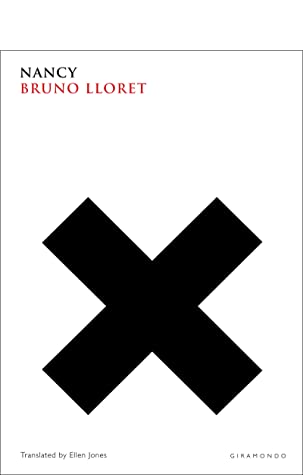
Nancy, the debut novella by Chilean writer, Bruno Lloret, is a curious read. Somewhere in northern Chile, a woman is dying of cancer. She is looking back over her adolescence and early adulthood—a rather unusual existence marked by poverty, encounters with gypsies, Mormon missionaries, and itinerant filmmakers. Some readers have imagined her an old woman, but even though time references are not reliable, it seems likely that she is only in her late twenties or thirties. At least that is what the nature of her aggressive cancer and the compressed quality of her adult experience would suggest. But I could be wrong. Hers is a tale filled with holes.These holes are made manifest in a most ingenious manner. The landscape of Nancy Cortez’s mind is framed within a sea of X’s. A flood of the symbols open and close her story, and mark sentences and spaces—gaps or silences—along the way. Between these X’s the language is notably stilted, there is little effort to set a scene, descriptive details are offered only as required to provide a basic context for the experience Nancy wishes to share, lending the text a spare, often awkward, quality. This is intentional. The author has claimed that his goal was to allow readers to engage with the work in different ways and to that end the X’s, and I would suspect, the embedded images of x-rays and other objects, are intended to break up the reading.

If this sounds cluttered and disruptive, at times it is, but the actual story reads easily and  smoothly. Nancy is an eccentric narrator, with a voice that is sarcastic yet notably flattened in affect. Her account opens with her escape from life with her sad, troubled father at the age of seventeen. She arranges to be smuggled into Bolivia where she meets the gringo Tim, quickly gets married, and ultimately ends up back in Chile. The marriage is less than happy, and ends with Tim’s bizarrely tragic demise after Nancy’s cancer has already taken a toll on her body. She describes the ravages of the disease quite vividly, talking about the fear of dying, and the loneliness of waiting for nature to take its course.

And then she retreats into her past. The X’s retreat too, leaving more room for words to fill the page. Her mamá, she advises us, was erratic and abusive, her papá quiet and oppressed by life, her brother Pato a refuge. She reports on adolescent experiences with sex, social outings to the beach, and periods of isolation at home. Everything starts to shift when her brother disappears and her mother walks out, leaving her at home with her bereft father who, in his distress, soon falls prey to the advances of a pair of Mormon missionaries:

But the Brothers really had managed to get my papa interested X X The Word of God had done its work, and via those missionaries with their tanned necks and yellowing armpits it moved him, drawing him slowly into their embrace X Damn the Word and damn the sneaking Truth, taking advantage so cruelly, so mockingly of a man who up until a few minutes ago believed he had no soul X X

This conversion, the transformation of papá tonto into papá santo, will have a significant impact on Nancy’s teenage years—in strange and unexpected ways the missionaries and other local Latter Day Saints will feature in the adventures of our heroine and her hapless father moving forward. Until, of course, the story circles back on itself, completing its narrative loop in a thickening pool of Xs.

Throughout, this narrative has a certain unevenness. Details are sometimes mentioned out of place, and there is a conversational coarseness and odd tone that surfaces. Nancy is not well read or particularly engaged in school, so her account does not have a literary flourish. This is an appropriate quality, given the protagonist’s background and deteriorating health, but does it work? Clearly for many enthusiastic readers it does, but I confess that I found it difficult to care about Nancy or the characters who people her tale. No one, not even the narrator, feels real. The eccentricity of the overall story was not in itself a problem; the disconnect lies in the fact that very little emotion is registered. Nancy typically shows an odd detachment and lack of concern for anyone, even for herself. The veracity of her account cannot be taken for granted if her memory has gaps, but people who confabulate to compensate for memory loss tend to show engagement with their stories all the same. I respect the attempt to create a first person narrative that defies typical lyrical expectations that can feel artificial given the narrator’s life circumstances, but as X’s filled the final pages, I was left feeling somewhat unsatisfied.

Nancy by Bruno Lloret is translated by Ellen Jones and published by Giramondo in Australia and Two Lines Press in the US.