Another winter solstice is upon us: 2016 – The year in review

Winter solstice. The longest night of the year.

Moving forward, the days grow steadily longer and, in less than two weeks, we will leave a dark, disturbing year behind us.

But it would be reckless to imagine that 2017 will be brighter. However, with luck, we can be forewarned, forearmed, and determined not to relax our guard. We can stand together against the rising tides of hatred, and remember what is truly at stake.
11229294674_e5844929df_z1

Since I started this blog two and a half years ago, winter solstice has become my annual check-in point. Last December, I reflected on the key elements of a year that began with a move to writing seriously about books and culminated with my first review for Numéro Cinq. Against that trajectory, I wrote about my trip to South Africa, and the pulmonary embolism and cardiac arrest that followed within a few weeks of my return. I imagined that the eventful year I had experienced would not likely, for better or worse, be exceeded this year.

Cue 2016.

This has been a year of heartache, anger, and dismay. Around the world and close to home. I watched the violence in Syria, the outcome of the Brexit vote, and the spectacle of the American election, among the other tragic and unexpected events that have unfolded. And as economic uncertainty and anxiety has grown in my own hometown—a city that lives and dies with the price of oil—the crime and homicide rate has risen sharply this year. It does not feel like the same community any more.

Then there is the lengthy roll call of the writers, artists, and performers who have left us. But to be honest, I cannot say that I have felt these losses as acutely as many others… I’ve been distracted by the immediate, personal losses that marked this year. My mother, my father, and one of my closest friends, all gone within the span of two months. And my grief—that most fundamental human emotion—is complicated, inarticulate, and wearing.

It will take time.
11592010455_89917d80e3_z1

But, 2016 has also been a time of amazing growth and opportunity for me as a writer. I don’t know how often I resolved, with the dawn of a new year that: This year I will write. Last December, with that first critical review under my belt, I could not have imagined that I would have, in addition to regular contributions to Numéro Cinq, published reviews at 3:AM, Minor Literature[s], The Quarterly Conversation, and The Rusty Toque. And I would not have dared to dream that I would see my essays and prose pieces published on line and in print, or that I would be invited to join the editorial team of The Scofield. As 2017 approaches, I have a handful of reviews scheduled and several prose projects underway. I’m also feeling inspired to return to photography after a lengthy hiatus, and to see how I can incorporate photos into my written work.

I have much to look forward to, in spite of, or rather, against the new darkness that threatens.

Art and literature are more important than ever at times like this.

So, this seems to be an appropriate time to look back over this year’s reading, and highlight the books that stand out for me.

I’ve read about 50 books to date, a little more than half of what I read in 2015. I don’t even want to hazard a guess as to how many books I bought, received as review copies, or brought home from the library. I feel, as usual, like I fell short of my intentions. However, I have to remember that I was writing, working on critical reviews, and dealing with considerable life stresses over the past twelve months.

More than ever before, I read like a writer this year. That is, I was especially attuned to voice, structure and approach to storytelling. Consequently, the books that made my year-end list tend to reflect this focus. Of course, any “best-of list” leaves out many excellent books. I’ve managed a baker’s dozen here, and it’s probably a reflection of the increased number of off-blog reviews I wrote that this year’s list is predominately composed of new releases. I was surprised to see that once I’d made my selection.

In reverse chronological order, my top reads of 2016 include the following:

Story of Love in Solitude by Roger Lewinter (France), translated by Rachel Careau
I will write about this collection of three short stories once I have completed The Attraction of Things. My verdict is still out on that title, but this tiny book is simply wonderful.

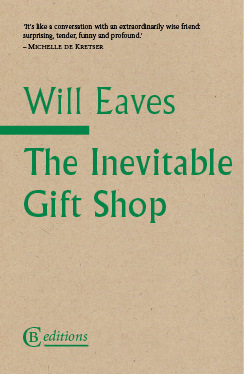
The Inevitable Gift Shop by Will Eaves (UK)
Fragmentary, cross genre writing that works fascinates me. Billed as a “memoir by other means”, it is Eaves’ unique tone that makes this blend of memoir, literary criticism, and poetry so compelling. His thoughtful reflections on reading and writing made this an ideal meditation to turn to after a year of reading critically and exploring my own literary voice.
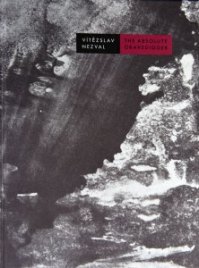
gravediggerThe Absolute Gravedigger by Vítěslav Nezval (Czech Republic), translated by Stephan Delbos & Tereza Novická)
I have found myself turning to poetry more and more as the world seems increasingly unstable and, well, surreal. This newly translated collection of poetry by one of the best known Czech Surrealists should be essential reading at this time. Originally published in 1937, the darkness he could see on the horizon are all too familiar once again.

The Country Road by Regina Ullmann (Swiss), translated by Kurt Beals
I read this collection of short stories when I was in a very low mood. But in the spare, sombre prose of these tales I found a beauty that, rather than deepening my depression, brought strange comfort. Admired, in her lifetime, by the likes of Rilke, Mann, and Musil, Ullmann’s work is mostly forgotten today. This volume, released in English translation in 2015, is a rare treasure—one that I encountered at just the right moment.
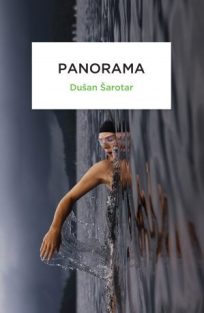
panorama-coverPanorama by Dušan Šarotar (Slovenia), translated by Rawley Grau
For me, as a reader and a writer, one of the most important books I read this year is this literary meditation on migration, language, landscape, and loss. This novel finally broke through my own stubborn determination to hold to a sharp delineation between fiction and nonfiction, and has made me re-evaluate potential approaches to themes I wish to examine. What Šarotar achieves here with his own unique take on what might be deemed a “Sebaldian” approach, is the creation of an atmospheric, captivating, and intelligent work.

The Passion According to G.H. by Clarice Lispector (Brazil), translated by Idra Novey
Oh wow! In a way, I am glad I didn’t read Lispector before writing and publishing my essay “Your Body Will Betray You,” because she is exploring the process of coming into being so beautifully that I might not have been able to write at all after reading this. Employing an unconventional narrative, Lispector’s G.H. experiences a vivid, metaphysical crisis triggered by the sight of a cockroach. The result is a remarkable, thoroughly engaging read. I have at least three more of her books waiting for the new year.

Proxies by Brian Blanchfield (US)
I bought a number of essay collections this year and currently have several on the go. This collection impressed me not only for the way the essays were composed—written without consulting outside sources—but for some of the ideas explored, and for reinforcing the value and possibilities of the personal essay/memoir form. I also greatly appreciated his guiding caveat: Permitting Shame, Error and Guilt, Myself the Single Source.
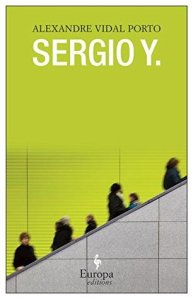
SergioSergio Y. by Alexandre Vidal Porto (Brazil), translated by Alex Ladd
This book is significant and important for dealing with gender identity and transition in a sensitive and original way. I am, as a transgender person, critical of much of what passes as literary writing on this subject. This is a most impressive work with a startling and unique approach. As I noted in my review, Sergio Y. is novel that approaches the transgender experience from the inside and the outside, allowing for the comfort with names and pronouns to vary, over time and from person to person, reflecting the complexities of relationships that others, even loving family members, can have when an accepted and assumed identity is challenged. That is the book’s greatest strength.
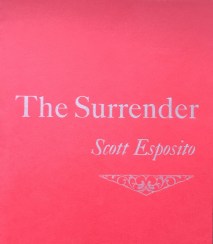
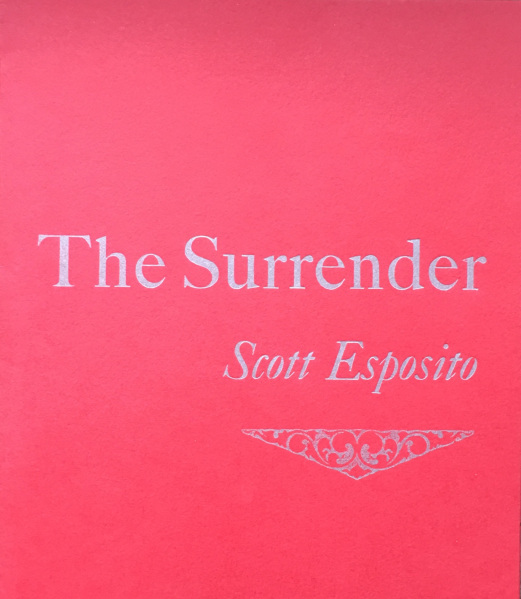
surrThe Surrender by Scott Esposito (US)
This book was on my radar from the moment I first heard of it. Again, despite my typical gender related skepticism, I was drawn to this transgender-themed memoir/film critique/literary diary. I wanted to know how Scott would present his story—one that is not commonly heard. Although his journey is very different than mine, we share a certain sensibility. This is a brave and most wonderful book by a man who has long been one of my heroes. He has since become one of the many literary friends I have come to know and cherish this year.
Layout 1

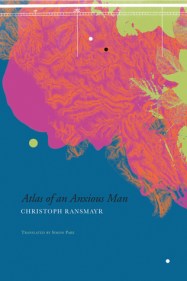
Atlas of an Anxious Man by Christoph Ransmayr (Austria), translated by Simon Pare
This book was a total surprise when it arrived courtesy of the good people at Seagull Books. This most unusual travelogue, a series of brief “encounters” across the globe, contains some of the most stunning descriptive language I have ever read. Each episode begins with the words “I saw…” and ends with a wise, evocative observation. From the North Pole, to South America, from deep inside the mountains of New Zealand, to a parking lot in San Diego, this is a journey that will not be easily forgotten. Highly recommended.

Quiet Creature on the Corner by João Gilberto Noll (Brazil), translated by Adam Morris
My third Brazilian book on this list is this enigmatic novella that led to one of the most entertaining literary discussions of the year. What is it about? Well that is the challenge. I had to read it three times before I could begin to get a handle on it. The narrator, a young man who finds himself in a strange situation that is rapidly growing stranger, is, in his oddly passive tone, almost more disturbing than whatever might be happening. Opaque and surreal, this book gets under your skin.

The Crocodiles by Youssef Rakha (Egypt), translated by Robin Moger
This novel still holds fast in my memory although I read it back in February. It is, as I described it in my review, a prose poem of simmering power, unwinding across 405 numbered paragraphs, tracing a torturous path from the first stirrings of poetic assurance within a trio of young men in the 1990s to the doomed protests of the Arab Spring. It is a dark, intense exploration of youthful political idealism, that builds on repeated images, themes and refrains to create a compelling narrative force as it moves toward its stunning conclusion. Again, this is another work that is increasingly relevant in today’s world.
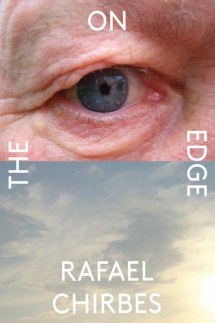
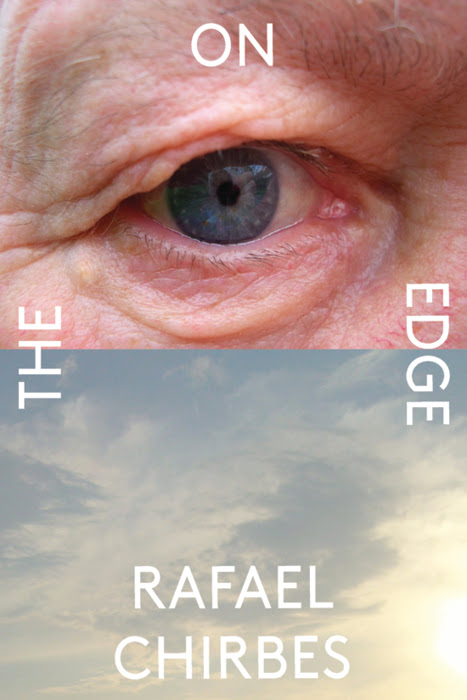
On-the-edgeOn the Edge by Rafael Chirbes (Spain), translated by Margaret Jull Costa
Finally, the very first book I read in 2016 is probably my favourite book of the year. I wrote about this novel at length for Numéro Cinq and I regret that it has not generated more discussion. In what is essentially an extended monologue with brief cameos from other characters, Chirbes creates a memorable, engaging, and tragic character in seventy-year-old Esteban, a man who has lost absolutely everything in the economic collapse of 2008.  Thoroughly human in his wisdom, his resolve, his shortcomings, and his despair; this is a powerful and important book that deals frankly with many of the critical issues—including migration, xenophobia, and economic decline—that are more vital than ever as we step into 2017.
Round and round: 33 Revolutions by Canek Sánchez Guevara

The unnamed protagonist of 33 Revolutions, a stark, relentless portrait of life in Castros’ Cuba, is a divorced, black man—a misfit who chafes against the collective tedium of his existence until he is forced to decide, like so many before him, what, if anything, holds him to his wretched island nation. The revolutionary bloom is long off the Communist rose that once held his hopes and enthusiasm. With weary resignation, he shuffles off to his ministry job day after day, enjoying the few privileges afforded by the little bit of extra money sent to him from his mother overseas, but it is a hollow existence:

Duty and desire. Angrily, he bangs out his dilemma on the typewriter until the paper is perforated with periods and commas. His desire is to be alone in his office, in this city, in this country, and never to be disturbed. Monotony is expressed in a thousand ways and acquires various signs. Work, radio, new bulletins, meals, free time: I live in a scratched record, he thinks, and every day it gets a bit more scratched. Repetition puts you to sleep, and that sleepiness is also repeated; sometimes the needle jumps, a crackling is heard, the rhythm changes, then it sticks again. It always sticks again.

33Threaded through the thirty-three brief chapters of this slender novella, are two repeated refrains: the scratched record and the suffocating tropical heat. This imagery is employed so incessantly that it begins to wear a groove that could, in a longer or less deftly handled work, easily become irritating. Instead, the sheer beauty of the language lends the repetition a peculiar freshness. And that is exactly the intention. Tedium and repetition can be borne, can even seem bearable. Until one day it isn’t, and then all bets are off.

The author of 33 Revolutions, Canek Sánchez Guevara, inherited a proud and defiant spirit  from his grandfather, the famous Marxist revolutionary who fought alongside Fidel Castro. At the age of 22, he rejected the dictatorial politics of his homeland, and left for Mexico where he became a writer, graphic designer, and heavy metal guitarist. He was dedicated to writing and speaking out against Cuba’s single party system and its attendant human rights abuses until he died unexpectedly in 2015, at the age of 40. This hypnotically engaging novel allows his voice to continue on.

With a sense of absurdity that Kafka would appreciate, Sánchez Guevara creates, in his hero, a man who is aware that he stands at odds with the world around him. He finds refuge in books and an incongruous fondness for avant-garde music. He is aware that his life is paradoxical, verging on metaphysical weirdness that is both a blessing and a curse. And this painful self-knowledge does nothing to protect him from the monotony that curses his days or the vivid nightmares that haunt his sleep. He understands his reality all too well:

He looks down at the sea again and drinks straight from the bottle. Behind him, the dirty, beautiful, broken city; in front of him the abyss that suggests defeat…. We win by isolating ourselves, and in isolating ourselves we are defeated, he thinks. The wall is the sea, the screen that protects us and locks us in. There are no borders; those waters are a bulwark and a stockade, a trench and a moat, a barricade and a fence. We resist through isolation. We survive through repetition.

As this ceaseless repetition begins to weaken him, our protagonist’s disaffection grows. An undercurrent of protest starts to build within him, fueled by the oppressive heat and boredom. He had long managed to hold his distance, to stand apart from both the street corner reactionaries and the huddled gossips distorting what the rumours passed down to the masses—but this continual buffering against the insidious mechanisms of state control, starts to wear him down like, well, the needle on a scratched record.

The heat is criminal—it melts neurons, incites to violence, multiplies fertility tenfold. There isn’t a beer for miles around (or water, or a barley drink, or anything that can be bought with national currency). Nothing belongs to me, he thinks. And what about me, do I belong to anything? (The scratched record plays insistently.)

His rebellion starts passively, opting out and feigning sick, but in that act the course is turned.

He finds himself drawn to the shore. His experiences, not only of the city around him but the uncertain and desperate promise that waits beyond the waves, is mediated through the lens of his camera. The frame of the viewfinder becomes his means of contextualizing himself in the world and a focuses his hopes for a possible future elsewhere. Everyone seems to be leaving—his doctor, an old friend from school, groups of kids clinging to rafts of questionable seaworthiness. The camera with its ability to play with depth of field, becomes his tool in an attempt to tell an alternate story, take control of and document his own fate.

This brief novella hits hard. Harder perhaps in the light of Fidel Castro’s recent passing, and in the desperation of migrants risking the seas for a better life elsewhere. The anguish that comes through personal and powerful, and it is more important than ever that we stop for a moment to listen.

33 Revolutions, by Canek Sánchez Guevara is translated  by Howard Curtis and published by Europa Editions.

A hoard of small treasures: The Inevitable Gift Shop by Will Eaves

Which of the psalms will hear the clouds as
they pass overhead, a stave of wires their nest?
What makes them beautiful? Why do they tear
themselves apart like aging stars or clocks?

Two years ago this month, I read a slender book called The Absent Therapist, by British novelist and poet, Will Eaves. It would become one of my top books of 2014 and remains, to this day, one of my bedside essential texts. This fragmentary tour through the musings and minds of a host of disembodied characters comes together to create a thoughtful, intelligent, and affecting piece of experimental fiction. It’s a book I’ve returned to often.

giftshopThe Inevitable Gift Shop, released earlier this year, forms a counterpoint to The Absent Therapist, but whereas Therapist was a project of inhabitation, brief and fleeting, interjected with moments of factual or speculative distancing—the mood of Gift Shop is much more immediate, personal. The text is divided into sections of poetry and prose, with the latter, still fragmentary, moving between memoir, literary criticism, natural science, and even the occasional humorous aphorism. The result is an unclassifiable work that is welcoming, engaging, unpretentious, and wise.

When I first encountered The Absent Therapist, I was deliberately seeking experimental approaches into what I imagined would be a fictional exploration of some aspects of my life story that I wanted to write about. I had, at the time, shared little personal writing beyond this blog, which was still finding its voice. Today, I come to this new work, this curious blend of nonfiction and poetry, as a writer with a number of published pieces to his credit, from in-depth critical reviews, to essay/memoir and prose poetry. If I am a more astute and directed reader now, I feel as if this book has anticipated me, and I find myself once again encountering words that reach out to me and catch me off guard in the way that my favourite passages from its predecessor did. (My review of The Absent Therapist can be found here.)

In particular, the fragments that address the act of writing—especially in its most vulnerable form—echo concerns that continue to haunt me after a year of writing myself “out” in the world. The very first prose piece, in which Eaves shares the insecurities he felt as a late bloomer, physically and sexually, ends with this admission that I recognize so well:

Even writing this is a perilous sort of confession: I will read it over and hear a small voice piping away, an echo that is shaming, and peculiar, because its mental acoustic is also so much to be desired. Because my refuge from all kinds of strange accusation and self-doubt will be the place anterior to the page – inside of my head.

By laying himself open in the earliest pages, Eaves is setting a tone that runs through this work and pulls it together into a cohesive whole. There is something in his voice—a measure of quiet reflection, as if he is thinking aloud and inviting the reader to listen and take from it what he or she wishes without expectation—that is refreshing. In this era of the self-indulgent introspective memoir and its thinly-veiled fictional counterpart, Eaves is, by contrast, slightly self-conscious in his writing. As a result, the memories and reflections he shares take on a special intimacy and personal feel throughout this work, whether he is remembering his mother,  commenting on Madame Bovary, analyzing  Shakespeare’s Sonnets, musing about the nature of consciousness, or  detailing the unfortunate mating habits of captive tortoises.

However, if there is a theme underlying the seemingly disparate fragments of this book, it might be the attempt to understand and capture conscious experience. A psychological imperative permeates the “conversation” that unfolds:

Something is more or less well done but it flows away from me in the doing, and when it’s finished I feel often a mild perplexity at the thing done – at the idea that it had anything to do with me in the first place. Because there is no way back into the work as it happens. Much as we rejoice in the escape from personality, we’re apt to be disconcerted by the experience of liberation – by the irretrievable oddity of what we produce. How was this written, who wrote it?

This unconventional “memoir by other means” is anchored by the poems that grace its pages. They appear like books within the larger book, islands of verse that balance a more conventional literary presentation within an experimental work. And Eaves’ discussions of poets and poetry that occur through the text enhance the experience of engaging with these poems:

Poetry, is the discipline exerted on or by words in order to summon feeling, often very painful feeling, at will. It is powerful because it recognizes that the material world, as far as humans are concerned, exits in psychological flux: no material or brute fact is an island. It survives in an atmosphere of witness…. The messiness of the world as it presents itself to creatures of emotion becomes subject to ordering, but the aim of poetic ordering is not to deny the emotion or regulate the world: it is to stabilize both in a form of words – an incantation, Thom Gunn says – that faces the entirety of the mystery, of why we are here to see and hear and locate these things in every daily particular.

The Inevitable Gift Shop, as its title (taken from the comment of the tour guide at an Icelandic greenhouse called The Garden of Eden) implies, is a collection of oddities, amusements and small treasures that reveal a deceptive depth as one browses its offerings. As a reader and writer, I suspect this is another book that I will return to time and again, fitting well alongside not only The Absent Therapist, but one of my favourite similarly eclectic collections of writerly wisdom and poetry, Breyten Breytenbach’s Intimate Stranger.

Original, undefinable and yet well worth the visit, The Inevitable Gift Shop by Will Eaves is available from CB Editions.

A modern day folktale: Baloney by Maxime Raymond Bock—my Rusty Toque review

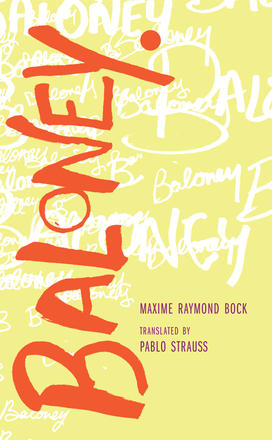
baloneyOne of my favourite books of 2015 was Atavisms, a collection of short stories by Quebec writer, Maxime Raymond Bock. I was especially impressed by his ability to employ a wide range of styles and genres, from historical to speculative fiction, in a multi-faceted exploration of Québécois history, society, and identity. His newest release, Baloney,—now available from Coach House Books and translated, like Atavisms, by Pablo Strauss—offers further evidence of Bock’s versatility. This novella evokes the spirit of a traditional folktale, with its tragic-comic hero whose larger-than-life adventures are immortalized by a disillusioned young writer drawn to the aging, eccentric would-be poet. By turns funny, sad, and wise, this simple story is surprisingly moving and thoughtful, and stands as yet another fine example of a new generation of Quebec writers who deserve to be more widely read in English-speaking Canada and beyond.

My review of  Baloney can be found in the current issue of The Rusty Toque—my first contribution to this fine Canadian online literary and arts journal.

Beginning to write through grief: A reflection & link to my poem at the Sultan’s Seal

I am, as many know, dealing with a multi-layered, complex grief—my mother, my father, and one of my closest friends—all lost within the last six months. When my parents died in July, I entertained an immediate grief project, my own mourning diary, an echo of Roland Barthes. I started with a subdued passion, an ache as intellectual as emotional. In truth, my emotions were, I can now see, constrained and intellectualized.

I was numb.

Others reached out to me in those early weeks, sharing their own stories. The terrain of grief is rocky, I was warned. The journey long. The pain uneven. But, although I am in mid-life, a loss of this nature—doubled and complicated—was something I had never faced.

Then my friend took her own life sometime on September 1st. Even though I knew, in my heart, that such an event was almost inevitable, the pain and anger tore me apart. I knew she had tried every available option she could afford to fight an erratic and devastating variation of bipolar disorder, and I fully respected her decision and her right to make it. But suddenly my world was a darker, lonelier place.

And she had lived half a world away.

Again, the first thing I thought of was to write. This time, my distance from her demanded and informed my need to write—and I knew exactly what I wanted to do. I wanted to gather words and sentences from her writing and our communications, and together with some photographs from my trip to visit her in South Africa, create an elegy.

An offering.beach

Drawing inspiration from a prose piece by Breyten Breytenbach, and the sound driven writings of my friend, Daniela Cascella, I set to work. And I knew exactly where I wanted to publish this memorial if I was able to realize my vision—The Sultan’s Seal, a most wonderful space created and curated by Egyptian writer, Youssef Rakha.

The result, “And I will Tell You Something,” was published this past weekend. Three hundred words, five images and almost three months shaping, reshaping, listening and accepting the silence that emerged. This is perhaps the most emotionally demanding piece I have ever written. Yet, now five days after my words were finally set free in the world, I feel a tremendous sense of rightness. An element of peace. I still ache, but, with this prose poem, I feel I can begin to heal.

And I hope that others may find something in it too.

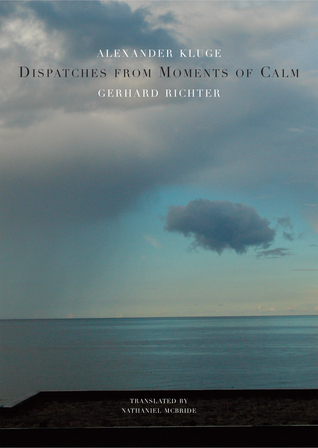
When you fall out of reality: Dispatches from Moments of Calm by Alexander Kluge & Gerhard Richter

As we witness an unprecedented assault on the integrity and role of journalists and the news media, fueled by recent events in the US—and, let’s be fair, in many other nations in our current climate of political unease—this collaborative effort to re-imagine an alternative approach to capturing reality is ever more timely and precious. The genesis of Dispatches from Moments of Calm (Seagull Books, 2016) lies in an unusual experiment. For one day, October 5, 2012, all of the noisy and distressing political reportage evaporated from the pages of the German national newspaper, Die Welt. In its place? Thirty pages of photographs capturing the simplicity of the everyday—a quiet interlude in restless times, created and directed by renowned artist Gerhard Richter.

calmInspired by this singular attempt to create a “moment of calm,” writer and film maker, Alexander Kluge, started to work on a collection of small stories to accompany the images. Richter responded in turn with the proposal of a collaboration. He added more photos; Kluge wrote more stories. The resulting book—a continuation of their first successful joint publication, December (2010/2012)is an important, and given the mood of the current times and the circumstances of the project’s origin, a more meditative and philosophical work.

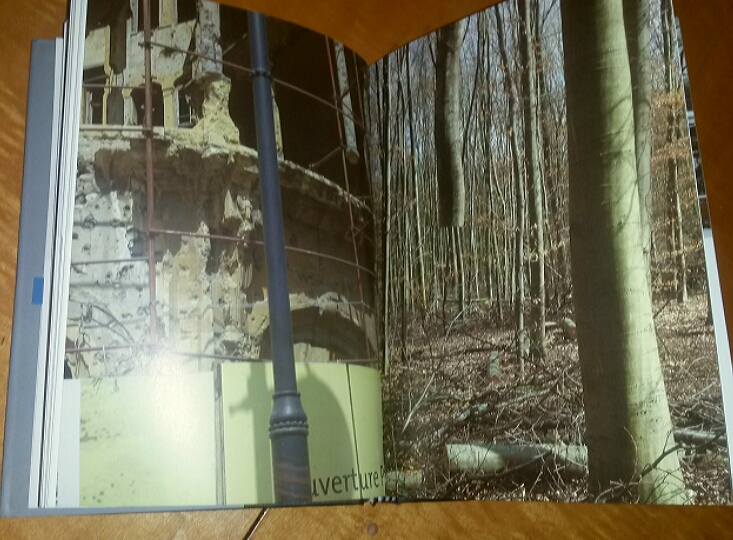
The photographs scattered throughout the text isolate the ordinary instant. The atmosphere is placid, low-key. We see a dog sleeping in the sun, the blurred image of a family at a meal, a deserted downtown street, images of nature, children at play, a moody seascape, and more. But each image exists in a space apart from time and the world. And Kluge’s fictions, taking off as they so frequently do, from real life people, events, and ideas, offer the ideal counterpoint. Many of the stories explicitly explore the intersection between art, music and reality:

László Moholy-Nagy was asked whether a photograph reproduces a piece of reality. He denied the claim. He replied that a photograph is constituted by the fact that it concentrates on an actual moment and records it, becoming a textual addition existing outside the world. He knew, the Bauhaus man continued, series and networks of such photographs, which relate to reality or current events like a mirror (including the gaps in that reality, to a silence or to a nothingness), but which, when cut off from the rapidly receding stratification of time, would form themselves into their own republic, one that would superimpose itself (like an El Niño mudslide) onto the original impression that caused the photograph, which itself would have disappeared from the participants’ memory, had they never had the impression to begin with.

Dispatches comprises 89 stories and 64 pictures. Some of the stories—which range from a paragraph or two to a couple of pages—were composed to accompany, after the fact, specific images from the original Die Welt project. Both Kluge and Richter added more contributions on their own. In the resulting book, the confluence between images seems to be accidental, rather than exacting. Where a connection exists, the image is unlikely to occur near the corresponding story. This arrangement adds to the incidental flow of the work. There is, however a thematic structuring at play.

2016-11-30-22-39-33The book is divided into five parts. The stories in first section turn on the element of chance. With narratives featuring real figures from science, music, and history, alongside parables drawn from nature and from everyday life, Kluge explores the vagaries of fate and circumstance. The consequences, happy or unhappy, have the effect of promoting a sense of disequilibrium—an awareness of the fleeting quality of those moments of calm that we experience.

The second part takes us into the city starting with stories set in modern urban spaces, moving back in time to vignettes that speculate on the Mesopotamian origins of the city-state and ruminations on the nature of the concept “city.” This section closes with a story featuring sociologist Richard Sennett:

The city that we carry around inside ourselves, he said, is visible. But when you see a city destroyed by bombs, one which you do not know and means nothing to you, and you nevertheless feel sad, then you can see from this reaction that we carry around inside ourselves just such an invisible city. You see the city only when it has been lost.

These words seamlessly lead into a collection of stories set in the Middle East—Beirut, Lebanon, Syria, Israel—engaging current events, history and even opera to reflect, in words, the very instants Moholy-Nagy imagined captured in the mirror of a photograph.

2016-11-30-22-29-25The final two sections sharpen the focus on questions of reality—how we report it, record it, place ourselves in relation to it. The philosophical musings Kluge entertains in these brief stories offer so much to contemplate. His ability to exploit the fluid intersection between what we, especially in English language literature, want to divide into fact and fiction, lends his stories the sense that these should be considered fragmentary pieces of nonfiction. The influence that his work had on W. G. Sebald is evidenced in this regard. These stories, parables, and reflections are, in themselves, narrative truths—regardless of whether they describe events as they really occurred, or if they even occurred at all. Kluge wants to make you stop, in the moment, and think. Here, as an illustration, is one of my favourite stories, in its entirety to provide a taste of Kluge at work:

For many centuries, thousands of monks in monasteries between Ireland and Byzantium, dotted like islands across the barbaric land, were writing out the holy texts. Their zeal and their great efforts produced mistakes. The result was that the texts imperceptibly expanded. One learned monk in Samanca was delighted to find a text by Ovid on the back of a copy of the apocryphal LOGION OF ST JOHN. The copyist on the island of Reichenau could not resist including this interpolation. In this way, a text was expanded in a distinctly “unholy” manner.

A transcription of texts (just as if evolution had been tinkering with their DNA texts) doesn’t only create lines to new future texts. It can also be reconstructed in the direction of paradise. The way there leads through indeterminacies. ‘Nearer, my God to Thee’ was the music played by the orchestra on board the Titanic as the ship went down. But it is also the working instructions to copyists of all countries, who are driven from the omphalos of experience into the parallel world (heterotopia), the pre-world history and the future world (the world of our children, who are so attached to life). For copyists, all images are NOW-TIME.

I don’t know if it is the nature of the project from which this collaboration arose, that is, as an attempt to visually introduce an element of calm to the daily news cycle, that gives this book its impact, but in contrast to December, which I read at the end of last year (my review is here), Dispatches from Moments of Calm is a more powerful, comprehensive work. But then it may be a question of timing. Originally published in German in 2013, the driving forces against which Richter’s photographic interlude at Die Welt was superimposed, have not slowed. Uncertainty has increased and continues to grow. But as Kluge and Richter, two of the most influential and respected artists of their generation stand to remind us, art is more critical than ever at times like the one we find ourselves in at the end of 2016.

Like the dome of lights over a great city, the STATE OF THE NEWS forms an aura in which a general notion of what matters in the world coalesces.

It is out of such NEWS VALUES and not out of the facts themselves that the daily image of the reality of our world is put together. The products of poetry form an antithesis to this daily fluctuation. In painted images, and in the narratives of short stories and novels, time outside stands still.

Dispatches from Moments of Calm by Alexander Kluge and Gerhard Richter is translated by Nathaniel McBride and published by Seagull Books. A second edition of their earlier collaboration, December (translated by Martin Chalmers) will be published, also by Seagull, in paperback, in Spring 2017.

Literature as Liberator: My contribution to the 2016-17 Seagull Books catalogue

Earlier this year I was invited by Naveen Kishore, the publisher of Seagull Books, to write a contribution for their 2016-2017 catalogue. Now the Seagull catalogue is never an ordinary publication. It is a lavishly illustrated volume featuring the stunning artwork of Sunandini Banerjee, and contributions from a wide range of writers, translators, and this year, a handful of humble book bloggers, myself included. When I agreed to try to put something together, Naveen sent me this year’s “Provocation”:

Soul he said. Soul as the prison of the body. Soul I asked? What about the ones who don’t believe? In soul. Or God. Or religion. The ones that understand the body for what it is. Accept its one-way journey towards the inevitable. The body as decay. Gradual ruin. Eventual crumbling. We all know this. Or those that think the ‘inner core’, or what I presume is a ‘substitute’ for the notion of ‘soul’, is actually just an ever changing, evolving, fermenting mass of literature that grows. And grows. And knows freedom. And fear. And emotion. And love. And death. And every kind of existential angst that any soul worth its weight in gold would know! What about me? I asked. Or you for that matter. We who write and read and write and continue to both read and write while our bodies grow old and tired. But the mind. The mind remains in a state of excitement. Constantly radiant. Its brilliance grows with every new thought. What if we substitute ‘literature’ for ‘soul’ in your proud statement so that it now reads ‘Literature as the prison of the body’. Thing is that this doesn’t hold. Literature cannot be a space that restricts movement. Or freedom. At least it shouldn’t be. It is meant to be a liberating presence. Like its close companion. The dark. For me the dark is important. The dark as a substitute for soul? Maybe. Darkness is essential for literature of meaning to grow and take root.

The body. The soul. Literature.

2016-11-09-17-33-54I knew immediately what I would write. I took themes that were spinning through my head, scratched out on notepads—unformed, but increasingly urgent ideas that I wanted to find a way to address in words—and placed them within the framework of an analogy I have long used to describe my experience of feeling that I did not belong in the body I was born in. This piece represents the first creative expression of the self, of my self, that I dared to offer for publication. Although I had addressed my gender-different history, my queerness, in the occasional blog post and review, I had never sought to open some of the deeper elements of being that have come to define—and trouble—my long-term experience of living in the world as a gay transgender man.

2016-11-09-17-28-08In the meantime, between writing and submitting my Seagull “response” and finally holding the published catalogue in my hands earlier this month, I published two critical pieces of writing. Your Body Will Betray You (Minor Literature[s] May 6, 2016) explores the body and being, while A Reader’s Journey Through Transition (Literary Hub October 25, 2016) takes a look at the urgency with which I attempted to read myself to a place of self understanding. I’m proud of both of these essays, but I must confess, there is a certain weariness that comes with writing so honestly about oneself, not to mention a creeping discomfort with being laid bare, as such. This is a reflection of my ongoing personal struggle with the value and efficacy of being out, and with the inevitable fatigue that comes with constantly having to come out, again and again.

If I had thought writing myself out in the world would help, I’m not sure it has. But then again, we are constantly reading and writing ourselves into being. It is a process, not an end. Like transition.

So, after a little consideration, I’m ready to reproduce my Seagull Books contribution here. Rest assured this is not an excuse not to request a copy of this amazing catalogue for yourself. A Seagull Books catalogue is a work of art and celebration of literature.

The seeds of both of my later essays are evident in the following parable, but this piece attempts to articulate my own experience of feeling “wrongly gendered.” You will note that it is not a question of outward expression—being differently gendered, as I know it, comes from inside, not from wanting to play with the toys or wear the clothing of the other “sex.”

Here, then is my contribution to the 2016-17 Seagull Catalogue, with endless gratitude to Naveen Kishore:

Literature as liberator, you suggest.

I am, I want to reply, inclined to agree.

But I would caution you that words can confine us, as readily as they can set us free. We can become entangled in meanings, lose ourselves in definitions, search in circles for explanations when all we know is that the words we hear don’t seem touch the heart of what or whom we seem to be. False trails can mislead, lead away from understanding, especially if the destination you seek is not marked on any of the maps you can find. You wander blind.

And, you speak of the transience of the body, its trajectory toward decline, deterioration and decay.

I would argue the body cannot be so easily discarded.

Let me reframe the imagery.

Accept, for the sake of argument that the body is the fragile housing of the mind and the mind is the intersection of the heart and the brain; and, as such, both are essential to the experience of being in the world. The soul then, or that spark by which we know we are alive, can be thought of as being-in-motion. And literature—the stories we tell, the stories we turn to—is an essential element of the process of understanding ourselves in the world.

We are reading and writing ourselves into being.  Always.

Let me tell you a story.

Imagine, for moment, a darkened room. The sole illumination is a candle burning against the insistent gloom.

A boy inhabits this space; it is the only space he has ever known. And he has known, for almost as long as he can remember that everyone he encounters, every person who stands at the threshold and beckons, is expecting someone else, someone he can only pretend to be. He decorates his room, he carries his candle into the corners to try to understand what secrets they might contain, he worries that his insecurities might be exposed. But, of course, it’s dark, and others tend to see only what they want to see.

As the boy grows, his room becomes a more distorted, distressing, disorienting place. He wonders what lessons he missed, why he is unable to learn to exist comfortably in this strange space.

He assumes he is at fault.

If only his candle burned brighter. If only his room was not so dark.

He continues to decorate and redecorate his room. He scours the books that line the shelves, listens to the music that fills the hollows. Somewhere, somewhere far away he senses there is an answer to his otherness but its truth escapes him. He seems to fall off the axis the wrong way. So he puts away the stories of his childhood, the ones he tried to emulate with his own tales of ordinary boys on heroic journeys to fight dragons, and tries to draw a new character, the one he is supposed to be. If he can tell this character’s story, find her voice, perhaps he can write himself into the woman everyone else anticipates, the woman everyone else sees.

But he cannot find the voice.

He puts down his pen, files the unfinished stories and poems. Or throws them away.

He goes to university. He reads more books. The unease intensifies, the books can only take him so far—he continually reaches a place where the road ends, where the bridge is washed out, where the trail fades away into the underbrush. And then he falls in love. If he can’t fix the persistent otherness, perhaps he can hide—in plain sight.

The years pass. And still his room is an alien space.

He plays by every rule he can imagine. Marriage. Children.

Until, one day, he finds a book. It’s not the answer, but it shatters something deep within, it whispers in the darkness, and the candle flickers briefly. So he reads more. He encounters words that catch him up, that lead him on. He reads more. The words, the words threaten to tear apart his world. He tries on stories; wonders if they fit, if they’ll finally help him understand the room that has, over the years, come to feel more like a prison than a body.

He longs to make his way home to a place he’s never been.

He reads more.

And at last he comes to understand that the only way to make sense of himself in the world—to touch the centre of his very own being-in-motion—is not to deny the man inside but to renovate the room. To step out of the shadows and acknowledge the person he has always been, celebrate him and let him live. The candle still burns, but the room is now bathed in natural light.

So yes, literature can illuminate the corners, crack the walls, break down the door to bring the essential being—the soul, if you like—into the light.

I know this in my bones. The story I just told you is mine.

Cold comfort: The Absolute Gravedigger by Vítěslav Nezval

That terrible fist swings the bell
The blasphemer
Is boxing
Hell-bent on knocking out the eye of heaven
That cynically floods desolate white-washed houses
With radial light
With an iron resolution to act
While the knuckles crack
This fist delivers bruises shaped like swallow nests to roofs
In the name of vengeance
(from “The Blacksmith”)

Upon my first read-through of this newly translated collection of poetry by prominent Czech Surrealist, Vítěslav Nezval, I was struck by an eerie sense that the poet was speaking to the present moment. Published in 1937, the poems gathered in The Absolute Gravedigger form a gallery of darkening, disturbing, and frequently grotesque images that capture the mood of the shifting landscape of the years leading up to the Second World War. Some are small, contained, and often bucolic scenes. But others depict expansive nightmarish vignettes of obsession, violence, corruption and decay—evoking imagery worthy of Bruegel, Arcimboldo or Bosch—and closely aligned with the spirit and sentiment associated with the more widely known French Surrealism.

Returning for a second reading, in the immediate aftermath of the election of Donald Trump, I cannot help but wonder how quickly the lessons of the last century have been forgotten—and shudder at the thought of what potentially lies ahead.

gravediggerBorn in 1900, Nezval began writing and publishing poetry in the 1920s, but by the early ’30s, he and a number of his fellow Czech writers and artists had fallen under the influence of the French avant-garde. He first met André Breton in Paris in 1933, and the following year he helped found the Surrealist Group of Czechoslovakia, the first such group to receive the Breton seal of approval, so to speak, outside of France. Yet, even though they made important contributions to the movement, the Czech Surrealists have remained relatively obscure, a situation further exacerbated by the artistic restrictions applied under the years of Communist occupation. The release of The Absolute Gravedigger from Twisted Spoon Press should help to ameliorate that situation, and spark further interest in the work of Nezval and his contemporaries.

In his poetry, as evidenced in this collection, Nezval was a stylist who drew widely from the Surrealist playbook. In an interview in The Bohemist, translators Stephan Delbos and Tereza Novická describe their decision to work together as follows:

Nezval was prolific and incredibly gifted, so the book is over 200 pages, and contains a range of styles from traditional rhymed quatrains to freewheeling litanies and dense, paranoiac prose. A challenge to translate, to say the least, so approaching it as a team seemed like a good idea.

The diversity of the poems in this collection is difficult to capture in the space of a short review. Suffice to say that they range from the relatively conventional to the decidedly bizarre. For example, “The Windmill” is a section comprised of a series of rural compositions featuring farm and small town scenes. However, the imagery is vivid, sometimes surprising in its unexpected shifts, and an unmistakable darkness seems to wait just over the horizon, as demonstrated in this portion of “The Reapers”:

The birds have flown off
Everything on the verge of tears
Huge carts haul off bales of straw
A cock crows
And wheels squeak
The landscape changes
Brown pitchers peak from under gladiolas
And confusion seized the horses
The mills clatter
From afar
As a signal
Like an imminent declaration of war
And suddenly the whole place is holiday empty

Similar bucolic settings return in the later “Shadowplays” section which features tightly rhyming, orderly quatrains which, to preserve the feel of the originals, the translators have chosen to carry into English with as much of the spirit and musicality intact as possible. Because these pieces stand out so sharply against the more open and, at times, unrestrained quality of the rest of the book, this seems to be a wise choice. Coming on the heels of the intense, fantastic and disturbing imagery of the poems in the “The Absolute Gravedigger” section— the title poem, “The Fetishist,” The Blacksmith,” “Milking,” and “The Plowman”—the sudden appearance of a traditional formality catches the reader off guard.

2016-10-27-16-12-40The author has also included several pieces of his own artwork and the poems they inspired framed by two prose pieces in which he talks about the process of decalomania (the creation of abstract images by laying a thick layer of paint on a surface and pressing a piece of paper or canvas against it) and its influence on, not only the directly referenced pieces but other key poems in the book. Nezval explains that the process gave rise to prototypes of “the hybrid creatures” that people his most surreal poems.

There is harsh brutality that runs through the most fantastic and, to put it simply, “surreal” of these Surrealist poems. The characters that are brought to life, resemble the denizens of an adult Grimm’s fairy tale—grotesquely featured, obscenely sexualized, dirty, decaying—and trapped, sentenced to their miserable fates. But the piece that is most profoundly political, and devastatingly timely once again is the final poem, “The Iberian Fly.” Here on the wings and body of a gigantic fly making its way through the skies, a terrifying spectacle is playing out, summoning imagery reaching back to the Spanish Inquisition, but zeroing in on the rising waves of fascist ideology sweeping Europe. Nezval’s original version was apparently more specific, naming names, but increasing censorship stayed his hand before the final version went to print. All the same, the message is clear:

[The Iberian fly’s] proboscis
Was gradually
Immersed
Into several drops of blood
Squeezed out
Of different races
And subjected these drops
To analytical chicanery
Whose fraudulent result manifested
As diagrams
Once these drops
Of blood
Hardened into a crust resembling sealing wax

As the drop
Of drying Aryan blood
Turned into a faux jewel
Spectrally depicting
Absolute nobility
In the form of Ionic columns
Under which reflected in miniature
The beguiling image of bathing women
On the sparkling left wing of the Iberian fly
The other drops
Drying
Transformed
Under the touch of the dirty finger
Of the little man with the Chaplin mustache
Into this pictorial relief

The relief that is depicted in the following stanzas incorporates African and Asian features—a chilling echo of the type of racist graffiti, propaganda and attacks that we have seen post Brexit and, now Trump. And these patterns know no borders. In Canada, where I live, the past week has seen a sharp upturn in the same trends. The immergence of this translation, at this time, is uncanny, there is a new chill to these words, almost eighty years after they were first published.

Plus ça change.

The Absolute Gravedigger is published, by Prague-based Twisted Spoon Press, in a handsome hardcover edition featuring Nezval’s own decalomania artwork on the cover.

Souls in disarray: The Country Road by Regina Ullmann

It is no coincidence that the landscape of the earth is identical to that of the heart.

The work of Swiss poet and writer, Regina Ullmann, is permeated with an abiding sadness that seems to speak to the core of human existence. Her language, contemplative without moralizing, pierces the surface of the façades we present to the world. Encountering her work, one has the sense that she is drawing on a deep, dark well. But light filters through, creating a canvas that evokes rural and small town life in the early decades of the twentieth century—a world inhabited by farm labourers, young girls and women harbouring secrets, lonely old folk, circus performers, and hunchbacks.

2016-11-11-23-11-09Ullmann was born in Gallen, Switzerland, in 1884, into the family of a Jewish-Austrian businessman. Her father died when she was only a few years old. In 1902, she and her mother moved to Munich, where she would first read a number of the key poets of the day, including Rainer Maria Rilke who would become an important mentor and patron. However, Ullmann’s personal life was difficult. She had two daughters out of wedlock, the second with psychoanalyst Otto Gross, who left her emotionally wounded. Depression dogged her, worsening after her mother’s suicide in 1938. Her conversion to Catholicism in 1911, a move that greatly informed the tone of her work, was not sufficient to prevent her expulsion from the German Writers Association in 1935 on the basis of her Jewish heritage, so she left Germany, spending several years in Austria before relocating to her Swiss birthplace, where she would remain for over twenty years. She returned to Germany only a few months before her death in early 1961.

Throughout her career, Ullmann, won critical praise from the likes of Thomas Mann, Hermann Hesse and Robert Musil—in addition to her champion Rilke—but she remained largely unknown and often struggled to make ends meet. She was, perhaps a step out of time, a modernist trailing ghosts of the past, but with the release of her 1921 story collection, The Country Road, in English translation (by Kurt Beals, New Directions, 2015), her fragile, haunting work is offered a new lease on life.

And I, for one, was ready to meet her.

From the opening paragraphs of the title story, I was struck by the spare, unforgiving earnestness and sombre beauty of the prose:

Summer, but a younger summer than this one; the summer back then was no more than my equal in years. True, I still wasn’t happy, not happy to my core, but I had to be in the way that everyone is. The sun set me ablaze. It grazed on the green knoll where I sat, a knoll with almost sacred form, where I had taken refuge from the dust of the country road. Because I was weary. I was weary because I was alone. This long country road before and behind me… The bends that it made around this knoll, the poplars—even heaven itself could not relieve my bleakness. I was ill at ease, because just a short way into my walk, this road had already dragged me into its misery and squalor. It was an uncanny country road. An all-knowing road. A road reserved for those who had been, in some way, left alone.

In a sense, this opening sets the tone for the entire collection, evoking a landscape with its illusory freedom that will reappear again and again, balanced against the confined spaces—rented rooms, taverns, houses—occupied by people who often live alone or are drawn into shared solitude. Her narrators tend to affect a dispassionate distance, a non-judgemental piety, whether telling their own stories or imagining the thoughts and motivations of others; however, there is a persistent awareness of social stigmatization against which the most disadvantaged of her characters are regarded or disregarded. Ullmann’s world is one in which deeply burdened souls cross paths, rarely unveiling the true nature of the crosses that they bear.

It is difficult to convey the mood of these stories without implying that this is a catalogue of darkness and despair. There is rather a grounded and humane sadness, an awareness of loss that recurs. But there is more. Throughout the collection, an animated natural world—flowers, forests, gardens, vegetables, berries, stars and blue skies—regularly reminds the reader that an unquenchable beauty does exist against the odds. The story “Strawberries,” one of several tales narrated by a young girl who, like the author, has an older sister and a single mother, captures perfectly the summer magic of childhood:

Perhaps you will argue that the three of us had never learned to go without. But what does it mean to go without—assuming that we really couldn’t do it—if not to take pleasure in looking at things. We returned from our trips to the market feeling sated, and often we hadn’t bought a single bouquet, a single basket of early cherries. And the treasure chests of our minds was wide open. But the little mirror inside that chest had only to reflect the ground; it showed the stand piled high with fruits and vegetables. But we felt how that world, like jewelry and old music, was transformed and passed over into us.

Ullmann’s other worldliness that sees her writing suspended somewhere between modernism and an earlier form of gothic folk tale is best illustrated in “The Old Tavern Sign,” one of the strongest and most striking pieces in the entire collection. It begins with an old tavern “in a hidden corner of Styria,” that stood, “as if it had been left vacant, like an etching made by one soul to tell another just what a house really is.” The story follows the troubled emotions of a young farmhand who falls for a beautiful young girl—deaf-mute and simple-minded—who had been taken in and cared for by the old horsekeeper. The girl, as she grows, remains indifferent to all and everything around her, but her caregiver and the beasts, wild and domestic, protect her and keep her safe. The farmhand knows his affections are misdirected, and struggles to fight his persistent desire to go to the horse pasture:

But if he didn’t know this love, it surely knew him. It always recognized him. It knew if he lifted the pitchfork, how he lifted it, whether he took large steps or stood still, where he stood and dreamt. And when he slept, it took the power of its dreams for its own, and dreamt for him. He was climbing a fir tree, up to the top and then beyond. He didn’t even notice he was past its tip. And so he fell over it, down to the ground, and lay there with dream-shattered limbs, on the edge of the forest, and yet in his bed, and it was night, or morning. It didn’t matter, anyway.

In the end, as human desire meets the force of nature, with savage intensity, Ullmann maintains a measured poetic account that is as breathtaking as it is brutal.

This is a collection that is at once perfectly pitched my current state of sorrow, grief, and depression—and yet stunningly beautiful to read. Ullmann’s vivid imagery, her lost and lonely characters, and the gentle, thoughtful pace of her prose offers unexpected comfort for the weary soul. This is, in the end, an offering of small and tender joys.

You say you want a revolution? The Revolutionaries Try Again by Mauro Javier Cardenas

DROOL: I wish we could have gone to Stanford together, Leo.

MICROPHONE: I haven’t thought about you in years.

DROOL: We could’ve spiked our Who’s Most Pedantic with courses on phenomonlogy,  econometrics, non-retrogradable rhythms.

MICROPHINE: Only what end continues, pig.

DROOL: I would’ve been happier staying in Guayaquil with you and arguing with you about everything.

MICROPHONE:  Yet another half truth.

DROOL:  I’m sorry Leo I . . .

MICROPHONE: You really think you have to confess all this to me?

DROOL:  Everything’s implicit and not implicit.

MICROPHONE: Do you feel better now?

DROOL:  Momentarily. No.

MICROPHONE: How many times do you have to re-imagine a heart-felt reunion until it replaces  the memory of our paltry reunion?

The attempt to write a review of Mauro Javier Cardenas’ debut novel, The Revolutionaries Try Again, in the aftermath of Donald Trump’s election as President of the United States, finds me a little at a loss for words. Fortunately, Cardenas is never at a loss for words. Words tumble forth, careen across the page, distort the lines between English and Spanish, (falling entirely into Spanish for two short chapters extolling, if titles be trusted, grandmotherly advice), and, sometimes, sometimes he offers snatches of dialogue, scripted even. This is a multi-voiced celebration of language, capturing in its best moments, the complicated mess of thoughts, emotions, and memories that course through the minds of his protagonists.

revolutionariesThe beating heart of The Revolutionaries lies in nostalgia for the idealism of youth, and the loss of faith in one’s ability to be a force for change. It is, essentially, about growing up, and the inevitable sadness that entails. Yet old dreams, it seems, die more readily for those who have the least to lose; whereas they crumble in agony for those who have little to begin with, and thus the most to lose.

The central character is Antonio. Upon graduation from an exclusive Jesuit-run boy’s school in Guayaquil, he had had the good fortune to be able to leave Ecuador, to study at Stanford University. In the US, he soon fell in love with avant-garde music and flirted with the notion of becoming a pianist. By the time we meet him he is working as a database analyst, projecting a life built on myths that draw on the appeal of his Latin American exoticism. He allows others to imagine he comes from a family of great wealth, and strains his credit cards to dress the part. He is living the migrant’s life of fantasy-meets-reality and it’s taking a toll:

I drink so I can bear talking to people, Antonio wrote. I acknowledge my conversational alcoholism. The more people converse with me, the more alcohol I am bound to imbibe. My liver, that most handsome of organs, was heard gossiping to my other organs about the absurdity of my social neurosis. Thank god my kidneys stood up for me and said shut up liver, you’re drunk again.

When his childhood friend Leopoldo calls him from Ecuador to report that there has been a coup and suggest that perhaps it is finally time for them to have a horse in the political game, Antonio heads home after twelve years away. What unfolds, more than productive action moving forward, is a replay of past memories, mediated by banter between the two friends, and featuring cameo appearances by other members of their former social group. They fall into using old nicknames, and rekindle past glories and grievances. Behind it all is a deep nostalgia for a time in their lives when their faith was grounded in a belief that they could make a difference in the world. As adolescents, under the guidance and inspiration of their beloved Father Villalba, the boys would visit the ill and catechize to the poor—they harboured a sense of being chosen, and Antonio even dreamed of becoming a priest for a while.

A third friend whose story plays out against those of Antonio and Leopoldo, is Rolando. He had not enjoyed the same relative financial advantages as the others, and together with his girlfriend Eva, he is struggling to broadcast a little reactionary radio program for better or worse. Their concerns are more immediate, the risks they take are greater, and even if the effect is small, they are actually trying to do something. But their relationship is complicated by unspoken losses—Rolando’s sister’s escape to America and Eva’s brother’s disappearance and death.

This is a novel that is looking back and stumbling forward at once. Little progress is made. That is the point and that is not the point. The realities of Ecuador’s political and economic uncertainties are an ever present backdrop, one that steps forth with particular brutality toward the end in the stories of the two female characters. But all of the main male characters seem to be mired in their own pasts, for all their vain talk of revolution. What rises to the surface is a profoundly human blend of nostalgia, loss, guilt, casual racism, sexism, and masculine insecurity. But there is also humour. This book is a startlingly infectious read.

To bring the story to life, Cardenas employs a wide range of narrative techniques from the modernist to the boldly experimental–slipping in and out of perspective and style as needed to keep a strong link to the interiority of most of his key characters. One chapter which follows Antonio’s thoughts upon his return to his mother’s home in Guayaquil, consists of a single sentence extending over twenty pages. Elsewhere, too, long sentences—interrupted by asides, imagined banter, or stretches of dialogue—are common. Here Antonio, preparing to meet with Leopoldo for the first time since his return, thinks back to their teenage games (Drool and Microphone were their respective nicknames):

… although Antonio doesn’t remember the exact content of the Who’s Most Pedantic exchanges by Don Alban’s cafeteria, he does remember that their game consisted of refuting each other about everything, spoofing the pompous language of the demagogues, priests, themselves, digressing manically about reforms they would enact to transform Ecuador—external debt, what is?—Leopoldo shaking Antonio’s hand whenever he won and declaring Always Above You, my friend, and if Leopoldo were a woman, Leopoldo would have been at ease in Antonio’s life in San Francisco because all of his friends in San Francisco had been women, as opposed to his former life at San Javier, where all his friends had been teenaged boys who expressed their affection by taunting each other with homophobic insults or misogynistic interpretations of the language between husband and wife—where’s your husband, Drool?—Microphone’s at home ironing my shirts, where else?—and if Leopoldo were a woman Antonio would be able to say, I’ve missed you, Leopoldo…

The tone is decidedly different when the narrative turns from Antonio, Leopoldo and their more privileged classmates, to focus on Rolando and Eva. Here the pace is even more frantic. Their protest is immediate—on radio airwaves and street corners. With rumours that El Loco, the flamboyant former President, Abdalá Bucaram, who ruled Ecuador for less than a year in the mid-90s, might be returning, Rolando reaches out to the poor and dispossessed on his makeshift radio station:

Ladies that’s the perfect segue to our contest about what would you like to call our interim president?—Puppet of the oligarchy—Very nice Doña Aurora—Pompous pajorreal—We’re warming up folks—Bestia con terno—Keep them coming comrades—Radio Nuevo Día / la radio al día—Up next how to cook a seco de chivo without the chivo—Baah—Speaking of chivos—El Loco is said to be returning from exile in Panamá—Who’s voting for that thief?—If you tell me you’re voting for Loco I’ll go loco—Has anyone seen the mansion of this leader of the poor?—Call now!

By engaging a range of narrative voices—at the personal and the socio-political level—visions of romantic idealism meet the harsh realities of class division. The shifts in perspective and energy keep The Revolutionaries Try Again moving at sharp pace, yet for all the sensation of being in freefall, Cardenas’ novel is, in fact, a tightly orchestrated achievement. In an interview published at Electric Lit, Cardenas shares a spreadsheet tracking the characters, conversations and narrative styles employed in one scene of the book. And this attention to detail at the formative level is what makes this cacophonous work succeed. Transitions between monologue and dialogue, present and past, are so smoothly handled that the reader is swept along with the sheer literary enthusiasm. But make no mistake, this is a novel that is as enjoyable to read as it is fundamentally melancholy and devastating at its very core.

The Revolutionaries Try Again is published by Coffee House Press.