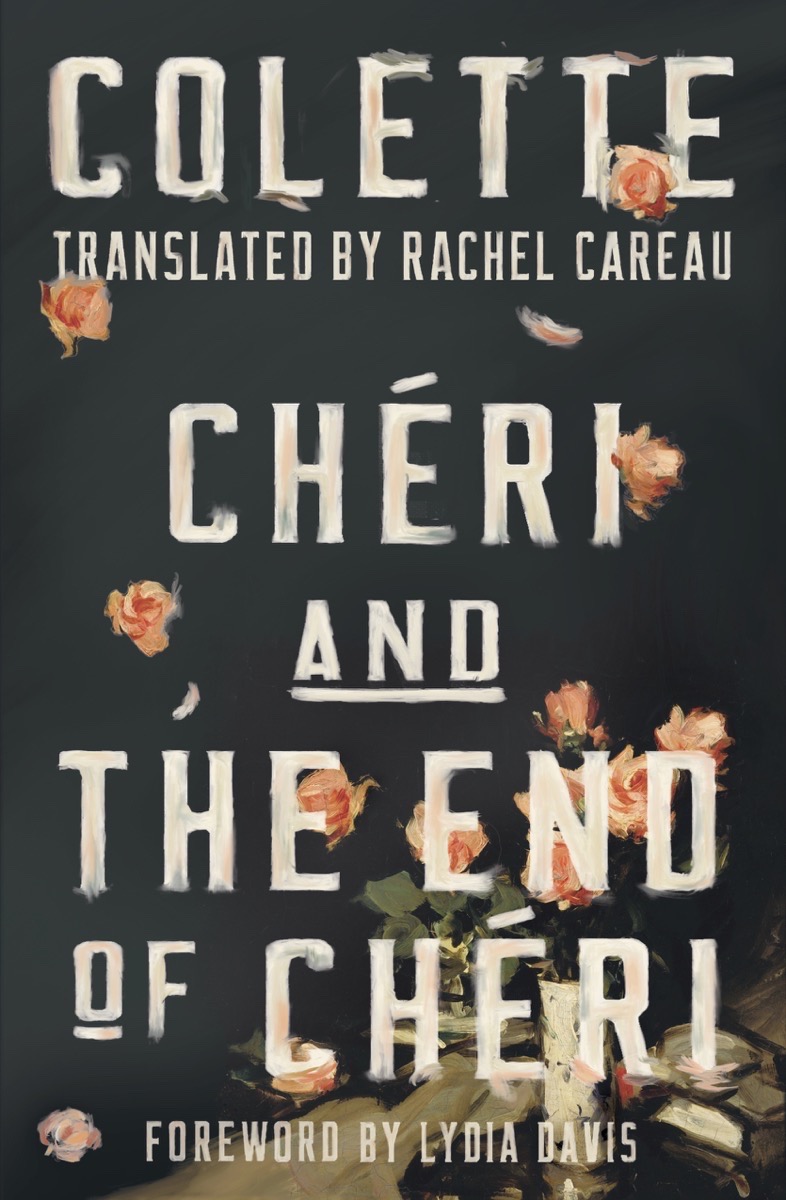
You who have loved me: Chéri and The End of Chéri by Colette (A new translation by Rachel Careau)

“My poor Chéri . . . It’s strange to think that in our loss—for you of your spent old mistress, for me of my scandalous young lover—we have lost the most honorable thing that we possessed on earth . . .”

It might surprise many English speaking readers to learn that writer, journalist and actress Colette was one of the most important literary figures in twentieth-century France, second only to Proust. Beautiful, resourceful, and sexually liberated, known for her liaisons with women and younger men, her persona may seem to overshadow her talent even though her better known contemporaries held her in very high esteem. And, of course, there is the matter of her gender and the name she ultimately chose to use which, contrary to expectation is not a diminutive but rather her last name. She was born Sidonie-Gabrielle Colette in 1873, would be the first woman elected president of the Académie Goncourt and, upon her death in 1954, she was given a state funeral. Yet if, as Lydia Davis suggests in her Foreword to the recently released edition of Chéri and The End of Chéri, Colette has not generally been afforded the respect she enjoyed in her native country, that may begin to change thanks to Rachel Careau’s brilliant new translation of two of her best loved works.

In her extensive and informative Translator’s Note, Careau discusses the unique qualities of Colette’s language and exposes the challenges of preserving the taut beauty of her prose:

what becomes most apparent to the reader of her work in the original French is its extreme and seemingly effortless economy: it contains no excess, no ornament, nothing beyond the essential. Her sentences can feel skeletal, the flesh carved away to convey their meaning with the fewest possible words. A master of concision, subtraction, condensation, renunciation, she is always trying to do more with less: “You become a great writer,” she states, “as much through what you refuse your pen as through what you grant it.”

This economy is difficult to capture without the temptation to fluff the pillows a little, correct her punctuation, fill in missing conjunctions, relative pronouns and even invent adjectives so as to keep her language from appearing too stiff—a tendency that marred earlier translations. But then one risks losing the spirit that animates her work. At once ornate and lean, her sentences flow unhindered by unnecessary clutter. Fond of ellipses, she paints small details with carefully selected words, side glances and intimations allowed to just drift unfinished into the air. Her ear for dialogue, both spoken and unspoken, is finely tuned, sharp and sharpened with complex emotion and barbed intensity. Chéri and its companion novel, The End of Chéri offer, in Careau’s crystalline translation, a welcome opportunity to fully appreciate the power of Colette’s literary talent.

Chéri, originally published in 1920, famously revolves around the affair of an aging courtesan, Léa, and her lover, affectionately called Chéri, a vain and spoiled young man nearly twenty-five years her junior. Set in the final years of the Belle Epoque, amidst the acquired (and sometimes feigned) luxury of the leisured class—not the uppermost layer of society but the strata composed of courtesans, former prostitutes and dancers—hers is not a work of social commentary. Colette’s tapestry features the intricacy and dynamics of human interaction: affection, obsession, deception, hostility, even tedium. She was a keen observer, not only of people, but of plants and animals. Small dramas play out on the page, but the magic lies not so much in what is happening as in how it is depicted in her precise, spare elegant prose.

Chéri has a languid pace, despite the inevitable romantic dissolution that lies at its core. It opens with the petulant, self-absorbed Chéri, playfully donning Léa’s pearls while she observes him from the depths of her bed. They have, at this point, been together for six years although she has known him since he was a small boy as he is the son of a long-time friend and fellow courtesan. He is twenty-five, while she is nearing her fiftieth birthday. The dynamics of their relationship are dissected, dramatized in intimate detail. Colette zooms in on the hint of a smile, the arch of a brow, the subtle movement of a limb. Repeated images—the cast of light, mirrored reflections, passing aromas—serve to heighten the tensions simmering beneath the surface of every thought or interaction. Chéri is aware of his beauty, terrified of losing it, suspecting perhaps that little lies beneath the surface. Léa is also conscious of the creeping ravages of time but her confidence and security runs deep after a lifetime of carefully leveraging her charms:

She stood up, wrapped herself in a dressing gown, and opened the curtains. The midday sun entered the cheerful, overly decorated pink room whose luxury was dated, double lace panels at the windows, rosebud-pink faille on the walls, gilded woodwork, electric lights veiled in pink and white, and antiques upholstered in modern silks. Léa would not relinquish either this cozy room or her bed, a considerable, indestructible masterpiece of copper and wrought iron, severe to the eye and cruel to the shins.

It has always been inevitable that Chéri would one day be expected to take a suitable bride, but when that day arrives suddenly and sooner than either he or Léa anticipated, neither one is prepared for how it unsettles their personal and emotional  equilibrium.

The End of Chéri, conceived of separately and published six years later in 1926, is essentially a companion piece and completion of what can be understood as one work. It is now 1919, six years after the setting of Chéri, and war has changed everything and everyone except, tragically, Chéri himself in spite of his time in the trenches. Still beautiful, his beauty will no longer suffice. His young wife, Edmeé, to whom he was needlessly cruel, is now more than capable of holding her ground. The only character who insists on calling Chéri by his proper name, Fred, she is managing a hospital for wounded soldiers, clearly in love with the head doctor, and together with Chéri’s mother, managing the family fortune. Unable or unwilling to take up any meaningful labour, Chéri drifts through the days, looking for an anchor in past connections and spiraling deeper into depression.

The End of Chéri has a darker, even tighter tone. Physical descriptions can be brutal, grotesque—and often wryly funny—filtered through the thoughts of the characters, revealing more about the viewer than the viewed. Chéri is at once the central and increasingly isolated figure. New power dynamics are revealed, playing out between the many female characters who are strong, independent, even eccentric. Likewise, the fabrics, the colours, the floral displays, the household routines evoke an atmosphere that drives Chéri to become more bitter and defiant. Léa, in their shocking reunion, quickly diagnoses him:

 “You have altogether the look of someone who suffers from the sickness of the times. Let me speak! . . . You’re like all your fellow soldiers, you’re looking for paradise, eh, the paradise that’s owed to you, after the war? Your victory, your youth, your beautiful women . . . You’re owed everything, you were promised everything, well, it’s only fair . . . And you find what? A nice ordinary life. So you become nostalgic, spiritless, disappointed, depressed . . . Am I wrong?”

“No,” Chéri said.

Because he thought he would have given a finger off his hand to make her shut up.

The impact of the war is present throughout this novel, but always beneath the surface, a tribute to Colette’s impeccable restraint. The characters, their appearances, conversations and mannerisms hint at how great a shift has occurred. The world will never be the same, and, sadly, some of the most profoundly wounded victims are those who were untouched in battle.

Chéri and The End of Chéri is my first introduction to the work of Colette and I am grateful to have made my acquaintance with her through this attentive and astute translation. I came to know of Rachel Careau through her translations of another very different and yet very distinct French author, Roger Lewinter. With this release, English language readers finally have the opportunity to appreciate the economical beauty of Colette’s prose, her strong, independent female characters and her ability to expose the timeless vulnerabilities and strengths of the human condition.

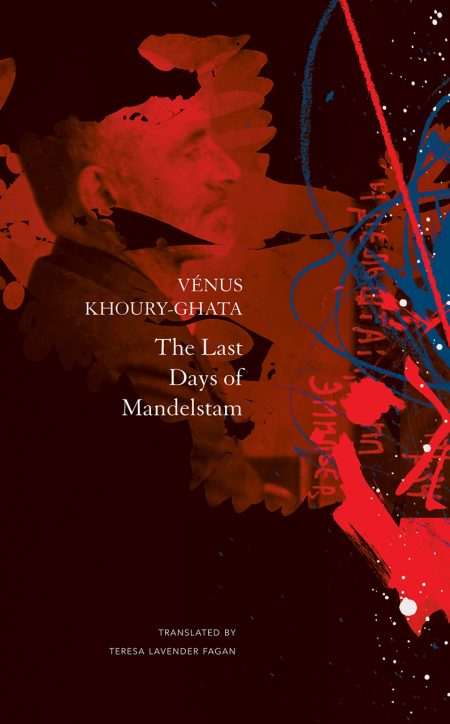
Chéri and The End of Chéri  by Colette is translated by Rachel Careau with a Foreword by Lydia Davis and published by W. W. Norton.

Seven (slightly vain) exercises in style: Rabelais’s Doughnuts by Pierre Senges

French writer and playwright, Pierre Senges, is a most subtle conjuror who casts a sidelong glance and exercises a sharp pencil to bring literary, historical, and contemporary notions together in unexpected intermixtures of fact, fiction and philosophy. An erudite alchemist, he spins extravagant, satirical, richly intertextual essays and imaginings that exploit that hallowed ground between the actual, the probable and the impossible. He may be dancing in the footsteps of Borges and Calvino, but Senges is the choreographer of his own inimitable style.

I have read and reviewed several of Senges’ works—the brilliant The Major Refutation, a conspiracy theory for the ages, the collaborative Geometry of Dust, and the chapbook Falstaff: Apotheosis—but on the menu today is an assortment of his idiosyncratic musings, half a dozen plus one tasty treats gathered together for the first time as Rabelais’s Doughnuts. Translated, like the other works, by Jacob Siefring, a veritable Senges evangelist, this slender volume is published by Seattle-based Sublunary Editions, their third contribution to the mission to bring more of the prolific French writer’s oeuvre into English. Six of the seven titles included in Rabelais’s Doughnuts were previously published in a variety of online and print journals over the past decade, but Siefring’s translations have been revised for this collection.

It tends to be difficult to succinctly summarize a Senges story/essay without tripping over one’s words. The most straightforward pieces here are two that involve Michelangelo’s famed painting Last Judgement. The first, “Last Judgment (detail),” is one of my favourites, revolving around a real person and situation that I was unaware of and would have thought to be entirely fanciful were it not for our friend Google. (One of the great joys of reading a writer like Senges is that he inspires a reader to look up an individual or a circumstance to find out what he is referencing—for those more cultured than myself that might be unnecessary, for those to impatient to seek out the subtext it could be frustrating, but in my mind it is a bonus.) This first Michelangelo piece considers the fate of Daniele Ricciarelli (called Daniele da Volterra or “il Braghettone”) who was commissioned to add tasteful coverings to several of the unsuitably exposed figures in the great artist’s masterpiece. With a certain empathy, Senges considers the task, the betrayal of his master, to which Daniele Da Volterra is committed:

When he draws, he draws, when he paints, he paints: depending on the point of view, the veils of the Braghettone benefit from his skill as the author of a Descent from the Cross, which has since become famous (famous as a reference, not as a celebrity). Or rather, it’s quite the opposite, one hundred and fifty veils fastened like so many pairs of underwear on the men and women of Judgement Day, all stretching towards their salvation or damnation, and disregarding as they would disregard a prune a nakedness that is more or less suited to the gravity of the occasion, one hundred and fifty veils are a valuable exercise for a painter.

The other Michelangelo related piece, “Measure of All Things,” imagines its way into the mind of the influential and critical writer Pierre Aretino who wrote an open letter to the artist offering his opinion on The Last Judgment.

Other works sing the dubious praises of the six hundred page novel, riff on one of Heinrich von Kleist’s prescient anecdotes about possible long distance communication, dragging it piecemeal into our modern world of the internet and Amazon, muse about writing exercises, and take on the character of a counterfeiter baring his sorry soul, such as it is, to a client. Figures from history and literature appear throughout, sometimes even providing a framework for Senges’ wide-ranging reflections. “Many Ways to Stuff a Watermelon” is a perfect example. He wanders through the libraries of a host of real and fictional characters, from the scant collections Russian writer Sigizmund Krzhizhanovsky granted his impoverished characters, to the actual library an aging Giacomo Casanova found refuge in, this tribute to libraries great and small will resonate with anyone who collects more books than they can ever hope to live long enough to read. In this, one English writer’s despair at the incalculable extent of available material speaks volumes (so to speak):

The reader’s tininess signifies the brevity of our lives: it follows that the impossibility of reading everything takes the measure of our mortality, provoking frustration and vertigo at the same time—to Thomas De Quincey, in any case, one hundred thousand forever unknown volumes brought forth tears which he compared to those of Xerxes countenancing the death of his soldiers: not some “fanciful case of misery”, but “as real a case of suffering as ever can have existed.”

Senges’ elaborate language and dry wit allow him to take a small idea and expand it into an intelligent, extravagant exercise, one that takes chances but always steers close to the truth, or a truth, digging freely into the past to make astute observations about the here and now. If you are new to his work (or well acquainted), this short collection is a an ideal way to meet (or spend more time with) this witty, intelligent writer.

Rabelais’s Doughnuts by Pierre Senges is translated from the French by Jacob Siefring and published by Sublunary Editions.

No promised lands: Canzone di Guerra by Daša Drndić

Each time I come back to Croatia, I see that it is not the Croatia I left, that I am not the person who left. Today, every lengthy departure from Croatia promises a still more difficult return, an ever more remote chance of establishing a firm, tenuously secure basis for living. Today, when I leave, I no longer know who I will find alive when I come back.

Croatian writer Daša Drndić was singular literary force, able to deftly weave facts—often gathered and presented in an unapologetic, even confrontational manner—with fiction to create compulsively readable, powerful works. Her novels incorporate lists, historical details, interview excerpts, documentary asides and lengthy footnotes into a character-driven story to achieve more than what either fiction or nonfiction could do alone. In Canzone di Guerra, recently released in English translation from Istros Books, we see an early form of this distinctive approach to storytelling, deeply political yet strikingly novelistic, echoing the author’s own experience in Toronto, Canada, as a single mother escaping conflict as the former Yugoslavia was falling apart in the early 1990s. Given this context, this work also stands as an increasingly relevant portrait of the immigrant experience—one in which my own country does not come out too well.

Originally published in 1998, Canzone di Guerra’s opening chapters zero in immediately on the narrator’s decision to leave Croatia and the varied circumstances immigrants and refugees face in Canada after the collapse of “Socialist Yugoslavia.” Framed by short digressions about the origin and fate of certain varieties of pigs—parables of culture, dislocation and loss—Drndić quickly shatters idealistic illusions and hints at the embedded inequalities and ethnic divisions that her superficially homogenous community carries with it to new shores. Imagined, in part, as the transcript of a radio documentary we hear the voices of an array of characters struggling to find work, dismayed at the lack of recognition for their professional credentials, and coping with loneliness and alienation:

Here we sleep peacefully, there’s no shelling, but we’re waging a different war. A war in the soul, a war in the head. Why did we come? We thought Canada was a country of great possibilities. I don’t know why no one told us the truth.

Beneath the dialogue, footnotes discuss the disappearance of trees in Sarajevo parks, coping strategies for stretching food or resources, even quote George Orwell. Throughout the text, such notes offer the opportunity for a multilayered discourse. There is always more going on beneath the surface.

Of the migrants, seeking a better life, some will thrive, some will not. The narrator, Tea Radan (“my name in this story” as she later says), has her young daughter Sara, to consider. She has to hope for the best. But what is she really hoping for? That is, at best, uncertain. Prior to moving to Canada, Tea and Sara had lived in Belgrade before moving to Rijeka in her native Croatia. Her sister lives in Slovenia, her brother is restless but goes nowhere. Those she knows want to leave but most don’t get far. However, the distance that her ability to migrate affords her seems to focus her attention back on her family, her parents and grandparents, and their actions and political associations during and after the Second World War. Her grandfather’s letters and mother’s diary entries help flesh out the story, but questions remain unresolved.

A romance with a fellow Croatian immigrant sets her off on an extensive, obsessive search through archives and records available in Canadian libraries, triggered by the notion that his family’s circumstances may have been connected to her own, most particularly to a betrayal of her mother during the war. It is not a healthy basis for a relationship, but it spurs a journey that leads Tea from one rabbit hole to another, as she delves into the history of Croatian communist and fascist movements, through the treatments of Jews in Canada, to tragic accounts of the concentration camps Theresienstadt near Prague and Jasenovac in Croatia. It is a gut-wrenching whirlwind tour, one that invites readers to slip down their own rabbit holes. Yet the intensity of her investigations, only trigger more questions:

The more I read, the less I knew. No one was entirely innocent, no one was entirely guilty: not the cardinals, nor the bishops, nor the popes, nor the churches, nor the Vatican. Nor the communists. As for the Ustasha ‘truths’, I read them too, but I didn’t believe them. They all had their version of history. Those who survived. The CIA had its truth as well. America and Great Britain their own.

Uncomfortably, for a Canadian reader, Drdnić, through her narrator, is unsparing in her critique of Canada’s failure to deal with a number of high profile war criminals who found their way here—something I was not unaware of but was chastened to review it all again.

This novel is, nonetheless, more than a vehicle to delve into past darkness. It is charged with a certain humour and warmth as Tea and her daughter navigate life in a new country. It is not easy. Along with other migrants they are forced to seek social supports, take degrading work under the table, and scour second hand shops for clothing and shoes. It sounds bleak, but Tea’s defiance and Sara’s spirit carry them through the endless bureaucratic mazes of the modern capitalist state.

Entertaining, intelligent and disturbing, to read Canzone di Guerra today, thirty years after the time when it was set, is enlightening. Immigrants still face the same frustrations finding support, resources, and work that recognizes their training. Yet, as refugees from the war in Ukraine flow into Canada and many other countries—often moving ahead of those waiting in line much longer—it is clear that all refugees and immigrants are not treated equally. The migrants arriving from the collapsing Yugoslavia note at one point that they are invisible compared to other more “obvious” newcomers. But visibility is not an asset, as long-time Canadians from visible minorities can attest. Racism and xenophobia has grown even more over the past few decades, buoyed by the same kind of nationalist sentiments that played such a key role in World War II and the Balkan Wars alike.   Daša Drndić’s work remains, as ever, clear-eyed, critical and timely.

Canzone di Guerra by Daša Drndić is translated from the Croatian by Celia Hawkesworth and published by Istros Books.

i am so pure and lonely: My Jewel Box by Ursula Andkjær Olsen

infinite energy borrowed from the future
founded everything
out of nothing

like debt  (45)

It has been four years since my first encounter with the work of Danish experimental poet Ursula Andkjær Olsen through her book-length poem Third-Millennium Heart. I was, at the time, grieving the death of my mother a year and a half earlier, and in a process of coming to understand the nature of the particular absence her loss had left in my own sense of identity.

Dramatic and intense, the poem follows an expectant mother-figure like no other, her language pulsing like blood through arteries and veins, her vision pushing beyond patriarchal capitalist dynamics toward a new conception of the body and the kind of life it can nurture and contain.

As I described it in a blog post, “we are held captive by a demanding chimeric voice, witnesses to the realization of a possible future reality which, not unlike the mechanistic hive-mind typically associated with cyborg imagery, envisions a hive-heart existence.” I was so swept up in the flow of this epic, inventively translated by Katrine Øgaard Jensen, that I was moved to create an experimental poetic response of my own which was published at Minor Literature[s]. (The PDF is reproduced here.)

Last year, a follow-up volume, Outgoing Vessel was released in translation. Reading, perhaps, more like a companion piece, rather than a continuation, the enigmatic speaker here is a more isolated, inward focused figure. Through an atmosphere heavy with grief, anger, pain and existential disconnect, her rhythmic chants progress toward the articulation of a radicalized technological ontology. Now, in the place of a new life/lives, the poet talks of an orb, an indestructible object that she carries within her body—a planet of her own that ultimately figures in a re-imagining of a new human beingness. The tone, often harsh and seemingly unforgiving, ultimately leads to an affirming vision, even more boldly futuristic than that of the preceding cycle.

Now, a third work—My Jewel Box—has arrived, bringing with it another striking shift and a remarkable sense of closure. That is, at least in my experience, the three volumes form an echoing, interconnected epic, with a grand operatic arc, one in which the speaker/singer evolves through different ways of seeing and understanding herself—in society, in the universe, and finally as vital link in the ongoing chain of life. She returns to earth, one might say, but as an ever-dynamic force, she bends earth (along with air, water and fire) to her own imagination. The connection with Third-Millennium Heart is possibly the most obvious, but in the move from a gestational to a generational reality, I would suggest that the strongly internalized, starkly solitary exploration of Outgoing Vessel can be read as a necessary recalibration of the individual self in contrast to the communal self that is governed and influenced by our interpersonal and transactional relationships with others. Now, the self is redefining herself once again.

interrupt me in my work

i sat there and

i’m in the deep laboratory
connecting myself to
the unrest, how it feels
it has a pronounced gravity
soft, possibly smooth, and heavy
it calms the body, even though
it isn’t still

is it my child, is it my mother
is it myself

is it alive

an incredible labor (18)

Like its predecessors, My Jewel Box is comprised of a series of poetic sequences that together form a single, book-length poem. Photographic artworks by Sophia Kalkau mark each section, the continuation of creative partnership that has enhanced the entire trilogy. Olsen employs reiteration, chant-like passages, shifts in tense and intention, neologisms and a distinct sonic intensity to propel her poetry forward. Motifs and themes from the earlier works also reappear, drawing on threads that run throughout the trilogy. In Danish, she is lauded for her daring use of language, so, as ever, the trust and chemistry that exists between poet and translator is critical. Olsen sees herself as the first translator of the ideas, and Jensen as the second, granted the freedom to work with the language to capture the inventiveness and spirit of the original. The result is a collaboration that is very special.

My Jewel Box opens with a surreal poem that involves the speaker’s sister and their mother’s body. Her parents and her child will also appear later in the longer poems that close out each sequence, hinting at a somewhat more intimate tone than admitted in the previous works. We catch a glimpse of the dynamic central figure as daughter, sister and mother. Nonetheless, the poetry resounds with bold statements, sharp contrasts—love/hate, pleasure/pain, blame/guilt/innocence, supply/demand—and harsh indictments, but the tone is somehow wiser; the debt ratios and mechanisms of balance are changing. What has been borrowed must be repaid. And the payment will be realized in a new understanding of the relationship between the body and the material world. It will be emotionally and physically painful.

to keep the spirit inside
force it to stay inside the body
despite physical discomfort
despite almost endless physical discomfort

i place the body inside the world
and breathe in
i place the world inside the body
and breathe out
that is what i do
i am

griefbody
ragebody
joybody
lovebody

i identify with everything, with
(fire, water, earth, air)  (131)

The preparation occurs at all levels of the body, from the cellular to the surface and beyond—fleshy and metallic imagery are interwoven leading, ultimately, to what is the beating heart of this poetic epic, the longest sequence, named, like the book, “My Jewel Box.” Here we move into a quieter, more organic, melancholy space, one that increasingly embraces a connection to the natural world, as the speaker enters a new phase of life—the post-fertile. This menopausal suite is, in its early movements, charged with loneliness and loss. Rivers of sweat run, the uterus is reimagined as a container for what? Air? Water? The blood now bled out is invisible.

i am a mother
who does not turn anyone into siblings
who will not be turning anyone into siblings  (183)

Yet, as before, Olsen’s poetic vision is fundamentally life-affirming and, as her speaker begins to come to a fresh appreciation of her newly defined integration with the material world, her language explodes with the most vivid array of colours painted onto a tapestry of stars, gardens and forests. In contrast with the limited palettes of Third-Millennium Heart and Outgoing Vessel, it is blinding and exhilarating. The sadness lingers, the transition is pained, but possibilities are awoken, to be reclaimed as the work draws to a close at the end of the final sequence.

The power of Ursula Andkjær Olsen’s trilogy lies, for me, in her ability to move from the restrictive to the expansive, the biological to the cosmic, and back again. Her enigmatic speaker seems to be seeking a grounding in a vast universe, either pulling it all inside herself or holding herself close against its emptiness. At last, with My Jewel Box, there is a sense that she has reached a more solid footing, at once tentative and secure, a place where she belongs, somewhere between eternity and eternity.

Or, perhaps, that might just be my own translation of my experience of reading this trilogy.

My Jewel Box by Ursula Andkjær Olsen is translated by Katrine Øgaard Jensen and published by Action Books.

Note: I will be in conversation with the poet and her translator on Sunday, May 15, 2022 at 1:00 pm CST. If interested, you can register to attend this virtual event at Brazos Bookstore.

“a translation of myself”: distant transit by Maja Haderlap

is there a zone of darkness between all languages,
a black river that swallows words
and stories and transforms them?
here sentences must disrobe,
begin to roam, learn to swim,
not lose the memory that nests in
their bodies, a secret nucleus.

(from “translation”)

Maja Haderlap was born Carinthia, the southern-most province of Austria, into the Slovenian-speaking minority community that served in the resistance against the Nazis during the Second World War. As a result, they suffered repression during the war and ongoing persecution in the decades that followed. Haderlap was raised in this hostile borderland environment and educated in both Slovenian and German, two languages burdened with conflicting histories and dynamics in the region. She first established herself as a poet with several Slovenian-language collections before releasing, at the age of fifty, her acclaimed German-language novel, Angel of Oblivion. According to her translator, Tess Lewis, her decision to write about her family and community history in German, was controversial, but guided by a desire to reach as wide an audience as possible with a story that was largely ignored or unknown. Now, with distant transit, she has returned to poetry, but, for the first time, through the medium of her second language.

The fact that these poems were composed and published in German adds an extra layer to the themes Haderlap explores. Language and the translation of identity and self-understanding inform the poet’s reflections on home, relationships, and belonging—experiences grounded in her Slovenian culture and heritage, but examined through German and all that that language has afforded her beyond her rural roots. The tension between the two forms of expression comes through in Lewis’ perceptive translation, heightening the emotional impact of this work.

Haderlap’s poetic diction and simple, lowercase form, reward careful engagement. I found that the style encourages a close reading to follow the rhythm and the division of thoughts or sentences. Her imagery is rich, inspired by the natural beauty of her native countryside, yet filled with longing and questioning. Language is an ever present element—what does it contain, preserve and lose as one grows and moves between vocabularies and grammars? And what does it mean to be at home in any one place or community?

                                 language opens
rotted doors, thrusts the dusty boards
from their brackets, reveals the buried stone.
it flies at my face like a flock of startled
swallows, confronts me as the smell of mold,
drops from the jagged armor and
hulls of kids’ stuff like silt shed from all that was.
as soon as its bird heart beats calmly,
it shows its skin, appears unscathed and
hardly used. keep me safe, language,
wall me off against time.

(from “home”)

This collection is steeped in the landscape and mythologies of Haderlap’s Slovenian youth, carrying that foundation into adulthood in an evolving relationship with language—hoping and trusting words to carry memories forth into another time and tongue. It is an uncertain faith. Yet her poetry so vividly captures the possibilities and limitations of translation, that I would suggest that one does not need to likewise live between two languages to recognize the nature of the dilemma. Any one of us who trusts our own memories, emotions and experiences to the vagaries of words—even if in our sole language—worries those same words onto the page. The writer is always recognizing the permeability of the borders and boundaries within their own experiences, translating and transcribing themselves into being, seeking to find preservation and refuge in words. Haderlap speaks to this so acutely.

the shore path is now built up, shifted,
torn out of the meadow and discarded.
i, too, have emerged repeatedly
as a translation of myself,
transferred and rewritten
i appear in a new transcription
although in similar form.

(from “on the shore path in the evening light”)

The poems that comprise distant transit speak to a personal political reality in intimate, yet recognizable terms, echoing the transitions we all experience as we grow into adulthood, away from home and search to find ourselves in the world. More specifically and powerfully though, Haderlap animates the mystery, power and baggage that a language can carry with it, how words and sentences are laden with implications for understanding the past and the present, to articulate one’s identity as an individual torn between two tongues.

distant transit by Maja Haderlap is translated from the German by Tess Lewis and published by Archipelago Books.

Love is blind too: Seeing Red by Lina Meruane

The claustrophobic atmosphere of Lina Meruane’s compelling novel, Seeing Red, envelopes you from the first lines. The narrator, Lucina, is distraught. Sentences end mid-thought. Unfinished. A party is in full swing, only a room away, but she is suddenly alone, isolated.

I had to give myself an injection at twelve o’clock sharp but now I wouldn’t make it, because the pile of precariously balanced coats let my purse slide to the floor, because instead of stopping conscientiously, as I should have, I bent over and reached to pick it up . And a firecracker went off in my head. But it was no fire I was seeing, it was blood spilling out inside my eye. The most shockingly beautiful blood I have ever seen. The most outrageous. The most terrifying.

A diabetic diagnosed with a serious condition affecting her eyes, Lucina had been warned against leaning over and now one thoughtless movement has left her eyesight, her work and her normal connections to the external world threatened by a curtain of blood. What follows is a deeply internalized monologue that builds in neurotic intensity, narrated by a woman struggling against her worst fears with a rapidly diminishing reserve of dignity and grace.

Inspired by her own real-life episode of blindness, Seeing Red is not exactly an autobiographical novel. In an interview, the Chilean author and essayist explains that she began writing what she thought would be a memoir, but as the relationship with truth began to interest her less, it quickly became a piece of fiction. She was, however, keenly interested in capturing the experience of blindness as “seen” from the perspective of the unseeing person—something raw that would be in contrast to the tendency in Latin American literature to present blind characters from view of the outsider.

Set in the early 2000s, Lucina, the protagonist of Seeing Red is, like her creator, a writer (writing under the name “Lina” Meruane) who lives in New York City with her boyfriend Ignacio, an academic. Their relationship is only about six months old and they are just about to move to a new apartment when her sight starts to rapidly disappear. She faces an uncertain prognosis, and a delay before the doctor will be able to consider operating, but they are bound to one another by the intense emotion of a new romance. That’s a good thing, because Lucina will test it, especially when she flies home to Chile to visit her parents—both of whom are doctors—while Ignacio attends a conference in Argentina. He soon joins her as they to try to salvage a vacation they’d planned, one that is now restricted to Chile, primarily to her family’s Santiago home, because of her fragile condition. Relying on her memory, she guides her partner through a city he has never visited, trying at the same time to blindly negotiate an emotional minefield of complicated family dynamics and past relationships.

The narrative style cleverly enhances the increasingly unreliable nature of Lucina’s connection to the world around her. Through a series of unbroken single-paragraph sections, each two or three pages long, we are held hostage to her unseeing perspective. Thoughts unspoken race through her mind, as she imagines how those around her are reacting, picturing their expressions and adding to their words her own visualized commentary. She second guesses herself. She second guesses everyone and everything. One can only imagine how her patient partner or her aloof mother really feel as everything is channelled through Lucina’s  personal filter. Her reconstructions. Her cynical digressions. Her abruptly aborted sentences.  As readers we have to trust her descriptions which are themselves coloured by her anxieties and growing agitation.

Aren’t you dying of cold? Ignacio insisted, rubbing his hands together as if lighting a fire. I was trained to resist the damp air that was seeping into his bones. His teeth chattered. He got up from the chair and bent his legs to wake them up. He rummaged quickly in a packet of cigarettes, the match scratched my ears, and I heard him suck on the cigarette in spite of his imaginary flu. I could envision him forming fragile smoke rings that his forced cough then tore apart, his dry cough and the beaten voice of a bellyaching Galician. Winter in my Santiago made him remember winter in his own, in Compostela, and he told me again how as a boy he’d slept beside a wall that let water filter in from outside, how he’d spent his whole childhood sick, covered in rashes, his ears hardened by chilblains. He exaggerated his hardships, or invented them, all so as not to talk about our own.

The question of her relationship with Ignacio, and whether it will stand the strain, haunts Lucina. She wants to give him the freedom to decide if he would be willing to stay, even if the unthinkable happens and her sight never returns, and yet they are each terrified of being alone, lost and overwhelmed by the enormous implications that hang over them both. Conversations begin but are quickly aborted. Strange sexual urges obsess her. Once back in New York, with surgery ahead, the narrative only becomes more charged and visceral and surreal. In Megan McDowell’s excellent translation, none of the energy or intensity is lost. Lucina is a complex, difficult, thoroughly compelling character. Her story vividly demonstrates the fear of losing control, the limitations of relying on the mind’s eye and the extreme pressures a person in crisis can put on those close to them.

Seeing Red by Lina Meruane is translated by Megan McDowell and published by Deep Vellum.

The weight of emptiness: The Dance of the Deep-Blue Scorpion by Akram Musallam

This is my life, my story: it has a lot of drama, successive doses of profound distress, and a lot of peculiarity, to the extent that I continually imagine myself a mere character in the novel, choreographed by the hand of a brilliant writer, but he overburdens me with unusual loads. I don’t mean in a literary sense—that’s for the critics—I’m talking on a human and personal level. He always puts me in the most complex scenarios, boiling over with seemingly cosmic plots, or at least in pivotal points of tearful collective historical plots, always overturning places on my head.

The narrator of The Dance of the Deep-Blue Scorpion, Akram Musallam’s metafictional meditation on loss, identity and emptiness, is at the mercy of his own pen as he endeavours to commit his own story to the page, a story which finds him at the intersection of a lineage bound by village and familial legend and a series of events that define the history of Palestine in the first decade of the twenty-first century. He is his own anti-hero, haunted by successive losses, disappearances and absences that undermine his efforts to write himself into being. The resulting novel-about-a-novel-about-loss, by turns melancholic and absurd, thus becomes a mirror of much larger questions haunting the Palestinian imagination.

Born in 1972 in Talfit, near Nablis in the West Bank, Musallam is a journalist for the Ramallah daily Al-Ayyam. The Dance of the Deep-Blue Scorpion, first published in Arabic in 2008, is his second novel, his first to be translated into English. And although its premise may sound bleak, this playful tale manages to be both sorrowful and fun to read. The magic lies in its charming and determined narrative voice.

The novel opens with a dream-like account of a night in late 1988 when our protagonist, a teenager working in a hotel across the border in Israel, has his first sexual encounter with a young woman who has a freshly tattooed scorpion at the base of her spine. At one point he asks her to stand, naked, facing the mirrored wall behind the carpeted stage in the “dance hall” where he slept each night. He traces her hips on the reflective surface with lipstick. The girl, a visitor from Paris, would leave for home the next day, disappearing from his life forever. However, she and her scorpion would begin to revisit him in his dreams, lying beside him once more. As he stroked the deep-blue design on her lower back the creature would come to life, slip off her skin and struggle to climb up the mirror to find its place between the lipstick lines drawn there. This scorpion in its desperate attempts to reclaim a perch on something that no longer exists, haunts the narrator, who adopts it as an identity for his story’s hero. “Isn’t this a novel-esque dream, or a dream of a novel?” he asks himself and the answer, he knows, is yes. Which I suppose means it’s both.

It is mid-2006 when he finally commits himself to realizing this novel-esque dream. He arrives at a parking lot in Ramallah and offers to rent a particular stall although he has no car to park there. He simply wishes to sit there, on the ground or on a plastic chair, think and maybe even write a novel. The attendant is uncertain, but the parking lot manager, a former political “prisoner” jailed for his actions during the Uprising, is smitten by the idea of hosting a writer. As the author-narrator’s story unfolds—that which we are reading and/or that which he is writing—the “prisoner” becomes his audience, his cheerleader and his challenger to the truth of the narrative as presented. But, just as real-life has dictated the narrator’s story, the liberties he takes in recording it are often the only way to begin to adequately—and safely—address the huge gaping holes that fate and history keep placing in his way.

‘Names aren’t that important, believe me, usually there are no names in my novel, haven’t you noticed that? Names are constraints for the characters and me, I don’t like them. I prefer to describe my characters according to what sets them apart. Then, my friend, you want a novelist to write “real-life things.” Listen: in order to be able to speak the truth, you have to wait for a lot of people to die; in the same way, speaking the truth may end up killing a lot of people.

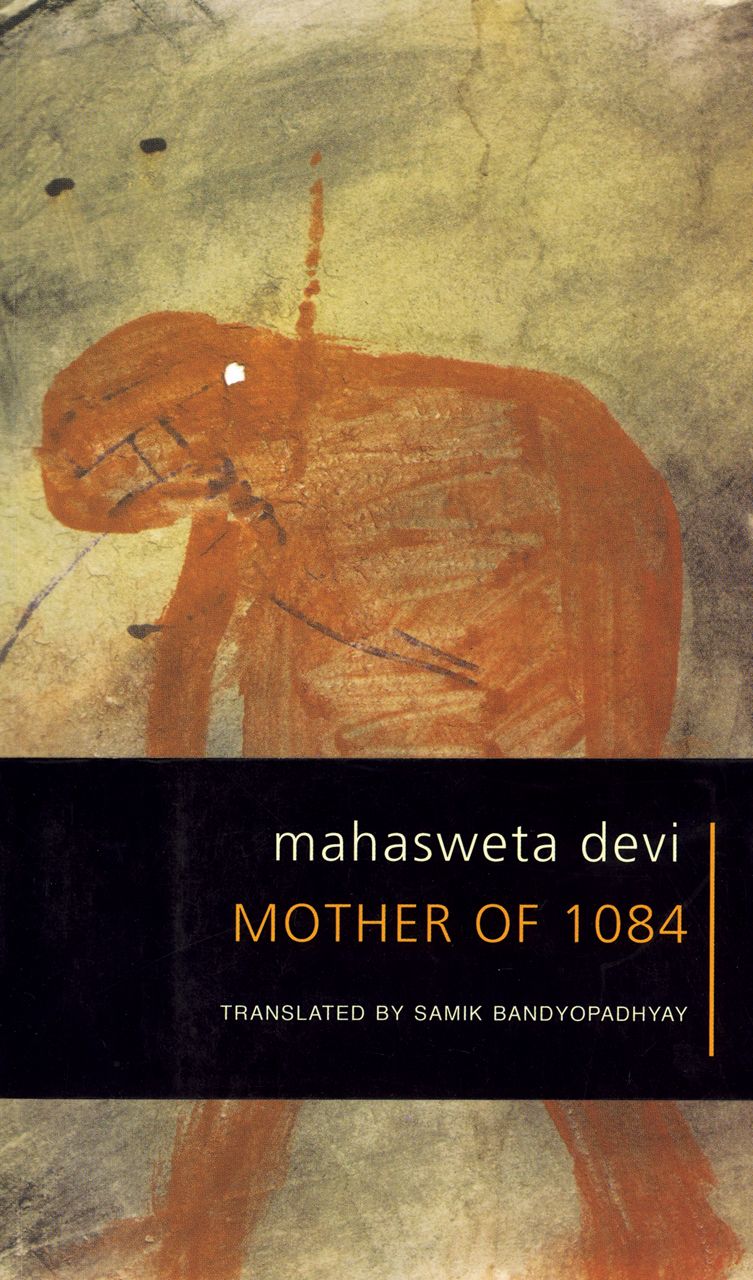
The Scorpion’s earliest life memories are charged with absence. When he was very young his father lost his leg, the result of a workplace injury attended not by doctors but by construction site “first aid” of a much more basic sort. As the only child it would fall to our hero to scratch his father’s missing foot—not the stump, but the space where his foot once was. It was an early, tangible experience of emptiness and perhaps began to condition him for life in a time of conflict in a land under occupation, insofar as one can ever be prepared to have the places most important to you, your key touchstones, destroyed or irrevocably altered—to have your history erased. He would have preferred that the war would stay out of his life, but it kept intruding, driving the plot. For the narrator of The Dance of the Deep-Blue Scorpion, his connection to lost places may seem exaggerated at times due to the magical tone of his tale and his tendency to limit or avoid identifying details, but they are not only fundamental to his sense of self and his ability to tell his own story, they echo the broader collective concerns that haunt the Palestinian people.

This is, then, a deceptively quirky, light tale filled with eccentric characters and family legends woven against historical events—the Passover Massacre in Netanya, the Second Intifada, the 2002 Invasion—that is deeply concerned with the stories we tell ourselves to address loss and emptiness, to remind ourselves that we do exist. As the narrator insists “my game, our game is a game of stories.” It is also about the stories we can dare to tell, especially in dangerous times. So, as his own manuscript takes shape, it isn’t completely clear where the novel we are reading and the novel being written diverge, if in fact they do. The scorpion is an enigma. Who is the scorpion? The narrator or his self-protagonist? Or a dream symbol of the impossible? A scorpion that can sweat, struggling to hold on to a memory and an idea of a time, a place and a nation that holds an increasing amount of absence as time goes on.

The Dance of the Deep-Blue Scorpion by Akram Musallam is translated by Sawad Hussain and published by Seagull Books.

you still don’t know / that you exist, & yet: in field latin by Lutz Seiler

i have said
something, sung without
my hands: i have

smoked up all the shadows.
lungward i took these shafts to where
the empty space begins the rustling
      out along the paling
towards the railway cars—seventeen years

before the text.

(from “sentry duty”)

Poet and novelist Lutz Seiler was born in 1963, in Gera, in the state of Thuringia in the GDR and, like many writers from the former East Germany, the arts, as a career, were not on his radar when he was growing up. He was expected to acquire a solid, practical trade and complete his mandatory military service—that was the accepted foundation required to be a productive member of society. And so he did, training as a mason and a carpenter, but during his period of service he began to read poetry, kindling an interest in reading and writing that would ultimately shape his future. He went on to study literature and is now widely recognized for his poetry and prose. German nature poet Peter Huchel (1903–1981) was an early influence on his own writing and, fittingly, in time he would become the custodian of the Peter Huchel Museum in Wilhelmshorst, thus carrying his distinct variation on the same literary tradition into the twenty-first century.

Natural themes and a strong sense of place mark Seiler’s work. This can be seen clearly in his collection in field latin, Alexander Booth’s thoughtful translation of his 2010 publication, im felderlatein. Rooted in the bucolic landscapes of his home state which, prior to reunification, was situated in the southwest corner of the GDR, many of his poems elicit the shifting moods of the borderlands, adding a certain layer of ambiguity to his precise, attentive lyric poetry.

within the fields’ rippling script the glimmer
of a few bricks, some tufts of grass & the small
      rests of bones: how

it all lies together in the end.
arise, ascent & so there was
a lot of signalling, radioing, failure
about my feet, step after step.

(from “what I possessed”)

The poems and sequences in this volume tend to draw inspiration from memories of childhood, family and the peculiarities of rural life. Seiler’s poetic form is spare, stripped down, details carefully selected and characteristically written with ampersands and without capitalization. This style is particularly affecting in German where nouns are typically capitalized, but in both languages the appearance on the page adds a hush to the sound and feel of his poems.

the shadows, aged early, but we
remember: homeward, lonely
simply walking
step by step recording
the silent outline. for

the shadows, at the beginning,
were the small, black units of pay
a currency for which
the creator interrupted his
.        work.

(from “the very first affection”)

Although Seiler’s poetic vision is clearly informed by his own unique political and literary inheritance—as much as any writer’s inevitably is—the deeply personal energy that animates his sparse, well-framed images invites recognition. It speaks to the universality of human experience. We are at once acutely aware of, and haunted by, the world around us. Every environment harbours its own ghosts. One of my favourite poems, “do you see the redbrick moon” evokes the image of an electrical lane. I once saw these parades of pylons marching across the landscape as an invasive species, but have learned to see them as a necessary presence, another creature that one might as well embrace as I do the line that runs between my apartment and the forest:

do you see the redbrick moon
above the eiffel towers? below that
the quacking, magnetic garbling & time
within the frogs’ legs humming?

this is the old high-voltage lane. it
holds the moistness to the poles, holds
the fog & supports it. soft
blue shadows envelop all, a spider

hands always its threads & floats
as if electrified. dreams unearthed.

Alexander Booth’s excellent translation allows Seiler’s poems room to breathe, preserving his unusual syntax and fine-boned imagery and emotion. As a result, in field latin offers a vital introduction for English language readers to the work of this important contemporary German poet.

in field latin by Lutz Seiler is translated by Alexander Booth and published by Seagull Books.

Crossing borders and defying boundaries: Tomb of Sand by Geetanjali Shree

Think of a story as a living being. There are countless beings and countless types of beings. Physiques, lifestyles, screams, conversations, breaths, tremblings, horns, mutenesses, ways of living and dying, all different. So running off in the middle of a story in a huff is simply not acceptable. Let it live its life, find its own denouement. A butterfly’s tale is a few days a flutter, a bee gets four weeks abuzz, a mouse drools over a handful of crumbs; if a dog lives twenty years, good for him, and yes, if you’re a parrot, turtle or elephant, you get a full century. The wretched cockroach won’t even die when fired from a cannon.

First things first, yes this story sprawls across some 700 pages, give or take, but as the above quote indicates, it has, as all stories do, its own lifeblood, its own pace, and Geetanjali Shree’s Tomb of Sand, kicks up its heels, starts with bold and defiant enthusiasm, and refuses to let go from its first paragraphs to its final words—and even then it carries an advisory that no story ever really ends. Quite simply, this energetic, intelligent and engrossing novel, brilliantly translated (or is that dazzlingly transformed?) from the Hindi by Daisy Rockwell, has the power to delight just about anyone with a pulse. Even an avowed novella devotee such as myself.

Tilted Axis, UK edition

Central, no, essential to this tale is one singular octogenarian heroine—Ma, Amma, Granny, Mata-ji, or Baji—depending on the perspective of the character (or creature) who falls into her orbit. Recently widowed as the novel opens, she spends the first, say, 175 pages or so lying in bed, defiantly turning her back to the world, ignoring the desperate entreaties of family and friends. She seems determined to remain, confined in her grief, willing herself to dissolve into the wall. Propped by her bedside is a cane, a gift of a grandson, one who engages for the most part from a distance and is thus known as Overseas Son. This collapsible cane, decorated with butterflies, is the key magical element in this oversized, yet thoroughly down-to-earth fable. What revolves and expands around Ma and her cane, is a story about borders—about women and borders we are told at the very outset—but it is also about all sorts of boundaries. Between genders (in society and within a single body and life), classes, family members, religions, nations and even between human and nonhuman communities.

Prior to her retreat from the world following the death of her husband, Ma was the typical matriarch of an upper middle-class Indian family. If there were subtle hints of a certain eccentricity, she devoted herself to the role of wife and mother, surrounded by her son, daughter, and daughter-in-law, referred to respectively as Bade, Beti and Bahu. Of the immediate family members, only the eldest grandson is known by a given name, Siddharth or Sid. The majority of the burgeoning cast however, servants, officials, Ma’s dear hirja friend have proper names of some sort—an indication that it is the core of the family that will have their prized self-identities tested the most once Ma emerges from her mourning isolation reborn, so with a fresh, almost adolescent sense of wonder and adventure.

Penguin India edition, cover illustration by translator Daisy Rockwell

However, before Ma’s new lust for life begins to assert itself, she disappears, raising all manner of panic, alarm and indignant outrage, only to turn up days later, at the police station, oddly changed, apparently confused and so much smaller than anyone remembers. Bade and Bahu are greatly relieved. He has just retired after an auspicious career in the government and will soon be moving from his official residence to a retirement flat where, as custom dictates, his mother will live and be cared for. But Ma has other plans. She intends to go home with her daughter.

Beti is, at first, pleased and surprised. She has always imagined herself as the free-spirited, bohemian member of the family. A feminist. An activist. Divorced, she lives alone in a modern flat decorated with art and stylish furniture. Her current boyfriend, KK, visits when he is not travelling. Both of them are journalists and value the ability to come and go as they please. Ma’s presence begins to upend everything Beti thinks she knows about herself, especially as Rosie Bau, Ma’s long-time hijra friend begins to spend more and more time visiting, charming everyone except Beti in the process.

The story in its second part becomes one of shifting roles and questions of identity. Bade struggles with the aimlessness of retirement, Bahu, is conflicted by her desire for individual expression and her commitment to the expectations of her place in society, and Beti by just about everything she has valued as she finds herself losing control of the world she has carefully constructed around her. She pulls away from her boyfriend. She is at once grateful for and resentful of the care and friendship Rosie offers her mother. And her work suffers as she finds herself slipping into a mothering/housewife role she had so proudly avoided. As Ma continues to shed layers of her past, to defy what others had long expected of her, her daughter acquires new, suffocating layers. One woman grows smaller as the other grows bigger, so to speak.

Finally, in the third part, Tomb of Sand enters the realm of Partition literature, heralded by an opening chapter that features a ghostly contingent of the many literary greats who have contributed to the tradition gathered at the Wagah Gate, the only land crossing between India and Pakistan where every evening a grand spectacle is held to mark the day’s end. The legendary authors and some of their iconic characters jostle for attention and much mayhem ensues, culminating with a direct, albeit invisible attack of mischief that disrupts the famed flag lowering ceremony. Of course, cellphones are duly collected by the embarrassed guards and no tangible record of the event survives. With that introduction, Ma and Beti’s adventures on the far side of the border—a border which has so bitterly divided a nation that once was one—is guaranteed to be filled with unexpected excitement, horror and heartache.

Of course, a thumbnail sketch like this hardly begins to do justice to a work like this in which the whole and its parts together create a larger-than-life experience filled with warmth, humour, and social, ecological and political commentary without skipping a beat. Ancient history and modern concerns—local, national and global—are wound together. The boisterous, omniscient third person narrative voice seamlessly drops in advice, wisdom and instructive asides along the way. There are characters we never see from the inside, Ma and Rosie in particular although they both will have their moment to speak deeply and passionately from the heart. By contrast, Bade’s and especially Beti’s tangled emotions are opened up wide. And we also cross over into the heart and mind of a crow and his community (who have some very pointed opinions on the way human creatures are fouling the planet) and are given, on occasion, the door’s eye view of the ongoing affairs because there are, after all, some things a door cannot avoid seeing. Finally, there is a guest narrator who makes several cameo appearances, a friend of Sid’s who by his own admission is not a character in this story, but happens to be on scene at the time. His brief first-person accounts stand as grounded eye witness reports of some of the more fantastic elements that others too busy with the business at hand may well have missed. This all may sound like a bit too much, but it works, the flow is smooth and swift and that the pages seem to turn of their own accord.

Then there is the language which necessarily involves a discussion of the translation. This book is liberally littered with Hindi (along with some and even a little Sanskrit) sometimes translated, obviously as with quoted poetry or, obliquely as in a clever comments like: “And no one will say, but these are good days, acche din! Except for the government, that is.” But more often than not,  Hindi words are simply worked directly into the text without any effort—or need—to explain though I will confess that as a reader with a basic Hindi vocabulary it was fun to recognize and understand them.

The original Hindi version of this book was known for its exuberant wordplay and this is where the translator’s careful attention to the spirit and the energy clearly shines. Onomatopoeia is liberally employed and generally transferrable, but the puns, layered meanings and alliteration possible in one language cannot be reproduced directly. The author and her translator established a good rapport that openly encouraged wordplay in the target language, and, as Rockwell describes in her Translator’s Note, she endeavoured to evoke an echo, a resonance, a dhwani of the source text. The result is work that embodies mood and emotion so effortlessly that even the smallest moments seem charged with life’s joys and sorrows:

No one noticed when the leaves changed the season of the heart yet again. When the monsoon was at its peak. The leaves grew fat. Hanging heavy on the trees. They hung, dripping sadness. Even when they’re quiet they hang heavy. There’s beauty in their fullness, but there’s a core of grief, dark and deep. The raga of grief in slow tempo, extremely slow, a despondent alaap, a prelude. Or is it a vilaap, a lamentation?

Finally, I want to say something of the portrayal of the hijra character Rosie who is key to the turning of the events that drive this novel. She is an independent figure, standing apart from many of the common activities that have so often defined hijra existence—begging and sex work. But that makes her an enigma and a perceived threat to Beti for all of the latter’s assumed hipness and LGBTQ-allyness. Rosie has a hold and influence on her mother that she cannot appreciate and this heightens her obsession with the hijra’s body, her otherness and the secret alliance Ma and Rosie seem to share:

What was all this topsy-turvy talk? Perhaps there was some clue to help Beti understand this topsy-turvy body. Strange how whatever one said of Rosie, the opposite was also germane. Like a body engaged in challenging all stereotypes and definitions. A body unrecognizing of the legitimacy of any borders. Flowing this way and that.

When Rosie eventually begins  to appear at times in male presentation, Beti is unable to cope with the dissonance that does not seem to bother her mother, KK or anyone else in her housing society. Yet, ultimately Rosie will be given the opportunity to take up the issue of her reality from her own perspective, as one who is not considered to exist, to be of value, to belong to anywhere. In this character, in her fabulousness and her tragedy alike, is a strong statement that I, as a legally and socially transitioned person who has crossed from one side of the gendered border to the other, can relate to. It is a recognition, not always acknowledged in fashionable transgender discourse, that we never really belong to either side. Some boundaries we carry within us forever.

Tomb of Sand is a huge novel, a story that celebrates the best of storytelling as an art form and as part of a cultural tradition.  Packed full of historical and literary figures and references, snatches of Bollywood song lyrics, and a wealth of culinary delights, it does what translated literature should do at its best: Invite the reader in, welcoming them to cross linguistic boundaries and experience a story that is filled with the scents, flavours and tones of its home country yet recognizable and relatable in the very human and global concerns it explores. Defying borders, at least for a time.

Tomb of Sand by Geetanjali Shree is translated by Daisy Rockwell and published by Tilted Axis in the UK and by Penguin in India. It has been longlisted for the 2022 International Booker Prize, the first Hindi translation to be nominated for this award.

The stars used to be on our side: Lucky Breaks by Yevgenia Belorusets

There is a very eerie atmosphere that envelopes the stories in Yevgenia Belorusets’ collection, Lucky Breaks. This is a collection that examines the impact years of covert military action on civilians, in this case the conflict in the impoverished Donbas region of eastern Ukraine that has been ongoing since 2014. But, by terrible coincidence, the release of this work in English came on the heels of Russia’s full scale invasion of Ukraine and these tales of loss, displacement and trauma have suddenly been cast into sharper relief. This slender volume has become more vital than it already was. As I write this I am following the author’s daily diary updates from Kyiv and her words have become an essential aspect of my emotional connection to a situation that seems to so difficult to understand. That is in no small part because she is deeply interested in ordinary people whose stories are so often unheard, caught up in events they did not choose and cannot control, detailing her character’s situations with a measure of ironic humour and serious respect for the remarkable resilience that keeps them going against the odds.

Fate delivered her to Kyiv. She didn’t know what to do about it. She came from Donetsk, where she had lived her whole life in her parents’ small one-family house. She had enough money in her purse. That’s what they say, “in her purse,” although her actual purse was empty, full of wind. The wind part, really, is a hyperbole. She simply possessed something in her name, that’s it. That’s how they say it around here, “to her name,” although her name had nothing to do with it; she was not a name brand. In short, she had some inviolable reserves that she had to unseal and start systematically spending.  (from “The Lonely Woman”)

Belorusets is a photojournalist and writer whose work is informed by political activism. Her intention is to call attention to communities that have been traditionally underrepresented in the media. Her writing is an extension of this practice. In her collection Modern Animal (reviewed here) she worked with people she had interviewed during her years in the Donbas to reimagine their painful experiences in stories and allegories involving animals. In her “Note Before the Preface”, she indicates that in this volume, her activity with the tales she tells is still a form of documentation, not of the conflict itself, but “the surmounting of the conflict through a dialectical process—by means of phantasmagoria, narrative, conversation, and the disclosure of certain situations to the viewer.” Alongside the stories there are two photographic sequences: But I Insist: It’s Not Even Yesterday Yet and War in the Park. The grainy black and white images are not labeled and are not related to any of the stories, rather the three threads are presented as a means of showing how different contexts collide and unsettle narrative certainty. I will also mention, and I don’t know if it is intentional, but the font used is unusually small, effectively slowing the reading process and forcing the reader to remain longer in each of these relatively short stories.

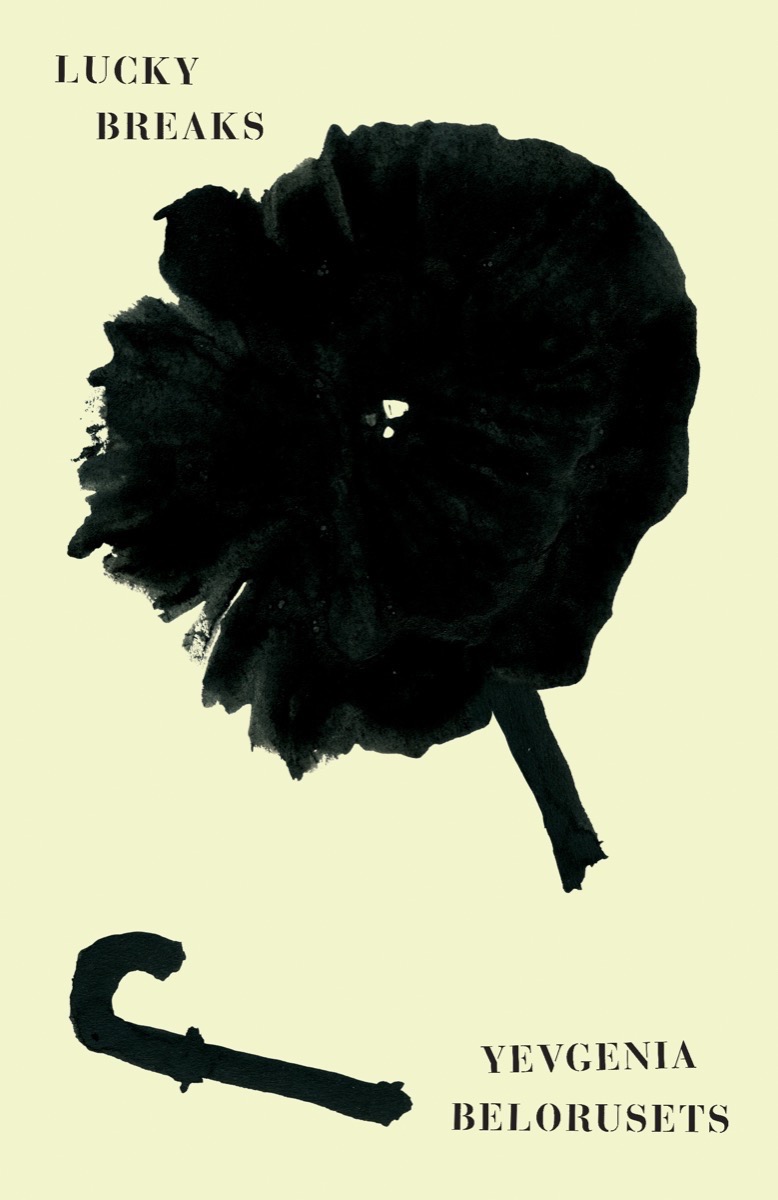
The protagonists of Belorusets’ stories are almost exclusively women, told either directly through the character’s voice, presented as conversations or interrogations, or recounted as the experiences of someone the narrator knows or knows of. As such, the author’s own voice may be reflected in some of the accounts. Refugees and others displaced by war are common. Many find themselves lost and disoriented in Kyiv, longing for a past life or trying to build some kind of existence in the city. They look for work where they can find it. Others belong to an uncertain fate. Like the story of a florist so attuned to her art that she hardly exists outside her shop in Donetsk, but what happens to her when her home and shop are destroyed? Some characters arrive in Kyiv bearing the scars of the traumas they’ve endured, like the woman who keeps trying to rid herself of a broken black umbrella she carries only to rush to retrieve it, scolding it, pouring her pain into this tattered object. There are dreamers and horoscope readers and a woman who visits a cosmetologist as one might a therapist, in the belief that her hands can somehow massage, however temporarily, the griefs she carries right off her skin. Through their troubled, often eccentric circumstances, the characters who inhabit these thirty-two stories contribute to a narrative of life under hostilities in a state of persistent, slow burn. The heat has since been turned on full and these tales become at once more affectionately folkish and more disturbingly real. The stakes are even higher. One recurring character advises the narrator that she wants her identity hidden, and challenges her motives for recording her story at all:

“At least this is why it’s better for you and me if no one knows about me. I could be called to account, couldn’t I? But is there anything I can change? Not only can I not change anything, I don’t dare to. You’re taking my words down, you must be counting on something. Maybe a tearjerker about how we’re all full of hope for a new future, or how the country that we loved became our prison. We’re left to eke out a life in small towns, to die in plundered hospitals, in dirty public wards, or in empty little apartments where there’s no hot water for months and the lights go out at night. Someone will want to hear about us, and then you will be the one invited to a grand festive table, you will be the one they’ll raise a toast to.” (from “Lilacs”)

In allowing such passionate, disaffected voices to come through, Belorusets has, in Lucky Breaks documented a mood existing in Ukraine before  the barrage of headlines that have come to dominate our understanding of her country. That is what a documentarian does. And she is still doing it as bombs fall.

In his informative Afterword, translator Eugene Ostashevsky describes Belorusets’ writing as being most indebted to the early stories of Nikolai Gogol and early Soviet era avant-gardist Daniil Kharms. Elements of the supernatural and the absurd normalized within the realm of the everyday and a concern with narrative fiction appear in her work. Ostashevsky also discusses her controversial choice to write in Russian which raises political and logistical challenges for a Ukrainian writer in a country where most people can speak both languages, but Ukrainian is increasingly favoured and protected. He does admit, however, that her Russian is subtly different from that spoken in the Russian Federation: “it is based on the rhythms and intonations of the Russian of Kyiv and Kharkiv, and continues the Russian-language line of Ukrainian literature.”

Despite the grim subject matter that underlies (and sometimes surfaces) in this collection, Lucky Breaks is filled with warmth and humour. Belorusets’ characters exhibit much the same mix of anxiety and resolve that can be seen in the people she meets today as she wanders the streets of Kyiv and compiles her journal that is, at this time, being translated and shared with followers around the world on a daily basis. However, I can only hope that a wartime diary is not required too much longer.

Lucky Breaks by Yevgenia Belorusets is translated by Eugene Ostashevsky and published by New Directions in North America. It will be released in the UK by Pushkin Press in May.