The Endless Summer by Madame Nielsen

The following review was originally published in the Spring 2018 edition of The Quarterly Conversation which is no longer accessible.

The Endless Summer by Madame Nielsen, translated by Gaye Kynoch. Open Letter Books.

I remember the year I became an adult. I was twenty-four. I had completed one degree, married, and moved across the country to continue my education. After rent, bus fare, and the student loans we’d secured, we were left with $10 a week for food and barely enough to keep the huge empty front room of our apartment heated through the frigid Ottawa winter. So we turned the registers off and retreated to the bedroom. Homesick, we missed our friends and families. By the end of the term we both recognized that something had been irrevocably altered; an intangible light had been extinguished. This was real life. We had grown up. Our own “endless summer,” that fragile Garden of Eden, was over.

“It is not the bite in the apple that makes the Fall. It is the idea of a life after this one-and-only now.”

Perhaps it is something you only notice once it’s gone; the last traces of a moment when you still believed in the possible, caught up in a lingering nostalgia for a time before the burden of responsibility took its toll. If only one could go back and recreate the mythical intensity of the past, eulogize the lost magic, just like the old woman whose most unusual story lies at the heart enchanting novel, The Endless Summer, by the equally enchanting Madame Nielsen.

The Danish transgender performance artist, has, over the course of her career, presented, masqueraded, invented, and re-invented herself many times, even having her birth-identified self, Claus Beck-Nielsen, declared dead along the way. (He was ultimately revived when the lack of any identity altogether proved too difficult to sustain.) The multi-facetted Madame Nielsen is a novelist, poet, artist, performer, stage director, composer, and singer. With The Endless Summer, newly released from Open Letter Books in a translation by Gaye Kynoch, Nielsen weaves a tale that sidesteps the common expectations of narrative progress and character development. Rather, an odd cast of characters is choreographed through a shifting, dreamlike landscape openly reminiscent of David Lynch, complete with digressions into side stories, tales from the past, and glances into the future. The stories are continually being started, interrupted, and resumed again. The influence of Proust and other French novelists is evident, but Nielsen’s wistful narrator, who will ultimately become an actor, demonstrates a strong theatrical sensibility throughout.

The novel opens with a simple statement, the oddly incomplete sentence: “The young boy, who is perhaps a girl, but does not know it yet.” This phrase will be echoed, with slightly different shades, gradation, and detail, throughout the text. Likewise, the other main characters’ defining characteristics or curious features will be continually evoked, elaborated, and elegized as the tale unwinds. This is, as the subtitle advises, a requiem. A deep melancholy is never far from the surface. But first there is the summer, the “endless summer” a nebulous state of being which exists outside of time, a world unto itself “where time and light stand still and the dust rotates and no one does anything, nothing other than living as if they were in a different era and a completely different location.”

The young boy, who is in fact in his late teens, but so slender, delicate, and shy, falls into this other world after meeting a girl, an ebullient, full-figured, dark-haired girl. He becomes her lover and slips into her household, joining her two little brothers, her jealous, gun-loving stepfather, and her enigmatic mother in a little white farmhouse. The last, a dazzling, long-limbed Nordic beauty spends her days riding her beloved stallion through the surrounding fields. The boy and girl spend their days in bed, losing themselves in one another’s bodies. All the while other characters are introduced, ready to take their places in the drama that will eventually unfold, we are warned, to its necessarily tragic end.

The narrative advances through a series of scenes played out on this other plane of existence, a fairytale space without distinct boundaries. It is not clear when it begins, or when it is truly over. This extended moment of impossibility, or rather, all possibilities, draws others into its sphere of influence—young men on the cusp of adulthood, wayward artistic wanderers, and those going nowhere, like the perfectly handsome, utterly unambitious Lars, the daughter’s best friend. Other characters circle, like satellites, around the periphery of this space of suspended reality, and thus on the edges of the story, providing substantive props against the ephemeral timelessness of the “endless summer.” Aware that the cautious reader may be inclined to advance with incredulity, the narrator is quick to advise:

… if the story so far sounds like a dream, a glossy tale of the kind one occasionally—on holiday or a long-haul flight—allows oneself to lean back into and, as if it were sinful, a praline, vanish within for a brief moment, then it’s because life is a dream, a dream from which you never wake up, but which one day is nonetheless suddenly long since over, but you’re still here and can either use “the rest of your days” to forget and “get on with it” or on the other hand, like me, abandon what is and try to retrieve what was, even the tiniest little thing that has been lost, even what perhaps didn’t really exist but nonetheless belongs in the story, call it forth and tell it so it doesn’t vanish but on the contrary now at last becomes real and in a way more real than anything else.

At the nexus of this act of remembering is the almost otherworldly presence of the mother, a romantically idealized woman, cool, impenetrable, and independent, who casts a spell on all who fall within her orbit, including the Portuguese artist half her age who will become her lover. The slender young boy is clearly enthralled by her, by “the inscrutability and the light that makes it impossible” for him to ever be finished looking at her, “because as soon as he glances away for a moment he has a feeling that he has not yet seen her.” She can be thought of as the embodiment of womanhood to which he, the boy who might be a girl but doesn’t know it yet, is unconsciously drawn. His first sexual and gender explorations are deeply enmeshed with the softly rounded body and pleasure-loving spirit of the daughter, but it is the mother who holds him in awe.

The only character about whom we have no solid background, who falls into the “endless summer” with little more than a passing reference to a family that pretended they had money but in truth had none, is the narrator’s own past self, the slender young boy. The rest of the cast, even those who pass through peripherally, have a story, with dramatic beginnings and occasionally exceptional, but most often disappointing or tragic ends. Early on, when he is spending his days lost in bed with the girl, she entertains him with accounts of her childhood with her grandparents in Spain, her discovery of the truth of her real father’s identity, and the details of her stepfather’s inherited wealth and decline into possessive aggression. It is noted that she has lots of stories. He, on the other hand, has only those he creates.

So this story, this winding, dreamy, melancholic tale of the “endless summer” and everyone and everything it contained, where does it lie? In memory? In longing? Or in the romantic imagination of the “weird cobweb-flighty female being” that the young boy, who might be a girl but doesn’t know it yet, ultimately becomes?

The success of this unlikely, sprawling reverie with its expansive cast and uncertain timeline lies in the emotionally absorbing, reflective tone of the narrative. To read is to submit, to trust the voice. The repeated descriptive motifs are reassuring rather than affected. When new characters appear, instantly vivid portraits are created with the capture of curious details and ineffable traits and qualities:

And shortly after midnight, the two Portuguese arrive with their rucksacks, the one, the pen pal, actually not so dark at all, far from it, tall and strong and with golden curls, Peixe, he is called, “The Fish,” but where he comes from they call him “o Vikingo,” the other one is smaller but equally masculine, dark and mysterious, a little shy like a wild cat, the same soundless movements, an abrupt laughter cracking his face in a flash of light that has disappeared before you have seen who he is.

However, the illusory nature of the entire enterprise, this attempt to recreate the transcendent quality of the “endless summer,” is never denied. Little by little, disillusionment and disappointment dilutes and denudes the magic; characters begin to fall out of that other world, and back into this one. But the end of the “endless summer” is as mutable as its onset.

The transformation of the slender young boy into an old woman lost to her memories is never openly explored. It is an inevitability written into the texture of the account. Rarely does the narrator admit a first person pronoun. This is her (or his) story retold from the sidelines of his (or her) life—a life in which “none of the things he promises himself or dreams about will ever come to anything, while all the things he has never wished for or promised himself will happen and amount to all there has been.” As a reader who was, at one time, a girl who was a boy, but didn’t understand it, I registered a particular resonance with The Endless Summer. The experience of living and writing across a gendered expression creates a haunting sense of disconnect, an otherworldliness. But this poignant novel is much more. It is a requiem for the death of dreams, and a hymn to keeping the spirit alive in the exercise of living beyond the moment when you still believed.

“Earth to earth, ashes to ashes, dust to dust.”


Ancient sorrows, modern woes: The Teeth of the Comb & Other Stories by Osama Alomar

Don’t let the current fashionable popularity of flash fiction deceive you—it is a form with a long history in Arab literature, an allegorical tradition to which Syrian writer and poet Osama Alomar proudly belongs. But, as an immigrant living in exile in the United States, his tightly crafted parables and short fictions have a quality that is both timeless and timely. We cannot but recognize ourselves and the world we live in today.

Free Elections
When the slaves reelected their executioner entirely of their own accord and without any pressure from anyone, I understood that it was still very early to be talking about democracy and human dignity.

In his most recent collection,  The Teeth of the Comb & And Other Stories, Alomar employs this traditional manner of storytelling to craft pieces that range from a single sentence to a page or more. Animals and objects—man-made and natural—are often animated to take centre stage, offering philosophical reflections on life, humanity, or wondering at strangeness of the universe. His narrators and protagonists, human or otherwise, speak to sadness, loneliness, and injustice while the shadow of his troubled homeland hangs over their tales. It cannot be ignored. The futility and violence of war is a frequent theme. These pieces may read like age-old wisdoms, but their message is immediate. If they sound timeless, it is because, at the end of the day, little changes.

The Dark Side
The moon wished to punish humans for the many transgressions and frightful crimes they commit against each other and against nature. She decided to hide her lighted side so that they would curb their behavior and return to reason. And so the eclipse took place. But great was the surprise of the moon when she saw millions of people coming out of their houses to enjoy the view of her dark side.

His style is spare and unsentimental. The shortest entries have a sharp aphoristic tone, whereas the longer ones, with a wider stage on which to play out contemporary themes, are painfully heart-wrenching. “Love Letter” is a long message addressed to a woman with whom the narrator was involved. It speaks to intimacy against a backdrop of war and revolution, an intimacy that deepened even after he left the conflict zone. When her letters and emails stop he fears the worst but holds to faint hope. “The Shining Idea,” one of my favourite pieces, is a dialogue between an unconceived child and the man he hopes will give him life. The would-be child sees only the beauty and joy in the world beyond the transparent boundary that contains him. The father he beseeches knows only suffering and poverty and cannot be convinced that his is a world worth bringing another life into.

Time and again, knowledge, compassion and understanding are the ingredients most at risk, or missing altogether in the world Alomar presents us with. His weary narrators and anthropomorphic characters know this well. But, in keeping with the tradition from which he emerges (Kahlil Gibran is one of his heroes), his messages are never forced or dogmatic. They are simply laid bare for the reader to encounter:

 Never Been Touched
A book sitting on the shelf with torn covers and pages filled with comments and notes in the margins said to his colleague who stood behind him, “I envy so much your freshness and your eternal youth!”
But his colleague answered him dejectedly, “I never been touched!”

With over 160 stories spreading across no more than 95 pages, one might be tempted to consume the accessible, entertaining short fictions that comprise this collection in quick succession, swallowing one after another. However, these fables, wisdoms and cautionary tales are best digested slowly, over a few days perhaps. At once beautiful and urgent, they deserve a little extra attention. The chorus of their voices deserves to be heard.

The Teeth of the Comb & And Other Stories by Osama Alomar is translated from Arabic by C J Collins with the author, and published by New Directions.

Revisiting a past review: A little radiance: Farewell, Cowboy by Olja Savičević

The following is a re-post of a review originally published on April 28, 2015. WH Smith Travel have selected this title as part of their Fresh Talent 2018 campaign, so readers in the UK—or visitors passing through airports and railway stations—have a special opportunity to discover this lively, affecting contemporary Croatian novel. Keep your eye out! It would make an ideal traveling companion.

Everything’s the opposite of what it seems: hell is a comfort to the living, while heaven is ordinary blackmail.

A deeply personal piece of unfinished business draws Dada, the spirited heroine of Farewell, Cowboy, from the towers of Zagreb, back to the grimy streets of her hometown on the shores of the Adriatic in this debut novel from Croatian poet and writer Olja Savičević. Once she arrives, her first task is to relieve her older sister of the responsibility of keeping track of their mother who seems to be surviving on a routine of pharmaceuticals, soap operas and bi-weekly treks to the cemetery to visit the graves of her son and husband. But at the heart of Dada’s return to the Old Settlement is a need to lay to rest her questions surrounding the suicide of her beloved younger brother Daniel several years earlier.

Dada is feisty, in keeping with her fiery hair, an attribute she shared with Daniel and their late father who succumbed to at an early age to asbestos poisoning. An aficionado of the western film, spaghetti and American classics alike, her father spent his final years working at the local movie theatre and then, after the war, in a video store. He bequeathed to his son his love of western heroes and a jammed Colt pistol.

Upon her return to the Old Settlement, Dada settles in to her room under her brother’s fading movie posters, gets an old scooter running and cruises through town on her mission to piece together the past. She recalls the eccentric playmates with whom she roamed the streets and encounters a most beautiful young man who appears and reappears, usually playing a harmonica. Meanwhile it seems that a movie crew has moved in to shoot a film on a drab grassed expanse that will double as the prairie for a project spearheaded by no less than a legend of the bygone era of the spaghetti western.

The primary focus of Dada’s pursuit however, lies closer to home. The family’s neighbour, known to most as Herr Professor, a veterinarian who had befriended Daniel, has resurfaced. After a violent attack triggered by rumours about his sexual proclivities, he had disappeared. Months later, seemingly without warning, 18 year-old Daniel threw himself beneath a speeding express train. Now the old vet has returned. And Dada is certain he holds the key to her brother’s death; in fact she is bitterly obsessed with a desire to confront him, to confirm that he is the author of a cryptic typewritten letter that arrived a few weeks after the funeral, a letter that seemed to indicate that Daniel had been trying to contact the sender. Face to face over cake and brandy she cannot quite say what she wants. She grinds her teeth over his melancholy insistence that “I don’t ask anything of life other than a little radiance.” What on earth is that radiance he asks for, she wonders.

This postwar Balkan world is one of decaying architecture, graffiti scarred walls and woodworm rotted buildings. Tourists are moving in or passing through. Modern technology and old customs exist side by side. Dada is a most engaging heroine, her voice rings through the grime and dust of her environs with a cool crystalline clarity and youthful spirit. For example, after tracking down her former room-mate she recalls that her friend had considered herself the last emo-girl:

‘You’re certainly the oldest emo-girl, and probably the last’, I said.
I imagined her as a little old Gothic lady, but little old ladies, at least the ones here in the Settlement, are generally Gothic in any case, it’s in their dress code.
My room-mate and my Ma would get on well, I reflected. They could go to the graveyard together and shave their heads in keeping with the Weltschmerz.
I’m thinking as though she had settled in my head, I reflected, immediately after, anxiously. I really am my sister’s sister.
Sar-cas-ti-cal-ly, I reflected, in syllables.

Savačević continually surprises with the originality and energy of her prose, translated skillfully by Celia Hawkesworth. Images are revisited, lines repeated, like refrains, throughout the novel, creating a very dynamic and original flow. Tragedy lurks in these pages, but what could be a dismal heartbreaking tale is lifted with humour and thoughtful asides. And that is the sense that lingers.


A poetic Pentecost: At the Burning Abyss by Franz Fühmann

I am not certain what has become of the person who first alerted me to the poetry of Georg Trakl, but it wasn’t very long ago and came backward through an interest in Celan. Then, over the last few years, Seagull Books released three volumes containing all of Trakl’s poems including significant variants and early versions, in new translations by James Reidel. I read and wrote about them all even though I had no particular confidence in myself as a reviewer of poetry. I’ve also explored other translations and biographical accounts of the troubled Austrian poet’s short life. So when I became aware of At the Burning Abyss: Experiencing the Georg Trakl Poem by Franz Fühmann, my interest was piqued. Finally, to be fully prepared, I recently read Fühmann’s autobiographical story cycle, The Jew Car.

I thought I was ready.

But no, nothing could have fully prepared me for the experience of experiencing At the Burning Abyss.

Fühmann was an important literary figure in postwar East Germany; a gifted, versatile writer who was no stranger to either reading poetry or fledgling efforts to write it when he first encountered Trakl. It was early May, 1945, just prior to the surrender of the Wehrmacht. As a young soldier in the German army, Fühmann had been granted a few days sick-leave following a stay in the hospital, and was taking advantage of the opportunity to visit his family. As bleak as things looked for Germany at the time, a reckless hope was still smoldering. Sitting with his father after dinner on the evening before he was due to leave for Dresden, he opened the volume he’d chanced to pick up in a used bookstore on his way home. One poem in particular, ominously titled “Downfall,” resonated:

Over the white pond
The wild birds have taken flight.
In the evening an icy wind blows from our stars.

Over our graves
The night bends its broken brow.
Under oak trees we sway on a silver barge.

The city’s white walls ring for ever.
Under vaults of thorns
O my brother we blind clock-hands climb towards midnight.

He knew nothing of Trakl but a conversation with his father that night revealed that the latter had served alongside “daft old Georgie” in the early days of the First World War. But beyond recollections of an eccentric character, Fühmann learned no more about the poet for many years. He would never see his father again, and his poetry book would be abandoned along with his coat and backpack a few days later. But the verse had worked its way into his consciousness and would keep him company and inspire his own desperate scribblings during his years in a Soviet POW camp in the Caucasus.

The Franz Fühmann who emerged from captivity in 1949 was a born again Socialist. He had seen the error of his ways, faced the reality of the horrors of Aushwitz, and rejected the false tenants of Nazi ideology on which he had been raised and indoctrinated. The final story in The Jew Car depicts the arrival of his fictional alter-ego in East Germany, his train journey into a new homeland marked with the composition of a suitably ambitious piece of Socialist-inspired realist poetry. However, his reunion with the decidedly anti-realist imagery of Trakl would soon occur.

Slowly, and steadily, the poems will challenge everything that he thinks he knows about reading and writing poetry, ultimately challenging his Socialist idealism and his own self-awareness.

At several points in At the Burning Abyss, Fühmann reminds his reader that the he is not writing an autobiography, insisting that he is engaged in a meditation on the experience of reading Trakl. However, this experience acts as a fundamental force within his own biography and cannot be read apart from it. His account of his personal response to Trakl is presented in first person singular against a broader examination of how a poem, and a couple of select pieces in particular, can and should be understood. This second thread is conducted as an extended first person plural conversation with the reader. His questions and concerns become our questions and concerns, we are invited to seek answers together.

He wants to know how the poem works on the unconscious, what gives it meaning, and what allows it to work across time and place. At the core of his examination is a conviction that the experience of a poem is necessarily subjective; that:

… a poem does not become a poem because it fulfils certain formal rules, but because a reader constitutes it. Until then it merely appears to belong to the genre of poetry, a dead form, interesting only once the interest in the poem as an artwork awakens.

The reader may take decades or even a century to appear, but if he does not, the poem does not come into being as poetry: there is no objective poetic form that legitimizes something a priori as a poem in the sense of an artwork.

This is then, a highly idiosyncratic engagement with the Trakl poem, but one that assures the reader that his own personal engagement with a poem, any poem, has its own validity. One should not be afraid of understanding wrong, or relating to something others eschew as unworthy. For, as he quotes Rilke in the opening sentence of the book: “poems are not feelings…they are experiences.”

For Fühmann, “Downfall” is the first Trakl poem that strikes him, across two decades from the time of composition, to capture the very moment in which he came to it. The blind clock-hands toward midnight climbing recur and echo throughout the text, joined in time, by other lines from other poems that become refrains, driving and troubling the attempt to resolve the dissonance that grows the further he explores Trakl’s poetry and life.

In his reading, an indication that the Trakl poem might reflect Decadence triggers his initial crisis of faith, if you will. Anxiously, Fühmann opens his text and lands, randomly on a poem filled with shocking imagery—“Night Romance.” He finds a “dreaming boy” with a “face decaying in the moon,” a murderer, a dead man, and a “nun with lacerated flesh” praying “naked before Christ’s travails.” All the features of decadence assembled and yet, somehow, the verses hold an undeniable appeal. Thinking of other poems, Fühmann’s anxiety increases:

What was this morass on which I’d lost my way?

And so it goes. The discussion turns to meaning. How literally can images be understood? Much of the focus turns on the poem “Decay,” but Fühmann insists that Trakl’s entire oeuvre can be seen as one great poem, so the discussion has broad application. Images of decay in all its aspects frequent his poetry, as do “autumn, “evening,” and “garden.” What weight can be applied to the startling images that appear, and to what extent is an exact explanation—a resolution of poetic riddles—possible or even desirable? If a mystery can be answered, is it answerable universally or for the reader alone? And, what role does the poet have in relation to the misery he or she records?

Of course, the questions, Fühmann raises are directly related to the threat Trakl poses to his schooling in the Socialist poetic form encouraged within the GDR. There is no place for mystery—a poem should be understood “at first go.” To rid himself of this contrary influence, Fühmann tries to destroy his Trakl books, but find himself unable to do so. He looks for comfort elsewhere, translating Vitězslav Nezval into German, for example, and finds himself sliding headlong in Surrealism! He seeks refuge in alcohol. For a long while, he struggles to mediate the conflict between the literature (and the grounding ideology) to which he is committed and this Austrian poet about whom, apart from his father’s cryptic recollections, he knows little. Having long professed to having little interest in the writer’s life, he suddenly desires to know all he can.

Shocked by his first encounter with Trakl’s awkward visage inside the covers of the slender biography he finds, Fühmann makes his way through the book in a single, fevered night. He is drawn into the account of “an unliveable life: an existence that fell to poetry.—An existence that fell to drugs and incest; a fall into decay, a plunge into suicide; a life at the zenith of European poetry.” What follows then, is a biography within this memoir, which includes the complete text of the sole eyewitness account of Trakl’s final days in a Krakow hospital.

Continuing to alternate between the analysis of what poetry can tell us about its author and, more critically, what it reveals about ourselves, Fühmann’s personal journey of self-discovery moves forward with an intensity that is powerful, irresistible and fundamentally human. The experience of the Trakl poem changes him and allows him to heal in a way doctrine never could. The reader can feel his pain and his passion, appreciate his conflicts and share his exhilaration when everything finally falls into place. “I believe in poetry,” he says, “because it works like fate—provided you stand within its magic circle.”

Well said, indeed.

At the Burning Abyss by Franz Fühmann, is translated with great dedication and affection by Isabel Fargo Cole, and published by Seagull Books.

One last glance back at 2017, as 2018 dawns

A little more than a week ago I marked the solstice on a rather positive note after another difficult year. The holiday season has been, however, more painful than I had anticipated. The weather has been brutal—as I type this, the temperature is in the low minus twenties, think -28 or -29C with a wind chill factor approaching -37C, and we’ve received about 30cm of snow or more—which has contributed to a marked degree of cabin fever. But what has weighed on me most heavily is a peculiar loneliness, a very personal emptiness, and a measure of anxiety about some of the changes I thought I was looking forward to, like selling my house and moving into an apartment. I’m feeling a little conflicted now, oddly because if my son manages to stay sober, I think less of escaping a bad situation and think more about the advantages of having someone else around, at least until he is well stabilized and ready to move on. (Okay, there’s also the fact that he saved my life a few years ago…)

Taken this afternoon. Does it look cold? Copyright Joseph Schreiber, 2017

However, now that the end of 2017 is upon us, I can distract myself for a moment by looking back over my year in blogging. Although I started this blog in mid-2014, I did not begin to seriously write about books, or venture into the realm of mini personal essays until the end of that year. In the three years since, my blog has grown steadily and, I hope, developed a bit of a reputation for being unclassifiable. This year I noticed a marked increase in traffic from Canada and Australia, a result, I suspect, of my increased engagement with readers and writers from both countries. Still the largest number of viewers came from the US and the UK, followed by Canada, Australia, South Africa, and India. My most popular review written this year was, by a wide margin, of Welcome to Our Hillbrow by Phaswane Mpe. Mine must be one of the only reviews of this book online; it was even cited in an extensive overview of post-colonial African literature—the only blog review cited in the entire article. This book is a classic of early post-Apartheid South African black literature and I can’t understand why it hasn’t attracted more attention—clearly it was being studied extensively this year judging by the traffic generated. The second highest number of views for a 2017 review was for The Major Refutation by Pierre Senges (tr. Jacob Siefring), the third, My Heart Hemmed In by Marie N’Diaye (tr. Jordan Stump) and the fourth for Fleur Jaeggy’s Sweet Days of Discipline (tr. Tim Parks). The 50/50 split between new releases and older titles in this selection highlights one of the advantages of blogging—not being bound to focusing exclusively on recent releases as is so often the tendency in other literary venues you can read and write about whatever books catch your fancy. Or not. This year I read much more than I reviewed here or elsewhere.

My own occasional reflective posts, which always make me feel mildly self-conscious, tend to be very well received, generating more hits than the majority of my reviews. Considering that the reviews typically take me much longer to write, it never ceases to surprise me that people actually want to read my idle ramblings… something to hold on to as I start to finally (yes, finally) tackle my memoir project in the year ahead. I’ve been piddling around on this front, to be honest. But it’s so terrifying to put one’s own life on the page. However, I trust I’m not the only personal essayist to struggle with this conflict. As I’ve mentioned several times in recent months, the work of French poet, essayist and ethnologist Michel Leiris has occupied much of my attention this past year (with much to keep me going in 2018). I had expected I would write some kind of a “review” of Scratches, the first part of his four-part autobiographical project Rules of the Game, yet I can’t quite imagine how to write about this book. It has become embedded in my consciousness, and interwoven with my reading of his dream diary, Nights as Days and Days as Nights, and his massive travel journal, Phantom Africa.

Long before Knausgaard starting dissecting the minutiae of his experience, Leiris was reflecting, musing, analyzing, and agonizing over the stuff of his life and, more accurately, his emotional and intellectual engagement with the world as mediated by language and memory. Scratches begins with his earliest recognition that language held magic and secrets that he could unlock as he came to understand the meanings of words. Throughout the book his discourses, which range widely from childhood amusements to recent events and back again, hinge on the associations he has for certain words or phrases. (Lydia Davis’ remarkable translation seamlessly weaves the French words into the text so that the layers of sound and meaning ring through.) It can be quite wonderful to get swept up in his winding and circuitous streams of thought. However, what I love about Leiris is his idiosyncratic emotional volubility. He easily swings from being proud and confident, to wallowing in despair and self-doubt. If the contemporary “journey of self-discovery” model of the memoir enforces the notion that life has a narrative arc that leads to growth and improvement, Leiris is not the model. In fact, much of the time he simply seems to be travelling in wide sweeping circles without getting anywhere at all. Nor is he wretched enough to stand as a forerunner to the popular misery memoir. But he doesn’t hesitate to indulge in a little morbid excavation of his weaknesses and failures when his mood plummets. I well imagine this annoys some readers, but as someone who has struggled at length with mood regulation, I adore the honesty and the way he somehow manages to drag himself out to firmer ground. Toward the end of Scratches he very nearly gives up his entire autobiographic endeavour worrying that he has reduced himself to “a sort of aged child, a prisoner of a bygone period and henceforth shut off from all action—even thought—involving the future.” In his anxieties, I see reflected my own insecurities about committing to a long term project. He justifies his decision to break off work on his book saying:

Since the literary work to which I am devoting myself with such difficulty seems less and less uplifting and no longer necessary (since it gives me nothing beyond what I put into it myself more or less deliberately), it would be better to abandon it and wait for a more favourable time. And right now the most serious hope I have for recovery is to let everything lie dormant until the anecdotal illness ailing me… and my brain cleansed by this period of repose, I can shed my old skin. To come into a new skin after a long period of obliteration in blankness, like a drum one has beaten too persistently and which, even though its body may still seem in pretty good shape, absolutely must have its vibrating skin replaced by a fresh one.

Of course, he not only recovers his enthusiasm but will go on to produce three more volumes after this.

So, looking ahead to 2018, I have a small selection of books that I am especially keen to read, but I know better than to make any public lists. I do want to continue a steady diet of poetry, learning how to read it more deeply, and write some of my own. But writing and photography have to take centre stage. Most immediately, I am heading to India in February to spend a couple of weeks in Kolkata where I hope to be able to find some distance from home, a wealth of inspiration and a little quiet time to write.

Copyright Joseph Schreiber, 2017

Happy New Year to all. Here in my hometown, and in many cities across Canada it is so cold that outdoor celebrations have been cancelled. But if the meteorologists are right, we should start to climb out of the deep freeze tomorrow as 2018 rolls in.

“I’ve been left all alone”: Hair Everywhere by Tea Tulić

On the day Grandma did not die, Mum had an unusual headache. Her eye began to run away to the left. My brother took her to Emergency. He came back without her.

The terminal illness of a loved one has centred many moving novels and memoirs, but there is something about Hair Everywhere, the debut novel of Croatian writer  Tea Tulić, that sets it apart. The construction is deceptively simple. Almost too simple at first blush. But what unfolds in a flow of very short chapters—some only a few lines, most less than a page—is a sad, gently surreal, fragmentary novel that follows the narrator’s awkward transition from adolescence to womanhood as her mother slowly dies of cancer. Reading like a series of micro fictions, each chapter tells a complete story or, rather, captures a complete memory and, although there is an overall arc to the narrative that evolves, the progression is not entirely linear. It is, in fact, at times rather scattered, mirroring the conflicted emotions of the narrator, and the uncanny suspension of reality that surrounds her family during this time of prolonged stress.

Mum
(Wants to Come Home Again)

When Mum is lying in bed with no make-up on, then she becomes fractious. When she talks to me, I stare at the tip of her tongue. It’s white. I tell her to write everything down on paper. Then she writes how she needs painkillers, which nurses are rude, or what she has eaten that day. When she asks me, writing on the paper, if she will be going home for the weekend, I am both happy and unhappy. But that decision is not mine to make, it is up to the white coats of Olympus who shake the neck of my faith.

They are still saving money on the lighting in the corridors.

The narrative voice is naked, spare, and unflinching. Deaths—accidental, random, and natural—are regularly recounted. Strangers, relatives, and an assortment of pets meet unfortunate ends. The dispassionate accounting feels like an attempt to diffuse the narrator’s anxiety about her mother’s health. There is also a matter-of-fact recording of bodily functions that speaks to the messiness of both adolescence and illness. Having found herself thrust into a caregiving role when she is still in need of support and guidance herself, the narrator seems to be trying to strike a balance between her childhood memories and the mature responsibilities she has been forced to take on. She visits her mother at the hospital daily and supports her when she is occasionally allowed to leave, comforts her through the chemotherapy and resulting hair loss. But back at home she has a younger sister and an ailing grandmother to look after. And although the male characters, her father and brother, tend to appear as peripheral presences, they are not absent. Rather, their silent pain weighs heavily on the household. Her father in particular, is out of work, and crushed with grief and financial fatigue. His daughter is well aware of this.

If this sounds like a dreary and morose read, fear not. There is a melancholy beauty to the prose, allusions echo throughout the course of the fragmented narrative and a measure of controlled sarcasm or mild black humour lightens the tone. This is an essential quality of the narrator’s effort to cope. However, nothing can hide the very real emotional and physical toll of the balancing act she is forced to play between her mother, grandmother, and younger sister. On the cusp of womanhood, she is almost suspended in a grey space where her past and future prospects, hopes and dreams, are bound by the obligations she has to the family members who depend on her. But she does not talk about that directly, what she alludes to is the snake in her stomach. Fear and anxiety are literally eating away at her.

While I watch her lying in bed, I can feel the umbilical cord between us. Something I have tried to cut a thousand times already. And now I hold onto that invisible cord as though I were hanging from a bridge.

Woven into the fabric of the story are continual appeals to the indifferent doctors and nurses, to the church, and to local superstitions, folk healers, and herbal medicines. The family fears that they cannot afford to fight the illness adequately, but the cancer is relentless and, as the narrator reminds her brother at one point, even rich celebrities have lost the battle. As her mother’s prognosis worsens, the grandmother, weakened and ill, but hanging on, grows increasingly bitter as she questions the God who refuses to take her after her husband and other children are all gone and now this last surviving daughter is dying. She seems destined to be “left alone” once more.

In the end, there are no miracle cures, no last minute reprieves. And for those left behind, life goes on, ever haunted by memories. What remains is this unusual and affecting novel of illness, loss and grief.

Tea Tulić was born in 1978 in Rijeka, Croatia. Hair Everywhere was originally published as Kosa posvuda in 2011 and has since been translated and published in Macedonia, Serbia and Italy. The English translation by Coral Petkovich was published by Istros Books in 2017. Further excerpts from the book can be found at B O D Y.

The seduction of ideological extremes: The Jew Car by Franz Fühmann

For months The Jew Car, Franz Fühmann’s autobiographical story cycle, sat on my shelf unread. I had bought it in anticipation of the recent release, in translation, of his last major work, At the Burning Abyss: Experiencing the Georg Trakl Poem. However, for some reason, I could not bring myself to read it. I have never been especially attracted to World War II literature, and with the current resurgence of neo-Nazi sentiments and far-right movements in North America and Europe, I was uncertain if I wanted to venture into a series of stories in which an East German writer traces a path from his enthusiastic adoption of fascist rhetoric as a youth, on through his experiences as a German soldier during the war, to his eventual rejection of Nazi ideology and acceptance of socialism in a Soviet POW camp. I wondered if I had the heart for it, and yet the translator of both volumes, Isabel Fargo Cole, advised me that Fühmann’s personal reflections in At the Burning Abyss would have greater impact and resonance with the background afforded by The Jew Car.

Born in 1922, Fühmann grew up in the predominantly German Sudetenland region of Czechoslovakia, the son of an apothecary who encouraged the development of a strong German nationalism. From the age of ten to fourteen, he attended a Jesuit boarding school in Kalksburg but found the atmosphere stifling. In 1936, he transferred to a school in Reichenberg, where he lived on his own for the first time and became involved in the Sudeten Fascist movement. After the annexation of Sudetenland in 1938, he joined the SA. 1941, he was assigned to the signal corps serving in various locations in the Ukraine before being moved to Greece as Germany’s fortunes declined. He was captured by Soviet forces in 1945. During his years spent as a POW, he would embrace socialism and upon his release in 1949, he finally found himself on German soil for the first time, settling in the GDR where he would spend the rest of his life.

Originally published in 1962, the stories in The Jew Car, which is subtitled Fourteen Days from Two Decades, follow the trajectory of Fühmann’s life between the ages of seven and twenty-seven. Presented with dramatic colour, they offer an attempt to explore the progression of his ideological development during this period. Through an engaging, often ironic voice and well-framed narratives, we watch Fühmann’s fictional alter-ego confront the psychological seduction of the persistent propaganda machine and engage in the mental gymnastics required to continually readjust to accommodate or explain away any evidence that failed to fit with what he has been led to believe.

The title story opens the collection. Set in 1929, the seven year-old narrator is caught up in a wave of rumours sweeping through his grade school. The children listen with a mixture of rapture and fear, to breathless tales of a four Jews in a yellow car who are said to have been travelling through the surrounding countryside, snatching and murdering innocent young girls. When our hero happens to spy a brown car carrying three people one afternoon, it becomes, in his imagination, vividly transformed into the feared mysterious vehicle exactly as described. At school the next day, he is the centre of attention, holding his classmates in thrall until the one person he dearly wishes to impress the most, the girl “with the short, fair hair” neatly puts him in his place. Yet rather than causing him to question his hasty assumptions about the car he actually saw, his humiliation is turned into an increased, abstracted hatred of Jews.

And so the process begins.

Fühmann manages to capture the mixture of naïve enthusiasm, patriotic fervour, and boredom that he and his friends regularly encounter as the tides of history are building around them. He is young, the air is charged with excitement mingled with fear of the dreaded Commune and the anticipation of liberation. At times his young narrator is surprised to catch the worried looks on the faces of his parents and other adults. His faith in the Führer is unshakable and he believes that the German Reich will not abandon the Sudeten German population to murderous cutthroats. This conviction is well captured in the story “The Defense of the Reichenberg Gymnasium.” (September, 1938) Although no violence has yet occurred in his corner of the region at this point, when an alarm summons him and his comrades from the Gymnastic Society to defend the Reichenberg gymnasium from imminent attack, he is ready and eager:

I was excited: I’d never been in a battle like this; the occasional school scuffles didn’t count, the scouting games and the stupid provocations of the police in which I and all the others indulged; now it would turn serious, a real battle with real weapons, and I felt my heart beating, and wondered suddenly how it feels when a knife slips between the ribs. My steps faltered; I didn’t think about the knife, I saw it, and as I passed Ferdl, a sausage vendor who stood not far from the gymnasium, I even thought of stealing off down an alley, but then I scolded myself and walked quickly into the building.

But, as uneventful hours begin to stretch well past lunch time, boredom and hunger start to set in. Ultimately it is decided to send forth a series of provisioning parties to remedy the situation. Young Fühmann is assigned to the third group:

It was a puerile game we were playing, childish antics, and yet murderous, and the awful thing was that we felt neither the puerility no the murderousness. We were in action, under orders, advancing through enemy territory, and so, the five-man shopping commando in the middle and the three-man protective flanks to the left and right, we casually strolled up the street, turned off without incident, made our way back down the parallel street through the tide of workers, Germans and Czechs coming from the morning shift, cut through the arcade, side by side, and at discreet intervals each bought twenty pairs of sausages with rolls and beer.

Fühmann is a gifted storyteller whose poetic prose and ironic tone are pitch perfect, especially in the earlier stories. He creates a portrait of his younger self that is not sentimental or idealized. His moments of empathy for individuals otherwise thought to be inferior are quickly reframed with racist convictions. He does not speak too much about his involvement in direct anti-Semitic actions (though he will in later works). What comes through most strikingly in The Jew Car is the sense of rational isolation that surrounds the individual. Information is strictly mediated, so that otherwise intelligent individuals lose any frame of reference or develop extreme responses to the continual routine of work and deprivation. His steadfast devotion to the military structure will start to weaken as he discovers poetry, although his first published efforts during the war are very much on message. Fühmann will not become a dissident poet until much later, long after the war is over.

The tone of the later stories is soberer, more contained. The narrator describes his conversion to Socialism in terms that border on the religious. He talks about having “scales fall from his eyes” during his training, describes reading Marx, encountered before but now understood in a new light. But he never provides detailed justification—he believes with conviction and is not ready to be swayed. The final tale which describes his arrival in East Germany after his release from imprisonment to join his mother and sister who have been relocated there, is forced and marked by Soviet style melodrama.

In his afterword to the 1979 reissue of The Jew Car, which aimed to address some of the editorial changes made to the original publication, Fühmann noted a shift in tone that impacted the overall flow of the collection:

Probably even while writing I began to sense the inconsistency in this work, expression of a fractured mindset, a switch from self-irony to affirmative pathos that had to lead to a decline in literary quality such as that between the first and last story…

However, although they are autobiographical in nature, these stories are essentially fictionalized—this is not an essay or memoir. That lends the collection a particular power and energy. Yet, there is a clear sense that the ending is idealized and incomplete, as indeed it is. As Isabel Cole’s Afterword goes on to explain, Fühmann’s infatuation with the socialist vision of the GDR will fade as he chafes against the rigid restrictions imposed on individual and creative expression. He will, nonetheless, remain in East Germany for the rest of his life. In 1982, two years before his death, he will publish an in-depth exploration of his personal evolution through his discovery of and affection for the poetry of Georg Trakl. To that work, At the Burning Abyss, my attention can now turn…

The Jew Car by Franz Fühmann is translated by Isabel Fargo Cole and published by Seagull Books.

This review, together with my review of Malina by Ingeborg Bachmann represents my contribution to this year’s German Literature Month. Also related: See my recent interview with translator Isabel Cole, primarily regarding Wolfgang Hilbig, but also touching on Fühmann, which was published at 3:AM Magazine this past month.

Live in wonder. Write in wonder: Malina by Ingeborg Bachmann

As far as I’m concerned no one has ever died and very rarely do I consider anyone alive except in the theatre of my thoughts.

Coming to the close of Ingeborg Bachmann’s 1971 novel, Malina, one might be inclined to wonder if there is anything that can be said about the reading experience. The deeply internalized, fragmented, and operatic-toned narrative, can be—has been—parsed, analyzed, and examined and yet it retains a certain incorruptible integrity. It’s not an easy read, not so much for its technical difficulty, as for the absorbing, exhilarating, and disturbing intensity that pulls you in and holds you hostage until the surreal, dramatic finale in which the narrator virtually writes herself out of existence.

Malina is simultaneously invigorating and draining, richly detailed and frustratingly opaque. To read it is to be caught up in the narrator’s increasingly desperate effort to command her own narrative. And there is an uncommon grief that lingers long after the last notes are struck.

The novel, the only one Bachmann completed before her tragic death at the age of forty-seven, begins almost formally, with a list of characters. There is Ivan, born in Hungary, who works with money at a business that, to protect his future, is designated an “Institute for Extremely Urgent Affairs.” His young sons, Béla and András, who live with his ex-wife, spend time with him regularly. The titular character, Malina, is a forty-year-old civil servant who works at the Austrian Army Museum. Reserved and cerebral, and he shares an apartment with the narrator—a woman who refers to herself only as “I” (Ich—a writer of some renown, although, as in all things, she routinely absents herself, even from the opening credits where she describes in her vocation simply as “a profession (crossed out twice and written over).”

The time is: “Today,” the place: “Vienna.” The narrator’s anxious nature is evident from the first pages of the introductory section which sets the stage for the drama that will unfold in three acts. As she sketches out the essential map of her Vienna neighbourhood and draws the basic lines that connect her to Ivan, her love interest, and Malina, her housemate, she finds grounding in Place that eludes her in Time. “Today” is an almost overwhelming quality for her from the outset—an indication that this “today” will become an increasingly unstable measure as the narrative progresses. “I’m just afraid ‘today’” she warns us, “is too much for me, too gripping, too boundless, and that this pathological agitation will be a part of my ‘today’ until its final hour.”

Malina is then, in a sense, a persistent unravelling of time and the narrator’s psychologically fragile relation to it. Its threads, wound around Ivan in the beginning, and lost through the nightmarish middle chapter, will never quite be gathered again as her personality slowly disintegrates in the final part.

In the first chapter, “Happy with Ivan,” the narrator recounts her first fortuitous first encounter with Ivan in front of a florist’s shop and her immediate knowledge that she is meant to be with him. As far as she is concerned he has rediscovered her, reanimated her buried self, and made her feel whole. He completes her, she claims, in a way she longs to be completed:

At last I am able to move about in my flesh as well, with the body I have alienated with a certain disdain, I feel how everything inside is changing, how the muscles free themselves from their constant cramps, how their plain and diagonally striped systems relax, how both nervous systems convert simultaneously, because nothing takes place more distinctly than this conversion, an amending, a purification, the living, factual proof which could also be measured and labelled using the most modern instruments of metaphysics.

It is a relationship of physical convenience, no matter how the narrator revels in the perfection of their mutual understanding. Ivan is an unadventurous man. He offers little, but expects her to maintain a pleasant demeanour, present a feminine appearance, accompany him on outings with the children, and write joyous stories, rather than the morbid-titled tales he notices in her room. One senses he would prefer her to conform without question, and in her insistence that this is exactly what she wants as well, the narrative takes on a forced, uncomfortable tone. Meanwhile, Malina is, initially, an ambiguous presence who together with Lina, the housekeeper whose name curiously mirrors his own, provides order to what would otherwise be a chaotic home. He looks after her with a detachment that belies the long-standing intuitive connection she claims they have. As a result, we encounter a very strange dynamic within which the narrator herself is a continual source of uncertainty. It is at once unnerving and irresistible.

Malina’s fragmented, inventive text continually defies narrative expectations. One-sided phone conversations, unfinished letters, portions of a story the narrator is writing to please Ivan, and the transcript of an interview are woven in to what is at times a frenetic, highly descriptive narrative—an episode where the narrator is left alone to care for the children for a few hours is priceless. Gaps, unfinished sentences, and repeated efforts at composing correspondences leave curious spaces that can’t quite be filled in. Is the narrator being intentionally elusive, or is her memory or concentration slipping? Is she addressing a reader or talking to herself?

In the second chapter, ‘The Third Man,’ everything shifts. Place and Time are no longer fixed and a long series of nightmarish dreams, punctuated by Malina’s bedside interrogations and ministrations, unfolds like an extended feverish psychosis. The narrator’s father is a persistent cruel and violent presence. He repeatedly tortures, rapes and murders her childhood self in scenes that echo the atrocities of the Second World War as much as the complicated emotional brutality of familial dysfunction implied by the recurring allusions to settings from War and Peace. The imagery is relentless, hellish:

When it begins the world is already mixed up, and I know that I am crazy. The basic elements of the world are still there, but more gruesomely assembled than anyone has ever seen. Cars are rolling around, dripping paint, people pop up, smirking larvae, and when they approach me they fall down, straw puppets, bundles of raw wire, figures of papier mâché, and I keep going in this world which is not the world, with balled fists, arms outstretched in order to ward off the objects, machines which run into me then turn to dust, and when I’m too afraid to go on I close my eyes, but the colours, glaring, explosive, raving, spatter me, my face, my naked feet, I again open my eyes to see where I am, I want to find a way out of here, next I fly up high into the heavens because my fingers and toes have swollen into airy, skycoloured balloons and they are carrying me to the heights of nevermore, where it’s even worse, then they all burst and I fall, fall and stand up, my toes have turned black, I can’t go on anymore.

This stream of torment and horrific dreams, is regularly interrupted with segments of dramatic dialogue in which Malina alternately calms and challenges her. There is little comfort to be found:

Malina: You don’t have to believe everything, you better think about it.
Me:        Me?
Malina: It isn’t war and peace.
Me:        What is it then?
Malina: War.

The final chapter, “Last Things,” brings with what appears to be a resumption of calmer, more rational narrative, but the illusion is short lived. The recorded dialogues between the narrator and Malina continue and become a more prominent feature of the text—almost a necessary prop against which she can frame her thoughts. They also take on a denser, more philosophical tone and, as her relationship with her housemate takes on a greater, more threatening quality, Ivan’s influence declines, and her own grip on her own identity starts to slip. Security in her own gender shifts, she finds it difficult to write, and becomes aware of the changing nature of sentences of all sorts. As a writer, she is acutely sensitive to sentences as if they have a tangible existence and are, for her, part of the very fabric of reality. Early on in the novel she marvels at the perfection of the sentences she and Ivan have shared access to—they hoard telephone sentences, chess sentences, sentences about life in general—but she worries, quite tellingly, that they have no feeling sentences. During her dream sequences, when her father has her imprisoned, her sentences take on an animated form, keeping her company and rising up in her defense, and later, arriving as messages inscribed on stones (“Live in wonder,” “Write in wonder”). But as her affair with Ivan grows cold it is reflected in the way their sentences change (“the chess sentences are lying fallow”), and as her fragile personality starts to disintegrate written sentences also begin to fail her.

One could argue, or at least I would, that Malina is, most strikingly, a novel of the marvel, the power, and the betrayal of the sentence. That may sound self-evident, of course, it is after all, composed of sentences. Dazzling sentences. Sentences that call and echo across the whole of the unconventional narrative expanse. There is an inherent musicality at play, not only through the direct musical notation and cuing that infiltrates the text toward the end, rising to a devastating crescendo in the closing passages, but throughout the work which can be read as an elaborately staged performance. Bachmann commands a wide range of sentence styles—long and winding, rushed and impertinent, suspended and unfinished—to orchestrate a rich and troubling exploration of the dynamics between men and women, the limits of personal identity, and the question of what it means to be alive.

Malina was intended to be part of a proposed Death Styles trilogy. The other novels exist in unfinished form and carry elements and  stories of characters that pass through this one. It is unfortunate that the complete effect will forever remain unrealized. That in no way diminishes the power or impact of Malina, or the influence it has had on many other writers including Thomas Bernhard, Christa Wolf, and Peter Handke.

Translated by Philip Boehm with an illuminating afterword, “Death Arias in Vienna” by Mark Anderson, Malina is published by Holmes & Meier.

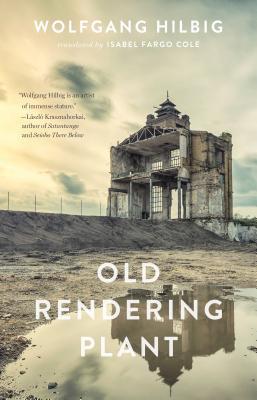
Lost in time with Wolfgang Hilbig: Old Rendering Plant

It is easy to become lost in the dense and convoluted narrative Wolfgang Hilbig unspools in Old Rendering Plant, the most recent translation of his work to reach English audiences. This slight novella invites the reader to wander, with the narrator, through the fields and along the pungent waterways that extend beyond his small East German town. As he rambles on, caught up in his memories of the past and hopes for the future, it’s easy to get swept up—and find oneself disoriented—amidst the industrial ruins where he is forced to confront the dark echoes of recent history and the expectations of the socialist state. It may be, especially for those unfamiliar with Hilbig’s idiosyncratic, stuttering prose, a little unsettling at first, but if one is willing to forego linear narrative expectations, an unforgettable, immersive, atmospheric reading experience awaits.

I read this book last summer to write a review for The Quarterly Conversation. In fact, I probably read it three times over to be able to read and articulate an opening into the narrative, but every time my appreciation of this moody, filmic text increased. As a critic, I derive the most satisfaction from writing about complex, unconventional narratives. My goal is not to give a definitive reading, but to explore the possibilities and questions offered by a piece of literature, while leaving a reader to find his or her own answers (or further questions, as the case may be). It was a sheer joy to write about this book.

My review from the Fall 2017 Issue of The Quarterly Conversation is reproduced below:

Old Rendering Plant by Wolfgang Hilbig (Two Lines Press)

Long after he escaped East Germany to settle in the West, where he continued to reside until his death in 2007, Wolfgang Hilbig remained bound to the darkened landscapes of the GDR. He was not one to downplay the bleak and oppressive qualities of life amid the abandoned mines and crumbling factories of his hometown, Meuselwitz, and his dense, swirling prose evokes a world of strange, suffocating beauty. But his emotional attachment to his birthplace and his complicated misgivings about the benefits of reunification, left him forever torn between East and West—a conflict captured clearly in the stories that comprise the second part of the collection The Sleep of the Righteous. By contrast, Old Rendering Plant, the latest Hilbig offering to be released in English, presents a narrative firmly planted in the GDR that does not travel far beyond the immediate environs of the narrator’s home; yet this tightly defined arena affords the perfect space for a multi-layered exploration of one man’s struggle to define himself against the restrictions and expectations imposed by family, class, history, and circumstance.

Wolfgang Hilbig was born in 1941 in Meuselwitz, near Leipzig. His father disappeared at Stalingrad, so he was raised by his mother and grandparents. His illiterate Polish-born grandfather served as an important father figure, encouraging his aptitude for sports. However, as translator Isabel Fargo Cole notes in her afterword to the novel I, his early obsession with reading and writing soon alienated him from his own family. The works of Poe and the German Romantics held a particular appeal for the budding poet. Following his military service he spent years working in local factories, where, at least on the surface, he epitomized the ideal of the worker-writer that the GDR actively encouraged. Yet, unwilling to follow accepted scripts, Hilbig’s writing was seen as too challenging and obscure, and it soon drew the unwelcome attention of the authorities. Ultimately the desire to write would win out, but the tension between duty to work and to literature became a central theme that he returned to again and again.

In Old Rendering Plant, an extended monologue that slips in and out of passages of pure stream of consciousness, this tension is implicit. Originally published as Alte Abdeckerei in 1991, this novella is a meditation on the formation of identity in an environment that contains a complex network of buried secrets. The narrator is looking back from a vague and indeterminate adult perspective at that point of transition from adolescence to maturity. His is a restless narrative; memories and waters sweep by as he traces and retraces a path along a brook that, bordered by stands of willows, carves a channel through the fields on the outskirts of his hometown. As a child he found refuge in this landscape filled with magic, possibility, and adventure, armed with a wooden sabre and an imaginary foe. It was a place to feel safe and protected.

One of his favorite playgrounds was, against all adult admonishments, found in the fragmented ruins of a coal plant. Here he waged countless fanciful battles until one evening he slipped and fell off a concrete platform. He was fortunate to land in the grass, but later that night he remembered hearing people staggering across the platform above him, and he awoke to find on his right leg evidence of the substance that had caused his fall: “a dried mire, a black-green slurry mixed with blood.” This incident marks the beginning of a loss of innocence, the first intimations of the existence of dreadful truths that, as the narrator ages, begin to take on a greater, more complicated and disturbing significance. As the narrative unfolds, his reminisces and reflections trace his movement toward a reckoning. Gradually, as layers of memory are stripped away, he approaches an clearer understanding of the forces that have driven him. It’s not a comfortable space he finds.

The narrator is a solitary personality, both as a child and as a man, given to wandering the pathways on the edge of town during the hours that mark the transition from late afternoon light to early darkness. He speaks of his family without affection, referring to them as “my relatives.” He passes from childhood into manhood almost imperceptibly, when the adults in his life no longer show interest or concern about his habitual lateness, his tendency to come home after dark. There is only one mention of an anecdote involving a friend, someone he visits on a brief, aborted attempt to break free of the house and town in which he grew up—during that visit, an encounter with the bloated corpse of a dead rat, which he is not even entirely certain is not an illusion or dream, sends him hurrying home. It is perhaps the thought that the horror he hopes to escape is bound to his being, rather than his environment, that frightens him so.

Central to the narrative is a rendering facility hidden among the ruins of the former coal plant. The narrator’s fall from the cement platform was his first direct indication that something nefarious existed there, but he had always been aware of the signs of its presence:

As a child I knew it was the smell of the milk-colored current that washed down the brook, bubbling and steaming like warm soapsuds in the evening. I knew that the smell soaked the banks and seeped under the fields; the mist over the river channel was this smell, and the mist that rose from the topsoil too, infecting everything that grew in the fields, and it rose from the meadows, the grass of the paddocks smelled of the river mist’s cloying essence, the bushes on the banks thrived amid this smell, a smell of flesh . . . old, useless flesh relinquished to the waters, washed its smell through the land to the east, I knew this as a child. Tallow sheathed the snarls of grass on the brook’s edge, ancient fat clung indelibly to the slopes of the embankment; it was a brew of rancid fatback, even covering the paths, boiled-out horns, bones cooked to the point of disintegration . . . the old river-willows luxuriated in this nourishment; countless bluebottles, ill from overfeeding, dripping like glossy shapes made of wax, skimmed sluggishly through the foam, and this shimmering foam, rapidly turning black spun lazily on the water by the willow’s dangling roots.

At a later point—he is at a loss to even specify exactly when, the experience was so intense that it remains trapped in a level of reality between dream and waking—he happened to witness cadavers and sick, terrified animals being unloaded at the site. This plant, nestled among the ruins, was named Germania II after the mine that had once supplied the old coal factory, and it becomes, for the narrator, the source of such complicated questions and emotions that he finds himself unable to pass beyond the bridge and railroad embankment he encounters on his regular sojourns. The smells, memories, and anxieties that arise at this location routinely force him to turn and wearily head for home.

The rendering plant was rumored to employ society’s discarded men. At a time when radio reports of missing persons, and rumors of dangerous foreigners hiding in abandoned buildings, were commonplace, the workers belonged to a stratum of mysterious characters, unnamed and unseen by the light of day. The particular autumn forays that form the pivotal thread of this monologue are motivated by the narrator’s concerns about what his own future holds. He is remembering his final year of school when, with graduation approaching, he has a critical decision to make. This is where his fanciful nature, his defiant poetic spirit, begins to stir as he briefly considers becoming a gardener, inspired by the end of Candide rather than by any fondness for the tilling the soil, and entertains an idyllic life as a miller. He seems oddly determined to disturb his family and his teachers, ultimately announcing his intention to work at Germania II. With a mix of horror and fascination he develops an obsession with the process of rendering carcasses to make soap, and attempts to seek out the elusive workmen. But there is something more complex at play.

This is, at its core, a search for identity and the expression of individuality. The question of where one is heading, is necessarily a question of where one has come from:

my strange interest in bad places was an unacknowledged, unclear interest in our origins . . . because I had not actually experienced the affronts that went with the soil we had sprung from.— On reflection, we were actually exiles. Of course, only in the indefinite way in which all our names were sheer hubris . . . all our names, titles, and nouns. So we were not exiles based on some neat solid idea, but exiles out of instability . . . out of ineptitude, ignorance, antisocial tendencies; we hadn’t been torn from our roots, we had lost our rights, we were in exile because we’d never had roots or rights; we’d never even sought to find them, perhaps we constantly sought the world’s most noxious regions in order to rest our rootlessness, like gray vegetation, feeding on the ground’s nutrients but giving nothing back, we settled in the desolate provinces that were the strongholds of evil, we settled between slag and scrap where we could run riot, rank and uncontested.

What, then, do those most reviled of workers say about him, and his people, who are similarly dispossessed? Is it a matter of degree that divides them? Is it destiny? As the narrator’s monologue continually circles back to this place of darkness and all of the memories that point in its direction, he rekindles the oppressive existential crisis that once drew him to fantasize about disappearing into its foul depths.

As the narrative progresses, Hilbig’s characteristic prose, which flows in fits and starts, like eddies in a stream, swirling, reversing, and moving on again, is hypnotic and disorienting. It is easy to get caught up in the beauty and rhythms of his language, momentarily losing one’s temporal bearings. As such, it is especially ideal for this type of lyrical reflective monologue. When, on occasion, he slides into passages incantatory stream of consciousness the effect is exhilarating. Translator Isabel Fargo Cole has a strong sensitivity and fondness for his idiosyncratic style that comes through in this, as in all of her Hilbig translations (including The Sleep of the Righteous and I).

Reading Hilbig, I often find myself stopping to reread a section before moving on. I revel in losing myself in his long, winding sentences and paragraphs that can stretch on for pages. This can, on the surface, draw allusions to Sebald, though, Hilbig’s prose is quite different in quality, and unlike a Sebaldian narrator, the protagonist of Old Rendering Plant, although he sets out again and again, finds it difficult to push beyond the boundaries his memories and fears have imposed. What is similar in the reading experience, however, is that both can stimulate a desire to distinguish points of departure—with Hilbig, to find those moments where reflections, memories, and memories of dreams diverge, reinforcing temporal dislocations.

The narrator’s troubled forays are rooted in his reluctance to bend to the fate that awaits him, choosing a practical apprenticeship and accepting the bonds of adulthood. He harbours a Romantic sensibility that can only find expression in defiance, in word if not in deed. This resistance continues until one evening when he wanders farther afield than intended. Disoriented, he attempts to make his way back to town, only to witness a dramatic event—an apocalyptic cataclysm resulting from the extensive economic hollowing of the land that tears a wound into the darkened recesses of the soul of his nation and ultimately frees one rootless exile whose lonely monologue culminates in a rousing Joycean climax.


Some thoughts on Michel Leiris’ Phantom Africa and a link to my review at 3:AM

It’s no secret to my literary friends that I have been somewhat obsessed with French writer Michel Leiris this year. I will address this fact further at a later date, but essentially, it is his autobiographical writing that fascinates me—it’s a very internalized, yet sharply observant form of writing about language, memory, and experience. In his epic journal project, Phantom Africa, a detailed, personal record of his experience as part of the Dakar-Djibouti ethnographic expedition in the early 1930s, one see him develop as a writer as the weeks and months past. With a background as a Surrealist poet and an essayist, he was a strong writer at the outset; what evolves over the course of the journey is an uncanny ability to lay himself open on the page with a distinct, idiosyncratic honesty. A discussion of this development forms the primary thread of my review of this critical work, published earlier this week at 3:AM Magazine.

However, the publication of this valuable document  in English, at this point in the ongoing post-colonial narrative, holds an importance that I only allude to in my critique. Leiris’ primary role on the expedition was as secretary-archivist. Ethnographic study was, for all intents and purposes, a mechanism of colonial control and exploitation. Thousands of artifacts, many with profound cultural and spiritual meaning, were collected for display in museums back in France. Some items were purchased, others taken by force or deceit, but in the end, it was all facilitated by an exercise of the power of the colonizer over the colonized. Leiris is not unaware of this fundamental inequity and he does express considerable concern and discontent with the ethics of the entire colonial enterprise, but he also admits to enjoying the thrill of the raid. Of course, it is not appropriate to measure a man outside the context of his times. Leiris’ true gift here lies in is his candid, unedited, record of the events he knows of or takes part in. It forms a vital contribution to the argument in favour of the repatriation of lost art and artifacts to Africa.

Phantom Africa, translated by Brent Hayes Edwards, is published by Seagull Books. My 3:AM review can be found here.