My father’s library: A very personal reflection

Originally published in December, 2015, I have updated this essay with an addendum.

I was standing in my father’s library last night, looking for a book I could not find, but as I scanned the titles I began to read the shelves as life lines, like the lines that always creased his forehead and fanned out from the corners of his eyes as he squinted through the windshield or glanced up into the rearview mirror of the car. For as long as I can remember, my father never drove without a grimace. The shelf lines are deep and distinct. His love of classic literature represented in tattered hardcover volumes with faded lettering on the spines. His life long obsession with Russia marked with rows of history books, discourses on Stalin and Marxism taking up more space than I’d remembered. And the Soviet literature, of course. Then his more recent forays into western American literature, Ivan Doig, Wallace Stegner. I wonder when he ever took the time to read. When other men might have eased into a life of retirement, my father resisted. Retirement is, like false teeth or hearing aids, for old men. He is 87.

My father is one of those men who, living by Dylan Thomas’ dictum not to go gentle into that good night, has spent his life fighting death with massive doses of mega-vitamins, a deep-seated distrust of doctors, and the belief that if one keeps on working, dedicating oneself to physical labour day after day after day, the Grim Reaper will never get a foothold. Ever. That means continuing to struggle with wheelbarrows full of wet cement, devising new projects, and never turning his back on a beloved old Mercedes that has broken his heart and nearly cost his life a few times. No matter how bent and weary, despite occasionally falling into the wood stove (“it’s nothing”), my father shuffled on defiantly until last Sunday morning when he fell and suffered a massive stroke in the simple human act of putting his pants on, as we all do, one leg at a time.

Yesterday, Christmas Day, was my first opportunity to get up to see him. Fate was not conspiring to make it easy – unless I am reading it wrong – but my car collapsed before I even made it out of town. For better or worse, we were across the street from an established mechanic shop and outside the house of a family who kindly took us in out of the -21c weather until we could make arrangements to get up to my parent’s house, a little cottage in the woods outside a village about 2 hours north of the city I live in. Long story short but one of my brothers was able to drive us, when attempting to rent a car proved impossible. From there I drove my mother, in her car, to Red Deer where my father is hospitalized – a further hour each way.

My first reaction to seeing my father helpless and restrained to his bed was, naturally, heartbreaking. But as my daughter and I took turns holding his hand, stroking his now smooth forehead, witnessing the genuine joy in his eyes – so pleased to see us even if he won’t remember – I realized that I have never, in my life, felt closer to this complicated and difficult man. Meanwhile, my son, hung over and fighting a panic attack, held back, not ready yet to come close. And that’s okay. They have had their own challenges over the years (the long hair and beard chief among them), but he and my father are, in their way, remarkably close. They have gone to the opera together and Thomas has already been given some of his grandfather’s most precious books.

6927247731_1be746041a_z
A childhood favourite of my father’s. My son keeps it safely in a plastic bag.

My father has never been an easy man, but as I grew older I was able to appreciate how harsh his own upbringing was, and to recognize in him the mood disorder we both share, even if he denies its existence. I learned to leave him space, to meet his outbursts without taking them too deeply. After all, how could I, the intellectually inclined, queer black sheep of the family, not love a man who worked in construction camps in remote Ontario, learning the electrical trade organically, until he could save enough to money to do what his family always discouraged – move to New York City and enroll at Columbia in his late twenties. He studied engineering, but he should have been an academic if he could have justified the path. His greatest thrill was reviewing opera and classical music performances for the student newspaper. His love of all things Russian also stems from this era – I am not entirely certain of the exact genesis, but seem to think it may have involved a woman. Hard to imagine,as my father never struck me as the romantic type but he did, in his younger years, bear a striking resemblance to Humphrey Bogart. Maybe there was smoky Russian woman in his past.

As it turned out, he never finished his degree, in those days it wasn’t necessary for an engineering designation. When he met and married my mother in 1957, school was abandoned for full-time employment and, over time, they would move to rural western Canada where he would pine for the New York of the 1950’s while simultaneously looking for more and more remote locations in which to settle. These last few years, working away in defiance of death in a cottage outside of Caroline, Alberta, have probably been some of his happiest. And now we don’t know what the future holds. In the months ahead as my brothers and I seek to find accommodations for our parents, I want to make sure I can look after the library, because unlike the countless carefully labelled jars of salvaged nut and bolts that insulate his workshop, for me, this is where his heart lies.

I want to curate it for him. Whether or not he is ever able to read again, I know he would want the company of some of his books if possible in the future. And I want to trace and record those shelf lines in his honour.

Update: My father did recover to return home, against his doctor’s orders and, for a time managed better than expected. On July 5, 2016 he suffered a stroke and was involved in a head-on collision (as to which came first it will never be known). Remarkably he survived the initial trauma and the stroke, but further complications continued to arise in hospital and he passed away on July 20.

In the midst of all this, my mother was taken to the hospital on July 6 due to infected sores on her feet. When she arrived her oxygen levels were less than 60%. Her lungs had been so restricted by long term effects of osteoporosis that the exchange of CO2 was severely impacted. A respirator failed to reverse the situation, and she passed away on July 9, 2016.

Within two weeks, we lost them both.

Winter solstice (again): 2015 – The year in review

I tend to run solstice to solstice, so this seems as good a time as any to pull together my thoughts about the year that was. I debated the conventional “best of” list affair, but somehow that is not reflective of the way I read or engaged with literature this year. I began the year still finding my footing as a book blogger, my earliest reviews tended to be less critical, more personal. By the end of the year I feel I have endeavoured to establish a more critical but, hopefully still accessible approach. Off my blog, it was an honour to cap off 2015 with my first review on Numéro Cinq where I have been invited to join the masthead. I am most thankful to Douglas Glover, the fine editor of this fine magazine, for having faith in my ability to write.
8294617299_b22c0cd186_z(1)I read and write about books as a an effort to strengthen my own skills both as a reader and a writer, but behind it all is a writing project of my own that has been struggling its way into being, seemingly with an infinite number of forays down paths leading to dead ends. So the following is a review of the year and, along the way, a nod to some of the books, new and not so new, that kept me company.

Reading in translation: I have typically read widely, but I never stopped to focus specifically on literature in translation, or, for that matter, to even think of much that I did read as being translated – sounds odd, I know, I think I just thought of myself as someone who tended to read internationally. Joining a shadow jury for the IFFP and then devouring as much of the BTBA long list as I could manage was, for me, a significant turning point in the way that I saw and focused my reading. My books are now shelved (or stacked) by original language. Apart from English I read books in 20 languages over the past year; German, French, Afrikaans, Czech and Spanish topped the list.
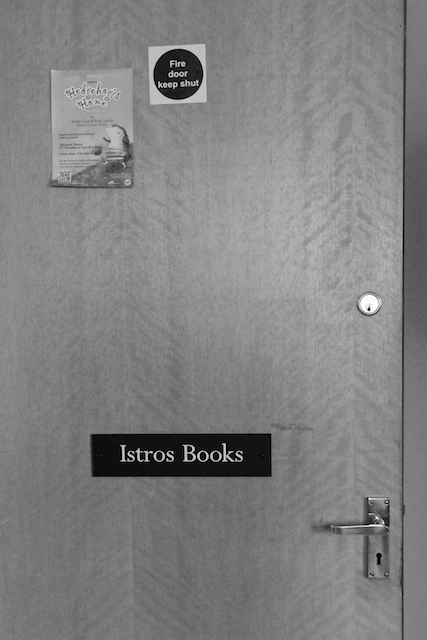
istrosIndependent and not-for-profit publishers: This year I became more conscious about looking to and supporting independent publishers. I was already well aware of Istros Books, a small UK publishing house dedicated to bringing Balkan and Central European writers to an English speaking audience, but this year I had the pleasure of meeting with publisher Susan Curtis, and visiting her closet sized office in the heart of London. She has been a most supportive influence in my development as a reviewer, and because I believe in their books and trust her instincts as an editor, I always look forward to their new releases. I also became conscious of other publishers including And Other Stories, Twisted Spoon, and Two Lines Press, just to name a few. I would reckon I bought few books from major publishers over the course of the past year, and trust me, I bought a lot of books!

2015-10-22 11.21.29Seagull Books: Here I have to credit (or blame?) Anthony of Times Flow Stemmed for bringing Calcutta based Seagull Books to my attention in recent months. I may be late to the party as they seem to have a core of passionate devotees. A book from Seagull is, quite simply, a finely crafted treasure, a reminder why books will never be supplanted by their electronic versions. They are also willing to take on authors or works that other publishers often balk at as witnessed by their impressive German, Swiss, French and African literary offerings, but any publisher who can transform a child’s tale by Thomas Bernhard into a huge, gorgeous picture book for all ages is alright by me!
23818667295_d1e4f92c94_zSouth Africa: I have had a significant interest in the literature of South Africa for a number of years but this spring, feeling especially isolated and unhappy in my present circumstances, I decided, rather suddenly, to visit the country for the first time. I aimed for the solstice, effectively trading what would have been summer solstice here in the north for winter solstice in the southern hemisphere. I spent time with a dear friend in the Eastern Cape, then kicked around Cape Town and dropped a small fortune on books.

An ending does not give a life meaning: On my last full day in Cape Town, I sat in the Company’s Gardens, took the notebook I had carried and scribbled in, back to front as is my habit, throughout my journey; opened it to the first page and began to write. I felt I had reached a point, perhaps of closure, a space in which to truly start to pull together my endless personal writing project. I was certain I could, from that vantage point, look back over the months to June of 2014 when I walked away from my job, wildly manic after a period of unbearable workplace stress, and finally begin to give shape to that story I had been trying to tell for so long. I was at an end, of sorts, so I thought, and now I could work back.
14344933323_66912ab5a8_zBut I was wrong: Just over two weeks after I returned home, a pulmonary embolism I had unknowingly developed, a souvenir most likely of my recklessly long flight back, triggered cardiac arrest – in my sleep. The quick response of my son, who happened to be home, saved my life. I nearly reached that “end”, not the one that I imagined would be the point at which I could render my particular life experience and write some meaning into it, but an end final and complete. One that would have left me mute, distorted in the memories of those who have known me. The story would no longer be mine.

So what of writing? That is most critically the end to which I read, seeking ways into a story, or stories, I that need to be able to explore – to ultimately put behind me. I can write easily about other people’s words but I choke up on my own. And so the following list of books are those which spoke to me this year as a reader and a writer. I read over 90 books and enjoyed many including: the long overlooked Hansen’s Children by Ognjen Spahic, Ivan Vladislavić’s Double Negative, While the Gods Were Sleeping by Erwin Mortier, Can Xue’s The Last Lover, Marlene van Niekerk’s monumental Agaat, not to mention her wonderful Swan Whisperer from the Cahier series, and  Primeval and Other Times by Olga Tokarczuk. I have, by the way, excluded from this accounting a host of writers I expect to like and therefore read regularly, often repeatedly, including Bernhard, Sebald, Borges, Coetzee, Damon Galgut, and, added to the group this year, Bohumil Hrabal.

But the following books were, for me, the most vital. Thbirdse order is chronological, as read:

The Alphabet of Birds (And Other Stories) S J Naudé (Afrikaans/tr. SJ Naudé)
* This debut collection, of long, simmering, often disturbing, stories is simply some of the most sensuous work I have ever encountered. The characters are typically groundless, searching South African ex-pats, uncertain residents trying to find their place, and or those suspended somewhere in between.

atavisms


Atavisms (Dalkey) – Maxime Raymond Bock (French/tr. Pablo Strauss)
* The thirteen stories that make up Atavisms reach back hundreds of years, stand in the present, and spin into the future to explore the Québécois experience – at the personal and the political level. Bock skillfully employs a variety of genres to create what reads, in the end, as a mulit-facetted yet cohesive whole. Most impressive.


The Elusive Moth (Open Letter) – Ingrid Winterbach (Afrikaans/tr. Iris Gouws & Ingrid Winterbach )
* This novel about an entomologist in search of some way to fill or heal an ache that even she is at pains to articulate becomes an evocative exploration of memory, loss and anxiety. The story unfolds through scenes that repeat motifs, imagery, and fragmented conversations; set against racial tensions building in the small town where she has come to conduct research. The result has an unforgettable cinematic, art film feel.

 On Wing (Dalkey) / Signs & Symptoms (Twisted gal_on-wingSpoon) – Róbert Gál (Slovak/tr. Mark Kanak/Madelaine Hron)
* As I have tossed my own writing goals between fiction and memoir, happy with neither, I had sensed that an experimental approach might be part of the mix. However I had been frustrated with many of the works I had encountered – at least in so far as they spoke to me in a meaningful constructive way. With On Wing and then Gal’s earlier Signs & Symptoms I finally encountered works that I could enter into with my own observations and begin to map out ways of talking about the essentially philosophical issues I want to address. Re-engaging with philosophy years after my formal studies in the field, has also been critical to framing the way I view the essentially ontological questions I wish to articulate. So I am most grateful to Róbert for both his writing and his encouragement.

A Sorrow Beyond Dreams (Farrar Straus and Giroux) – Peter Handke (German/tr. Ralph Manheim)
* This 69 page memoir, Handke’s finely wrought tribute to his mother written within months of her suicide at the age of 51, not only paints a careful and delicate portrait of a woman trapped by her circumstances, but offers reflections on the challenges of telling a true story – distilling an entire life to the essential elements – when it might be easier to simply make up stories, to, say, write a play. A whole life is messy to write about with elegance. Handke succeeds.

dreamhorsesA Dream of Horses & Other Stories (Roundfire Books) – Aashish Kaul
* This is a collection of dreamscapes populated by seekers of truths, purveyors of words, storytellers and readers. Most of the protagonists are writers, negotiating the fine balance between truth and imagination, struggling to capture the point of intersection in words. At least in my own experiences as a writer, or would-be-writer, that is what spoke to me throughout this melancholy, impressionistic book. And that is why it has to be on my list.

Vertigo (Dorothy Project) – Joanna Walsh
* Short story collections dominate my favourite books this year. It was an intentional focus, again with an eye to becoming more confident with medium. To that end, I recognize that the stories I am drawn to tend to have narrative arcs that are less pronounced, or more subtle, than some may like. The writing is typically more evocative, more ambiguous, more difficult to define and pin down. Like Vertigo – brutally sharp, spare and gorgeous, cutting to the quick of everyday life – an exquisite piece of work.

Dry Season (Istros Books) – Gabriela Babnik (Slovene / tr. Rawley Grau)
* I read many fine and challenging works from Istros Books this year, but the most stunning and devastatingly original has to be the EU Prize winning novel Dry Season. This tale of a love affair between a 62 year-old Slovenian woman and a 27 year-old man from Burkina Faso breaks every expectation, weaving African magical realism into a layered metafictional narrative that culminates in an ending so unexpected that it suddenly throws everything into a new light. Or does it?

sleepSleep of the Righteous (Two Lines Press) – Wolfgang Hilbig (German/tr. Isabel Fargo Cole)
* 2015 saw the release, for the first time in English, of two works by the late German author Wolfgang Hilbig – both championed and translated by Isabel Cole (The other, I, from Seagull Books is waiting on my shelf.) The magic of this collection, set in East Germany before and after re-unification, lies in the atmosphere created by the long sentences that flow, like a stream, back and forward again. Starting grounded in a harsh reality the narratives slip into a subtly surreal, gray-toned, world where reality blurs at the edges and memory takes on a haunting, dark quality.

Adventures in Immediate Irreality (New Drections) – Max Blecher (Romanian/tr. Michael Henry Heim)
* It may well be that my most memorable read of the entire year is one of the last – an impulse buy if I can be honest. A prisoner of the plaster body casts that were the standard treatment of spinal tuberculosis, Blecher’s creative imagination penetrates the experience of being in the world at the level of minute, intimate detail and manages to capture with acute sensitivity those moments of reality in flux and flow. I don’t know how unique this way of interacting with the world is, but as someone who has always had a discordant, dysphoric relationship with his own body, there is more for me, personally, in this book than I can begin to express. A fine closure to a year of excellent reading experiences.

Finally I am most grateful for the conversation and company of the book bloggers and twitter literary folk with whom I have been so fortunate to engage over the past year. I have a dearth of book lovers in my real life. I was at a Christmas party the other night and a game was played in which we were each to share our three worst Christmas gifts – two true and one lie. I was saddened how many people included books among their worst gifts ever. Breaks my heart. Bless you all for keeping me (somewhat) sane.

A look at two winter treasures from Seagull Books

It may not be winter by the calendar (yet), but here, where I sit, north of the 49th Parallel and west of the Rocky Mountains, it is a perfect wintery day. The snow has been falling, no too much to be fair, but the wind has been playing with it, sweeping it into drifts and coating the roads with ice. A good day for a good book.

2015-11-24 20.04.02

In recognition of the German Literature Month reading project that is drawing to a close this week (a growing list of over 120 reviews contributed by participating bloggers can be found here) I wanted to call attention to two very special books that not only feature German authors, but celebrate the book as a work of art. Both have winter themes and are published by Calcutta based Seagull Books.

Victor Halfwit: A Winter’s Tale by Thomas Bernhard is a short fable lavishly illustrated by Sunandini Banerjee. Listed in the Seagull catalog as “Children’s Literature”, I would suggest that this is, aside from being an opportunity to introduce a child to Bernhard early (and who would not want to do that?), a book to speak to the child inside. The story is essentially classic Bernhard. On a cold winter’s night, a physician crossing through the forest on his way to see a patient, stumbles, quite literally over a man lying in the snow. This man with the improbable name of Victor Halfwit is legless as the result of an accident and now, most unfortunately, his wooden legs have “snapped in the middle, as wooden legs do”, leaving him helpless and facing a miserable end. He had been on an ill-conceived attempt to win a bet with a miller who had wagered that he, Mr. Halfwit, would be unable to make his way from Traich to Föding, through the snowy forest, in just one hour, on his wooden legs. The faint chance of winning 800 schillings – the price of the finest pair Russian leather boots, something he had long desired – was too tempting, so Victor took the bet and nearly proved the miller right. Almost. But then, even a happy ending would not be without it’s bitter dark irony. This is Bernhard after all.

Taking a sentence or two at a time, this tale is presented in the company of rich, glorious collages. Drawing inspiration from famous artworks, medical illustrations, Indian imagery, playful designs and so much more, each page turned presents a new, original background to compliment the passage in quite unexpected and infinitely wonderful ways. I will confess that I ordered this book without paying much attention to the description. I knew it was Bernhard, I knew it was illustrated, but I was completely – and happily – caught off guard by this large, most gorgeous book when it arrived in the mail. I had expected something special, but honestly I had imagined something more modest. As a gift for a Bernhard fan or a lover of visual arts, or for yourself, let’s be honest, I would heartily recommend this book.

December is a take on the tradition of calendar stories that pairs 39 short texts by German writer, film director and critic, Alexander Kluge, with 39 haunting photographs of wintery forest scenes by Gerhard Richter. Included in this collection is a story for every day in December. Some are set during the war years, others in the 2000’s; some appear to have a straight forward historical tone, others seem more experimental in form. I can’t actually say because I intend to read this book throughout the month of December. Each entry is short, no more than a couple of pages at most. I bought this book with a gift card my daughter gave me for my birthday, thinking that it would be a welcome companion for the dark days – in a practical and an emotional sense – of December. Like many, I find it to be one of the most difficult times of the year and I look forward to exploring this work as the month unfolds.

Victor Halfwit: A Winter’s Tale and December are both translated from the German by Martin Chalmers and published by Seagull Books.

The dying gold of ruined stars – Poems: Book One of Our Trakl by Georg Trakl

“Sun, autumnal, thin and shy,
And the fruit falls from the trees.
Stillness dwells within its blue rooms
During a long afternoon.”

– from “Whispered during the Afternoon”, Georg Trakl, translation by James Reidel

Many years ago when I was in school, poetry, in so far as we were introduced to it, was almost exclusively the works of English language poets. In high school I fell under the spell of the English Romantic writers and that was the beginning. Over the years though, I would be inclined to think that most of the poets I have become obsessed with wrote in English, that is, until I began to read more translated fiction. With that my attention shifted, or to be more precise, my horizons became broader.

TraklThis year, a German book enthusiast I have come to know through the “internet of book discussions”, the corner of the web I inhabit, introduced me to Austrian poet Georg Trakl. Somehow he had escaped my attention before. Of course, when you come to read poetry in translation, the question of the translation itself becomes critical. Typically, when more than one translation of a poet’s work exists I try to access and compare a few. But when Seagull Books released the first installment of a three part series of Trakl’s poetry, I did not hesitate to order a copy, sight unseen.

Poems: Book One of Our Trakl is a new translation, by American poet and translator James Reidel, of the poet’s first collection, simply titled Poems (Gedichte), which was originally published in 1913. In his note at the opening of this volume, Reidel recounts that he has endeavoured to preserve the same concentrated mania that marks the works of the 19th century poets Trakl would have read: Baudelaire, Rimbaud, Verlaine, Hölderlin and Poe. He says:

“I want to actually channel Trakl, his craft (with its implicit painterliness) and work ethic, to have him, so to speak, absorbed in the right dosages he – as a poet, pharmacist and addict – intended.”

Reidel does go on to add that to emulate Trakl’s delivery in English, the rhyme scheme of the original poems is often necessarily sacrificed, but the contortions required to retain  rhyme can trivialize a poet’s spirit and tone.

In an essay in the online poetry journal Mudlark, Reidel expands on his Trakl translation project. He provides an overview of Trakl’s short and tragic life, as well a discussion of his approach to the translation, and a selection of his translations presented with the original German. A poet himself, Reidel brings a sensitivity and insight to his reading and approach that I, as reader, value:

“I have found that when you read Trakl in the original German, you get a snapshot of what is there. When you go back, you get another view. It may be sharper or less so, and with the feeling that it is intentionally less so. This can be frustrating for those who speak and think in English, that lawyer of languages. There is no fixed point to reading him or rendering him. This makes any book of translations simply a collection of snapshots of a particular reading at any point in time. Another way of rendering/reading a Trakl poem is through the barrel of a kaleidoscope, where one can only fix on a view when one stops or when the glass bits sometimes jam. I do this.”

Born in 1887, into a prosperous Salzburg family, Trakl was a precocious child, creative and intelligent – by his early teens he was experimenting with lyric verse that showed great promise. He could, however, be withdrawn and prone to depression. He was exceptionally close to his sister Margarete (Grete), a musical prodigy with whom he is thought to have engaged in an incestuous relationship. He began publishing poems in 1908, in Vienna where he had gone to study pharmacology, a tempting profession for one who already had a tendency towards addiction. As a budding poet, he enjoyed early success and mentorship during the following years, ultimately attracting the discreet patronage of Ludwig Wittgenstein. But the outbreak of war forced him into military service. Relying on his training as a pharmacist he hoped to avoid direct combat, but the trauma of trying to attend to desperately wounded troops without adequate supplies would drive him to attempt suicide. He was sent to a military hospital in Kraków for observation, but suffered a relapse and was found dead of a cocaine overdose on November 3, 1914. He was 27 years old.

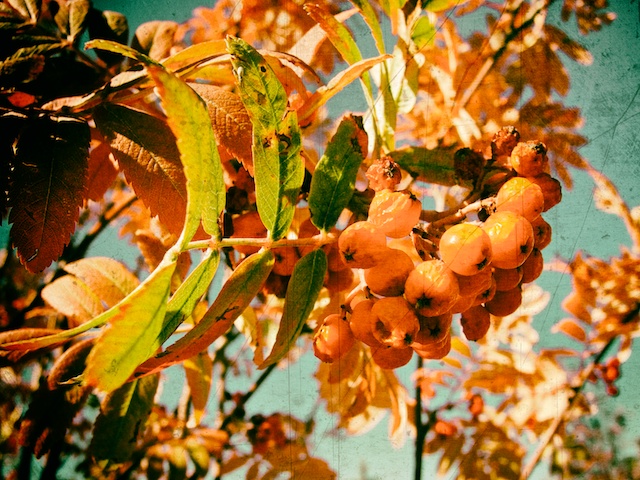
                Patterns of Decay  (c) JM Schreiber, 2011
Patterns of Decay , Copyright JM Schreiber, 2011

This first volume of Trackl’s poetry, beautifully bound and presented by Seagull books, readily lends itself to an immersive reading from beginning to end. The autumnal themes that feature so strongly make it an even more evocative read for someone like myself at this time – that is, in November in the northern hemisphere – but autumn is rendered almost metaphorical in his verses. Nature figures in his work, rendered through rural and religious imagery; however nature, for Trakl, is one which couches death and decay as an intrinsic element of its stark beauty and haunting appeal:

In the evening, when the bells toll of peace,
I follow the birds in their glorious flights,
Long multitudes, like pious trains of pilgrims,
Disappearing into autumn’s clear breadths.

Wandering through the twilight-filled garden
I dream following their brighter destinies
And feel the sundials barely move any more.
So I follow their journeys above the clouds.

There a blast of decay makes me start to tremble.
The blackbird laments in the leafless branches.
The red vine totters on rusting trellises.

While like a dance of death of pale children
Around the dark weathered rim of the fountain
The blue asters toss shivering in the wind.

– “Decay”

These are quiet, brooding poems that show a clear obsession with decline. They speak to a young poet struggling to capture the gloom in his own soul, consequently the poems have a very immediate and personal feel. Are they depressing? As someone who has had his own lifelong challenges with mood dysregulation, I find his words oddly comforting. I am not equipped to offer a critique of poetry, I am afraid I can, in this case, only speak to what I feel. And I don’t believe I am alone in registering a profound personal response to Trackl’s poetry. In his short life he produced a small, but vital, body of work that would have an important influence on other German language poets including Paul Celan, Thomas Bernhard and Peter Handke; and draw the ongoing interest of poets, translators and readers outside of German speaking countries that continues to this day, just over one hundred years after his death.

For my part, I can only eagerly look forward to the upcoming additions to Our Trakl.

To write one’s self: reflections on the stories we have to tell

IMGP2473 - Version 2

Don’t write yourself
in between worlds,

rise up against
multiple meanings,

trust the trail of tears,
and learn to live.

             – Paul Celan


I have resisted the act of writing my self. Writing about myself. The conceit of imagining that my own experiences hold a value, interest or point of connection for others. I wanted to tell stories, inventions, creations that were removed from the inexorable ordinariness of my own life.

IMGP2477 (1)I am not sure I have that gift. I fear that all the stories I have that are worth telling are real. Not true stories. I do not believe there is an objective truth to the stories we tell ourselves or others. But they are real.

For many years I worked as a storyteller. Not in the conventional sense of the word. I worked with survivors of acquired brain injury and their families. Whether I was meeting with clients, advocating with professionals or leading support groups stories were my medium. I had hundreds of stories, I had a facility for remembering the broad details of the experiences of our clients and their families. Tales of courage, tales of horror, tales of the ordinary and the everyday. I was able to pull out an example whenever I required one to offer warning, hope, validation. And I was able to do so without revealing identifying details.

IMGP2465 (1)As always I was the master of ambiguity. After all that was how I engaged with the world myself. But what is essential in a professional capacity is crippling in a personal sphere.

I have touched at the edges of my own stories, in so far as I am learning to articulate them, in this space from time to time. And I am beginning to wonder whether it is a folly for me  to assume that I have the capacity to make up stories, to entertain with carefully constructed lies.

Or if this mess of a life that has piled up in front of me like heavy wet snow against a plow has to be cleared, examined, transformed into words on a page before I can even begin to figure out if there might be something here that someone else might want to read.

IMGP2461 - Version 2 (1)In the coming days I will officially be two months out from the night a blood clot very nearly took my life. My chest still feels tight, bruised and cracked ribs are slow to heal completely, but I can finally get out and walk with comfort – something that was still impossible a few weeks ago. Rat poison is my friend.

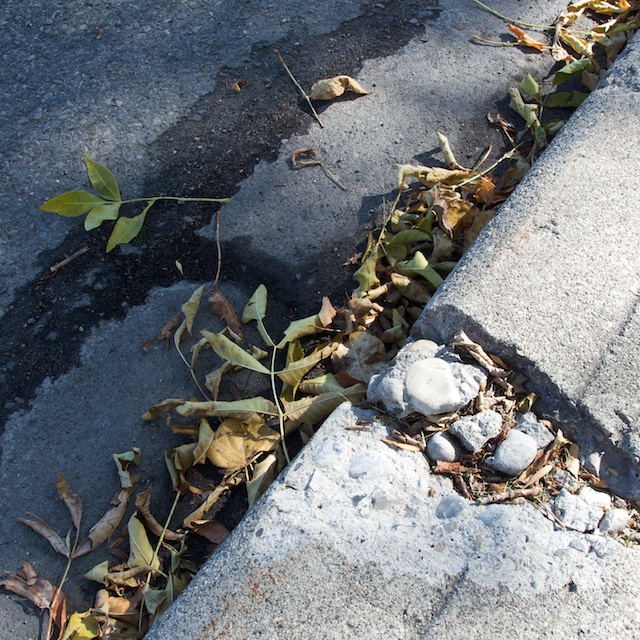
I took my camera out into the neighbourhood this afternoon. The foliage is turning colour, the sky is crystal blue, yet I found my attention turning to the cracks in the road, the fallen leaves in the gutters. I photographed the little things that caught my eye and tried not to think too much.


Listening to the voices of Afghan women: I am the Beggar of the World

“In my dream, I am the president,
When I awake, I am the beggar of the world.”

With a long history, passed down through generations, landays are traditional two line poems recited or sung by the mostly illiterate Pashtun people who live along the border region between Pakistan and Afghanistan. They are composed of twenty-two syllables – nine in the first line and thirteen in the second. For the women in this area who face social and cultural restraints that define and restrict their lives, these anonymous couplets have become an important medium for self expression. Sometimes they gather to share or perform the landays they have learned, updated or re-invented; but radio and the ubiquitous social media and cell phones have also been worked into a new modern network for sharing.

beggarI Am the Beggar of the World: Landays from Contemporary Afghanistan, a collaboration between translator and poet Eliza Griswold and photographer Seamus Murphy, is a sensitive and moving collection of landays, brief essays, and photographs. Upon hearing of the death of a teenaged poet who had been forbidden by her family to write poems and burned herself in protest, Griswold was inspired to journey to Afghanistan to explore the role of landays in the lives of Pashtun women. She returned to collect some of these poems, assisted by native speakers and a Pashta translator, Asma Safi, who sadly died of a heart condition before the project was complete. Arranging meetings as an American was not always easy – being under occupation is a difficult, deadly environment – but along the way she collected the words and stories of some very strong, fascinating women.

Divided into three sections, the first is dedicated to Love. Many of the couplets are brazenly racy, teasing and modern. Yet because landays are by their nature anonymous, no woman can be held responsible for sharing them or for the contemporary imagery has been worked into the more traditional versions:

“Embrace me in your suicide vest
but don’t say I won’t give you a kiss.”

“Your eyes aren’t eyes. They’re bees.
I can find no cure for their sting.”

“”How much simpler can love be?
Let’s get engaged. Text me.”

The second section is dedictated to the themes of Grief and Separation. Suffering and servitude are enduring features of the lives of Pashtun women. Marriage implies both. Curiously love also features throughout the poems in this section because romantic love is forbidden. If a young woman is discovered to be in love with a man she can be killed or driven to take her own life to preserve her family’s honour.

“Our secret love has been discovered.
You run one way and I’ll flee the other.”

Once married, having one’s husband take another wife is emotionally painful, but being passed over altogether or married off to an old man can be worse.

“Listen, friends, and share my despair
My cruel father is selling me to an old goat.”

The final section explores War and Homeland. Complex, mixed emotions, anger and sorrow rise up here in poems that are moving and, again, shockingly modern. A long legacy of occupation under British, Russian, and American forces has placed the women of Afghanistan in a difficult position, torn between the brutality of American protection and the combined threat and promise of the Taliban. The landays and the images in this section are especially powerful and represent sentiments that women would not be able to express so readily in any other forum:

“Be black with gunpowder or bloodred
but don’t come home whole and disgrace my bed.”

“Beneath her scarf, her honor was pure.
Now she flees Kabul bareheaded and poor.”

“May God destroy your tank and your drone,
you who’ve destroyed my village, my home.”

This slim volume is a testament to the resilience of the Pashtun women in the face of the violence, threats and restraints they live with every day. These traditional two-line poems provide a framework for illiterate women to express themselves and share their sorrows, joys and wisdom with their sisters. In Afghanistan they still face risks in committing their own poetry to paper when they are able, so this oral tradition remains important, even if modern devices like cell phones have expanded their network. This beautiful book which pairs the simple landays with muted black and white photographs documenting the people of Afghanistan, the sparse landscape and the violence of war, provides a rare opportunity to hear the intimate voices of women that might otherwise be silenced.

One miserably roughed up ghost, rising from the ashes once more

Sometimes you fool yourself. You believe that you are invincible. You know that bad things happen to good people. You know that they have even happened to you. But time and time again we are caught off guard reminded of the wisdom of Monty Python’s idiom: Nobody expects the Spanish Inquisition.

14701351714_280be514fc_z
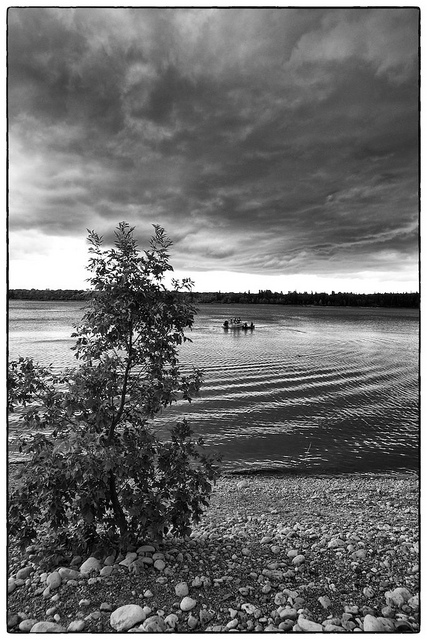
Copyright JM Schreiber Storm clouds over the Reservoir, Calgary, AB

If I had had more experience traveling I might not have made the mistakes that may very nearly have cost me my life this past week. I thought that by focusing my first visit to South Africa to longer stays in two areas, I would limit my travel time. But instead I ended up with long plane flights and interminable bus trips. Next time, and I definitely hope there is a next time  – *the hematologist looks at me askance* – I hope to take longer and fly between major centres once I get to South Africa. The buses have a certain charm and I definitely got to meet and talk to people in a way I might not have otherwise, but to top off my three week excursion with a three leg flight home with very short turnarounds was a major miscalculation  on my part. It sounded great. But I had no idea exactly how tight a three hour stop over is, especially if you have to clear customs. Longer stop overs would have helped. Baby asprins, compression stockings. Everyone has recommendations now.

Yet although I was tired and swollen upon my return, it would take a few weeks before my journey caught up with me. Last Sunday night, or rather, early Monday morning, two and half weeks after I returned home, all swelling and fatigue seemingly gone, I suffered a pulmonary embolism. Well actually, it was not clear what had happened at first. I have very little memory of that day or an evening event I had been to with friends. My 25 year-old son, a creative, troubled but wonderful soul, heard me moaning. Thomas came upstairs to find me disoriented. He called Emergency and started chest compressions.

The kid saved my life. In one of those odd ironies, or twists of fate, toward the end of my time away, Thomas had suffered a couple of acute panic attacks so severe that he twice was taken to the hospital. In the second situation he was referred on to a psychiatric nurse he liked and she suggested a 4 week outpatient program he had just started. Mind you my little detour has interrupted  his plans but they will contact him as soon as there is a good point for him to join back in. Me, I will be in the hospital for at least another week, but the more “functional” I am, the more I can spend time reading.

So good with the bad. Who knows? Maybe the two truly are bound more tightly than we realize.

Looking back over my shoulder at three weeks in South Africa

It is coming up on two weeks now since I left South Africa. I was missing the country before I left; I am missing it now. When I passed though customs at the airport the official who stamped my Canadian passport sighed and shook his head. “Everyone is going to Canada these days,” he said. What could I say? Only that morning I had only read a newspaper article about young South African families eager to find a new home abroad – the US, Australia, Canada.

I suppose if I was raising young children in a city where so many single family dwellings have the appearance of bunkers with high walls, spiked gates and coiled razor wire, I too would be looking to distant shores. Over the course of my limited stay in Cape Town I regularly walked between my B&B in Sea Point and the downtown core. The occasional house perched on the slopes of Signal Hill without such enclosures was a source of fascination. What manner of brave or reckless soul lives here?

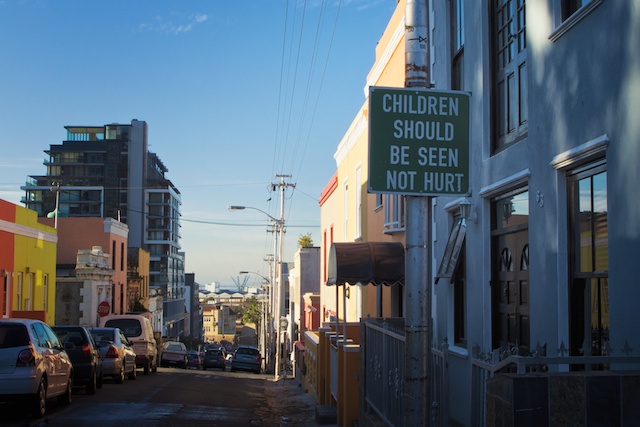
A sign on a narrow cobblestone street In the Bo Kaap district of Cape Town - Copyright JM Schreiber
A sign on a narrow cobblestone street In the Bo Kaap district of Cape Town
– Copyright JM Schreiber

I can’t say that I felt uncomfortable as I wondered the streets or rode the buses. I did quickly learn to make prudent choices, especially after a couple of unnerving encounters set me off my guard. My bad. I don’t make the same mistake twice. Aside from a night out with a friend in Green Point, my stay in the city was quiet, skirting most of the major tourist sites, sticking to bookstores, museums, galleries. Despite the cool weather tourists flocked to the Waterfront and Table Mountain but no one chanced more than a passing glance while I sat mesmerized by the full 30 minutes of William Kentridge’s installation The Refusal of Time at the South African National Gallery. I seemed to find hollow pockets in the city, safe but open empty spaces. And it felt right. I had come to South Africa, after all, to find myself.

What I found surprised me and is only beginning to take form in my thinking now that I am back home. My interest in South Africa is a curious blend of sociological, historical and literary factors but it has always been mutable and undefined. It just is. It stretches back to the early 1980s when I first encountered South African ex-pats while I was at university, continued forward, from the outside, as the world watched the steady and difficult move to independence. Being able to visit the country and, for the most part, simply talk to people and observe has marked the beginning of a process of reconciliation for myself – on a deeply personal level on the one hand, on a socio-political level on the other.

Eastern Cape morning - Copyright JM Schreiber
Eastern Cape morning
– Copyright JM Schreiber

With respect to the former I will simply say that my decision to actually visit South Africa this year was sudden and born of the intense loneliness that sweeps over me regularly. One day when that wave crashed upon me I stopped and realized that the one person in the world that I really needed and wanted to talk to, the sole person who could understand the strange mixture of illness and queerness that I have been struggling to sort out lately, lives across the globe – in South Africa, Eastern Cape province. And, with some money I had needed to access that was not worth reinvesting at today’s interest rates I had enough to get there. So I went.

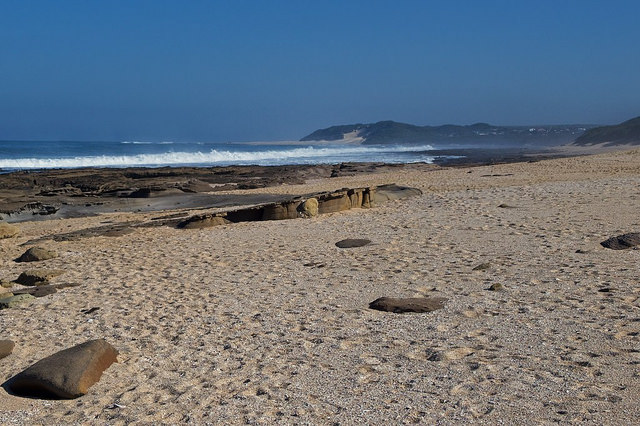
Arriving at my friend’s home in a small village perched on the edge of the Indian Ocean, I was stunned by the beauty of the unfolding landscape, green flecked with the orange of aloe in bloom, the wide open blue skies, and the crystal brilliance of the waves crashing upon rocky shores. I was at peace. I felt grounded. I felt I had come home to somewhere I had never been. My friend and I settled into a comfortable routine as if we had known each other forever. Although at ease in silence, we never ran short of things to talk about. When it came time for me to prepare to head back to Cape Town, her dog worried after me as I packed my bags in the same way that my own cats had fretted over my suitcases back in Calgary. In a little over a week I had been accepted as family.

Indian Ocean, Eastern Cape - Copyright JM Schreiber
Indian Ocean, Eastern Cape
– Copyright JM Schreiber

Oddly I never felt lonely in South Africa, even though I spent much of my time alone. Strange that that feeling oppresses me in the city that I have lived in or near for most of my life, or this country where I have lived for over five decades. At one time I was immensely proud to be a Canadian but I feel increasingly discouraged and estranged from this land. Oh, of course, it has its beauty and, compared to so much of the world, its benefits are innumerable. But there are concerns, inequities, a steady erosion of freedoms, unresolved historical debts to our First Nations and now a rapidly declining economy against a growing racism and xenophobia to think about.

While I was in South Africa, whenever anyone would ask me where I was from, eyes would light up and I would be met with statements like: “Ah Canada, that’s like the perfect country, isn’t it?” Perhaps I am less than patriotic (which is in itself a rather Canadian thing to be), but I felt it was worth engaging people in honest discussions. After all in early June the final report of our very own Truth and Reconciliation Commission was released. For over 100 years First Nations, Métis and Inuit children were routinely removed from their homes and placed in Residential Schools. The cumulative impact of the abuses, trauma and cultural disintegration has been significant and devastating for Aboriginal communities. If I wanted to engage in conversations about colonial legacies it is not to compare or absolve anyone. But no country is perfect. The question for a citizen is, what am I willing to speak to? I can only speak to my experience in Canada and listen to South Africans. Which is a good start.

Sunset over the Atlantic, Cape Town - Copyright JM Schreiber
Sunset over the Atlantic, Cape Town
– Copyright JM Schreiber

But not even two weeks home and I feel shiftlessness starting to seep in again. On the positive, I returned to the promise that some healthy changes may be emerging in the life of my troubled son, opportunities that might not have arisen had I not put a continent and hemisphere between us. And on my last full day in Cape Town I sat in the Company’s Gardens and finally began to write in earnest in the notebook I had been scribbling in throughout my visit. That has continued. Yet I am aching for that indefinable other that drew me to South Africa in the first place… the landscape, the people, my friend, the oceans.

Yes, the oceans. Landlocked here in a vast country that spans 5½ time zones, it really is little wonder I feel so alone.

Further notes from South Africa: Wildlife and quiet times in the Eastern Cape

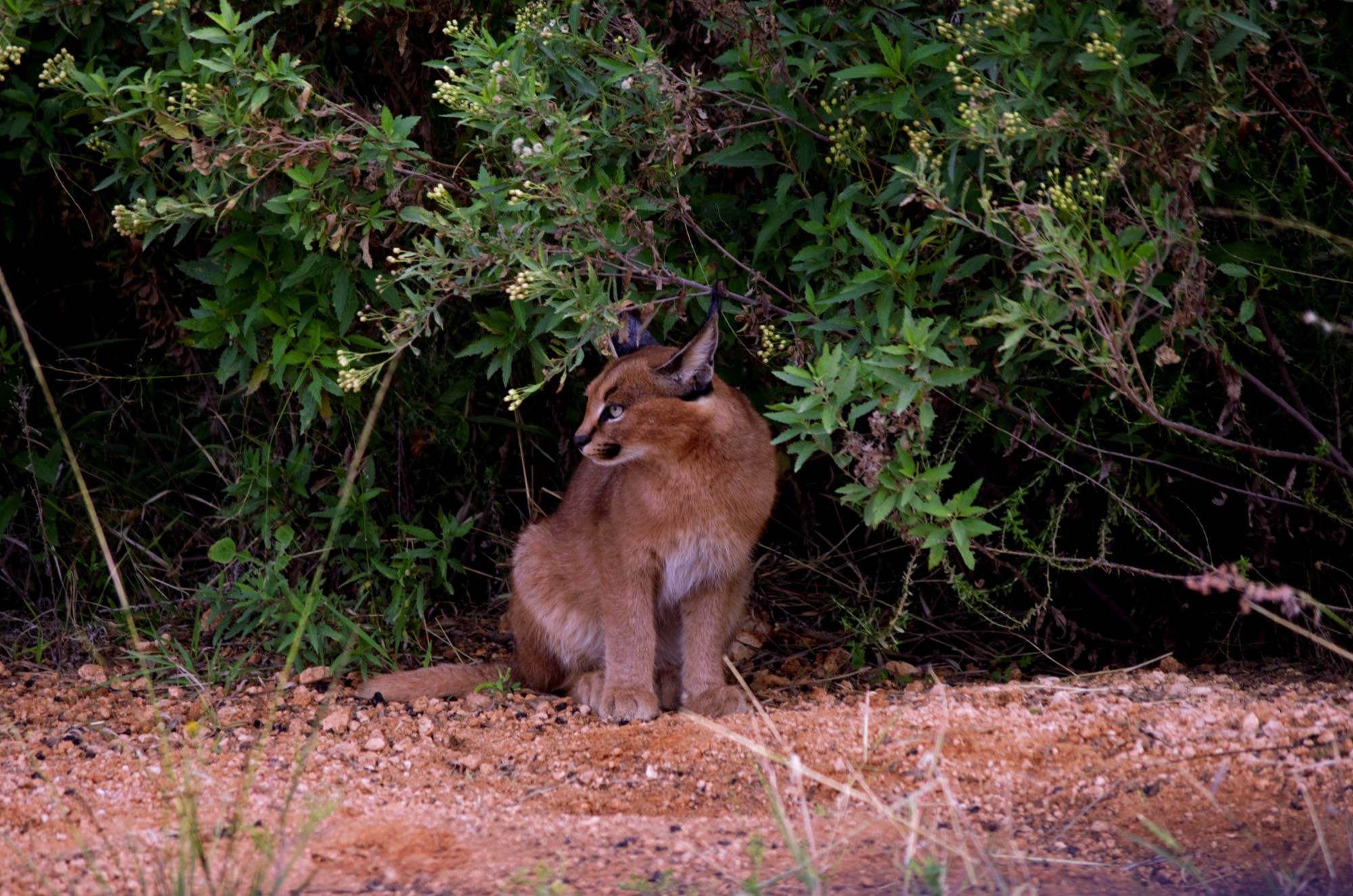
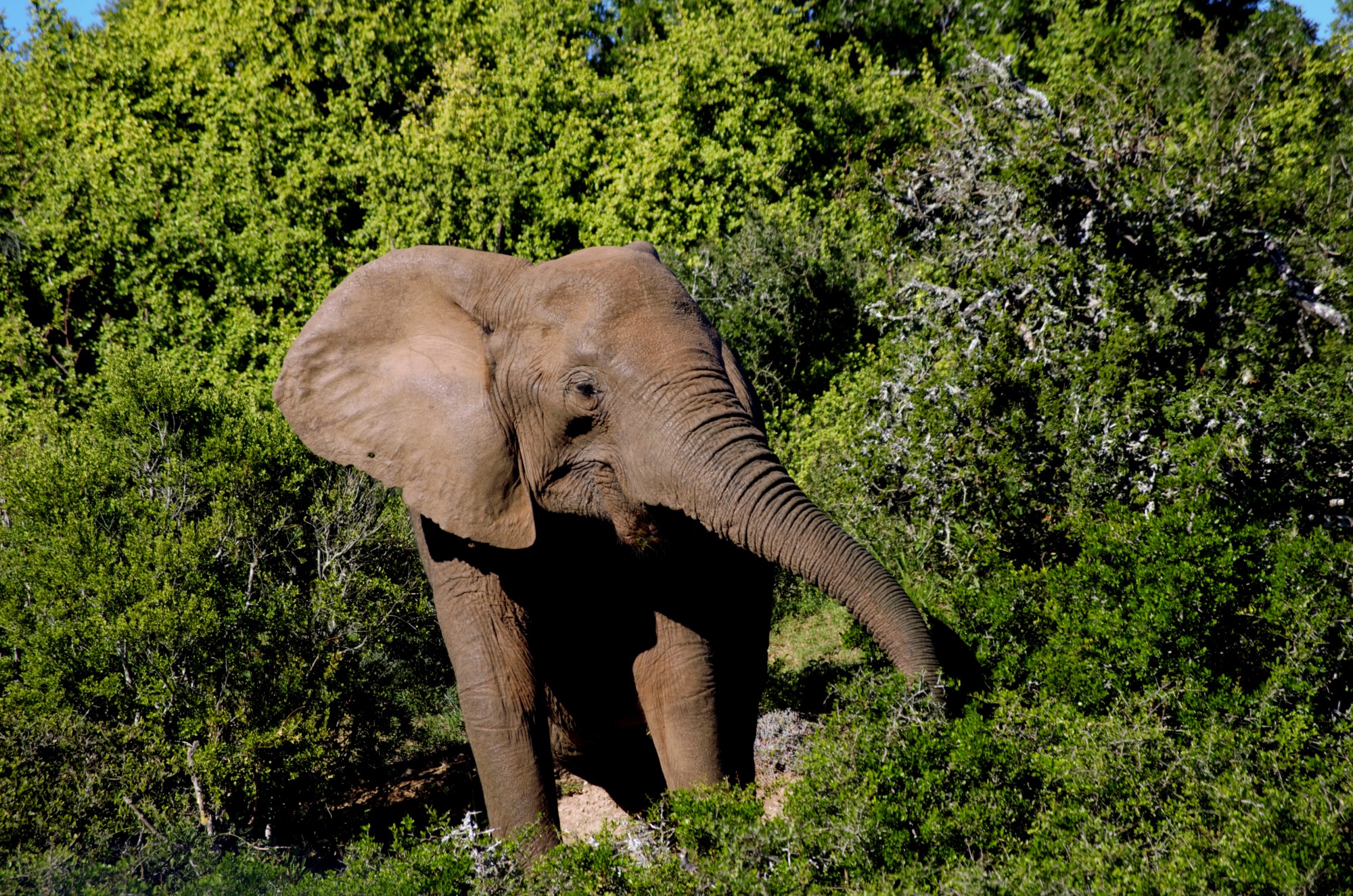
I have been in South Africa for just over a week now. It’s been an amazing opportunity to meet people and observe the country on its own terms. The closest I have had to a typical tourist experience has been our day trip to Addo Elephant Park. Nothing quite prepares you, on your first visit, for the sight of these huge majestic beasts looming ahead on the road, appearing out of the bushes. And there is so much more to see than elephants. We were stoked to encounter two young rooikatte along the roadside. These lynx are a rare sight at the best of times and we were able to sit and watch them for 15 minutes.

Rooikat
Rooikat
Addo Elephant Park
Elephant  – Addo Elephant Park, South Africa

The value of taking time to relax, soak in the countryside, meet fascinating individuals and spend quality time with my friend has been exactly the medicine I needed. In a few days I will make my way back to Cape Town for the much more urban, cosmopolitan side of my stay which will, in its way, be quiet and introspective. Cities can be good for being alone too.

Old sheep
Old sheep
Eastern Cape farm garden

My endeavour to gather more South African literature to bring home is going well. So far I have collected a stack of second hand books from a little shop in East London here in the Eastern Cape and have another stack waiting for me back in Cape Town. I have been digging through my friend’s bookcase for titles to look for here or back home and last night I was thrilled when my favourite author, Damon Galgut, won the Sunday Times Literary Award for South African fiction for his novel Arctic Summer. So, a fine literary excursion to date.

South African sunset - All photos copyright JM Schreiber
South African sunset – All photos copyright JM Schreiber

Otherwise it has been a relief to step back from my normally heavy engagement with news and social media. I did read with dismay about the terrorist attacks in France and Tunisia. I was relieved that my American LGBT brothers and sisters have achieved a long overdue milestone. But I came to South Africa in large part to put as much distance between myself and my life at home as possible for a few weeks and, for now, watching waves crash on the shore or sitting on the stoep and watching the sky burst with colour in the evening or listening to Breyten Breytenbach reciting poetry in Afrikaans is therapy of the best kind.

Roughghosts is one year old today: Looking back and ahead

Today I received a notification from WordPress congratulating me on my first anniversary. Well happy anniversary to my alter ego roughghosts who was born on this day from a scarp of creative writing I uncovered in one of my endless unfinished notebooks. I never was very clever with user names; most of my aliases amount to little more than my initials and the first 5 letters of my last name.

Copyright JM Schreiber, 2014

I have become quite fond of roughghosts. It suits me, more than I might have imagined, or at least been willing to admit on May 31st of last year. To be honest, I created this blog to engage with other WordPress blogs and, I don’t know, maybe reflect a little, and explore some creative writing. At the time, a little voice I the back of mind said this looks like a rather manic move. After all I was under a soul crushing amount of stress at my workplace, had a major fundraiser and annual report due, and had not slept for more than a few hours a night since the previous November. But I shrugged it off, forged ahead only to crash and shatter into a thousand pieces a few weeks later.

Today, I have managed to rebuild myself to a point. There is still a lot more glue, stitching and healing required. Mania has subsided to a simmering depression with doses of anxiety and a pill that I do not like but is presently necessary as a sleep aid. And roughghosts the blog has evolved from a space to moan about the shock of realizing that, yes, I still have a mood disorder and all the fallout that a major breakdown entails, to a book based blog with a strong focus on translated and international literature.

Over the past few months I became involved with a jury shadowing the International Foreign Fiction Prize (IFFP), a challenging and highly rewarding experience. It taught me to read faster – still no speed demon, I – and read more deeply with a specific goal to being able to rate and write a constructive review for each book. I have started scribbling in margins and filling notebooks when I read. As a reader and a writer this has been invaluable. The camaraderie of reading and discussing the books together was an added bonus, introducing me to a great group of book bloggers. My subsequent expansion of activity on twitter has further enhanced this community of readers, publishers, authors and translators.

Then, close on the heels of the IFFP came the Best Translated Book Award (BTBA) with a challenging and exciting longlist and a selection of small North American independent publishers to discover. Adding to this embarrassment of riches for lovers of translated literature was the conjunction of the biannual International Booker and the writers I want to explore from that list of finalists. And, on top of all this, my longstanding interest in South African literature will be further nourished by a trip to that county in a few weeks with a list of books I hope to obtain.

I am, I hope, reading my way back to wholeness. Preparing to write my way back into the world, or rather document my very real journey into the world in a full and honest way for the first time in more than half a century of living.

This past week’s awarding of the 2015 IFFP and BTBA prizes saw the celebration of female authors and translators. The IFFP honoured Jenny Erpenbeck and Susan Bernofsky for The End of Days, a decision that coincided with our shadow jury’s esteemed choice. This is a most important book with a timeless theme spanning the whole of the 20th century. About an hour later the 2015 BTBA was awarded to The Last Lover by Chinese author Can Xue and translator Annelise Finegan Wasmoen. I encountered this book as a longlisted IFFP title and simply fell in love with the surreal, dream-like tale. Notably, Can Xue was also named that same day with six other women and two men as finalists for the Neustadt International Prize for Literature. I’ve been decidedly excited by this celebration of female writers and for those who know me, that is a huge shift in my own approach to literature.

Back in late January I wrote a pot in response to a discussion on the Tips, Links and Suggestions blog of the Guardian which had caused me to reflect on the abysmal ratio of female to male authors in my reading and on my shelves. However, my more explicit focus on literature in translation is slowly beginning to shift that balance. Especially if one considers how many of the works I read, if written by men, were translated by women. And I am taking serious note – not only should I endeavour to read more female writers, I can easily fall under the spell of Can Xue, Anne Garréta, Marlene van Niekerk, Olja Svačević or Valeria Luiselli, just to name some of the authors that have really impressed me of late. And I am pleased to report that an increasing number of the books I am currently reading or planning to read feature female writers and/or translators.

Copyright JM Schreiber, 2014

So, on my first anniversary as a blogger, I look back over an ad hoc journal chronicling an ongoing passage from a terribly messed up state, struggling to make sense of a sudden shock to my self esteem, my confidence and my identity to a place where I have a strong real life community, solid mental health support and a creative environment where I am proud of the work that I publish in this space. Moving forward I hope to explore further writing opportunities, continue to recover and, with luck, make my way back into productive employment.

And keep reading a lot of terrific, exciting and challenging literature from around the world.